

I’ve been watching the 7 Up TV series. One change in our behaviour really struck me
Before mobile phones, being filmed was very rare – and if you were, you acted naturally. Today, our relationship to the camera is very, very different
Not for the first time, I got something wrong. As someone who made a living being on camera, I developed theories about what it takes to be yourself on screen. My main thought was that everyone in the world would soon be able to do it, because they’d be getting so much practice.
Once upon a time, hardly anybody was filmed or videoed. When the head of my middle school announced in assembly one morning that there would be television cameras in the dinner hall at lunchtime, every child woke up. For once the headteacher had our full and undivided attention. Consternation was in the air. This would have been about 1979. Regional television news probably needed pictures to cover a story about school dinners or something. Nobody, but nobody, in the school that day missed that evening’s edition of Midlands Today. It was a big deal. I saw the back of my head, and was agog.
In the home, being filmed was just as rare. Before smartphones, before camcorders, moving pictures of domestic life were few and far between. Growing up in the last decades of the last century I was aware of the existence of cine cameras but knew of no one who owned such an exotic, perhaps even vaguely sinister piece of kit.
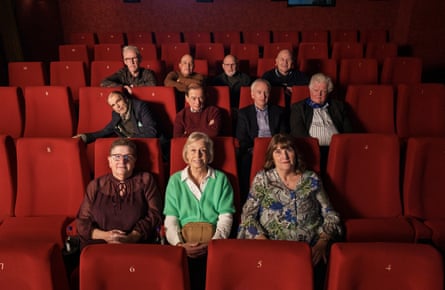
The ubiquity of video cameras surely means we’re more natural in front of them. But looking natural is different to being natural. It might even be the opposite.
This dawned on me when talking to the remarkable Tony Walker, who 63 years ago was one of the seven-year-olds featured on the longitudinal documentary series which started with Seven Up! and has now concluded with 70 Up. From the back of Tony’s black cab I listened as he told me how this little East End rascal had barely seen a TV, let alone a TV camera, before the day Michael Apted’s crew came bowling into his life. I went back and binge-watched the series from the beginning – 7, 14, 21 Up and so on – and, while this group obviously gained experience of television every seven years, from the outset it’s striking how naturally everyone speaks. This is not despite, but because of, their lack of practice. They’re blisteringly honest and are being – dread phrase – their authentic selves. They’ve yet to learn how to be anything else.
The same thought is provoked by Chris Terrill’s seminal BBC series, Soho Stories, now repeated 30 years after it first went out. Chris, embedded in the Soho area of central London for a year, mines a rich seam of characters: Gwen the student/burlesque dancer, Mark the tailor, Danny the wannabe actor and so on. Even as recently as 1996 it’s noticeable that they don’t have enough of a grasp of the grammar of television to be able to do anything other than reveal an unvarnished, unmediated version of themselves. The lack of guile is at the heart of their honesty.
Fast forward to 2026 and it’s guile galore. Influencers, vloggers, clever dicks, dicks, whoever – all are talking to camera with disarming competence, entirely at home with the form and quite coruscatingly natural. Yet natural is the last thing they are. To see what natural really looks like, examine people’s expressions on very old black and white photographs, back before they’d worked out what faces to pull. Compare and contrast with today, in which everyone’s acquired the knack of presenting a carefully, if unconsciously, curated version of themselves. The level of naturalness is a lot of things, but the one thing it isn’t is natural. If you want natural, go back to the days before folks had worked out how to pretend to be natural.
Adrian Chiles is a broadcaster, writer and Guardian columnist
Explore more on these topicsShare
Reuse this content
