

The UAE’s indoor entertainment boom is gathering pace, with a new generation of attractions being developed as the country draws regional theme-park visitors with a growing variety of year-round leisure offerings in one destination.
“The quality and diversity of attractions across the UAE continues to position the region as a leading family destination,” said Mike Rigby, Middle East & North Africa vice president of the International Association of Amusement Parks and Attractions (IAAPA). “There is now such a variety of fantastic projects that the market caters to the full family demographic, across multiple generations.”
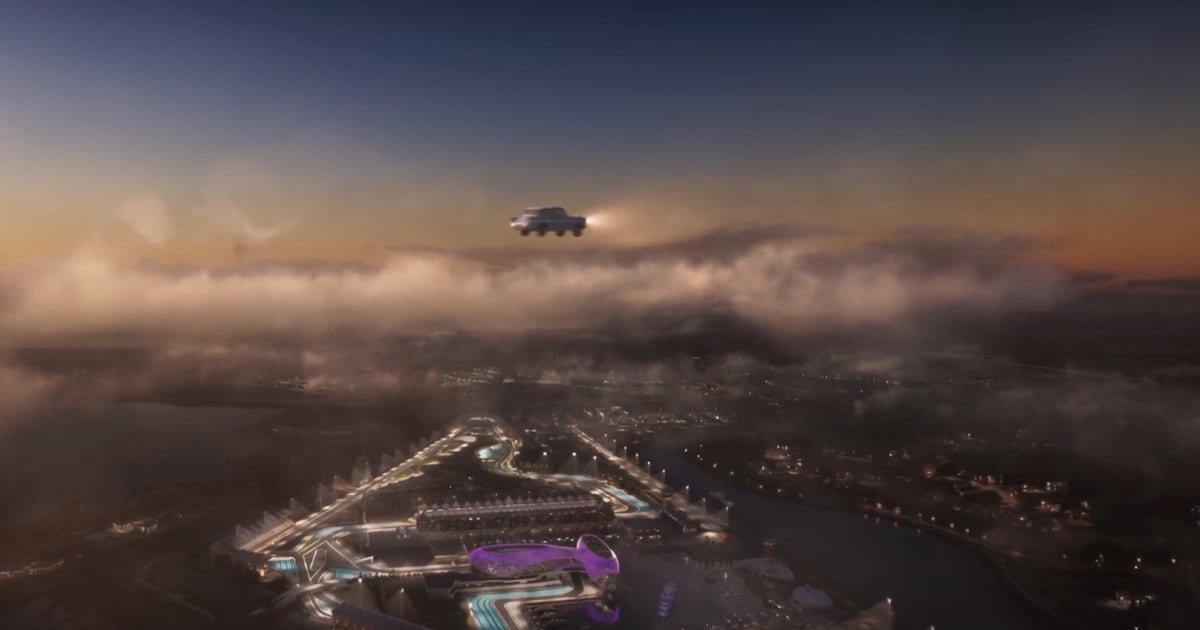
Details have emerged this month about the Middle East’s first Harry Potter-themed land, planned as an indoor, climate-controlled expansion of Warner Bros. World Abu Dhabi on Yas Island, featuring Hogwarts Castle, Diagon Alley, three rides and other attractions.
It joins an expanding pipeline on Yas Island, where plans are advancing for Disney’s first Middle East theme park, Sphere Abu Dhabi and an outpost of Topgolf.
The expansion builds on a surge in family entertainment centres, whose numbers more than quadrupled from 76 in 2022 to 311 in 2024, according to an Oxford Economics study commissioned by IAAPA.
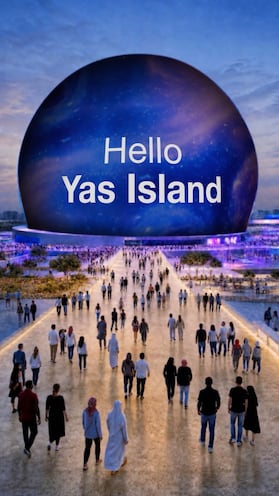
Sphere Abu Dhabi set to open on Yas Island in 2029
The study, released in April and based on 2024 data, shows revenue across the UAE’s attractions industry reached a record $5.4 billion that year, up 17.2 per cent annually.
Yas Island in Abu Dhabi is the heartbeat of the UAE’s attractions scene. The destination is home to three indoor theme parks – Warner Bros. World, SeaWorld and Ferrari World – as well as Yas Waterworld, Etihad Arena, Yas Marina Circuit and CLYMB.
Indoor attractions are particularly suited to the Gulf because they can operate throughout the hottest months while allowing operators to create elaborate themed environments protected from the elements.
SeaWorld is the Middle East’s most-visited theme park, with 1.8 million visitors streaming through its turnstiles in 2024, according to the latest data from the Themed Entertainment Association. It is followed by Warner Bros. World, with an attendance of 1.6 million, a 12.5 per cent increase on the previous year.
During the Eid weekend in May this year, attendance at Yas Island’s parks and CLYMB was 32 per cent higher than last year, with the on-site hotels hitting 92 per cent occupancy at an average daily rate of Dh1,278 ($348).
Indoor boom
Family entertainment centres cover everything from bowling, trampolines and arcade games to escape rooms, esports arenas and go-kart tracks. Their predominantly indoor format makes them particularly suited to the Gulf, offering families year-round entertainment during the hottest months.
Among the major UAE additions during the period were Snow Abu Dhabi in Reem Mall and the world’s first Mission: Play! by Mattel, home to Barbie-themed dance parties and Hot Wheels car design workshops.
Mission: Play! opened in Al Maryah Island’s Galleria mall in 2024 alongside Sparky’s, while Dubai’s City Centre Mirdif added a branch of Canadian entertainment chain Activate.
The expansion has continued beyond the period covered by the research. Last year, House of Hype opened in Dubai Mall, while last month Ibn Battuta Mall added Zamania, aimed at teenagers with ziplines, racing simulators and a Ninja Warrior course.
Population growth may also be helping to underpin demand. The UAE’s population rose 9.8 per cent to 11.3 million between 2022 and 2024, expanding the potential domestic audience alongside the country’s international tourism market.
“Year on year you see more people migrating to the UAE from elsewhere and this increases the domestic demand and domestic market,” Mr Rigby said.
Saudi leads
Saudi Arabia nevertheless has the Gulf’s largest attractions industry, generating $6.2 billion in 2024 compared with the UAE’s $5.4 billion.
Saudi Arabia had 611 family entertainment centres in 2024, almost twice the UAE’s 311.
Earlier this month, SEVEN Abha opened as the first of 14 indoor entertainment complexes due to debut in Saudi Arabia by 2028.
Six Flags Qiddiya City opened at the end of last year, followed by Aquarabia this year.
The UAE, however, had 15 theme parks compared with Saudi Arabia’s eight during the period covered by the research.
Visits to UAE attractions rose 21.7 per cent to 64 million between 2022 and 2024, compared with 126 million attraction visits in Saudi Arabia.
The attractions boom is also feeding into the UAE’s broader economic diversification drive. The industry supported 69,100 jobs in 2024, up 12.9 per cent from 2022, while salaries reached $733 million.
“The attractions market not only directly generates significant employment and revenue, it is also a key differentiator driving overall tourism and indirect revenue across the UAE,” Mr Rigby said.
With Harry Potter, Disney and other major projects in the pipeline, the UAE is betting that indoor entertainment can help sustain its attractions growth as Saudi Arabia invests heavily in its own leisure industry.
