

The certification itself is not new. Meta claimed it first, in its September 23 announcement of the glasses, which said they “are the first ever IMAX Enhanced certified VR device and will be one of the only ways to experience select films in IMAX’s exclusive expanded aspect ratio at home.” VR.org covered that launch the same day. What changed 48 days later is the source. A line in Meta’s product post is now a disclosed agreement from the licensor, carried on a newswire to IMAX’s shareholders, and it adds two things Meta’s post did not contain: an IMAX-branded app on the device, and a start date for the expanded format that matches the hardware.
What the certification covers
IMAX Enhanced is a certification program rather than a film format of its own, and IMAX runs it with audio partner DTS, a relationship spelled out when the program reached its first major streaming service in 2021. It applies to devices and to content. Tuesday’s release lists Sony, Hisense, TCL and LG among the makers of certified display and audio devices, and names Disney+ and Sony Pictures Core on Amazon Prime Video as services hosting IMAX Enhanced content. The Meta VR Glasses join that device list as its first VR entry.
The clearest precedent for what the glasses would show is that 2021 launch. On November 12, 2021, Disney+ added IMAX Enhanced versions of 13 Marvel films, and Disney’s announcement defined the format precisely: IMAX’s Expanded Aspect Ratio “is 1.90:1, which offers up to 26% more picture for select sequences.” The qualifier deserves weight. How much of any film gains the taller frame depends on how that film was shot.
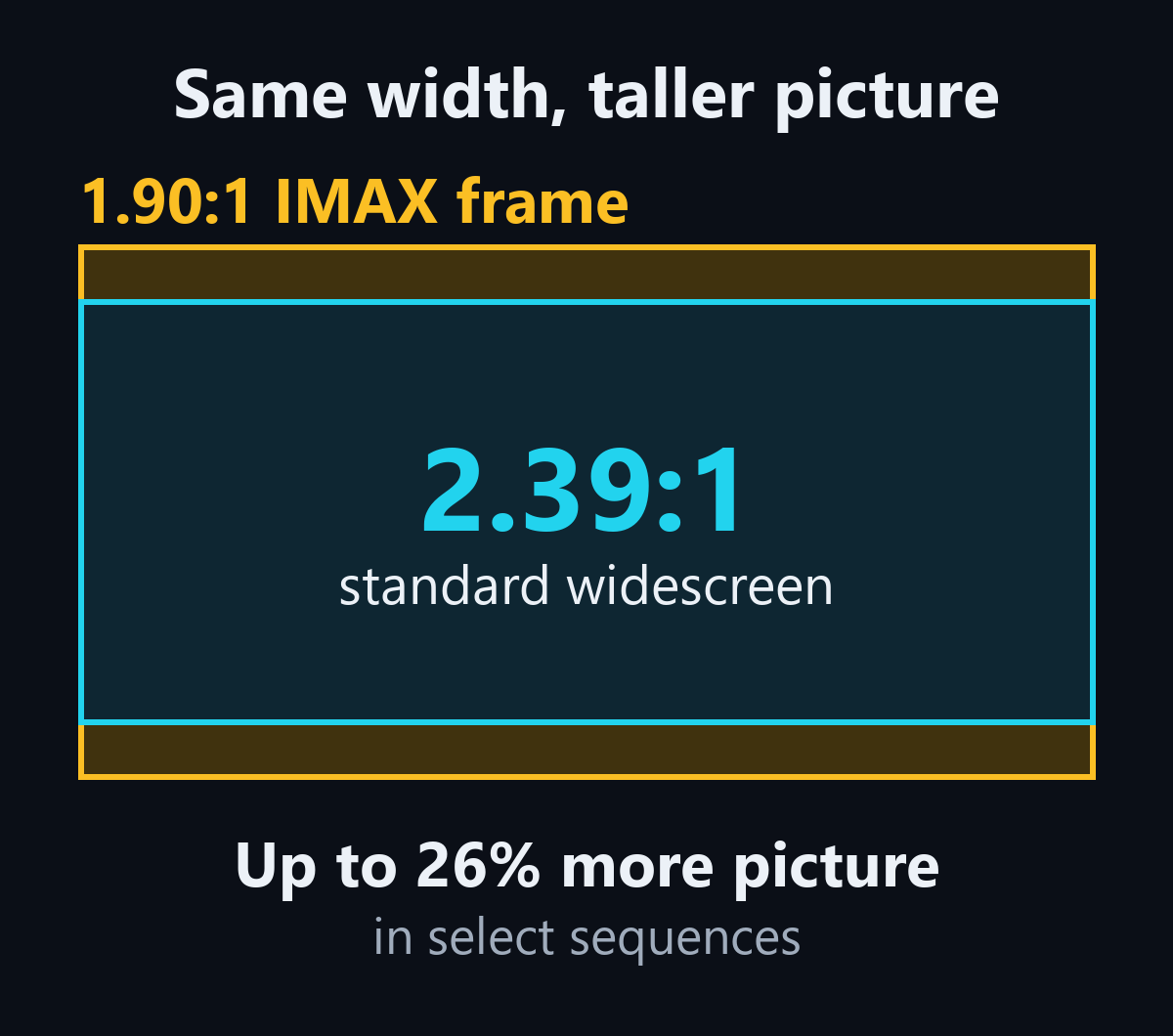
On a television, the benefit appears as thinner black bars. On glasses that draw a virtual screen, there are no physical bars to remove, so the value of the certification on this device is harder to state than the marketing implies. A virtual screen can be rendered at any shape. What a certification can govern is the master the device receives and how faithfully the device presents it. Neither company has said how large the virtual screen in the IMAX app will be, how it handles a film that changes ratio mid-scene, or whether the DTS sound side of the program carries over to the glasses.
