

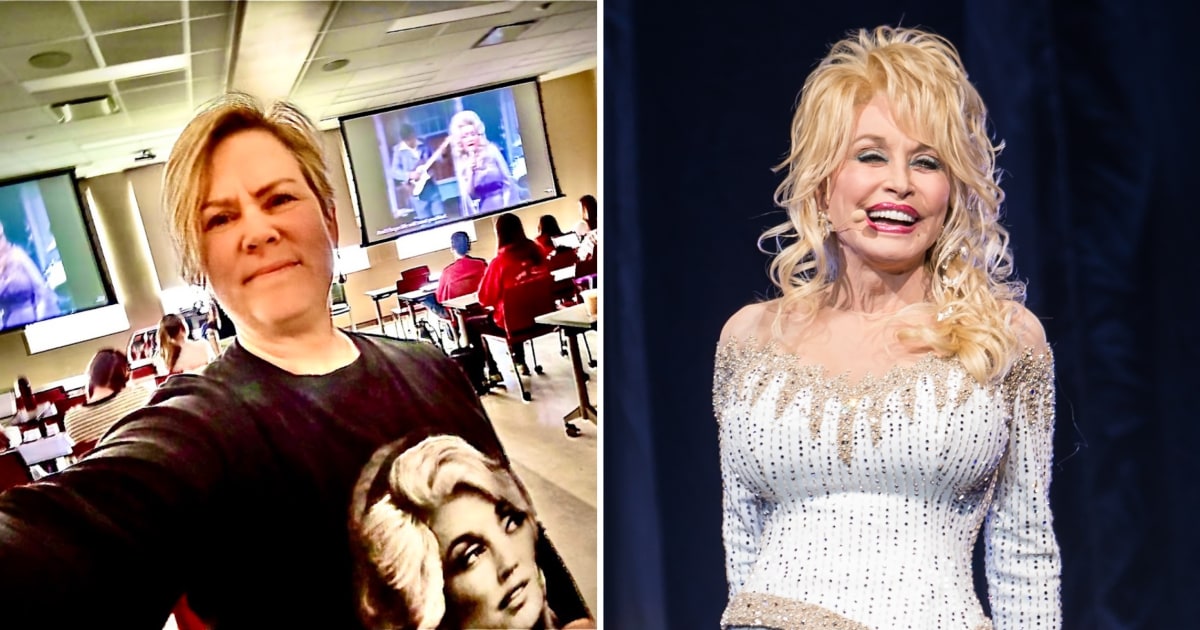
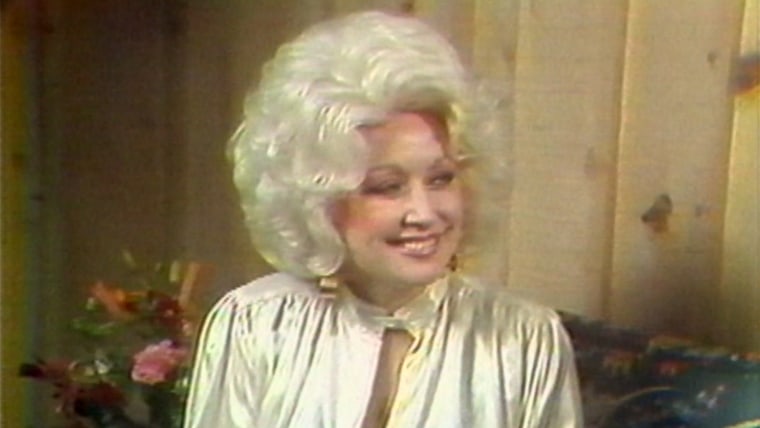
See Dolly Parton’s First TODAY Interview from 1978
07:33
“Take It From Me” is a TODAY.com series where experts use their wisdom to explain trends or make recommendations within their fields. In this latest installment, an anthropology professor explains what Dolly Parton has to teach us all.
The news of the Dolly Parton’s passing at the age of 80 led to an outpouring of tributes from peers in the industry and fans.
After hearing the news, anthropology professor Sarah Phillips spent part of the afternoon of “curled in a ball” in her office, “just outright mourning Dolly and all that we’ve lost.”
“It’s been a real roller coaster. Like many people, I think I never really believed she was mortal,” she tells TODAY.com.
For Phillips, Parton’s death felt personal. An associate professor of anthropology at Indiana University Bloomington, Phillips taught a course called “The Anthropology of Dolly Parton” for two years in a row.
“We have graduated around 120 ‘Dolliologists,’” Phillips says.
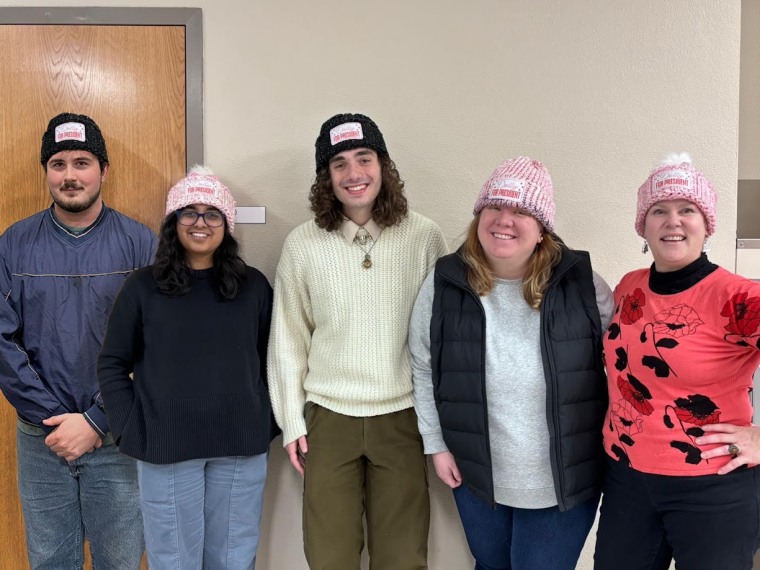
The course, which is taught every spring semester with the help of four undergraduate teaching assistants and a graduate associate instructor, uses Parton as a lens to study sociocultural anthropology.
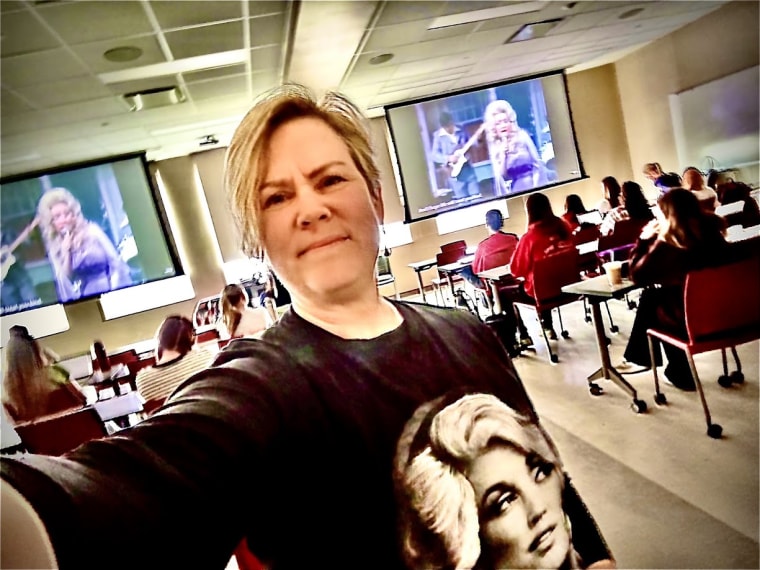
Phillips says Parton’s story is one-of-a-kind, in that by following its arc, a person can learn about regional differences in America, class, fame, femininity, workers’ rights, women’s rights, queer culture, education and more.
“I can’t think of anyone else that this approach would work as seamlessly as it does,” Phillips says.
She was known as much for her song-writing prowess as her distinct appearance, entrepreneurship and philanthropy. She was also a devoted wife, aunt and godmother. Parton was beloved in her home state for many reasons, including investing in the local economy by building Dollywood in Pigeon Forge.
The class uses Parton’s story as a way to talk about, well, America.
“We talk about regional stereotypes. We talk about language and dialect. We talk about the history of different forms of music, especially country music, and how it moved from different parts of Europe through the United States down to the South, and how Dolly and her people were part of that movement.”
At one point in the semester, the class watches “9 to 5,” the 1980 film Parton starred in with Lily Tomlin and Jane Fonda and wrote the lead song for, and connects it to the real-life office workers’ movement originating in Boston.
Another class is a lesson on regional stereotypes in the U.S, like how the idea of the hillbilly and redneck are curated and challenged in Parton’s album art and different periods of her career.
She also tries to impart Parton’s message, which she summarizes like this: “If you have a dream and you put in the work, because she sure did work, you can do anything that you want to. Despite the hurdles that are going to be put up in front of you by naysayers, by people who want to see you fail, by people who think they have your best interests at heart but are giving you advice — listen to your heart.”
What also fascinates Phillips is Parton’s undeniably wide appeal, and what caused it.
“She was so genuine beneath the big hair, beneath the rhinestones, theacrylic nails, the over-the-top look that she curated. As she would say, ‘Where it counts, I’m real.’ And she really connected with people on a personal level,” Phillips said. “Dolly Parton often said, ‘When people come to see me, they’re really coming to see themselves,’ and so she knew that people looked to her as a reflection of all that was good in themselves, and she really leaned into that.”
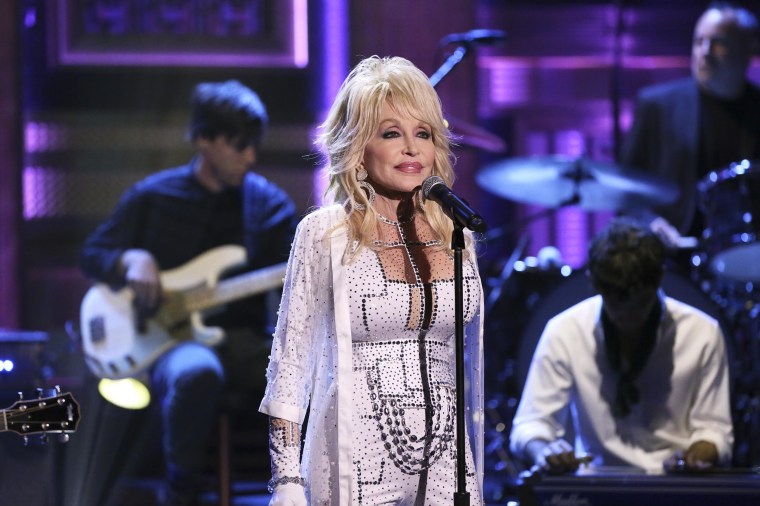
Phillips says the students leave the class inspired by Parton’s story. Many have reached out in the wake of her death, hoping to gather.
“They want to go out and change the world, and they want to do so in a way that is caring and kind and energetic and in line with their moral compass, and they see how Dolly did that, and it really inspires them,” she says.
While not everyone can take “The Anthropology of Dolly,” Phillips provided us with a mini curriculum. She says the course was inspired by the nine-episode podcast “Dolly Parton’s America.”
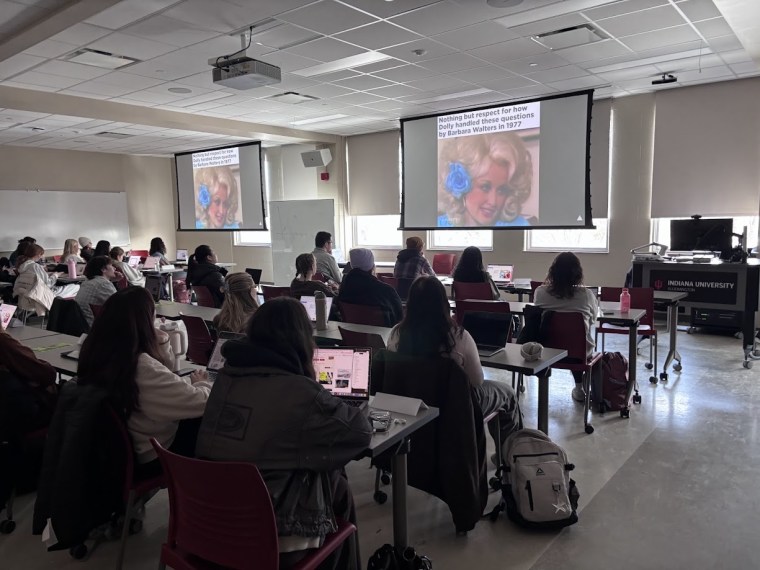
“Start with ‘Dolly Parton’s America,’ there is a treasure trove. There’s so many wonderful people interviewed in that podcast, so many different perspectives presented,” Phillips says. “Then, go after those authors, see what they’ve written.”
There’s another thing Phillips says we do: “Keep her memory alive.”
“I have no doubt that that’s going to happen, but we also have to think through these questions that you’re asking me,” Phillips explains. “What made her so special? What made her this uniting figure? Something that you know the one person all Americans can agree on, and can we all try to cultivate that just a little bit in ourselves? It would be a much better world if we could.”
More Dolly Parton
- Read Dolly Parton’s Family’s Statement on Her Death in Full, Which She Hand-Selected Her Nephew to Deliver
- Dolly Parton Had a Well-Documented Love Affair With Food. These Were Her Favorites
- Dolly Parton Reflected on Having Kids, Her Signature Look, and How She Wants to Be Remembered in 1978 TODAY Interview
