

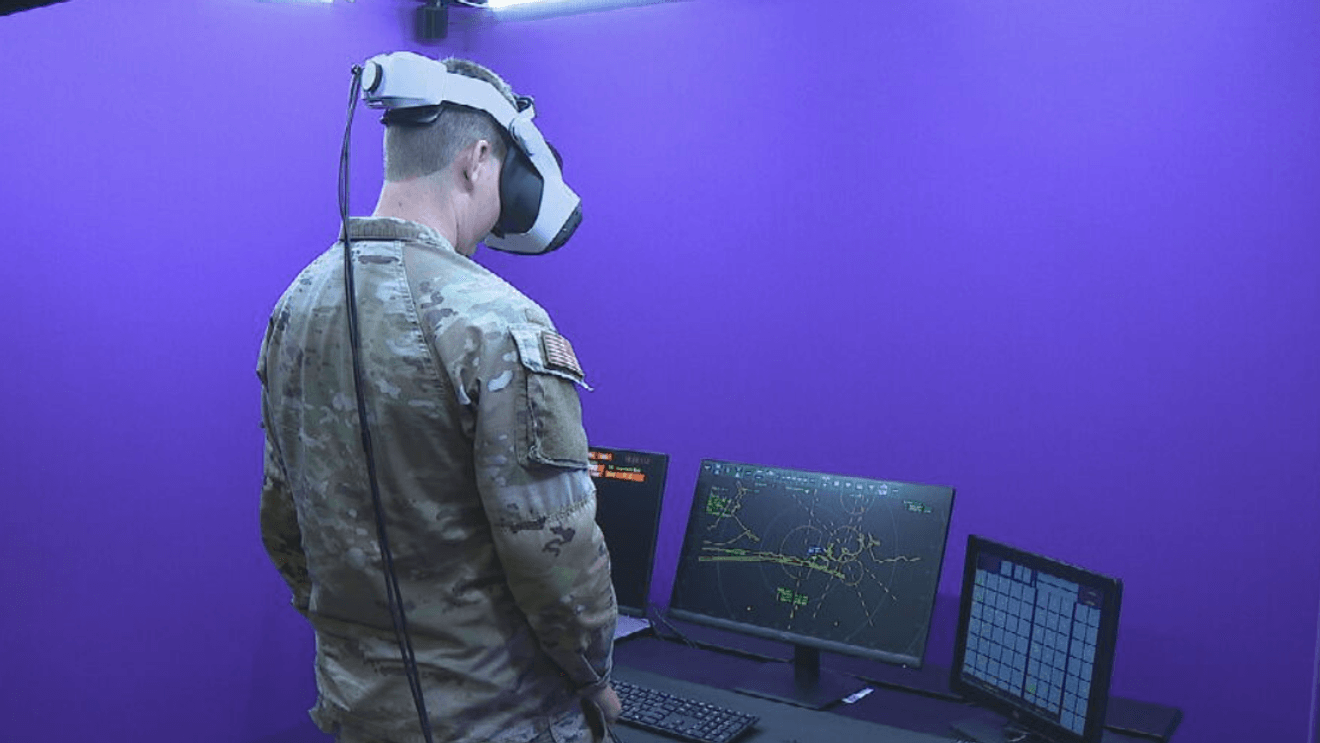
Future air traffic controllers are making decisions in a lifelike setting before they’re responsible for real aircraft. They’re using a new VR training simulator at Hurlburt Field/WEAR
HURLBURT FIELD, Fla. — Future air traffic controllers are making decisions in a lifelike setting before they’re responsible for real aircraft.
They’re using a new VR training simulator at Hurlburt Field.
While trainees are immersed, instructors are shaping the challenge and conditions of the session.
“Me on the computer, I can also put specific commands in to make sure that they’re craft and the environment that they’re seeing are doing exactly what they want them to do,” said Peter Fontana, trainer in training. “Also it’s very dynamic because I can change what the weather looks like for the trainee in real time.”
They can vary factors like weather, visibility and number of planes arriving and departing.
The new system gives more control than the previous simulator.
“Because the legacy system that we usually use, it’s a very static,” said Ian Wylie, non-commissioned officer with training and sanitization. “It’s five computer screens in front of you. … Whereas the new VR sim, the trainees can see their hands. They can turn around and see the entire tower cab outside, inside. They can see the equipment in front of them.”
“When you see planes coming through, it’ll talk to you like how the pilots talk to us,” said Quentin Russ, who’s currently in the air traffic controller training program. “It kind of basically simulates a little bit of the stress level that we kind of go through every day.”
“It helps really generate the scenarios for the trainees, narrow down the areas where they might be struggling in and identify the problem areas and help them improve in that,” said Leilani Espoloa, air traffic control trainer.
Hurlbert Field is one of two installations currently using the VR technology. Leaders say it’s another example of how military training is evolving.
“It was something that we wanted to jump head in first and really take hold of and see how it can affect the training of our airmen,” said Michael Russell, airfield operations flight director of operations. “We believe it’s really going to sort of leap and bounce to provide them the best opportunity to succeed in the training environment that they can.”
Leaders say implementing this technology is just the beginning, as virtual reality could play a bigger role in future military training.
