

Today
3 mins read
Workforce
Lisa O’Hehir discusses a virtual reality simulation she co-developed to teach social work students about hoarding practice, informed by people with lived experience of such interventions
When experiential knowledge is thoughtfully integrated within social work teaching, educators can offer students a richer understanding of people’s lives, producing practitioners who are not only knowledgeable but genuinely sensitive and responsive to the human realities they will encounter in practice.
With this in mind, in 2025, I undertook a project to develop a ‘true-to-life’ simulation in which the primary safeguarding concern related to hoarding within a home environment. The intention was to enable students to engage with a realistic scenario to help them consider how they might respond in practice and reflect on what it may feel like for people with hoarding behaviours to have to engage with a social worker on this issue.
The project involved social work educators and practitioners, including those with direct experience of working with individuals presenting with hoarding behaviours. Crucially, the group also included people with lived experience, who shared personal insights, contributed to the development and review of story board and character scripts, and provided images used in constructing the virtual reality environment.
Colleagues and University of Gloucestershire students also contributed their expertise, voices and images to create the authentic characters of Mary, who was the client, and Jo, the student social worker.
Learning from lived experience of hoarding
Participants with lived experience played a central role in shaping the simulation, particularly by offering guidance on language and approaches used by social workers which in the past they found useful and unhelpful.
They conveyed how overwhelming it feels to have make quick decisions about “their stuff” and finding having to make decisions as the hardest part. They expressed coming home to “surprise cleanings” as being “traumatic as fuck”.
Another spoke of feeling violated after a support worker took pictures of their belongings without permission. An adult child said they realised, after witnessing their parent’s panic attack when trying to help clean up, that “it’s not about the stuff, but about safety and control”, and that they wished they had understood this sooner.
Notably, several participants challenged the terminology itself, expressing strong dislike of the term “hoarding”.
More positively, one person spoke of a support worker bringing a small box and labels for them to arrange belongings, which they found helpful. Another found it beneficial when a practitioner brought a floor plan and asked them what they wanted to use spaces for if they were clear. A third advised that referring to “creating safe pathways as opposed to removing fire hazards” made them feel “less crap about themselves”.
Testing the virtual reality simulation
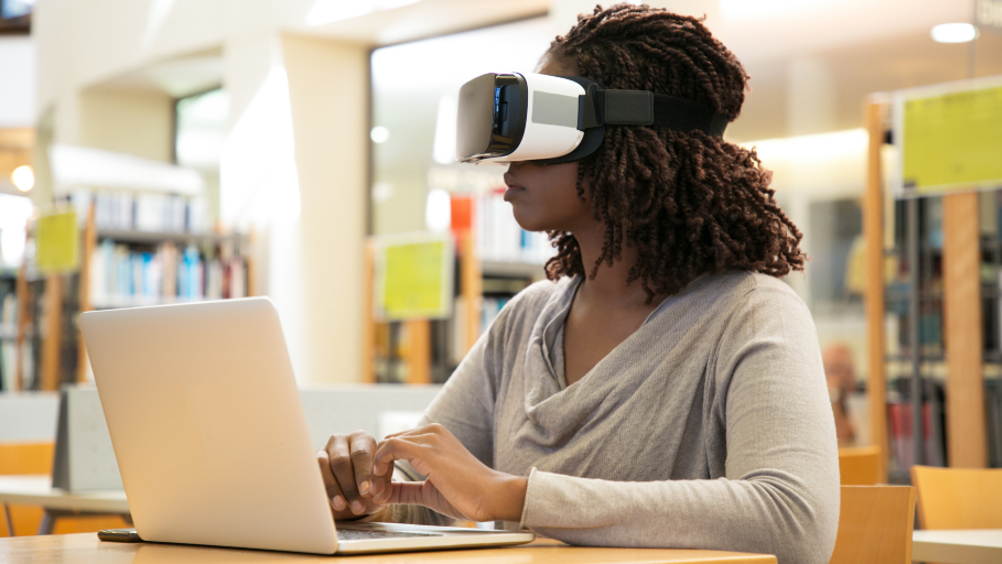
The developed virtual reality simulation was later tested by adult social care and social work practitioners using virtual reality headsets.
Feedback indicated that participants recognised the value for students in being able to explore and test potential responses within a safe learning environment. They also highlighted the risks to relationship-building when sensitive issues are poorly handled.
Overall, the simulation was experienced as authentic and reflective of real practice, with participants identifying potential for wider application across other areas such as dementia care and home visits.
Challenges with the project
However, this approach is inherently iterative and demanding. Projects such as this require facilitators to possess specific skills, including responsiveness to unpredictability and being able to sustain motivation on projects.
These projects require a timeline that appreciates that volunteers may experience fluctuating motivation and interest as well as competing commitments and varying levels of availability.
Some practical challenges emerged during implementation of the trial, including some participants having difficulties with navigating the technology, adjusting to controls and managing the physical environment in which the headsets were used.
These issues raised important considerations for accessibility, facilitation and health and safety in future delivery.
Embedding lived experience within social work education
Also, while simulation is widely recognised as a valuable pedagogical tool, it has also attracted criticism. Concerns include the risk of reinforcing biases, oversimplifying complex experiences and failing to adequately prepare those involved in portraying roles of clients.
In response, my research explores how people with lived experience can be meaningfully and ethically involved in the development of simulation-based learning.
Embedding experiential learning and lived experience into teaching encourages students to reflect on how they relate to themselves and others, supporting the development of thoughtful, relationally capable practitioners.
Ultimately, this contributes not only to enhanced professional practice but also to improved outcomes for the individuals and communities social workers are there to serve.
Lisa O’Hehir is senior lecturer in social work at the University of Gloucestershire. The project, which was supported by a University of Gloucestershire learning innovation award, is part of her doctoral research, supervised by Dr Anna Harvey, of the Tavistock and Portman NHS Foundation Trust. This focuses on the ethical co-creation of simulation content that realistically represents the emotional and relational experiences of individuals engaging with social workers.
WorkforceAdults
social work educationlived experience of social workhoarding
