

Crypto Casinos
5 min, 36 sec READ
Waiting several days for a gaming payout once felt normal. Today, players expect deposits, purchases, and withdrawals to happen almost instantly.
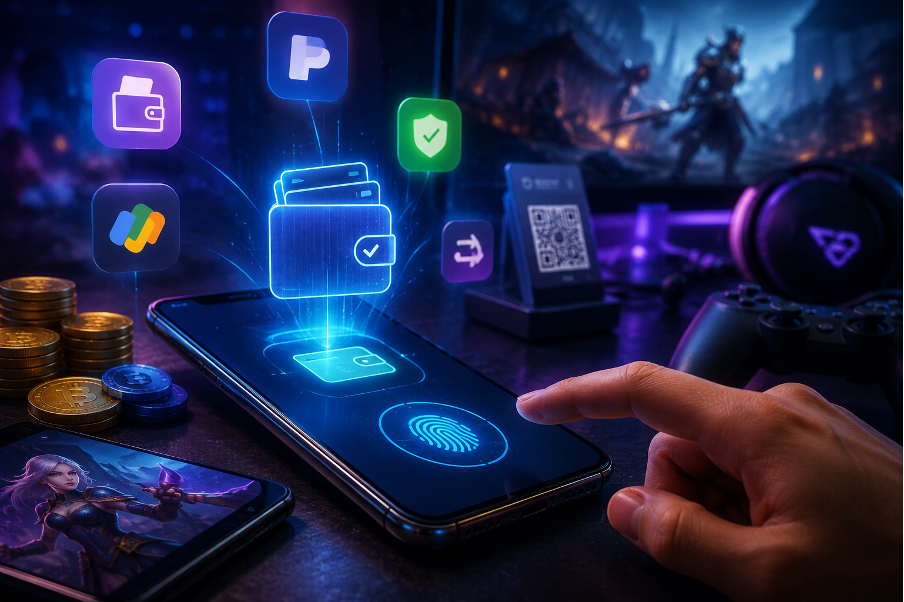
As online gaming has expanded across mobile apps, PC platforms, consoles, esports, regulated iGaming, and blockchain-based titles, digital wallets have evolved from convenient payment tools into essential infrastructure that powers the modern gaming economy.
Digital wallets now account for more than half of global e-commerce transaction value, reflecting consumers’ growing preference for faster, more secure payment methods. Within gaming, they have raised expectations for one-tap purchases, instant withdrawals, biometric authentication, and support for multiple currencies. For operators and developers, delivering a seamless payment experience has become just as important as delivering compelling gameplay.
Mainstream Digital Wallets: Making In-Game Purchases Effortless
Technology companies have integrated digital wallets directly into mobile operating systems and devices, making purchases almost invisible to the player. In Crypto Rollx‘s analysis of payment options across leading gaming and iGaming platforms, digital wallets were among the most consistently supported payment methods, reflecting growing demand for faster deposits, simplified authentication, and quicker withdrawals.
Apple Pay & Google Wallet
Apple Pay and Google Wallet have become standard payment methods for purchasing battle passes, downloadable content (DLC), subscriptions, and in-game currency. Rather than transmitting actual card numbers, both services use tokenization, replacing sensitive payment credentials with secure digital tokens. Combined with biometric authentication such as Face ID, Touch ID, or fingerprint recognition, they allow purchases to be completed within seconds while reducing merchants’ exposure to sensitive payment information.
PayPal
PayPal remains one of the most widely accepted payment methods across major gaming platforms, including Steam, PlayStation Network, Xbox Store, and the Nintendo eShop. Its familiarity, cross-platform compatibility, and buyer protection have made it a preferred option for millions of gamers purchasing digital content.
Revolut and Regional Mobile Wallets
Fintech platforms such as Revolut appeal to international gamers by offering multi-currency accounts, competitive foreign exchange rates, and integrated crypto trading and conversion features. These capabilities help reduce the cost of cross-border purchases and subscriptions.
Meanwhile, regional wallets such as ShopeePay and OVO have become central to Southeast Asia’s mobile gaming ecosystem, where app-based top-ups and digital wallet payments are often preferred over traditional credit cards.
Specialized Digital Wallets for iGaming
In regulated online gambling markets, payment speed can directly influence player satisfaction and retention. Specialized e-wallets have emerged to simplify deposits and withdrawals while supporting the compliance requirements imposed by gaming regulators.
Neteller & Skrill
Developed by Paysafe, Neteller and Skrill have long been among the most recognized wallets in online gambling. Their infrastructure is designed for high-frequency gaming transactions, while premium account tiers and loyalty programs cater to frequent players and high-volume users.
MuchBetter
MuchBetter was built specifically for gaming and gambling payments. The wallet incorporates security features such as dynamic CVV technology, competitive transaction fees, and rapid withdrawal processing designed to reduce friction for both operators and players.
PayPal in Regulated Markets
Beyond mainstream gaming, PayPal also supports deposits and withdrawals at several regulated U.S. sportsbooks, including operators such as DraftKings and FanDuel in eligible jurisdictions, offering players a familiar payment option backed by established financial infrastructure.
Account-to-Account Payments Are Reducing Banking Friction
A growing number of payment systems bypass traditional card networks entirely by connecting gaming platforms directly to bank accounts through real-time payment infrastructure. These Account-to-Account (A2A) systems reduce transaction costs while enabling faster settlement.
The Federal Reserve’s FedNow Service enables participating financial institutions to settle payments around the clock. As adoption expands, it allows operators and banking partners to offer significantly faster deposits and withdrawals than traditional ACH transfers.
Trustly and Open Banking
Open Banking platforms such as Trustly enable players to connect directly to their bank accounts during the payment process. In several European markets, this supports “Pay N Play” experiences that combine payment, identity verification, and account creation into a single streamlined interaction.
UPI and Pix
India’s Unified Payments Interface (UPI) and Brazil’s Pix have become foundational payment systems in two of the world’s largest mobile-first markets. Their speed, low transaction costs, and broad consumer adoption make them well suited for gaming deposits, esports purchases, and other digital transactions.
Web3 Wallets Are Redefining Digital Ownership
Unlike traditional payment wallets that simply move money, Web3 wallets also establish ownership of blockchain-based assets. Players can store cryptocurrencies, manage NFTs, sign blockchain transactions, and transfer compatible assets between decentralized applications and games without relying on centralized intermediaries.
TON Wallet
Integrated directly into Telegram, TON Wallet supports blockchain-based mini apps and tap-to-earn games, making Web3 functionality accessible through a familiar messaging platform without requiring users to install separate wallet software.
Phantom
Phantom has become the leading wallet for the Solana ecosystem, offering fast transaction signing and low network costs that suit high-frequency gaming applications.
MetaMask and Immutable Passport
Although often mentioned together, these solutions serve different purposes. MetaMask is a self-custodial wallet that gives users complete control over blockchain assets. Immutable Passport, by contrast, simplifies onboarding through wallet abstraction and social logins, allowing players to access blockchain-powered games without managing seed phrases or complex wallet configurations.
Tether (USDT)
USDT has become the dominant stablecoin for many digital wallet ecosystems because its value is designed to remain close to the U.S. dollar. This stability helps players avoid cryptocurrency price volatility while enabling fast global transfers and lower cross-border payment costs.
The Infrastructure Behind Every Wallet
Players rarely see the technology powering their transactions. Behind every checkout sits a network of payment orchestration platforms that manage routing, currency conversion, fraud detection, compliance, and transaction optimization.
Xsolla
Xsolla enables game developers to support hundreds of regional payment methods through a single integration, allowing studios to localize checkout experiences without building individual payment connections.
SoftSwiss & EveryMatrix
These B2B platform providers deliver turnkey infrastructure for regulated gaming operators, including player account management (PAM), multi-currency wallet support, payment integrations, and cryptocurrency gateways.
Nuvei & MoneyMatrix
Payment orchestration platforms such as Nuvei and MoneyMatrix intelligently route transactions through multiple acquiring banks and payment providers to improve approval rates, reduce failed payments, and strengthen fraud prevention using automated risk analysis.
The Future of Gaming Payments Is Invisible
Digital wallets have evolved far beyond simple checkout tools. They now underpin the global gaming economy, enabling everything from one-tap mobile purchases and instant sportsbook withdrawals to blockchain asset ownership and cross-border transactions.
As biometric authentication, real-time payment rails, open banking, and Web3 technologies continue to mature, the distinction between logging in, verifying identity, and making a payment is becoming increasingly blurred. The most successful payment experience is one that players barely notice.
For game studios, esports platforms, and regulated gaming operators, offering localized, secure, and wallet-first payment experiences is no longer a competitive advantage; it has become a baseline expectation for attracting and retaining today’s players.
Disclaimer: information contained herein is provided without
considering your personal circumstances, therefore should not
be construed as financial advice, investment recommendation or
an offer of, or solicitation for, any transactions in
cryptocurrencies.
