

This story is part of our Aughts Effect package, which celebrates 20 years of Popsugar — and enduring culture. Read all the stories here.
I’m a Miranda. Or maybe a Robin? No, I’m a Pam.
The era of 2000s pop culture, no matter when you were born, was foundational for on-screen representations of friendship. It was an era of increased female representation in <a href="https://comicvibe.com/monumental-sports-entertainment-unveils-bold-vision-for-brand/” title=”Monumental Sports & Entertainment Unveils Bold Vision for Brand”>entertainment, and a time when the pop culture that raised you could serve as a North Star: a constant reminder to an anxious and sometimes awkward adolescent that you were going to find your people, even if you hadn’t yet.
I was a ’97 baby — on the cusp of being a millennial and Gen Z, on the cusp of having a smartphone by high school and not, on the cusp of graduating from college before or after the pandemic. And also on the cusp of experiencing tween-geared pop culture in the actual 2000s before becoming the first streaming generation, which allowed me to then experience everything I was too young to consume when it was actually happening.
I was 12 in the final year of the Aughts. Disney Channel was still king, and Nickelodeon was its wilder older cousin that I would sometimes flip the channel to, until a character made a joke that I found to be inappropriate for my age. (Can you say “first-born child?”)
“Different” was the worst thing you could feel as a kid at school. I’d wonder why I couldn’t be cool like other girls in my class, or know the right thing to wear or say to make more of my classmates like me. But after school, I’d pour myself a bowl of Goldfish and set myself up in front of the TV for some tween sitcoms. It helped plant the seed that those things alone were not prerequisites to living a happy childhood.
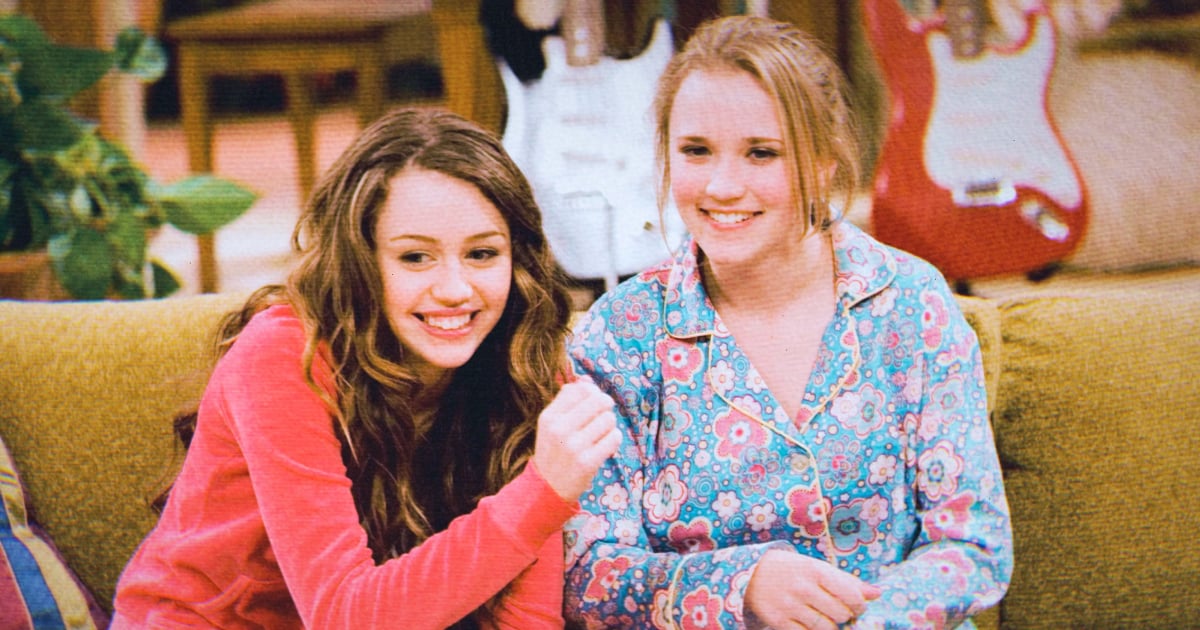
Lizzie McGuire, Raven Baxter, Miley Stewart, Kim Possible, and Alex Russo were my big sisters. They were so uniquely themselves — even as mean girls at school made sure to voice all the ways in which being them was a bad thing, even when their crushes overlooked them in favor of said mean girls.
They didn’t need the adoration of the whole school. They had one or two best friends who were often even more eccentric than they were. Their friendships weren’t superficial — they were honest and silly and weird and supportive in ways that drowned out all the noise of middle and high school social drama and anxiety.
“How I Met Your Mother” was the first TV show I ever binge-watched — back when a lot of people were still discovering that you could watch Netflix from a website on your computer instead of getting DVDs in the mail. ( I can’t wait for my solidly Gen Z sister to let me know how unc that sentence made me sound.)
I was a high school freshman, and spent my entire spring break staying up until the early hours of the morning watching Ted and the gang navigate the big-city dating scene. It was my first glimpse into what the grown-up social world entailed. I saw Robin, a budding journalist who found a totally new friend group in her 20s without sugarcoating her headstrong, independent, sarcastic self.
“The Office” soon became the hot show to stream. My fellow high school newspaper staffers had all become obsessed with the show. Nothing bonds people together more quickly than a shared love of pop culture, I discovered — to this day, I’ve lost track of how many people I’ve connected with in an instant because of our shared love of reality TV.
I saw myself so clearly in Pam Beesly: a young woman who was creative and had good ideas but hadn’t yet found a way to comfortably share who she was or what she wanted. As I prepared for college, witnessing Pam come out of her shell offered proof that I hadn’t yet met all of the versions of myself I’d someday be.
Years before I actually sat down to watch “Sex and the City,” I heard adults talk about how they were a “Samantha” or a “Charlotte.” It seemed strange to my child self that these characters, who were all such good friends, could be different enough that viewers identified with each of them, but somehow also similar enough to still find and celebrate each other.
I only watched “SATC” for the first time in my 20s, after I had landed a full-time job as an entertainment journalist. Any 20-something writer who lives in a city and writes about lifestyle topics is lying to you if they say they haven’t wanted to be Carrie Bradshaw at some point. But I found myself identifying more strongly with Miranda. She didn’t have the effortless “cool factor” in the same way that Carrie, Samantha and Charlotte did. But she had something that really stuck with me: A successful life she built on her own and friends who adored and supported her even if viewers at home tended to use the phrase “she’s a Miranda” as an insult. She wasn’t perfect, but plenty of people in her life thought she was great anyway.
Having your shit together, it turned out, was not a prerequisite for aging out of your 20s. Phoebe Buffay was around 36 when she started dating the man she would go on to marry. Will Ferrell and John C. Reilly’s “Step Brothers” characters were in their 40s when they famously just became best friends. Lorelai Gilmore was in her mid-30s when she landed her dream job and her dream partner, all while being a parent — and friend — to Rory.
They were all still figuring it out. No, better yet, they were all still figuring it out together.
In an era where I can tell you what almost everyone I know from high school and college is up to, it’s so difficult to not compare myself to others. That couple just got married, those people who I knew as crazy college kids just welcomed a baby. It’s tough to not feel left behind.
But that was also the very premise of so much of 2000s entertainment. Everyone is on their own timeline: Some are married. Some are single. Some are parents. Some just landed their dream career.
Being different didn’t often feel safe when I was actually growing up in the 2000s. But consuming that decade of entertainment — both at the time and subsequently — promised me that you can have a group of people with widely varying interests, goals and life stages, and they can all actually be made better for knowing each other.
Hannah Yasharoff is a journalist based in Washington DC specializing in entertainment, wellness, and lifestyle topics. Previously, she was an entertainment and wellness reporter at USA Today for more than five years before serving as a health and wellness reporter for The Messenger.
