

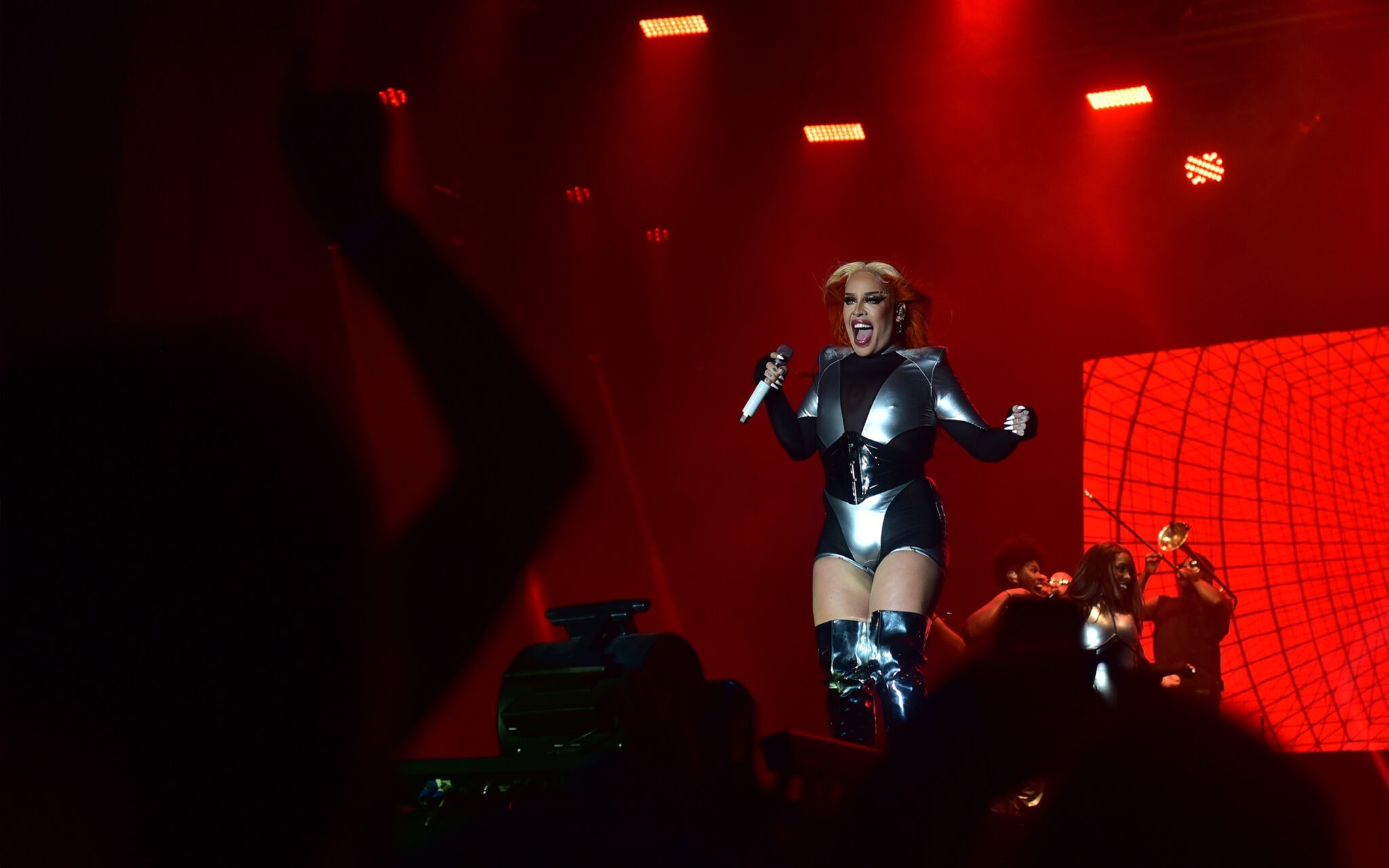
Singer Gloria Groove at the 2023 edition of the event in Fortaleza, Ceará
For years, Daniel Braga has tried to get his mother to take a closer look at his work. As president of the Sana Foundation, he runs Sana, one of the largest geek culture events in Brazil’s North and Northeast, which kicks off Friday (10) in Fortaleza. This year, for the first time, Jacinta Maria took her son up on his invitation. A fan of Korean dramas, she wants to see actor Park Sung-hoon, a star of Korean productions, in person. But Braga still has another reluctant audience to win over: brands.
In recent years, Brazil has become a growing force in the global pop culture market, which spans gaming, video and music streaming, film, conventions and licensing, among other segments. Total sales figures vary depending on methodology, but industry estimates generally put the market for licensed retail products—apparel, footwear, toys, and collectibles—at somewhere between R$20 billion and R$22 billion a year
The trouble is that the market remains heavily concentrated in the Southeast, where purchasing power is higher and the country’s biggest events are held. Conventions such as CCXP, <a href="https://comicvibe.com/9-roblox-games-that-tell-surprisingly-good-stories/” title=”9 Roblox games that tell surprisingly good stories”>gamescom Latam, Brasil Game Show, and Anime Friends have made São Paulo, in particular, Brazil’s geek capital. Other regions, meanwhile, are still struggling to get noticed
“Brazil is a continental-sized country, and to really understand it, brands need to connect with local consumers. A strategy that works in the Rio-São Paulo corridor won’t necessarily work in the Northeast,” Braga said. Underestimating the region’s potential, he added, is a mistake. “People here love forró, but they also love Naruto,” he said, referring to the popular anime character.
After pinpointing logistics as the main obstacle keeping brands away, the Sana Foundation built a support structure for exhibitors—assembling a team of designers to develop booth layouts and partnering with local providers for services like booth assembly and event staffing. The effort has paid off, Braga said, cutting logistics costs to roughly a third of what companies typically spend in São Paulo
According to the Brazilian Institute of Geography and Statistics (IBGE), average monthly per capita household income in the Northeast—total household income divided by the number of residents—runs nearly 81% below that of the Southeast (R$1,470 versus R$2,669). Even so, the Northeast, together with the Southeast, forms Brazil’s main pop culture hub: nearly 68% of the country’s geek consumers live in those two regions, according to the GeekPower survey by Omelete Company, which owns CCXP, and consultancy Go Gamers.
For brands, Braga said, that’s an opening—a chance to develop more affordable product lines suited to the Northeast’s dominant consumer profile and to build experiences in a region where such efforts remain scarce, despite its highly active social media audience
Sana traces its roots to 2000, when a group of anime fans began gathering at Praça Portugal in Fortaleza to trade VHS tapes and other collectibles. The first formal event, held in 2001, drew 250 attendees. The convention now runs twice a year; its January edition pulled in 103,000 visitors, and organizers are expecting 130,000 this time around
As a nonprofit, the Sana Foundation reinvests all proceeds into the event itself and into social, sports, and educational programs. In February, it opened Casa Sana Social in Eusébio, Ceará, where 500 young people receive services each month, including free courses run in partnership with Sesc, the retail-funded network of vocation training and business support services, and a robotics program developed with Senac, an affiliated organization
Another initiative, GeekAção, aimed at public school students, launched in 2016 with 600 participants and now serves 12,000 students per edition through free or discounted admission—including reduced-price tickets in exchange for food donations. Roughly 54,000 young people have taken part so far, with support from municipal and state governments
Through these programs, the foundation is aiming beyond its most devoted fans, reaching a broader audience that’s emerged as pop culture has broken out of its niche and gone mainstream. “At our events, you’ll see reisado performers next to hip-hop artists, and MMA fighters wearing One Piece T-shirts,” Braga said. “It’s all very diverse.”
This article was translated from Valor Econômico using an artificial intelligence tool under the supervision of the Valor International editorial team to ensure accuracy, clarity, and adherence to our editorial standards. Read our Editorial Principles
Mais recentePróximaGovernment urges faster Central Bank oversight of fintechs
