

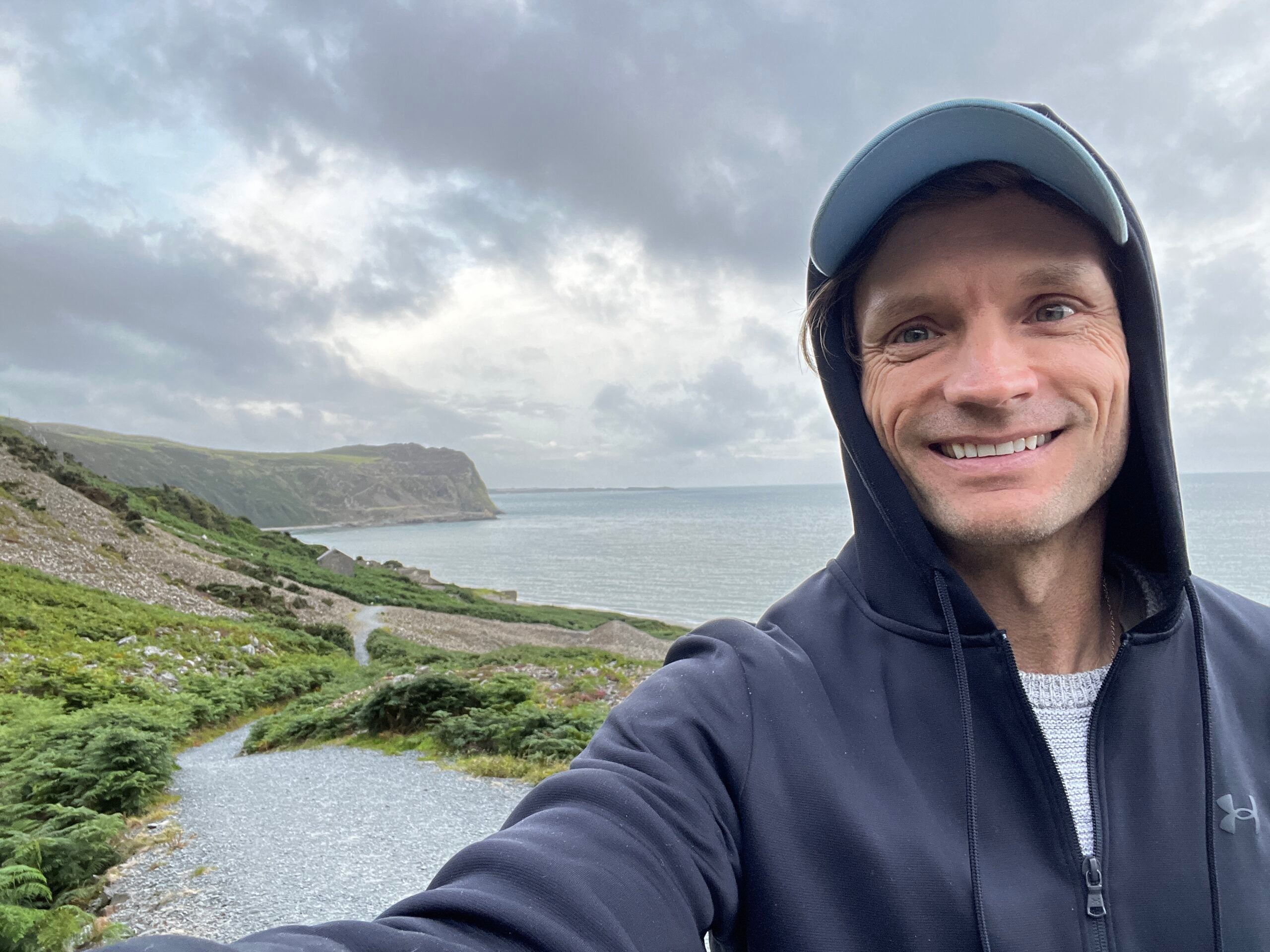
Hans Obma is a Green Bay-based actor who grew up in La Crosse and Fond du Lac.
“Pobol y Cym” is a Welsh-language television drama that debuted in 1974, known as the BBC’s longest-running soap opera.
How did the two come together? When Obma joined the program for its 2026 season.
Understanding Wisconsin, Together.
WPR’s “Wisconsin Today” newsletter keeps you connected to the state you love without feeling overwhelmed. No paywall. No agenda. No corporate filter.
Talking to WPR’s “Wisconsin Today,” Obma says his love of languages has opened doors in the acting world — and has ultimately led him to a recurring role on the long-running show based in Wales in the United Kingdom.
Inspired by a high school language teacher, Obma went on to learn Spanish, French, German, Russian and Welsh. He says his acting career stalled until he leaned into languages and accents. Since then, his credits include shows like “General Hospital,” “Better Call Saul,” “WandaVision” and this year’s 19-episode run in “Pobol y Cym.”
In addition to acting, he wrote and acted in a short film released this year called “Cardigan,” also set in Wales. In August, he competed in a Welsh-language monologue contest in the National Eisteddfod of Wales, an annual event featuring poetry, dance, music and other cultural events and competitions.
The following interview was edited for clarity and brevity.
Rob Ferrett: What got you interested in pursuing foreign languages?
Hans Obma: When I was in high school, I had a fantastic teacher named Julie Proffitt who stated to me that I had a gift for languages, and that was foundational for me. I found that I required affirmation, and that got me swimming.
RF: How did that lead into acting roles?
HO: I was in Los Angeles for about five years, and I had been attempting everything. I’m a persistent soul. But by the end of those five years, I had booked no work and I sought advice.
And fortunately, I received some that was excellent — because there’s a lot of people who want to give you advice, so finding the good stuff is a little challenging. But the advice was: become known for excellence at just one thing.
And at that point, I did speak French and Spanish and had dabbled in German, and I decided, well, people have always thought Hans Obma was from Germany ever since I was very little. Why don’t I lean into that? And every time I meet a casting director, I mention that I speak languages and accents.
Literally a week after shooting my first bit of footage, I had my first role in “General Hospital” playing a Russian bad guy named Horvat.
RF: My obstacle with foreign languages is I know the thing I need to do is talk to people in those languages I’m trying to learn. And even though I talk for a living, that fills me with fear. How do you suggest people, losers like me, overcome that fear?
HO: The main thing with language is, you are right that speaking is how it happens. But that must be paired with the acceptance that I’m going to make mistakes. I’m eager to make mistakes, I will make mistakes because that is the person that eventually speaks very well. That is where fluency comes from.
When a person begins to speak without thinking much about it, that is when a person is able to just do anything, and that comes from being willing to make mistakes and not being concerned about them.
RF: Spanish, French, German and Russian. People study those pretty often. What led you to tackle Welsh?
HO: My grandmother, who emigrated to Wisconsin, was originally from Wales. She was not a Welsh speaker, but because of that, when I began writing TV scripts, I incorporated Welsh themes into the project. And over (the COVID-19) lockdown, I began developing a TV series called “A Question of Service,” which involves a Wisconsin person who’s half Welsh.
As I began developing that series further, I recognized this concept would be much stronger if the main character were a Welsh speaker. So I went to Wales with the goal of spending a summer learning basic Welsh. But by the end of the summer, I’d had such a lovely time and started making friends that I decided to take the plunge and go further into it.
Now, three years in, I’m a Welsh speaker. I’m part of Welsh culture. I’m working on a Welsh TV show.
RF: There’s a little story behind how your Welsh grandma ended up here in the United States.
HO: So my grandmother was on a bus from Cardiff to Brynmawr, where she was from, and there was a good-looking American GI — this is during World War II — who offered her his seat, and she said, “You know what? Why don’t you come over and have tea with my family?” And two weeks later, they were married.
RF: Your longest-running booking on TV is not in an English language TV show. It’s in this long-running Welsh drama. How did you go from, “Sure, I’ll try learning Welsh,” to being a fixture on Welsh TV?
HO: After I had been learning Welsh for about a year, I was in Cardiff, and I became friends with an actor. His name is Rhys ap Trefor, a fantastic actor who was working on “Pobol y Cym” at the time. He plays bad guys, which I also tend to do. So there was a bit of a connection in that way.
He’s like, “Why don’t we pitch you to my show?” And so we came up with two different scenarios where I would maybe play his twin brother or closely aged brother because we look vaguely similar. That did not end up adding up.
But a year later, I met with the producer through a different set of circumstances, and they were pleased enough with my Welsh to say, “Let me get back to you.” And he had asked me to name “one of the actors on our show that you think are great,” and I named one who is arguably the Welsh actress of the generation, Sara Lloyd-Gregory.
And two weeks later, he contacted me and said, “What do you think of playing her secret husband, who’s American, who has gone to prison and learned Welsh on her behalf?” And that gave me a lovely soapy story.
RF: As an actor, you’ve been to Los Angeles, you’re working on some projects, you’ve done the TV show in Wales. But now you’re basing yourself in Green Bay. How is that for you as an actor? Is that something you think is
HO: The last few years that I was in Los Angeles, I had begun spending summers in Europe. I had gone to France to study French. I’d gone to Germany to study German. And I had found that I was not experiencing a high level of joy living in Los Angeles.
I started thinking, if I could be anywhere, I would be among my family in Wisconsin. But it took a pandemic to be able to say, “I’m going to pull that trigger and go and do that.” And it has been a complete win.
Now the fear was I would be based in Wisconsin and I would cease to get work anywhere, but that proved not to be true at all. So I work often in Los Angeles, in Atlanta, in New Mexico, now in the UK. Being here has not been a difficulty. Now, occasionally, I need to very quickly arrive in Los Angeles, and sometimes it’ll be, “please arrive tomorrow” or something like that. But it’s a small price to pay to get to be in good old Wisconsin.

2 Comments
Pingback: PLAVE's Yejun Achieves 105.12% of Birthday Support Goal..Demonstrating Fandom Power - Comic Vibe
Pingback: Vikrant Massey stresses importance of mental health: `Today, the meaning of success is something else’ - Comic Vibe