

The metaverse is a digital space where people can play, socialize, learn, shop, and collaborate. Its future will not depend on one platform alone. It will come from a broader digital universe built from games, virtual worlds, creator tools, identity systems, payments, AI, spatial computing, and new forms of digital interactions. For businesses, developers, creators, and communities, the chance is to make spaces that feel useful, social, safe, and worth coming back to.
What does the metaverse mean?
The metaverse is best seen as a growing network of persistent digital spaces where users can interact with content, other people, and virtual objects in real time. It can include virtual reality, augmented reality, 3D games, digital twins, avatar communities, blockchain gaming, social gaming, and branded worlds. No single technology defines it. The simple idea is that digital life becomes more spatial, more interactive, and more connected.
At the basic level, the metaverse changes the web from something people mainly browse into something they can enter. Instead of clicking through flat pages, users may walk through a virtual store, attend a concert as an avatar, train in a simulated workplace, or join a metaverse football league with friends in other places. The experience does not always need a headset. Many metaverse-style spaces already work on phones, browsers, consoles, and PCs.

Know when your
coins move
Alerts, real-time prices, and market news — all in one app

Point your phone camera to install

4.8 based on 40K reviews in the App Store and Google Play


This matters because presence is likely to shape the next phase of digital engagement. Presence is the feeling that other people, places, and objects are there with you, even when the interaction is fully digital. The stronger that feeling becomes, the more natural digital interactions can feel for entertainment, education, commerce, and community.
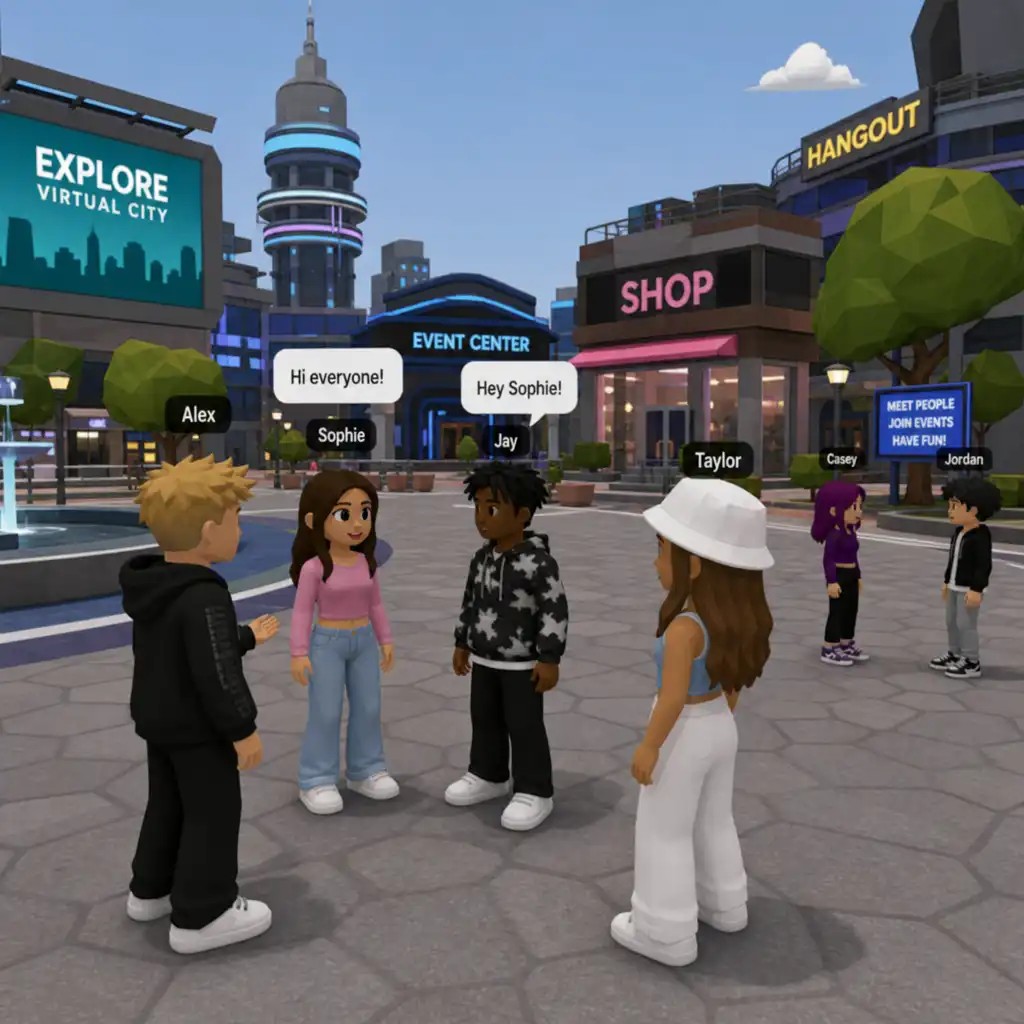
The metaverse is moving from hype to practical utility
Early talk often focused on futuristic worlds, virtual land, and speculation. The future is likely to be more grounded. The strongest metaverse experiences will solve clear problems, create useful entertainment, or make digital collaboration more engaging than normal screens.
For users, this shift means the metaverse must be easier to access and more enjoyable to use. Companies succeed by creating purposeful products rather than just flashy virtual spaces. A virtual showroom should help customers explore products better than a standard catalog. A training simulation should reduce confusion and make practice safer or more repeatable. A game world should give players identity, progress, community, and moments they want to share.
The future will also be shaped by compatibility, though it may arrive slowly. People often imagine moving one avatar, inventory, or identity across every virtual world. In reality, different platforms have different rules, economies, art styles, and limits. The more realistic near-term goal is selective compatibility: shared account systems, portable identity pieces, cross-platform communities, or assets that can move between compatible experiences.
Core technologies shaping the digital universe
The metaverse is not one invention. It is a stack of technologies that work together to create immersive, persistent, and interactive spaces. Some are already mature, while others are still growing. Knowing the stack helps businesses and creators choose where to invest.
Spatial computing and extended reality
Virtual reality, augmented reality, and mixed reality are closely tied to the metaverse because they make digital content feel spatial. VR places the user inside a simulated world, while AR overlays digital content on the physical world. Mixed reality blends both ideas by letting digital objects respond more naturally to real surroundings.
These technologies can make immersive experiences more natural, especially for training, design, gaming, education, and live events. A designer could review a product prototype at scale. A student could explore a historical environment instead of only reading about it. A sports fan could watch a replay from several virtual angles. The key challenge is comfort, cost, content quality, and everyday usefulness.
Real-time 3D engines
Real-time 3D engines power many virtual spaces, from games to design walkthroughs. They let objects, lighting, physics, avatars, and interfaces respond at once to user input. That fast response is essential because the metaverse depends on action, not passive viewing.
For teams exploring metaverse game development services, real-time 3D skill is often central. Development teams need to think about performance, device support, environment design, multiplayer systems, animation, user interface, and content pipelines. A beautiful world that loads slowly or confuses users will still struggle.
Artificial intelligence
AI can support the metaverse in several ways. It can help build environments, animate non-player characters, personalize experiences, moderate communities, translate conversations, and assist creators who are making digital assets. AI-driven characters can also make virtual worlds feel more alive by reacting to users in more flexible ways.
The value of AI depends on design. If it is only a novelty, it may not improve the experience. If it helps users navigate a complex space, find useful content, create faster, or communicate across languages, it becomes part of the base layer for better digital interactions.
Blockchain and digital ownership
Blockchain gaming and token-based systems are often discussed with the metaverse because they can support digital ownership, scarcity, trading, and user-controlled assets. In theory, blockchain can let players or participants hold certain items outside one company database. That may be useful for collectible items, community control, rewards, and creator economies.
However, blockchain should not be treated as required. Many metaverse experiences do not need tokens or on-chain assets to succeed. The best uses begin with a clear user benefit: ownership that matters, clear asset history, community participation, or items that can move across compatible ecosystems. Without that benefit, blockchain can add friction instead of value.
Networks, cloud systems, and edge computing
Immersive environments need fast, reliable systems behind the scenes. Multiplayer worlds need servers that can sync actions, update environments, protect user data, and handle spikes in use. As experiences become richer, infrastructure becomes even more important.
Cloud systems make it easier to launch and scale virtual experiences, while edge computing may reduce lag by processing data closer to users. These layers are not always visible, but they strongly affect whether a digital universe feels smooth or frustrating. Lag, crashes, and uneven performance can quickly break immersion.
Why are games leading the future of the metaverse?
Games are leading the metaverse because they already combine real-time interaction, avatars, virtual economies, social spaces, competition, creativity, and community. Players already know how to move through digital worlds, customize identities, earn rewards, join events, and communicate through shared goals. In many ways, gaming has been testing metaverse behavior for years.
Social gaming is especially important because it turns play into a place to gather. Many users do not enter virtual worlds only to complete missions. They enter to spend time with friends, attend live events, create content, trade items, or express identity. That is why the future of the metaverse will likely borrow a lot from game design, even outside entertainment.
A workplace training space, for example, can use game mechanics like scenarios, feedback, levels, and team tasks. A virtual fitness experience can use goals, leaderboards, and shared challenges. A digital education platform can use quests, roleplay, and interactive simulations. The lesson is not that everything should become a game. The lesson is that engagement improves when people have agency, feedback, and social context.
What game design teaches metaverse builders
Strong metaverse experiences need more than 3D graphics. They need reasons to join and reasons to return. Game design offers simple lessons for building those reasons:
- Clear goals: Users should know what they can do, where to go, and why it matters.
- Meaningful progress: Progress can come through skill, status, collectibles, access, knowledge, or community roles.
- Social loops: Experiences last longer when users can invite friends, cooperate, compete, and share results.
- Personal expression: Avatars, spaces, items, and profiles help users feel seen.
- Balanced rewards: Rewards should support the experience, not turn it into a shallow trade.
- Easy onboarding: New users need guidance before they must master controls, wallets, menus, or complex systems.
Metaverse game development services can help turn these ideas into working products. The work often includes concept development, world design, gameplay systems, multiplayer architecture, avatar features, token or inventory systems when needed, testing, and live operations planning. The best work starts with the user journey, not the technology checklist.
Blockchain gaming and ownership need careful design
Blockchain gaming may play a role in the metaverse, but its future depends on trust, ease of use, and real entertainment value. Players are unlikely to stay in a game only because an item is scarce or tradable. They stay when the world is fun, the community is active, and ownership adds something meaningful.
A healthy blockchain gaming model should not make the economy more important than the game itself. If earning, trading, or speculation becomes the main reason to play, the experience can become fragile. A stronger model uses blockchain to support player identity, collectible history, creator rewards, transparent markets, or community participation, while keeping gameplay at the center.
Useful blockchain gaming applications
Blockchain can be useful when it improves clarity, mobility, or participation. Examples include:
- Digital collectibles with history Players may value items with a visible past, such as limited-edition drops, tournament rewards, or creator-made objects.
- Player-controlled inventory Certain assets can exist beyond one game account, giving users more control over items they earn or buy.
- Creator economies Artists, designers, and developers may earn when their digital assets are used or traded, depending on the system design.
- Community governance Some projects may let participants vote on limited choices, although governance must be structured carefully to avoid confusion or abuse.
- Cross-experience use Assets may work across related worlds, games, or events when technical and creative standards are aligned.
The main point is that blockchain should serve the experience. Users should not need to understand every technical detail before they can enjoy the world. Good design hides complexity where possible and explains risks clearly when needed.
Metaverse codes, access systems, and digital identity
The phrase metaverse codes can refer to several practical systems: access codes for virtual events, redeemable item codes, invitation codes, developer codes, promotional unlocks, or coded standards that connect digital spaces. In each case, codes act as bridges between users and experiences. They help people enter, unlock, verify, claim, or connect something inside a digital space.
For brands and developers, metaverse codes can make campaigns more interactive. A product package might include a code for a virtual collectible. A live event might use codes to unlock a private room or avatar item. A metaverse football league could use codes for team membership, fan rewards, match access, or limited digital merchandise. The value comes from making the code feel like part of the experience, not a random gimmick.
Digital identity is closely tied to this. Users in virtual spaces need tools to show themselves, control access, secure accounts, and manage shared information. Identity may include avatars, display names, credentials, achievements, wallet addresses, social graphs, and reputation signals. The future needs identity systems that are flexible enough for creativity but secure enough for trust.
A practical checklist for access and identity design
When planning metaverse codes or identity features, teams should consider:
- Purpose: What does the code unlock, verify, or connect?
- User value: Does the user get something useful, fun, exclusive, or meaningful?
- Simplicity: Can the code be redeemed without confusing steps?
- Security: Can codes be copied, abused, resold, or guessed too easily?
- Expiration rules: Should access be permanent, time-limited, event-based, or renewable?
- Privacy: What user data is collected, and is it needed?
- Support: What happens if a user loses access or enters the code wrong?
- Compatibility: Does the system work across devices, platforms, and account types?
These details may seem small, but they shape trust. A smooth access system can make a virtual experience feel premium and intentional. A confusing one can stop users before they reach the main experience.
Social gaming will define everyday digital interactions
Social gaming is one of the clearest paths to mainstream metaverse use because it gives people a familiar reason to enter virtual spaces. The goal is not always to win. Sometimes the goal is to hang out, watch, build, roleplay, customize, explore, or share a moment.
This has major effects on digital interactions. In a normal online exchange, people send messages, images, videos, or reactions. In a social gaming space, they can stand beside each other as avatars, move through a space together, complete shared tasks, and create memories tied to place. The interaction feels less like sending information and more like doing something together.
Businesses should plan how engagement is changed. A branded metaverse space should not simply display ads in 3D. It should invite participation. Users can solve challenges, attend launches, customize objects, join teams, collect rewards, or contribute to community projects. The more active the role, the more memorable the experience becomes.
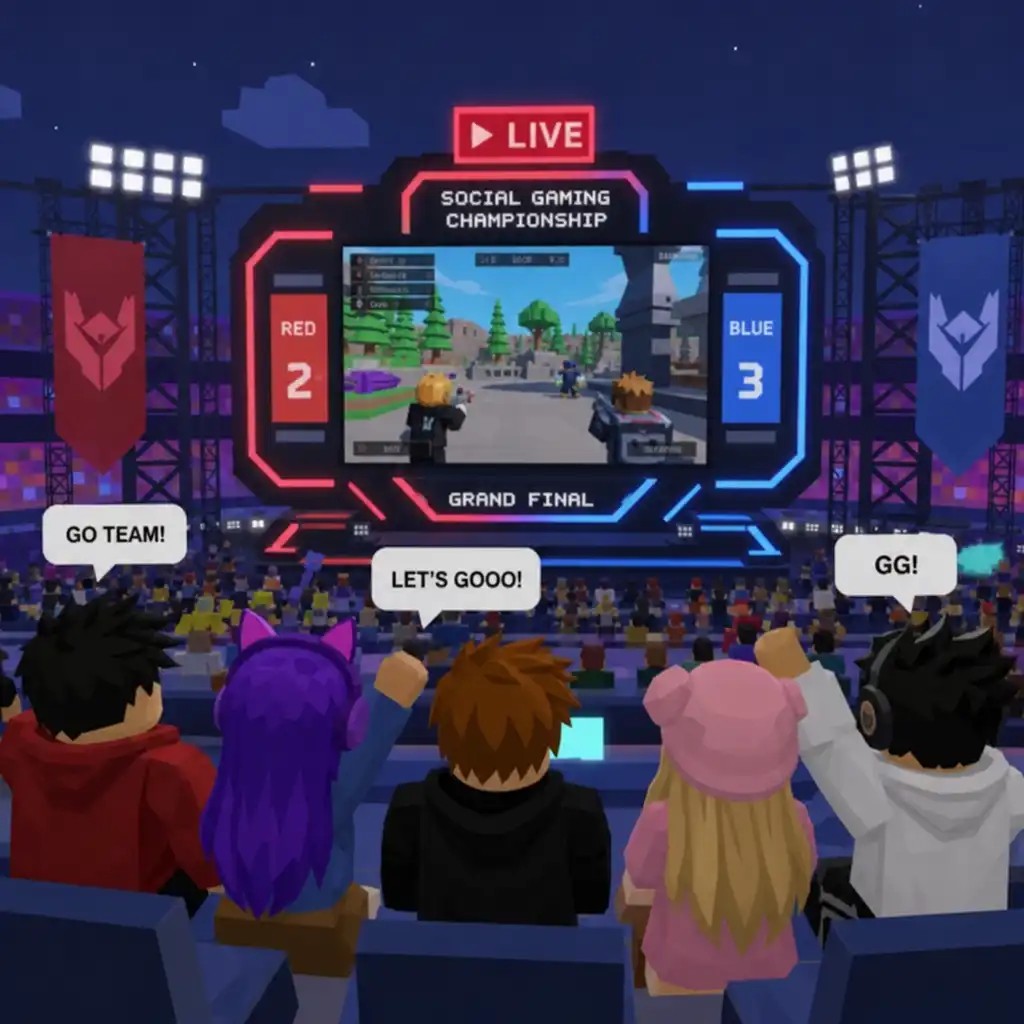
Sports, fandom, and the metaverse football league concept
Sports are a natural fit for the metaverse because they already combine identity, competition, community, live events, statistics, collectibles, and emotional loyalty. A metaverse football league could take many forms. It might be a fully virtual competition between avatar teams, a fan layer linked to real-world football, a fantasy-style experience, or a social hub where supporters gather before, during, and after matches.
The strongest chance is not simply recreating a stadium online. Expanding what fans can do. In a virtual space, fans could join team zones, take part in prediction games, unlock digital collectibles, attend player-inspired events, customize avatars with team items, or watch tactical replays in a more interactive format. Community matters as much as spectacle.
Possible features of a metaverse sports experience
A well-designed metaverse football league or sports world could include:
- Avatar fan zones where supporters gather by club, region, or interest.
- Interactive match centers with live chat, polls, challenges, or watch-party tools.
- Skill-based mini-games that let users compete in penalty kicks, strategy tasks, or training sims.
- Digital collectibles tied to moments, teams, or participation milestones.
- Creator tools for fan banners, chants, rooms, and custom wearables.
- League progress with seasons, rankings, tournaments, and community rewards.
- Easy viewing options for users on mobile, desktop, console, or headset.
The key is to respect what fans already love. Sports communities build on belonging, rivalry, memory, and shared emotion. A metaverse layer should strengthen those feelings, not distract from them.
Commerce in the metaverse will depend on experience, not novelty
Virtual commerce has potential, but users will not embrace it just because it is 3D. They need a better reason to shop, explore, or buy in an immersive space. The future of metaverse commerce will depend on whether virtual spaces help people make decisions, express identity, access exclusive experiences, or connect with communities around products.
A fashion brand might let users try digital wearables on an avatar before buying a physical or virtual item. A furniture company might let users place products in a room-scale simulation. A music artist might sell digital merchandise tied to a virtual performance. A sports brand might connect product drops to challenges, fan wins, or metaverse codes shared during events.
Commerce should be added with care. If every interaction feels like a sales pitch, users may leave. If commerce supports the story, identity, or usefulness of the space, it can feel natural. The best virtual commerce experiences will likely blend entertainment, service, and personalization.
Education, work, and training in immersive environments
People often discuss the metaverse through gaming and entertainment, but its long-term value may also stem from learning and work. Immersive environments can help people practice skills, understand complex systems, and work around shared 3D content. This is especially useful when the real-world task is expensive, dangerous, rare, or hard to visualize.
In education, students might explore scientific models, historical reconstructions, language settings, or shared problem-solving spaces. In corporate training, employees might practice customer talks, safety steps, equipment handling, or emergency scenarios. In design and engineering, teams might review prototypes at scale instead of relying only on flat screens.
The metaverse will not replace every meeting, classroom, or training manual. Many tasks are still better handled through simple documents, videos, or calls. The benefit appears when spatial understanding, emotional engagement, or repeated practice improves the result.
When immersive training makes sense
Immersive training is most useful when at least one of these is true:
- The task needs physical awareness, sequence, or spatial judgment.
- Mistakes in the real world could be costly, unsafe, or hard to reset.
- Learners gain from roleplay, feedback, and repetition.
- Teams need to work around a shared object or simulated space.
- The content is hard to understand through text or video alone.
- The organization needs consistent training across many locations.
This kind of planning keeps the metaverse practical. Instead of asking how to use immersive tech, teams should ask where immersion makes learning, collaboration, or decision-making better.
Building better immersive experiences
The future of the metaverse depends on experience design. Technology can create possibility, but design decides whether people stay. A strong immersive experience has a clear purpose, smooth onboarding, simple controls, social value, reliable performance, and a reason to return.
Builders should begin with audience behavior. Different groups like teens, sports fans, workers, and collectors need unique interfaces and rewards in virtual worlds. The more specific the audience, the easier it is to make design choices. Device access also matters. If most users arrive by mobile, the experience must work well on mobile before adding advanced headset features.
A simple planning framework
Teams exploring metaverse game development services or broader immersive projects can use this framework before production begins:
- Define the core promise Say what users can do in one sentence. If the promise is unclear, the world will likely feel unfocused.
- Identify the main audience Decide who the experience is for, what they already know, and what motivates them.
- Choose the right level of immersion Not every project needs VR. A browser-based 3D space, mobile AR feature, or multiplayer game may be easier to reach.
- Design the first five minutes Users should quickly understand movement, goals, rewards, and social options.
- Plan the return loop Give users a reason to come back through events, progress, community, creation, or new content.
- Build safety and moderation early Social spaces need reporting tools, community rules, filters, and human review where needed.
- Test with real users Watching confusion, boredom, or delight is more useful than guessing.
- Measure meaningful behavior Track retention, participation, completion, sharing, creation, and user satisfaction, not just first visits.
This framework stops teams from treating the metaverse as only a visual project. The goal is not to build a world that looks impressive in screenshots. The goal is to build a place people understand, enjoy, trust, and revisit.
Safety, privacy, and trust will shape adoption
As digital interactions become more immersive, trust matters more. In a flat website or app, harmful behavior is already a concern. In a spatial space with avatars, voice, gestures, and real-time presence, the emotional effect can feel stronger. Safety cannot be added at the end.
Metaverse platforms need clear community rules, reporting systems, moderation workflows, privacy controls, and age-appropriate design. Users should know what data is collected, how identity is managed, and how to control visibility. For younger audiences, safety expectations are even higher, especially in social gaming and open virtual worlds.
Trust also applies to transactions. If users buy virtual items, redeem metaverse codes, connect wallets, or join blockchain gaming economies, they need clear information about what they own, what can change, what fees may apply, and what risks exist. Confusing systems can damage confidence quickly.
Open standards and compatibility will take time
Many people imagine the metaverse as one seamless digital universe where everything connects. That idea is appealing, but it is technically, commercially, and creatively hard. Platforms have different engines, file formats, business models, identity systems, moderation rules, and performance needs.
A more realistic future may involve layers of compatibility rather than total unity. Avatars may share some identity features across selected worlds. Digital items may work inside a family of compatible experiences. Payment systems, social graphs, and authentication tools may become easier to connect. Developers may adopt common standards for certain assets, but not every object will move everywhere.
This gradual path still matters. Even limited compatibility can reduce friction and give users a smoother path. The key is to design for compatibility where it improves the experience, not to promise universal portability before the ecosystem can support it.
Business opportunities in the next phase of the metaverse
The metaverse creates opportunities across entertainment, retail, sports, education, events, healthcare training, real estate demos, tourism, and enterprise collaboration. The strongest ideas connect immersive technology to a real audience need. A project does not need to be huge to be effective. Focused experiences often work better than empty virtual worlds with no clear purpose.
For companies, the opportunity can be grouped into several categories:
- Brand engagement: Interactive spaces, launches, quests, fan zones, and virtual events.
- Revenue growth: Digital goods, premium access, virtual merchandise, and hybrid physical-digital products.
- Community building: Social hubs, member experiences, creator programs, and multiplayer activity.
- Training and simulation: Repeatable learning spaces, safety practice, and role-based scenarios.
- Product visualization: 3D showrooms, configurators, demos, and spatial previews.
- Gaming ecosystems: Social gaming worlds, blockchain gaming features, leagues, tournaments, and live operations.
Successful business use cases do not rely on fear of missing out. They come from asking where immersive experiences can create more value than existing digital channels.
Common mistakes to avoid
The future of the metaverse will reward thoughtful builders and challenge shallow experiments. Many projects fail not because the tech is impossible, but because the concept is unclear or the experience is inconvenient.
- Building a space with no activity: A virtual room is not enough. Users need something to do.
- Favoring graphics over usability: Visual quality matters, but performance and clarity matter more.
- Forcing blockchain where it is not needed: Ownership systems should create real user value.
- Ignoring mobile and browser access: Headset-only plans can limit reach.
- Skipping moderation: Social spaces need safety tools from day one.
- Making onboarding too complex: Wallets, downloads, account setup, and controls can all cause drop-off.
- Treating launch as the finish line: Metaverse experiences often need updates, events, and community care.
- Copying real life too literally: Virtual spaces can do things physical spaces cannot, so design should use that freedom.
Avoiding these mistakes does not guarantee success, but it builds a stronger base. Users are more likely to return when the experience respects their time, attention, and trust.
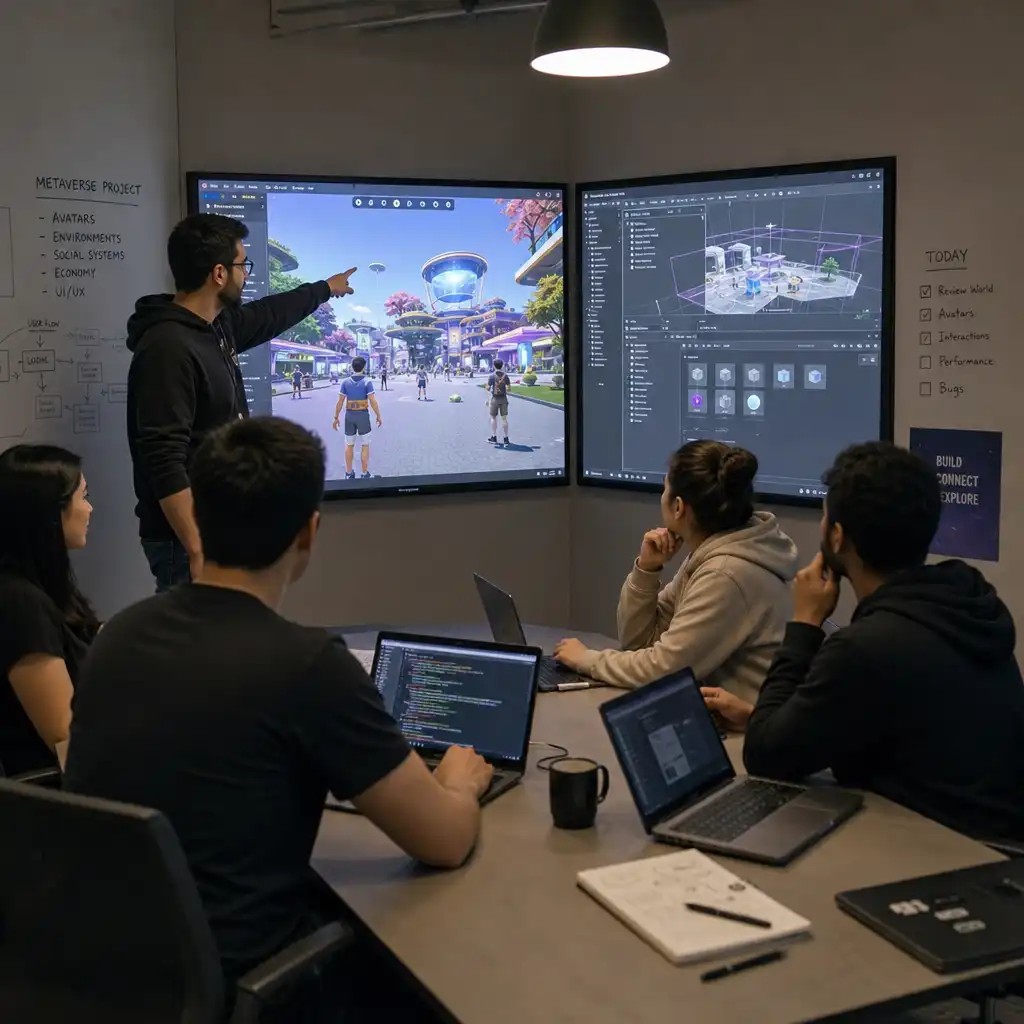
How should businesses prepare for the metaverse?
Businesses should start small, learn from users, and focus on clear outcomes instead of following every trend. To start, find where immersive experiences, social gaming, digital identity, or 3D interaction can enhance customer, employee, or community experiences. From there, teams can prototype, test, and expand based on evidence.
A company interested in a metaverse football league, for example, might begin with a simple fan challenge or avatar watch party before investing in a full virtual league system. A retailer might start with a 3D product configurator before building a persistent virtual store. A game studio may try a simple blockchain gaming feature that benefits users before creating a complete token system.
A phased approach to metaverse adoption
A practical roadmap could look like this:
- Explore Study audience behavior, platform options, competitor activity, and internal goals. Define what the metaverse means for your context.
- Prototype Build a small experience that tests one core idea, such as avatar interaction, virtual product exploration, social gaming mechanics, or metaverse codes.
- Validate Watch real users. Look for engagement, confusion, repeat visits, sharing, and open feedback.
- Improve Refine onboarding, performance, content, safety, and incentives before scaling.
- Scale Expand the world, features, partnerships, and community programs only after the base works.
- Operate Treat the experience as a live product with updates, moderation, analytics, and new content.
This phased model helps control risk. It also supports better creative choices because each stage is shaped by user behavior rather than assumptions.
The future is a network of purposeful virtual experiences
The metaverse’s future may not be one big reality replacement but many connected experiences enhancing digital life. Some will be games. Some will be classrooms, workplaces, stadiums, stores, simulations, and social spaces. The common thread will be presence: the feeling that people are sharing a place, not just exchanging content.
For users, that future can make online life more expressive and active. For creators and developers, it opens new forms of worldbuilding, storytelling, and community design. For businesses, it creates a chance to rethink engagement around interaction rather than attention alone.
The most successful metaverse projects will not be the ones that use the most buzzwords. They will be the ones that give people a clear reason to enter, a smooth way to join, and a meaningful reason to return. Whether through social gaming, blockchain gaming, immersive training, virtual commerce, metaverse codes, or a metaverse football league, the real opportunity is to create digital interactions that feel useful, human, and alive.
Question: Does the metaverse require virtual reality headsets?
Short answer: No. VR, AR, and mixed reality can make metaverse experiences more immersive, but many metaverse-style spaces already work on phones, browsers, consoles, and PCs. The main idea is not the headset itself. It is the move toward persistent, interactive, social, and spatial digital spaces.
Question: Why is practical utility more important than hype for the future of the metaverse?
Short answer: Practical utility matters because users need a clear reason to enter and return. A virtual showroom should help customers explore products better than a standard catalog, a training simulation should make practice safer or more repeatable, and a game world should provide identity, progress, community, and shareable moments. Projects built only around novelty or speculation are less likely to last.
Question: When should blockchain be used in a metaverse or gaming experience?
Short answer: Blockchain should be used when it creates a clear user benefit, such as meaningful digital ownership, visible item history, creator rewards, transparent markets, community participation, or portability across compatible ecosystems. The article warns that blockchain is not always needed and can add friction if it does not serve the experience.
Question: What makes social gaming so important to metaverse adoption?
Short answer: Social gaming gives people a familiar reason to enter virtual spaces and interact with others through shared activity. Instead of only sending messages or reactions, users can gather as avatars, complete tasks, attend events, customize identities, and create memories tied to a place. That makes digital interaction feel more participatory and human.
Question: How should businesses begin experimenting with the metaverse?
Short answer: Businesses should start small, focus on a clear audience need, prototype one core idea, and validate it with real users before scaling. The article recommends a phased approach: explore, prototype, validate, improve, scale, and operate. This helps companies avoid chasing trends and instead build immersive experiences that are useful, safe, and worth revisiting.
