

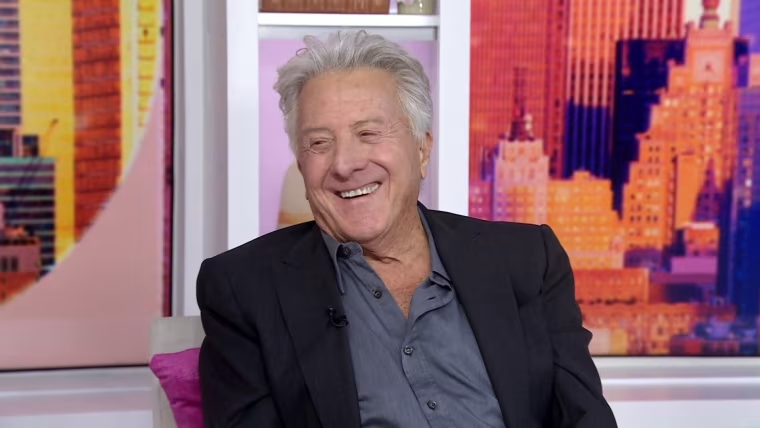
Dustin Hoffman Reflects on His Roles in Iconic Movies
06:34
Legendary actor Dustin Hoffman has a long list of award-winning movies including “All the President’s Men,” “The Graduate,” “Kramer vs. Kramer” and, of course, “Tootsie.”
The 1982 film stars Hoffman as Michael Dorsey, an out-of-work actor wins a part on a soap opera by auditioning as a woman.
In his new memoir, “Look At Me,” Hoffman writes that the movie title comes from his mother, who called him “My little Tootsie Wootsie” and that the genesis for the film came while he was ribbing a close friend about coming to terms “with his feminine side.”
“The idea that every man has a feminine side and every woman has a masculine side was something I’d been thinking about a lot while I was making ‘Kramer,’” Hoffman says in the book.
Though it began as a joke, the idea stuck with Hoffman, who continued to mull it over with longtime wife, Lisa, and screenwriter Murray Schisgal.
“There’s something to this,” he says of their conversations in the book. “There’s something about coming to terms with the woman inside you that’s really interesting.”
It made the actor reflect on how things might have been different if he’d been born a female and writes that the idea eventually became the screenplay for the Oscar-winning movie “Tootsie.”
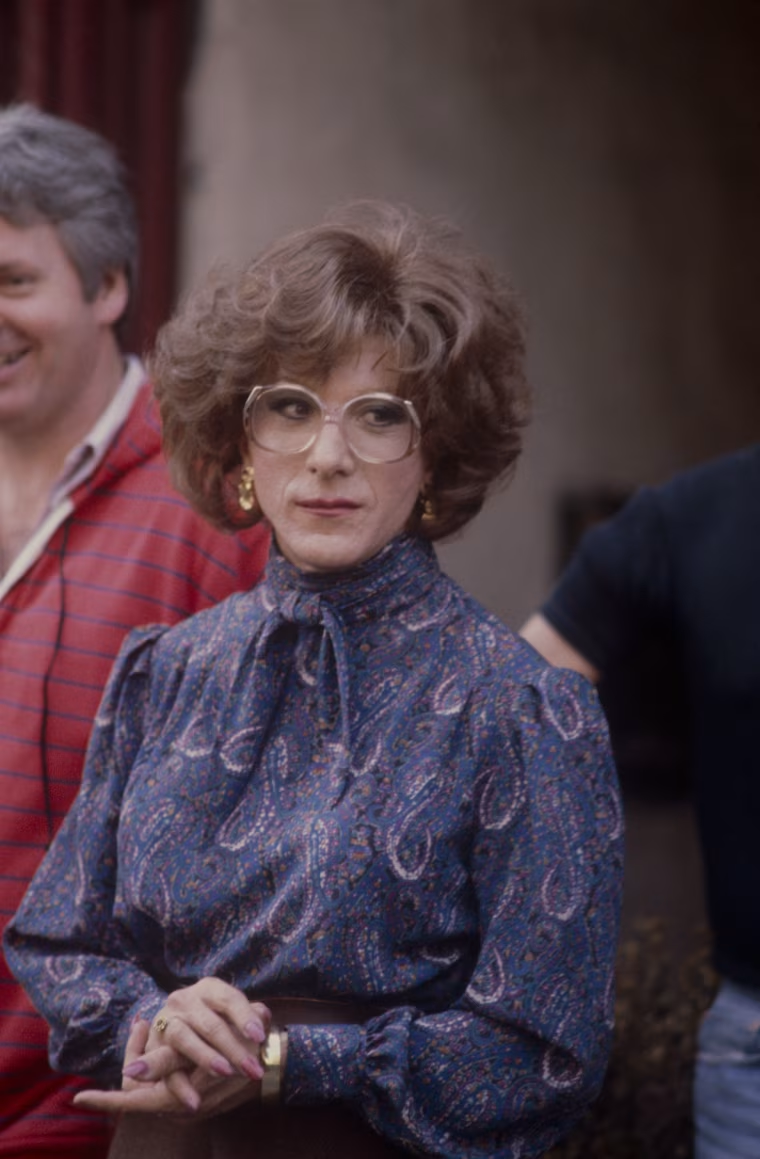
Once the movie took shape, Hoffman began doing research to play Dorothy Michaels, his feminine alter ego in “Tootsie,” and in many ways it changed his life.
“Dorothy Michaels made me see women in a new way,” he writes in the memoir. According to the actor, it took him more than a year and a half to get to the point where “I could go out on the street as her and nobody looked twice.”
Though he’d accomplished what he set out to do, Hoffman says in the book that he was “upset” that while he could easily pass as Dorothy, no amount of makeup and prosthetics were ever going to make him “beautiful” by society’s “narrow definition” of beauty.
It led to an epiphany.
“When I was young, I told my aunt Pearl I wanted to an actor. She looked genuinely puzzled when she replied, ‘You? You’re too homely!’” he says in the memoir.
He says his aunt Pearl’s judgment would later ring out on the cover of Life Magazine, which “once published the sentence ‘If Dustin Hoffman’s face was his fortune, he’d have been condemned to a life of poverty.’”
And, after the release of “The Graduate,” Hoffman writes that “critics seemed almost offended that someone as ugly as me got to be in a movie.”
But the deeper realization was that despite being ridiculed for his appearance, he was still getting work
“I got insulted plenty for my looks when I started starring in movies. But if I’d been a woman, I never would have been cast in the first place.”
His understanding of that double standard crystallized during the filming of “Tootsie.”
“Before I played Dorothy Michaels,” he writes, “I hadn’t considered the endless, tedious, expensive demands put on women to be ‘feminine.’ Wearing heels and a bra and stockings, having to spend hours putting on makeup and shaving my legs – and then getting rashes shaving my legs – by the end of ‘Tootsie,’ I thought, ‘F— this.’”
But more than the time and money, Hoffman writes that it was a matter of dignity.
“There is something really demoralizing about performing these neverending rituals that suggest, ‘I am no good as I am. My face my hair, my body are wrong, and require covering up, altering, apologizing for.”
Hoffman went on to earn an Academy Award nomination for the movie, which also stars Jessica Lange, Teri Garr, Bill Murray, Geena Davis, Dabney Coleman and Charles Durning.
Looking back on the film, Hoffman writes, “‘Tootsie’ has been a great part of my life.”
