

Superman is the original superhero, the one who started it all. His first appearance in Action Comics #1 gave DC Comics a new kind of hero and the publisher, and many others, were off to the races. There have been numerous eras of Superman; the original, pre-World War II Supes was a working class hero, fighting crime in both the streets and the boardrooms and city halls. Silver Age Superman went in more science-fiction related directions, with his powers increasing exponentially. During this period, Superman was also one of the most popular superheroes around, to the extent that his ridiculous power levels became the default setting for the hero.
Videos by ComicBook.com
The Silver Age lasted from 1956 to 1969, roundabouts. DC Comics had great success over this era, birthing the multiverse, but this was also the time of the rise of Marvel Comics. Marvel took their heroes in more human directions and fans loved the more down to earth heroes, especially when compared to DC’s characters. However, the first superhero publisher learned their lesson and decided to ground its characters more in the years ahead. This led to a new conception of Superman, one that would dig into the character in new ways. However, Crisis on Infinite Earths came a-calling and suddenly the character looked very different, beginning a process that’s still going on today.
The Bronze Age Superman Is the Ultimate Version of the Hero
The Bronze Age of Comics lasted from 1970 to 1986’s Crisis on Infinite Earths. The Silver Age was the decade when kids comics ruled DC. Most of their books were written for younger audiences, with Julius Schwartz, one of the most legendary – and taciturn – editors ever keeping the books kid-friendly. He shadow wrote much of the publisher’s books, giving the writers the ideas for stories and letting them do the rest. Schwartz could be a tyrant with creators, but he was someone who wanted to make sure that his books at least had some educational value.
However, Marvel was beating the pants off their distinguished competition by bringing more emotional complexity to their characters and DC started to do the same thing. Denny O’Neil and Neal Adams began their legendary Batman run and Green Lantern/Green Arrow‘s “Hard-Traveling Heroes” in 1970, their stories grounding the heroes and taking them in new situations, ones that were more realistic. This was a big change from what came before.
Superman in the Silver Age was one of the poster boys for superheroes. He was massively popular, but he was also an extremely simple hero when you compared him to someone like Thor, a character who was in a similar role and had a similar power level. The Silver Age was all about science fiction, so we ended up getting way more stories set on Krypton, with Superman going back in time and meeting his parents, having adventures in the past. In the Bronze Age, creators decided to go in a new direction with the character and it was all about the sadness.
The Man of Steel had been the smiling hero of the Silver Age, but Bronze Age creators like Elliot S! Magin remembered that he was the Last Son of Krypton. They started to play up Kal-El instead of Clark. Kal had seen the glory of Krypton via time travel; he knew what he had lost. Bronze Age Superman stories concentrated on a more somber Man of Tomorrow, one who exclaims things like “Rao!”, named after the sun god of Krypton and wanted to be called Kal more. Suddenly, Supes wasn’t just the hero everyone looked up to, he was a more complex person, having to deal with the loss of his entire civilization.
These Superman stories didn’t throw him into outer space for somewhat wacky sci-fi adventures. Instead, these stories had a more somber tone to them. That doesn’t mean the character was suddenly completely changed into the old school equivalent of Zack Snyder’s Superman, it meant that there was a new facet to the character. Superman has starred in amazing stories since the end of the Bronze Age, and they all benefited from creators making the character more serious than he was. He was allowed to grow in the Bronze Age and it worked.
Alan Moore wrote three stories with the Bronze Age Superman in 1985 and 1986 and they are the perfect showcase for this era of the character. Superman Annual #11 and DC Comics Presents #85 both came out in May of ’85; a year later, he would write the last Earth-One Superman story ever in “Whatever Happened to the Man of Tomorrow?” Moore boiled everything that Bronze Age creators had done with the character – focusing on his Kryptonian heritage and how it affected him and his changing world – showing off the growth of the character over the course of the Bronze Age.
Crisis on Infinite Earths was a revolutionary evolution of DC. The publisher had spent the first half of the ’80s rebuilding their universe after the DC Implosion of 1979 and Crisis was meant to simplify things. However, I think it’s even simpler than that – they wanted to Marvel up the DC Universe. The Bronze Age of Comics for DC was all about trying to compete with the more complex heroes of the House of Ideas, with Superman leading the way. One of the most interesting things about the post-Crisis reboot is that John Byrne threw out all of the Kryptonian stuff. Clark didn’t want to be Kal anymore, he didn’t say things like “By Rao!” anymore. He never went back in time to meet his parents and if he had, he would have encountered the 1986 equivalent of Vulcans.
Bronze Age Superman is, in a lot of ways, the ultimate evolution of Superman. Imagine you were Kal-El. You were raised by humans on Earth, find out you’re an alien, then go back in time and see your old world. That would change you. You’d no longer be the happy, well-adjusted person you were. You’d want to learn more about your culture, try to be that kind of person and there would be a sorrow that never really went away. Bronze Age Superman dug into a part of a character that no one had before, but one that made the most sense for who and what he was.
Superman – and Comics – Grew Up in the Bronze Age
Crisis on Infinite Earths changed everything for DC and it was honestly a needed change. The DC Universe became more complex and modern, giving readers some of the best superhero stories of all-time. However, eventually DC decided to bring back its past, starting with Infinite Crisis. Since then, the publisher has been reintroducing old concepts and ideas, especially to Superman. Post-Crisis Superman was the one I grew up with and he was great, but he was also kind of shallow and I could never say why until fairly recently.
In the last 20 years, creators who grew up reading the more serious, somber Bronze Age Superman have been bringing that version of the character back. While he hasn’t as completely embraced his Kryptonian heritage, this is a Superman who isn’t just the perfect leader of the Silver Age. He has doubts. He has sadness. He questions his place in things. He’s altogether more complex and his stories have gotten infinitely better. DC perfected Superman in the Bronze Age and they’ve been putting those lessons into practice in the 21st century, helping the Man of Steel soar to the top again.
Crisis on Infinite Earths Is Fantastic and It Does These 5 Things Better Than Any Other Event Book
More Comics
-

Image Courtesy of DC Comics Comics
23 hours agoOracle Was Meant to Be More Than Barbara Gordon, and One Forgotten Batgirl Run Proved It
-

Image Courtesy of Marvel Comics Comics
1 day agoWolverine Is One of Marvel’s Biggest Stars, So Why Does His Current Comic Feel So Directionless?
-

Comics
1 day ago -

Image Courtesy of Marvel Comics Comics
2 days agoMarvel Introduced the Hippest Mutants Ever in the Early ’80s (and It’s Long Past Time the MCU Made Them Superstars)
-
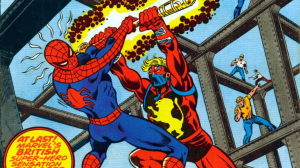
Image Courtesy of Marvel Comics Comics
2 days agoEveryone Forgets About Spider-Man’s Original Superhero Roommate, but He Helped Debut an Iconic X-Men Villain
