

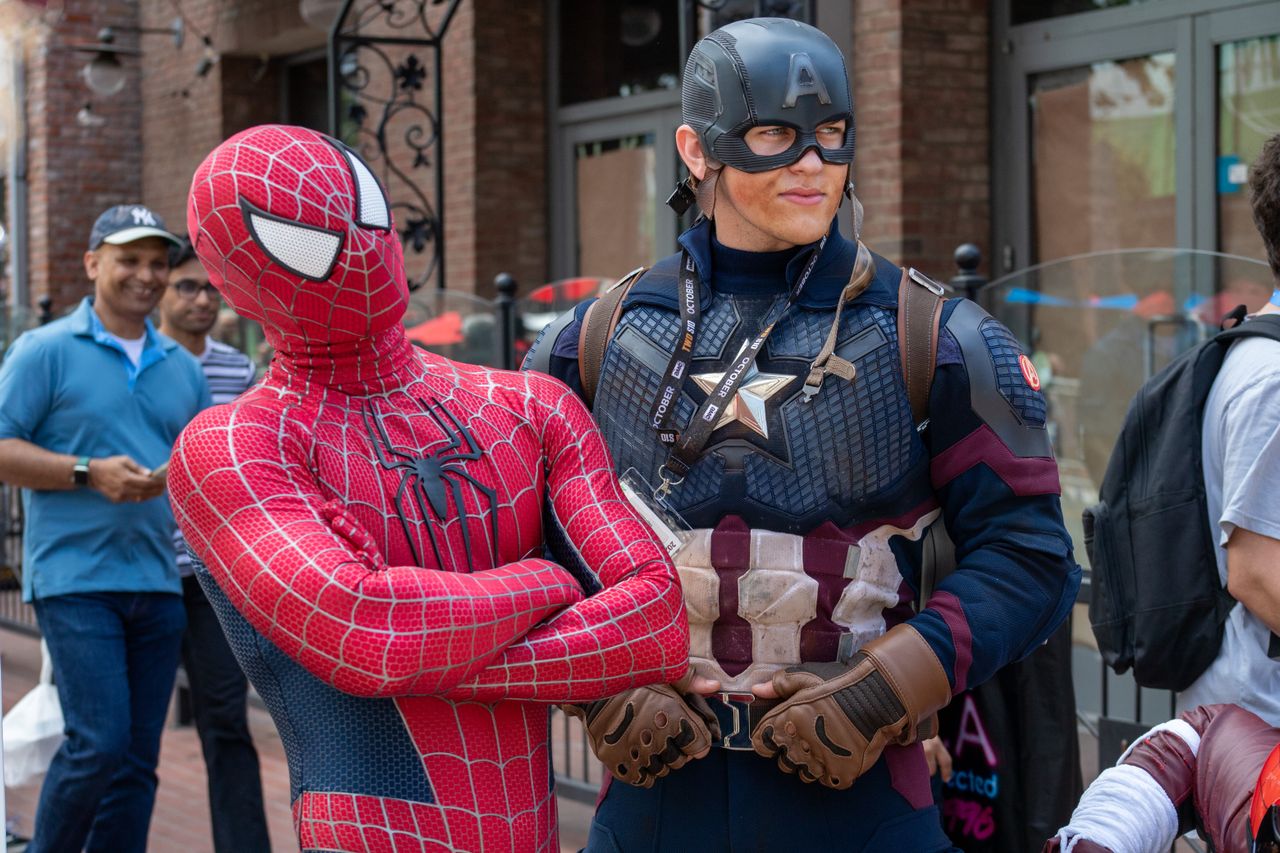
Manchester has always been comfortable with subcultures. Music may be the most obvious example, but the city also has an enthusiastic community built around <a href="https://comicvibe.com/halloween-the-game-gets-a-comic-book-spinoff/” title=”"Halloween: The Game" Gets a Comic Book Spinoff”>comics, science fiction, fantasy, gaming and cult television. These interests increasingly meet at conventions and other fan events where people can celebrate fictional worlds collectively rather than enjoying them only at home.
For science-fiction fans, that creates a culture that stretches well beyond watching a favourite series. Collecting, cosplay, gaming, meeting actors and discussing stories with other fans have all become part of the experience, and Manchester provides plenty of opportunities for those interests to overlap.
Comic Con Turns Fandom Into a Social Experience
Watching science fiction is usually a fairly private activity. A convention changes that completely by putting thousands of people who enjoy similar stories into the same space.
Comic Con Manchesteris a good illustration. The event describes itself as one of the UK’s largest pop-culture conventions and says it attracts more than 10,000 fans annually. Its programme reaches across movies, television, streaming, gaming, anime and sports entertainment, while previous guests have included actors associated with major genre productions.
The attraction goes beyond celebrity appearances. Fans can explore trader and artist areas, see props and set builds, play retro and contemporary games and watch cosplay on stage. That variety is important because modern fandom rarely stays within a single medium.
Dressing Up Has Become Part of the Fun
Cosplay is one of the most visible parts of convention culture. Some participants spend months building highly detailed outfits, while others simply want something recognisable that allows them to join in without turning costume-making into a major project.
Science fiction is particularly suited to this because costume design often helps establish an entire fictional world. Starfleet uniforms are a good example. Their colours, insignia and changing designs immediately identify different periods in Star Trek history.
For Manchester fans preparing for a convention or themed gathering, officially licensedStar Trek Costumesprovide one way to recreate those familiar looks without having to construct an outfit from scratch. Smiffys currently offers designs associated with The Original Series, The Next Generation and Voyager, including recognisable command and operations uniforms.
The appeal is not necessarily about producing a perfect screen replica. For many visitors, dressing as a favourite character is simply another way to participate in the atmosphere of the day.
Manchester Gives Fans Space to Find Their Community
The social side of fandom may be even more important than the costumes and collectibles. Science fiction has always encouraged discussion, whether people are debating favourite captains, comparing adaptations or arguing over which film deserves another viewing.
Conventions bring those conversations offline. Comic Con Manchester explicitly places community at the centre of the event, describing how fans travel from around the UK to share their enthusiasm for comics, fantasy, sci-fi, gaming, horror and cosplay.
For newcomers, that environment can make niche interests feel considerably less niche. Someone attending because of one television series might leave having discovered an artist, comic, game or entirely different fictional universe.
Cult Classics Keep Finding New Audiences
Science-fiction culture also has an unusual relationship with time. A television programme can be decades old and still feel current because new viewers continually discover it through streaming, conventions, merchandise and recommendations from existing fans.
Star Trek demonstrates that longevity particularly well. Uniforms based on the 1960s Original Series still appear alongside designs from later productions, while characters and visual references remain immediately familiar to several generations of viewers. Smiffys’ current range alone spans multiple eras of the franchise, showing how older screen designs continue to function within present-day fan culture.
The same pattern applies across science fiction. Cult films are rediscovered, older games find new players and comic characters are repeatedly reinterpreted. Fandom keeps the original material circulating rather than allowing it to become a historical curiosity.
More Than a Weekend in Costume
Manchester’s sci-fi scene works because it gives fans different ways to participate. Some want photographs with actors, others arrive in elaborate cosplay, and plenty are happy simply browsing artwork, playing games or spending a day surrounded by people who understand their references.
That variety is what keeps fan culture lively. Comic cons may provide the biggest gathering point, but the enthusiasm behind them exists throughout the year. In a city already known for embracing distinctive cultural identities, science-fiction fandom has found a natural home of its own.

1 Comment
Pingback: In Gen Z Romance Shows Like 'Crew Girl,' Sports Are the New Sex - Comic Vibe