

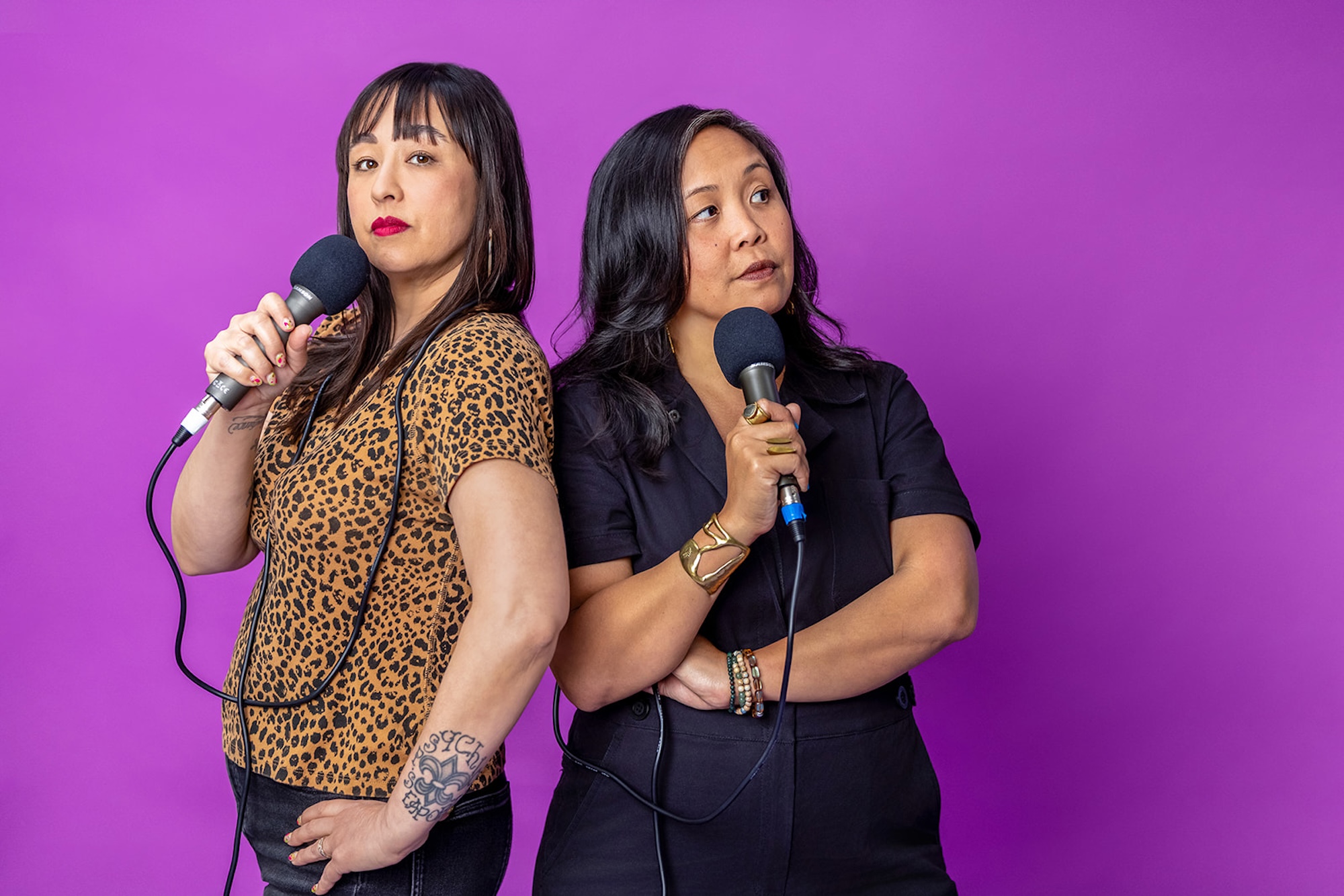
Hosts Erin Lim and Ange Tabora have spent 13 years and 1,000 episodes celebrating the Bay and AAPI pop culture.
Aug 27, 2026
Updated 2:15 pm PT
Erin Lim and Angela ‘Ange’ Tabora, hosts of San Francisco podcast ‘Bitch Talk.’ (Chloe Jackman)
It’s a sunny San Francisco day and Bitch Talk podcast co-hosts Erin Lim and Angela Tabora are hanging out in The Sitting Room, the cozy Fillmore venue where they both work as bartenders. They are describing, very entertainingly, a recent afternoon downtown when they encountered crowds of tech professionals outside the Moscone Center applauding a dancing robot. Suddenly aghast, Lim responded by putting herself front and center and instinctively flipping off the machine.
“This robot is dancing to ’70s funk, of all music!” Tabora exclaims. “That’s soul music! For things with souls to dance to!”
“And so I was flipping it off,” Lim says. “There’s this whole crowd of people clapping with no rhythm, cheering it on, and I was just like, get me out of this fucking place.”
This is the story Lim and Tabora tell when asked how they’ve kept their culture podcast going for 13 years. Somehow, they’ve made it work as indie broadcasters in a region known for both its extreme affordability and the creeping ubiquity of AI.
“We’re inundated,” Lim sighs. “We’re being colonized by AI. But if we’re not here, then who’s going to take our place? It makes me sad with all the AI billboards everywhere and the people that come in thinking they know San Francisco, and they don’t. White saviors. They’re not curious about this space and they’re not willing to learn. But we’re here too.”
Indeed, as frustrated as Lim and Tabora are about ever-encroaching tech and exorbitant rents, they remain absolutely dedicated to staying in the city, where they continue their mission of honoring local culture and communities. Lim, originally from Los Angeles, first moved to San Francisco in 1999. Tabora — who joined Bitch Talk 100 episodes in, after original cohost Karyn Paige bowed out — was raised in San Leandro before moving to San Francisco in 2005.
“The thing that keeps me loving San Francisco is that community,” Tabora says. “Artists, local business owners, musicians. Of course, a lot of [my old friends don’t] live in the city anymore. But good stuff’s still here. Things like Hunky Jesus, the chili cook-off every year at Standard DeThat’s what keeps me going.”
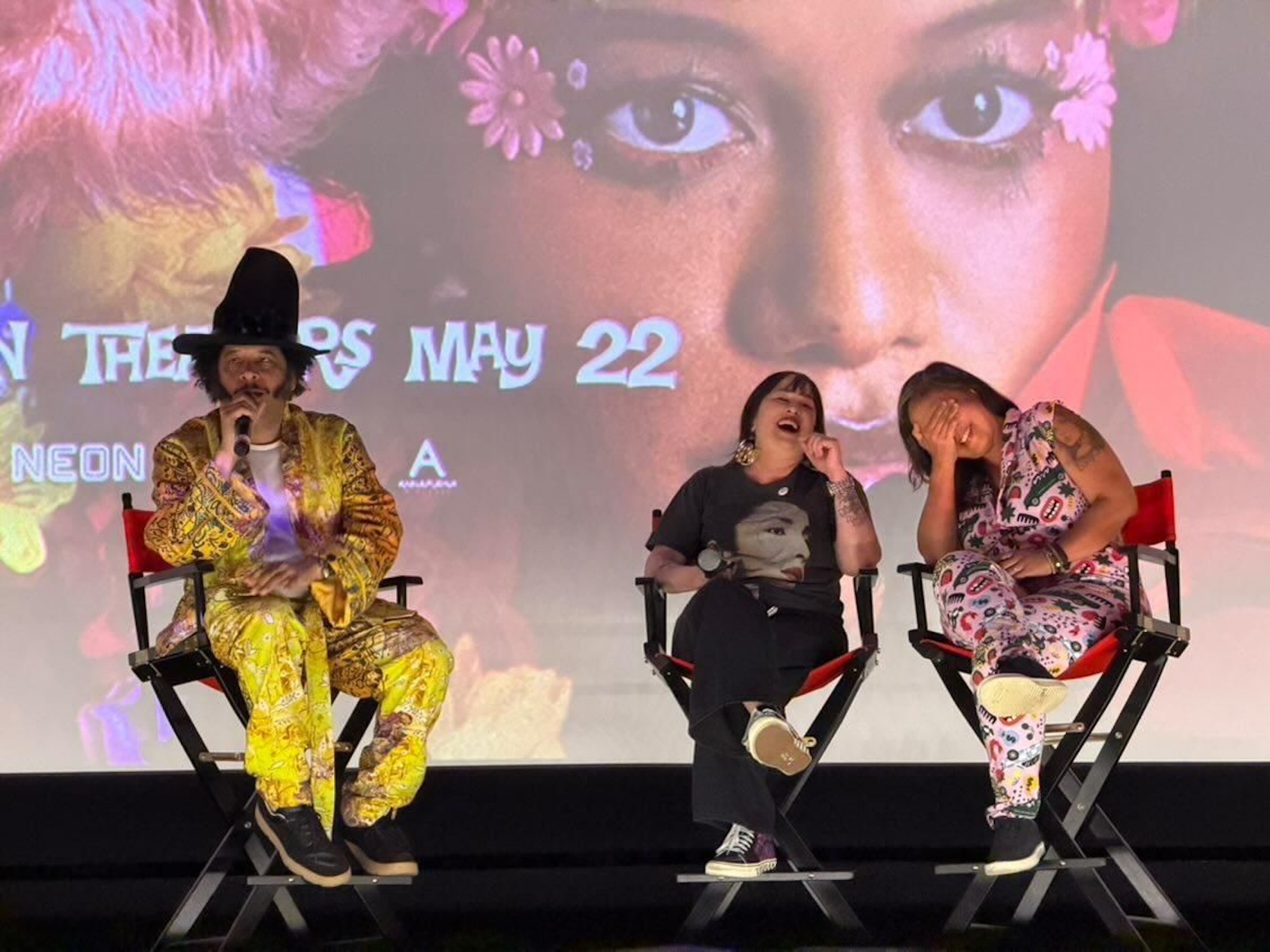
Bitch Talk, now approaching 1,000 episodes, is a labor of love for Lim and Tabora. The pair, who self-fund the podcast with the help of only an annual fundraiser and occasional sponsorships, first met while working at a television production company in Marin. Lim still works as an audio journalist for KALW.
“We’ve gotten advice from people that we really respect, that have gone far in this industry, that have told us, ‘To become more mainstream, I think you need to change the name,’” Tabora says.
“We will stick with Bitch Talk, thanks,” Lim adds. “I don’t care. Where’s my pearls?”
Lim and Tabora’s podcast started as a gathering of friends, led by Lim, who got together over a bottle of whiskey to discuss pop culture and events of the day from a distinctly Asian American perspective. The show was specifically designed to fight back against the overwhelmingly “pale and male” (as Lim puts it) nature of podcasting.
Over time, due in part to Lim’s background in movie PR and Tabora’s ongoing work in documentary filmmaking, Bitch Talk expanded from a chat and analysis show into one that also focused on moviemakers and film festivals, as well as local events, actors and musicians. When Lim and Tabora aren’t reviewing, they’re interviewing the likes of Barry Jenkins, W. Kamau Bell, Oli
When they’re not interviewing, they talk to each other and their audience in so-called ‘Basic Bitch’ episodes, in which they visit their favorite locations around the Bay and explain why they’re special. (A September 2025 episode recorded in Costco is one of the finest examples of this.)
“I think the beauty of our podcast is we don’t have anyone to answer to,” Tabora says. “So we don’t have to focus on any one thing.”
The duo’s efforts and outspoken style have not gone unnoticed, winning Best Podcast honors from San Francisco Magazine’s Best of the Bay awards for three years straight between 2022 and 2024. One of the most appealing elements of Lim and Tabora’s work together is their chemistry. They’ve been friends and coworkers for so long, they frequently finish each other’s sentences. They are also unintentionally hilarious, with Lim often playing the straight (wo)man during Tabora’s wildcard moments.
“We have grown a lot together,” Tabora tells KQED earnestly. “I think we push each other. She fills my holes and vice versa.”
Lim quickly glares at Tabora.
“Gaps! I mean gaps, not holes!” Tabora corrects. “You know what I mean? Like, she does the things that I don’t do so well, and vice versa.”
“We complement each other,” Lim affirms.
“Oh God, please don’t say we fill each other’s holes!” laughs the mortified Tabora, head in hands.
One of the benefits of Lim and Tabora’s chatty, comedic exteriors is their ability to share political content in an easily digestible manner. Earlier this year, they created an activism page on their website that categorizes their back catalog according to topic: LGBTQ+, race, and women’s rights. So many episodes in, the hosts are aware that they’ve quietly built an important archive of activist information.
“I just think we’ve done all this work, and all these interviews, and watched all these films,” Lim says. “If you are even thinking about [activism] or have a question about it, we have the rem — but it’s true.”
So, what’s next for Bitch Talk? Their annual fundraiser is happening in October, so they can keep the podcast afloat for another year. Lim and Tabora are also learning to lean into middle age as loudly and proudly as possible.
“We’re kind of the first generation that looks and acts this way as middle-aged bitches.” Tabora says. “I’m proud of that. We’re not trying to defy science. We’re talking about first colonoscopies, perimenopause, my hysterectomy. I want to talk about these things, especially in the space of social media and Hollywood — so much anti-aging everywhere. Don’t make me bust out my pocket fan!”
“That’s why we call ourselves the Golden Girls of podcasting,” Lim adds, “because we are.”
