

Generational Clash in Manga Editing
In August 2024, a conversation between two prominent manga editors unexpectedly turned into a sharp debate about the future of the industry.
One participant wasKazuhiko Torishima, the legendary editor who helped shapeDragon Balland later became editor-in-chief ofWeekly Shōnen Jumpduring the period when the magazine launched global hitsNarutoandOne Piece. The other wasShihei Rin, a younger editor associated with a different generation of successes, includingChainsaw ManandSpy × Family.

What began as a casual podcast conversation soon exposed a fundamental rift in how editors understand their role.Torishima spoke from the perspective of the magazine era, when manga publishing revolved around weekly anthologies and editors exercised strong authority over authors. In that system, editorial judgment developed through long collaboration with creators, and reader feedback arrived gradually through circulation numbers and postcard surveys printed in the magazine itself.
Rin, by contrast, described a professional environment shaped by digital platforms. Online distribution, real-time audience responses, and global readership had transformed the way manga reached readers. Editors now worked within an ecosystem where reader reactions appeared instantly through online comments, engagement metrics, and social media circulation.
Neither framed it as a direct confrontation, yet the disagreement proved unavoidable. Beneath it lay a larger question: in a world dominated by digital platforms, what exactly is an editor’s job?
At the time, the exchange seemed like a generational disagreement about changing technology and evolving editorial practices. But less than two years later, the manga industry would confront a controversy that made those questions far more concrete.
A Scandal Emerges
On February 27, 2026, a manga artist who was herself serializing on Shogakukan’s digital platformManga ONEpublished a blog post describing a situation she had learned about within the platform’s contributor community. Although she was not directly involved, she wrote that she could not remain silent after discovering that a writer previously convicted of sexual offenses against a minor had been allowed to continue working on the platform under a different name.
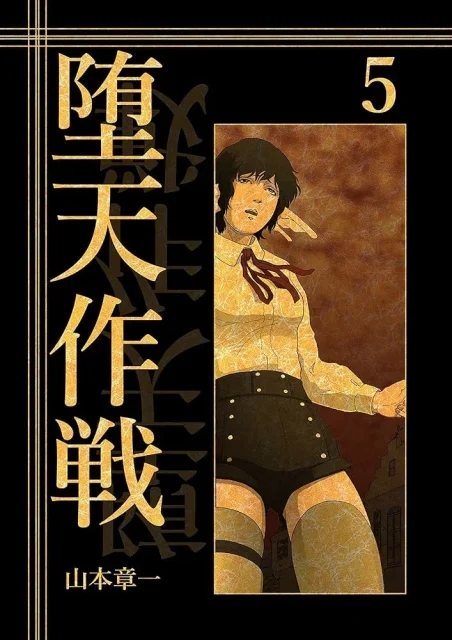
Drawing from court records and public sources, she outlined the sequence: In 2015, Kurita (under his earlier pen name Shoichi Yamamoto) began serializingDaten SakusenonManga ONE. The following year, in 2016, while working as a high-school instructor, he sexually abused a 15-year-old student. Four years later, in February 2020, he was arrested and summarily indicted, resulting in a fine of ¥300,000. The series was suspended; Shogakukan later announced plans to resume it, but postponed the resumption after the victim contacted the company. The series was ultimately suspended indefinitely.
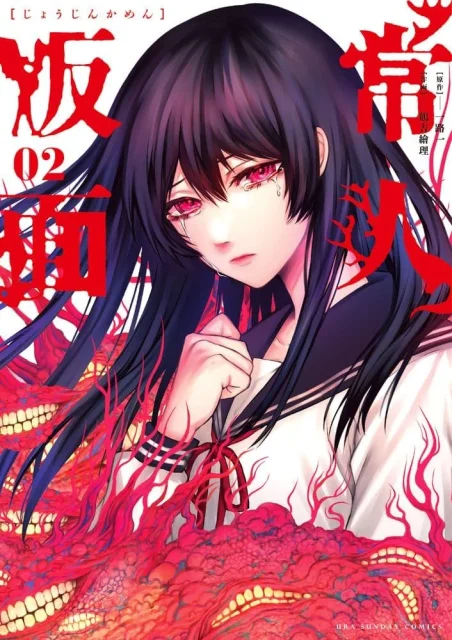
In 2021 an editor became involved in settlement negotiations with the victim through a LINE group; and despite the criminal history, Kurita returned in 2022 under the pseudonym Hajime Ichiro as story writer rather than manga artist forJōjin Kamen.
This whistleblower-style post from a fellow contributor onManga ONEquickly circulated among readers and creators. It named specific editors involved and condemned the decision to publish the work under a different name, without disclosing the connection to the earlier case, calling it a betrayal of readers, creators, and victims alike. The scandal transformed what might otherwise have remained an internal editorial matter into a public controversy. On February 27, 2026, the editorial department of Shogakukan’sMangaONEannounced thatthe editorial department of Shogakukan’sMangaONEannounced that it was halting further digital distribution and print sales ofJōjin Kamen— a series that had already concluded its run in October 2025 — acknowledged that the individual in question should not have been engaged, and issued an apology to the victim.
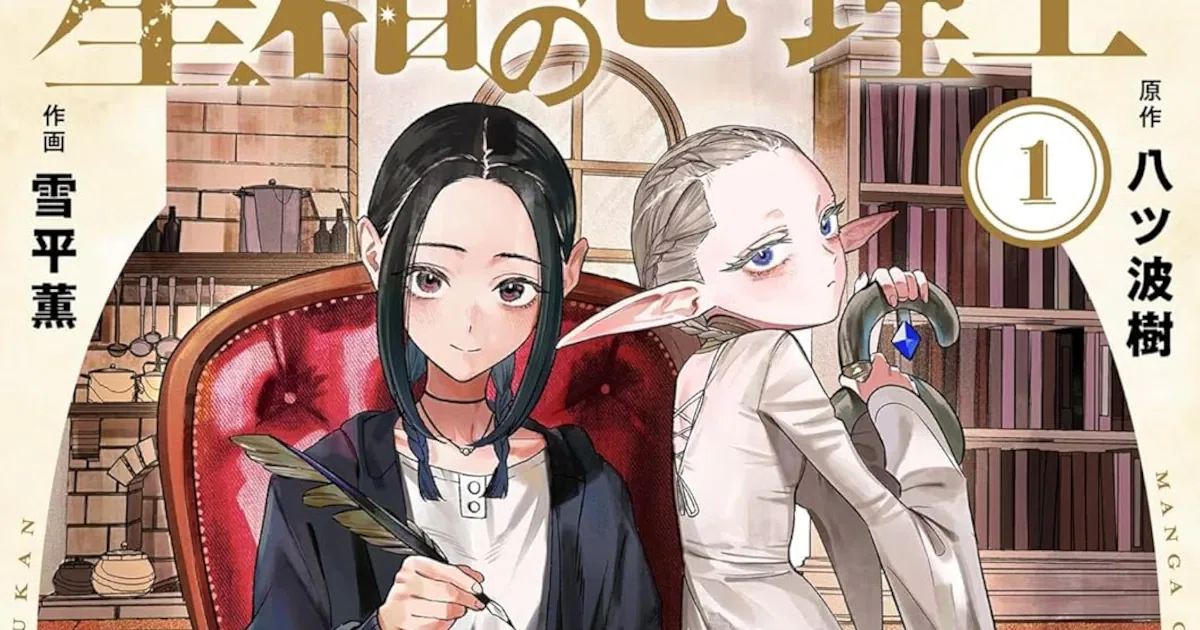
Just days later, on March 2, Shogakukandisclosed a second caseuncovered during an internal review: the story writer ofSeiso no Shinrishi(“The Counselor Through the Years and Stars”), writing under the pseudonym Miki Yatsunami, was revealed to be Tatsuya Matsuki. Matsuki had been convicted in 2020 of indecent acts with middle-school girls while authoring Act-age forWeekly Shōnen Jump. The editorial team cited the completion of his suspended sentence, demonstrated remorse, and progress in counseling as grounds for their initial approval, stating the pseudonym change was intended to avoid secondary harm to victims.
Shogakukan also announced that they upgraded its initial internal investigation to a third-party committee comprising external specialists and lawyers. The committee’s scope includes verifying the facts of both cases, examining the editorial department’s author-hiring processes and human rights awareness, investigating the editor’s participation in the 2021 settlement negotiations, and providing recommendations to prevent recurrence. The company emphasized full cooperation from the Manga ONE editorial team and a commitment to external expert judgment on the propriety of past decisions.
A Different Approach to the Issue
Within Japan, the scandals of Shogakukan—one of Japan’s oldest publishing houses and a dominant force in the manga industry—have drawn widespread condemnation not only from manga fans and industry professionals but from a broad segment of the public.
Rather than repeating the moral outrage that has dominated discussion in Japan, this essay asks a different question: what deeper, often overlooked shifts in the industry’s structure—especially the move from the magazine era to the platform era—made these decisions possible?
Looking back at the 2024 podcast exchange between Torishima and Rin—which now seems strikingly prescient—this essay examines how these seemingly separate events reveal a deeper shift in how manga is governed. That shift has reshaped editorial authority, risk assessment, and institutional judgment in ways that made the later decisions conceivable.
Platforms After Disaster
To understand this controversy, we must first look back at how Japan’s digital manga platforms—including Shogakukan’sMangaONE—came into being.
For much of its history, manga was inseparable from the magazine system. Weekly and monthly anthologies were not merely distribution channels; they were the institutional framework through which the industry functioned. Editors curated works, magazines built readership communities, and publishers mediated the relationship between creators and audiences.
The shift was already underway, but the disaster of March 11, 2011 demonstrated the practical value of digital distribution in a particularly visible way.
The Tōhoku earthquake and tsunami disrupted physical distribution networks across eastern Japan. In the weeks that followed, several publishers experimented with digital delivery of manga magazines, sometimes making issues temporarily available online when printed copies could not reach affected regions. What had previously been treated as a secondary format suddenly appeared as a practical necessity.
In the years that followed, major publishers began launching dedicated manga apps. These platforms allowed them to distribute new serializations digitally while also republishing older titles from their vast back catalogs.Manga ONE, launched by Shogakukan in 2014, emerged from this broader wave of experimentation.
Another Wave
Yet the shift toward digital distribution was not driven only by publishers themselves.
During the same period, some Japanese telecommunications and technology companies began investing heavily in manga platforms. Firms whose primary business lay in messaging services, mobile infrastructure, or online payments recognized that serialized comics could function as highly effective engagement content for smartphone ecosystems.
Services such asLINE MangaandPiccomademonstrated the power of this model. Yet building a platform raised an immediate question: where would the content come from?
Technology companies entering the manga market did not possess the editorial networks that traditional publishers had cultivated for decades. They could not simply recruit established magazine artists, whose careers were usually tied to long-term relationships with specific editorial departments.
Instead, many platforms turned to alternativeing from online communities, and stories adapted from the vast ecosystem of user-generated fiction on narrative sites
In addition, assistant artists already working within the manga industry—many of whom had long sought opportunities to debut as primary creators—found new entry points through these digital platforms. In this environment, the boundaries between professional manga production and digital amateur culture began to blur.
A New Competitor: The Rise of Webtoons
A third force soon intensified this transformation: the growing global visibility of Korean webtoons.
Unlike traditional Japanese manga, webtoons were designed from the outset for smartphone reading. Their vertically scrolling format, full-color production, and studio-based workflow reflected a production model closer to digital entertainment platforms than to magazine publishing. As webtoons gained international popularity, they introduced a new competitive logic into the digital comics landscape.
For Japanese publishers, the convergence of these forces—platform competition, technology firms entering the market, and the rise of webtoons—created a fundamentally different environment from the magazine era.
Digital platforms now compete not only through editorial taste but through engagement metrics: click rates, reading time, daily active users, and algorithmic visibility. Editors must therefore think simultaneously as cultural gatekeepers and as participants in a highly competitive platform economy.
Pandemic Acceleration and the Rise of Jump+
As mobility restrictions forced millions of readers indoors, smartphone usage surged, and digital manga consumption grew rapidly.Jump+was uniquely positioned to capitalize on this shift.Jump+drew directly on the editorial expertise ofWeekly Jump. For decades, the magazine had relied on weekly popularity surveys to determine which series would continue and which would end. Editors, authors, and staff had become highly attuned to reader responses, developing a finely tuned system for nurturing new talent and guiding promising stories to their fullest potential.
This institutional knowledge transferred smoothly to the digital platform.Jump+leveraged its editorial experience to curate new series, promote read‑through via strategic placement of free episodes, and offer opportunities for emerging creators. The result was a clear advantage over Shogakukan’sManga ONE: a platform that lacked comparable editorial depth and historical experience. Over the course of the pandemic, this advantage became visible in user engagement and download numbers, asJump+steadily pulled ahead of its competitors.
Editorial Authority in the Platform Era
It is at this point that the earlier conversation between Kazuhiko Torishima and Shihei Rin becomes particularly revealing.
When the two editors spoke on the podcast in 2024, their exchange was not merely a generational disagreement about taste. It reflected a deeper uncertainty about how editorial authority itself was changing in the platform era.
Torishima’s career had been shaped by the magazine system at its historical peak. In that environment, weekly anthologies such asShōnen Jumpfunctioned not only as distribution channels but as central cultural institutions. Editors exercised strong oversight over authors, guided the development of long-running series, and relied on reader surveys printed in the magazine to gauge popularity. The system was fiercely competitive, yet structurally centralized: the magazine served as the arena in which success was determined.
Rin, by contrast, belongs to a generation of editors working in a landscape where the boundaries of that arena have expanded dramatically. One of the clearest places where this transformation can be observed isShōnenJump+, the digital platform launched by Shueisha in 2014.
Originally conceived as a companion service to the Jump brand,Jump+soon developed into a major platform in its own right. Freed from the physical constraints of a weekly print magazine, it allowed for a wider range of formats, publication rhythms, and narrative experiments. Early on,Jump+leveraged its digital freedom to host darker, more experimental works—intense horror, graphic violence, and psychological depth—that would have been challenging in the printWeekly Shōnen Jump. Titles such asChainsaw Manexemplified this “dark shōnen” phase, pushing boundaries in body horror, moral ambiguity, and emotional intensity.
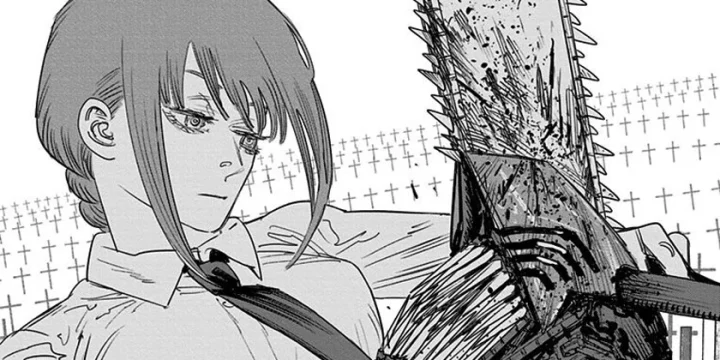
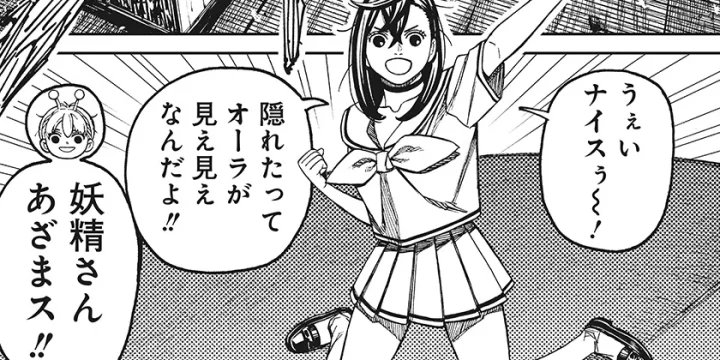
This evolution allowedJump+to maintain Shueisha’s editorial heritage—its finely tuned sense for nurturing talent and responding to reader feedback—while adapting to smartphone readers’ preference for sustaining, emotionally rewarding content that encourages daily returns.
The rise ofJump+has therefore introduced a new dynamic within the Jump ecosystem itself.
Where the weekly magazine once stood as the unquestioned center of the brand, the digital platform operates according to a somewhat different logic. Serialization schedules are more flexible, reader responses appear almost immediately through comments and online metrics, and international readership has become far more visible as digital distribution enables near-simultaneous global consumption.
Yet, for editors like Torishima, shaped by the magazine era, this transformation raises troubling questions.
If success is no longer determined solely within the closed arena of a weekly magazine, what exactly is the editor’s role in guiding a series? How should editorial judgment interact with real-time audience data? And in a system where platforms compete for attention through engagement metrics, to whom is the editor ultimately accountable—the author, the publisher, or the platform itself?

Platform Without a Flagship
Unlike Jump+, which carried the full weight and prestige of Shueisha’sWeekly Shōnen Jumpinto the digital realm, Shogakukan’sManga ONElaunched as something new—a standalone digital hub without a flagship print magazine to anchor it. When Shogakukan introduced the platform in 2014, it did not foreground the name of any existing print magazine such asWeekly Shōnen Sunday, Shogakukan’s flagship shōnen manga magazine and a counterpart toWeekly Shōnen Jumpat Shueisha. Instead, the service appeared as a newly created digital manga magazine in its own right.
At launch,Manga ONEcombined several differentunning on earlier web manga services while also offering complete access to recently concluded titles that had originally appeared in Shogakukan’s print magazines. Readers could therefore follow ongoing digital serializations while simultaneously browsing a large archive of popular works from the publisher’s back catalog
This mixture of new material and easily accessible archives proved highly attractive in the early years of smartphone manga consumption. By 2016,Manga ONEreported monthly active user figures that surpassed those ofShōnen Jump+, positioning the two platforms as direct rivals in the emerging market for digital manga distribution.
In this sense,Manga ONErepresented a platform model different from that ofJump+. Rather than extending the authority of a single flagship magazine, it functioned as a digital hub that reorganized content drawn from multiple editorialns—and backward—through the extensive circulation of previously published works
During the mid-2010s, the two services were frequently described as competing experiments in how major publishers might adapt manga to the rapidly expanding smartphone ecosystem.
Genres, Platforms, and Editorial Strategy
The competitive landscape of digital manga, however, was shaped not only by platform design but also by the kinds of works that editors chose to publish.
One factor behind the growing visibility ofJump+was its ability to host material that would have been difficult to run in the main pages ofWeekly Shōnen Jump. Freed from the expectations associated with the flagship print magazine, several major hits emerged from the digital platform environment.
Yet these experiments unfolded under the protective umbrella of the Jump brand. Even when serialized digitally, successful titles were collected as volumes under the familiarJump Comicslabel and distributed widely through bookstores and convenience stores. Decades of brand authority thus continued to support the platform’s new digital ventures.
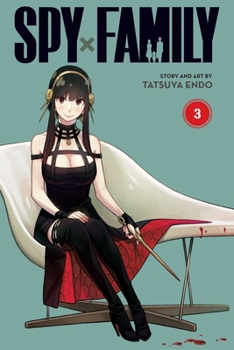
A similar pattern could be observed across the broader digital comics ecosystem. Platforms backed by telecommunications and technology companies frequently promoted works built around horror, revenge narratives, or other forms of emotionally intense storytelling. Such genres proved well suited to the episodic rhythm of smartphone reading and to recommendation systems driven by user engagement.
These trends also intersected with another rapidly expandingtories first published on the user-generated fiction siteShōsetsuka ni Narō(“Become a fiction writer”) were increasingly converted into digital manga by pairing relatively lesser-known manga artists with popular web fictions. The result was a new production pipeline linking amateur web fiction to commercial manga publishing
Against this backdrop,Manga ONE’s editorial direction appears less accidental than strategic. The platform emerged in a digital environment where darker narratives, revenge plots, and web-fiction adaptations were already demonstrating strong online appeal. Manga ONE, however, kept its distance from works directly adapted from web novels, instead emphasizing original manga developed within its editorial framework—a traditional model in which editors pair artists with story writers when necessary.
Diverging Platforms in a Changing Publishing Landscape
Over time, however, the trajectories of the two major publisher platforms began to diverge. After the pandemic,Jump+gradually broadened its editorial approach. Editors discovered that works with lighter tones and openly humorous sensibilities could generate equally strong engagement, expanding the range of successful genres on the platform.
Manga ONE, by contrast, appeared slower to pivot in response to these changing signals. A service that had once rivaledJump+in scale increasingly found itself trailing behind its competitor in the evolving digital marketplace.
This shift was unfolding against a broader structural change in the Japanese publishing environment. Since the 2000s, magazine sales at convenience stores had already been in decline. The COVID-19 pandemic in 2020 accelerated this trend, as convenience store sales shifted toward daily necessities and consumables, reducing the prominence of magazine shelves.
Even after the pandemic subsided, more stores chose not to maintain magazine sections at all. In effect, manga magazines were losing one of their primary points of sale, making the transition from print-based distribution to digital platforms an increasingly urgent necessity for the industry.
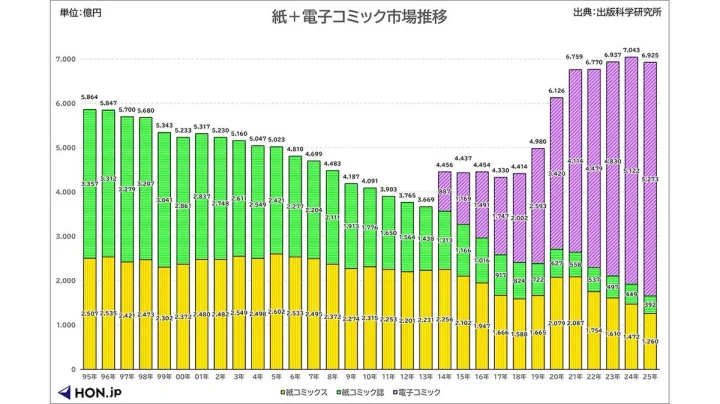
Some publishers were able to adapt more effectively to these changing conditions, while others struggled to keep pace. Shogakukan appeared to fall into the latter category. As a result, it is not difficult to imagine that expectations within the company forManga ONEbecame correspondingly higher.
Risk, Redemption, and the Platform Economy
Top illustration from theManga ONE10th anniversary website.
For a digital platform, this difference mattered enormously. Unlike the magazine system of the past—where circulation remained relatively stable over long periods—platforms exist within a volatile attention economy. Downloads, daily active users, and social media visibility can rise or fall quickly depending on whether a service produces works capable of capturing sustained public interest.
Within this environment, editorial departments faced a dilemma. Established magazine structures had once provided a relatively predictable pipeline of talent. Authors debuted through clearly defined channels, assistants advanced gradually into their own series, and editorial relationships were often cultivated over many years. Digital platforms, however, operated under a faster and more experimental logic.
It was in this fluid environment that the controversial writers eventually entered theManga ONEecosystem. The editorial team decided to let people with criminal convictions involving minors contribute under different names. The arrangements were never made public; the writers worked under pseudonyms that separated their new professional identities from their past cases.
Editorial Judgment and the Collapse of Trust
Ethically, the risks were obvious. But for a platform struggling to compete in a rapidly changing digital market, the calculation of risk can shift. A writer with a troubled past may still offer narrative skill, industry experience, or a promising concept that fits the metrics-driven logic of platform competition. Once that writer agrees to a pseudonym, editors can persuade themselves that the upside—talent, experience, fresh ideas—outweighs the risk, especially if the legal sentence has been served and remorse appears genuine.
TheManga ONEdecision appears to have emerged precisely at the intersection of these two logics. Editors attempted to balance the possibility of professional rehabilitation against the reputational risks to the platform. For a time, the arrangement remained invisible to the public.
However, after another manga artist publicly exposed the situation in a blog post—apparently knowing that doing so might end her chances of publishing with Shogakukan, one of Japan’s largest publishers—the issue quickly drew public attention. As criticism mounted, Shogakukan eventually disclosed the matter, and several creators, including Rumiko Takahashi, withdrew their works fromManga ONEin what appeared to be gestures of solidarity with the whistleblower—less a protest against Shogakukan than a modest show of support intended to ensure that the accuser would not be left isolated within the industry, a form of quiet professional solidarity emerging in a context quite different from the more confrontational dynamics that marked the early phase of the #MeToo movement in the Western world.
This response also suggests that many of those involved—including prominent creators such as Takahashi—remain uncertain how to interpret the situation or how it should be handled. Statements issued in late February by the Japan Cartoonists Association and by Ken Akamatsu (a former manga artist who is now a member of the National Diet) conveyed a similar sense of uncertainty between the lines.
Taken together, these reactions suggest that few still see the affair as simply a matter of editorial misjudgment. It is better understood as an example of institutional judgment failing under the pressures of the platform era.
The Debate in Japan
As a result, the controversy risks being interpreted primarily as a matter of individual moral failure. When framed in this way, the broader structural transformations currently reshaping the manga industry remain largely invisible.
In retrospect,the earlier exchange between Kazuhiko Torishima and Shihei Rinlooks different. Rin spoke optimistically about the possibilities of digital platforms, arguing that apps and online services would foster new kinds of creators and stories that the traditional print magazine system could not produce. Torishima questioned that optimism, asking whether the shift might weaken the protective oversight editors had long exercised over young and impressionable readers. The exchange grew increasingly heated, and the program ultimately ended with the two editors still speaking past one another.
The heated exchange between the two brilliant manga editors on the podcast divided manga fans at the time. Their conversation revealed two sharply perceptive understandings of the manga industry, each shaped by a different historical environment. Their disagreement ultimately remained unresolved. The two editors spoke from positions that seemed to run in parallel rather than converge.
Seen from the vantage point of theManga ONEcontroversy, however, that parallelism becomes easier to interpret. What appeared at the time as a generational disagreement over editorial philosophy may in fact reflect a deeper structural transformation already underway. The institutional framework that once defined the authority of manga editors is being reorganized by the pressures of the platform economy. In this sense, the controversy surrounding Shogakukan’sManga ONEseems almost to have given concrete form to the very tension that surfaced in their earlier conversation.
In the end, one might see theManga ONEcontroversy less as a story of individual failure than as a structural revelation. What once seemed like parallel views from two different generations now appear as opposite sides of a deepening fault line running through the entire manga industry. (Ironically, both Torishima and Rin hail from Shueisha, a major winner in the digital platform era.) This case has already made visible how platform economics can blur the lines of editorial accountability. It is not an endpoint, only a beginning. As platforms continue to replace magazines, the same rift is likely to produce further problems in the years ahead.
Note: As this article goes to press, Shogakukan’s third-party investigative committee has not yet released its final report. The situation surrounding Manga ONE continues to evolve.
The analysis above was drafted shortly after these scandals first came to light in March 2026. Almost five months later, on August 3, Shogakukan published the findings of its independent third-party investigative committee in a 106-page report.
The report explains that, at Shogakukan, decisions concerning the content of works, the selection of manga artists and original authors, and whether a series should be launched or continued were “basically understood to be matters to be decided by the editor-in-chief of each publication.” It attributes this practice to a broader Japanese publishing culture in which “editorial authority was entrusted to the editorial departments.”
The report further states that decisions such as the selection of contributors were left to the editor-in-chief, and that “editorial authority was considered something that should be strongly respected, and it was widely understood that decisions made by an editor-in-chief on the basis of that authority should be respected even by other editorial departments, administrative divisions, and senior executives.” The report identifies this organizational structure itself as one of the factors behind the failures, concluding that “authority became concentrated in the hands of the editor-in-chief, checks were not exercised because of appeals to editorial authority, and the company was unable to manage human-rights risks as an organization.”
The following day, company president Nobuhiro Suga announced that he would voluntarily return 50% of his monthly salary for three months. In an official statement, the company declared: “We recognize that this is an extremely grave matter concerning human rights, one that calls into question our consideration for the victims, our awareness and judgment regarding human rights, and our corporate governance and crisis-management systems.”
Along with the president, 25 other executives will also accept reductions in their monthly compensation for the same three-month period. Shogakukan also announced a series of institutional reforms intended to prevent similar incidents:
- Human Rights Committee: Establishment of a new committee, including outside experts, to strengthen systems for preventing human rights violations.
- Internal Training: Mandatory compliance and human rights training for all executives and employees.
- Formalized Decision-Making: New procedures requiring management and administrative departments to participate systematically in business decisions involving potential human rights concerns.
- Reporting Procedures: Formal rules requiring employees to report suspected human rights violations involving outside creators or business partners to supervisors and administrative departments. According to Shogakukan, this expectation had previously been communicated only through informal internal meetings.
As of August 6, 2026, the full investigative report remains available only in Japanese. Shogakukan has stated that an English-language summary outlining its corrective measures will be released in the near future. The company has also stated that it currently has no plans to hold a press conference following the release of the report.
(Note: On August 4, the editor who was in charge at the time and had been involved in settlement negotiations between Shoichi Yamamoto and the victim published an explanation and apology on his personal X account.)
Further Update: August 6, 2026
The Committee’s report notes thatDaten Sakusenaccounted for only 0.21 percent ofManga ONE’s total sales in 2019, concluding that its sales were not large enough to have had a significant impact on the platform as a whole. (p.45) Yet by 2019, digital manga sales in Japan had already grown to more than three times those of manga magazines, as shown in the chart accompanying this essay. In this context, it is difficult to doubt thatManga ONE’s editorial operation had acquired a greater degree of autonomy and institutional significance within Shogakukan. From this perspective, one might also see the limited scrutiny from the legal department or senior management over potential human-rights violations as a consequence of the editorial autonomy that had developed around the platform. (Third-Party Committee Report,p.102)
A broader indication of this shift can be seen in the decline of Japan’s major print manga magazines.Weekly Shōnen Jumphas now fallen below one million copies in circulation. According to the Japan Magazine Publishers Association, its average print circulation from April to June 2026 was 985,000 copies—the first time it has fallen below the one-million mark since the association began publishing these statistics in 2008. Its rival, Kodansha’sWeekly Shōnen Magazine, had a circulation of 281,000, while Shogakukan’sWeekly Shōnen Sundaystood at 120,000. Among non-manga magazines,Shūkan Bunshunhad a circulation of 362,000 andFRIDAY115,750. In other words, no Japanese print magazine now has a circulation exceeding one million copies. In recent years, an increasing number of convenience stores in Japan have also stopped carrying magazines altogether.
