

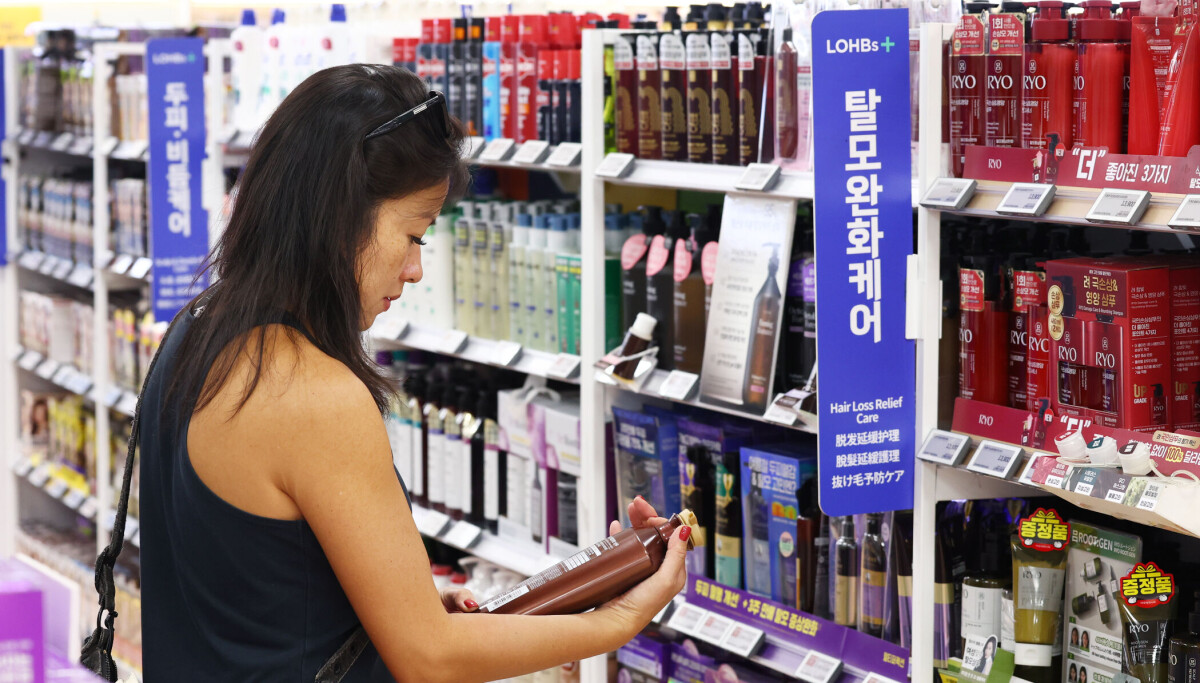
Overseas online sales of Korean products are surging as the global popularity of Korean culture boosts demand for locally made goods, andthe weak won makes them cheaper for foreign consumers.
Online direct sales to overseas consumers reached 1.2 trillion won ($870 million) in the second quarter, up 38 percent from a year earlier, according to the Ministry of Data and Statistics on Friday.
The figure broke the all-time high set just a quarter earlier, when quarterly sales surpassed 1 trillion won for the first time.
Related Article
-
Korea launches reporting center to combat fake K-brands overseas
-
Around 20,000 Japanese citizens attend Korean pop culture exhibition
-
No rooms left: Seoul hotels struggle to meet demand as tourists flood their halls
“Demand is growing particularly among consumers who want to immediately buy products available only in Korea or items currently trending here,” an e-commerce industry
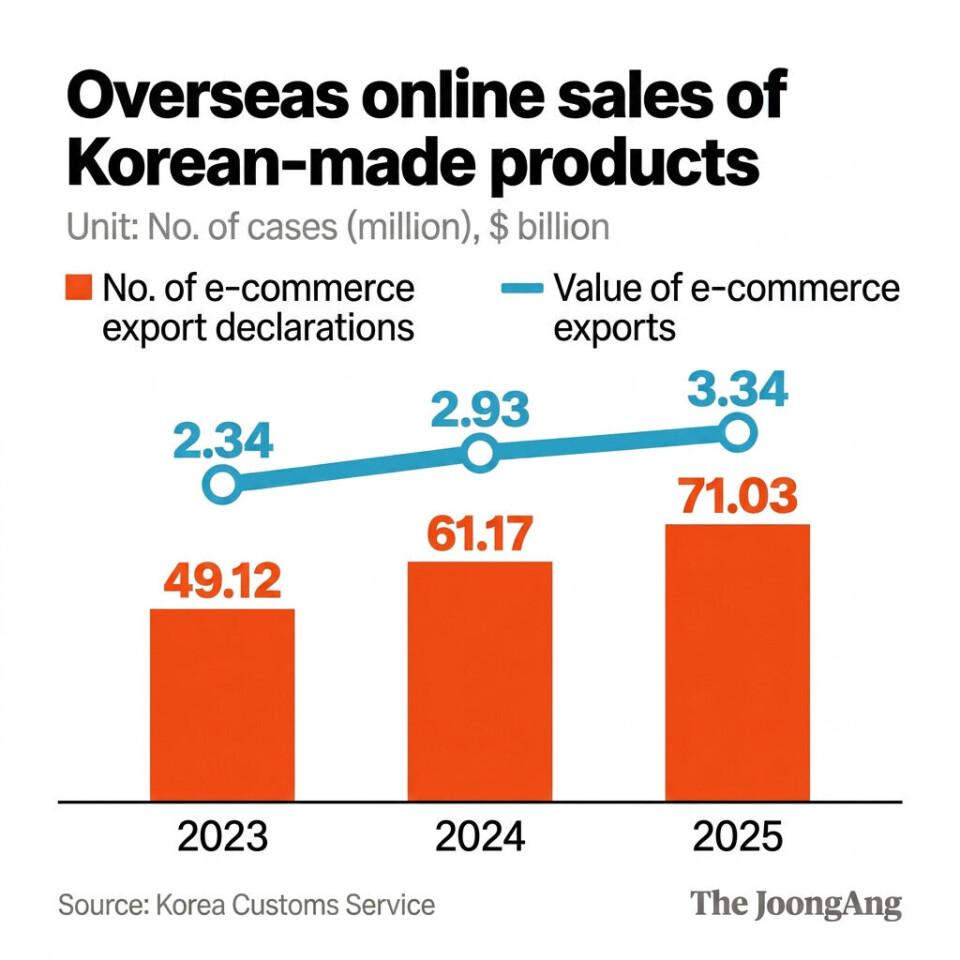
The growing overseas appetite for Korean products has also drawn more sellers into the cross-border market.
The number of new sellers on eBay in the second quarter doubled from two years earlier, according to the company. The figure has increased for six consecutive quarters since the first three months of last year and is now at an all-time high.
Gmarket, a Korean-based global e-commerce platform, has also seen similar growth among its global sellers. The platform had around 7,000 sellers offering 1.2 million products last year, compared to 11,500 sellers and 30 million products as of the second quarter this year. The value of sales transactions has also roughly doubled from the second half of last year.
Much of the growth has primarily been driven by the global popularity of K-pop, Koreancosmetics and Korean cuisine.
Korean cosmetics and perfumes were the best-selling products on Gmarket in five Southeast Asian countries — the Philippines, Singapore, Malaysia, Thailand and Vietnam — from January through July. Twelve of the 30 best-selling products were beauty products.
The spread of K-pop fandom culture has also boosted demand for merchandise used to collect and decorate photo cards — small collectible cards typically featuring photos or selfies of K-pop idols. Stickers and other accessories used by fans to personalize the cards have become particularly popular.
Products with a distinctly Koreanflair are finding buyers as well. Quilted padded vests commonly associated with older Korean women and winter hats with ear flaps are marketed as vintage items overseas, where they can sell for three to five times their prices in Korea.
Even familiar Korean bathhouse staples are attracting attention, too. Exfoliating washcloths and soaps traditionally used for scrubbing away dead skin at saunas are gaining interest among overseas consumers looking to experience aspects of Korean bathing culture.
The weak won has also provided another boost to cross-border sales. A higher dollar-won exchange rate means overseas shoppers can effectively pay less in their own currency for products priced in won.
Lower barriers to selling overseas have also helped expand the market. Since eBay operates as an auction-based marketplace, individuals can list and sell products relatively easily, much like on secondhand trading platforms.
The company also offers services designed to make overseas selling easier. eBaymag — one of the services — allows a product listed on eBay’s U.S. site to be automatically listed on local eBay sites in seven other countries, including Britain and France.
Logistics have also become more streamlined. Sellers using eBay eGS, also a convenience service provided by the online auction platform, only need to send ordered products to a logistics center in Incheon. eBay handles the remaining process, such as customs procedures.
“Sellers don’t even need a business registration certificate, so we are continuing to see more office workers selling products overseas as a side job,” an eBay representative said.
