

ByAngelo Franco-DeWitt
Posted Thursday, August 20, 2026 – 12:15 pm
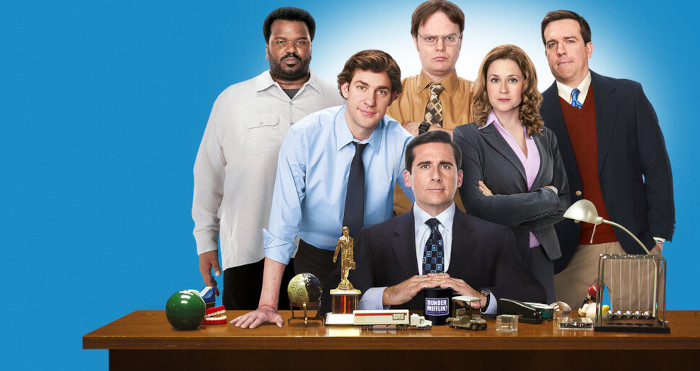
Every night, millions of otherwise intelligent adults open a streaming app containing more television than any human being could watch in five lifetimes, stare at the options for several minutes, and then put on the same episode of The Office they have already seen 11 times.
This is not a failure of imagination. Sometimes, after a long day of answering emails, reading headlines, dodging subscription prompts, and being informed by a refrigerator that its water filter is experiencing a crisis, the prospect of learning an entirely new fictional universe can feel like yet another unpaid administrative labor. A new show requires names, motivations, plotlines, perhaps even subtitles. An old show asks only that we press play.
And so, we return to the familiar. We know which jokes are coming, which couples will get together, which misunderstanding will ensue hilarity. There are no surprises, which is precisely the point. In an era defined by political instability, climate anxiety, economic precarity, and the general sense that every appliance now needs a software update, predictable television offers something increasingly rare: a world in which the problems are contained and the ending is known.
Streaming platforms have been very happy to accommodate this retreat. They may advertise themselves as infinite engines of discovery, but their real genius lies in making repetition effortless, with the next episode beginning automatically or the old favorite remaining prominently displayed; the algorithm remembers what soothed us last time and offers us another dose.
The comfort watch may look like harmless nostalgia. It may even be harmless, at least most of the time. But our collective devotion to familiar television raises a less comforting question: When entertainment becomes primarily a tool for emotional regulation, what happens to our appetite for anything that might actually surprise us?
Part of the answer lies in the peculiar burden of abundance, because streaming does not simply give us more television, but transforms it into an exercise of constant selection. We open Netflix, Hulu, Max, Disney+, Peacock, Paramount+, Apple TV+, or whichever other service has managed to acquire one indispensable show and fourteen-thousand hours of vaguely recognizable filler, and we begin the nightly ritual of browsing.
There are rows organized by genre, mood, popularity, viewing history, critical acclaim, and categories so microscopically tailored that they begin to sound like accusations. Because you watched one British crime drama in 2019, the platform has determined that what you crave is “Brooding Detectives With Complicated Marriages.” Because you paused too long over a cooking competition, it now believes you are ready for “Gentle Reality Shows About Personal Reinvention.” Somewhere inside this endless taxonomy, there is supposedly a perfect program waiting for us, one calibrated precisely to our tastes and the amount of emotional devastation we can reasonably absorb before bed.
This is where the paradox of choice begins to turn leisure against itself. The term, popularized by psychologist Barry Schwartz, describes the way an excess of options can make decision-making more difficult rather than more liberating, increasing our anxiety about choosing poorly and leaving us less satisfied with whatever we ultimately select. The problem is not merely that there are too many shows, but that every choice now carries the ghost of all the others—the prestige drama we should finally watch conflates with the critically beloved foreign series that would make us a better person, if only we could summon the energy to read subtitles.
Television once arrived with a certain degree of blessed indifference to our preferences. We watched what was on, or what we had recorded, or what happened to be playing when we collapsed onto the couch. The limitations were annoying, certainly, but they also relieved us of the obligation to optimize every free hour. Now, even relaxation has acquired the logic of consumer choice, complete with reviews, ratings, recommendations, and the suspicion that we are probably choosing wrong anyway. Faced with a library that promises infinite possibility, we become strangely conservative because choosing something new means accepting the possibility that our scarce leisure time might be wasted.
The familiar show eliminates that risk. There is no possibility that the show will disappoint us in a novel way, because it has already disappointed us in all the old ones, and we have made our peace.
Rewatching also saves us from the small but real labor of beginning. A new series asks us to learn its rules, remember its names, distinguish the troubled detective from the other troubled detective, and care about a political system that may require three episodes and an online explainer to understand. Even a mediocre sitcom demands a probationary period during which the characters are still strangers and the jokes have not yet acquired the warmth of familiarity.
This does not make the impulse to watch a comfort show shallow or mean that we have collectively lost the capacity to appreciate anything new. Rather, when choice itself has become exhausting, familiarity is relief. The same show becomes a solution to a problem the streaming era helped create: an endless abundance of entertainment that somehow leaves us too depleted to choose.
Repetition also creates a sense of control that the outside world rarely has the courtesy to provide. Real life has poor pacing, unresolved subplots, and an alarming tendency to introduce major developments without consulting the writers’ room. A comfort show, by contrast, keeps its promises. The breakup happens where it always happened; the misunderstanding clears on schedule; the difficult character remains difficult in familiar proportions; and even the episode that makes us cry does so with the decency of advance notice. We are not spared discomfort, exactly, but we are allowed to encounter it without risk.
There is a modest parasocial intimacy at work here. We have spent hours with these people and watched them survive the same mistakes so many times that they begin to feel like exceptionally repetitive acquaintances. The attachment is often biographical, too. We do not return only to the show, but to the version of ourselves who first watched it—an apartment we no longer live in, a roommate we no longer speak to, a period when our problems were different enough to seem, in retrospect, quaint. A series can become a time capsule preserving old anxieties and aspirations, such that watching it again is not simply nostalgia for the story, but for the self who once encountered it without knowing what came next.
What is more revealing is how naturally this private coping mechanism has expanded into a mass cultural habit, because our appetite for predictability did not grow in isolation. It sprung during a period when unpredictability became less an occasional disruption than the background condition of being alive.
That condition is difficult to overstate, even if we have become remarkably skilled at pretending otherwise. Over the past several years, political upheaval, economic precarity, climate dread, pandemic aftershocks, and the constant alarm of digital life have collapsed into one continuous atmosphere. The phrase “unprecedented times” has been used so often that it’s lost all meaning. Under those conditions, predictability acquires a new value. The comfort watch becomes a small act of environmental control, a way to narrow the world to something manageable when everything beyond the screen feels loud and hostile.
Millennials, in particular, have been trained for this strange arrangement of abundance and exhaustion. We came of age during the transition from appointment television to infinite access, old enough to remember waiting a week for a new episode and young enough to have adapted without much resistance to entire seasons appearing overnight. We were promised convenience and control, and received, among other things, 12 streaming subscriptions and three overlapping catalogs.
The result is a generation with more access to culture than any before it and, often, less psychic energy available to engage with it. Familiar television fits neatly into that gap, offering companionship without obligation and stimulation without surprise.
Streaming companies, naturally, have noticed, and they have built entire ecosystems around the fact that tired people are remarkably easy to retain once the next episode begins before we have had time to reconsider our lives.
Almost every design element of the modern streaming interface is engineered to reduce friction and preserve momentum. The “continue watching” row waits at the top of the screen; autoplay removes the need to choose again; and recommendation systems serve up endless variations of the thing we just finished, each one different enough to count as a new option and similar enough to require almost no adjustment. The result is a peculiar kind of abundance, expansive in theory yet recursive in practice.
We are told that the algorithm understands us, which sounds flattering until one considers what it actually understands: that we finished six episodes of a workplace comedy, paused twice during a British crime drama, and abandoned an acclaimed limited series after 17 minutes. From this, the platform builds a model of our tolerance, calibrated to predict what will hold us with the least resistance.
Discovery, then, becomes a controlled variation on the known. A show is recommended because it shares an actor, tone, genre, pacing style, or a thumbnail vaguely reminiscent of something that previously kept us from closing the app. Even categories that appear whimsical or hyper-specific tend to lead us back toward established preferences, narrowing the range of possibility while preserving the sensation that we are freely exploring it.
This is useful to the viewer, certainly, because no one wants to spend 40 minutes browsing only to discover that the film they selected is three hours long and “meditative.” But it is even more useful to the platform, whose primary interest is to keep us subscribed. The most successful recommendation is not always the one that expands our taste, but the one that prevents us from leaving.
Familiar catalog titles are especially valuable within this arrangement. A beloved sitcom or procedural can be watched repeatedly, entered at almost any point, half-ignored without consequence, and resumed months later with no need to remember whether the kingdom of Valyria is allied with the northern faction or whether that was the other dragon show. These programs function like renewable resources, producing hours of engagement without the expense or uncertainty of continually persuading viewers to invest in something new.
The industry’s growing dependence on reboots, sequels, revivals, franchises, and recognizable intellectual property follows the same logic. Familiarity lowers the risk on both sides of the screen. The audience knows roughly what it is getting, the studio knows there is already an audience, and the marketing department does not have to explain the premise from scratch. What begins as a viewer’s desire for comfort becomes a business strategy, and what becomes a business strategy eventually hardens into a cultural assumption: People want what they already know.
This creates a feedback loop so efficient it would be admirable if it were not also mildly depressing. Audiences, overwhelmed by choice, gravitate toward familiar stories; studios interpret the resulting numbers as proof that novelty is commercially dangerous; and the next round of programming arrives pre-softened by recognition. We are offered abundance, but much of it is arranged around repetition, a vast buffet in which every dish has become another form of chicken.
The consequences are subtle because the system rarely feels coercive. No one is forcing us to rewatch anything, and the algorithm does not appear on screen wearing a monocle and demanding our cultural stagnation. It only makes the easiest choice easier until our habits begin to resemble preferences and our preferences become commerce.
None of this means that comfort watching is inherently suspect, or that every return to a familiar show marks some small surrender of the human spirit. Sometimes a person is tired; the world is unbearable; and Bob’s Burgers is there. Civilization has survived worse accommodations.
The more interesting question is what happens when comfort stops being one use of art and becomes the only use we are willing to tolerate—when television is no longer something we engage with so much as something we deploy, like a white-noise machine with the voice of Mariska Hargitay. A familiar show can soothe us, but it can also ask almost nothing of us, allowing our attention to remain pleasantly diffuse while we scroll, cook, answer emails, or drift toward sleep.
At that point, the distinction between restoration and avoidance becomes difficult to see. We may tell ourselves that we are unwinding, and often we are, but we may also be protecting ourselves from the small demands of novelty: concentration, ambiguity, patience, the possibility of disappointment. The comfort watch becomes not simply a refuge from the world, but from being surprised by it.
And surprise, however inconvenient, is one of the things art is supposed to achieve. Because new stories ask us to do more than recognize ourselves—they ask us to remain inside an experience we do not yet understand, to tolerate uncertainty long enough for another person’s logic, another culture’s rhythms, or another moral universe to become legible. That process is not always soothing. Sometimes it is slow, irritating, disorienting, or emotionally expensive, which is precisely why it can enlarge us in ways that comfort rarely does.
To encounter unfamiliar art is to surrender a small measure of control. We are asked to pay attention before we know if it will be rewarded, and to sit with ambiguity without immediately reaching for an explanation or the phone that has spent the past decade training us to flee at the first sign of boredom.
The concern, then, is that a culture organized increasingly around familiarity may weaken our patience for anything that does not announce its value immediately. Slow narratives begin to seem indulgent, difficult characters seem badly written, unresolved endings seem defective, and unfamiliar styles are dismissed as inaccessible. What looks like a preference for comfort can gradually become a demand that art arrive pre-digested.
That demand matters because engagement with new art is also a form of empathetic practice. Stories give us access to lives, histories, and interior worlds that do not resemble our own, but only if we are willing to meet them on terms that may initially feel strange. The more our cultural diets are shaped by repetition and algorithmic resemblance, the easier it becomes to remain within a closed loop of recognizable faces and emotional outcomes calibrated to confirm what we already understand.
The industry, of course, is attentive to this narrowing. Every abandoned pilot, repeated episode, completed season, and return to a known title becomes data; and data, unlike critics or artists, has no romantic attachment to risk. It tells platforms what held us or where we left, and those signals help shape what gets financed, renewed, promoted, or removed from the homepage.
This helps explain why contemporary television can seem simultaneously overproduced and underimagined, crowded with content yet increasingly dependent on familiar franchises or premises that can be understood before the trailer ends. New series are often expected to arrive fully formed, generate immediate engagement, and justify their existence before viewers have learned the characters’ names, while older properties are granted the enormous advantage of being remembered. A strange, ambitious show may need time to teach an audience how to receive it; a reboot needs only a logo.
There is a bleak efficiency to this arrangement. Viewers retreat from risk because attention is depleted, platforms reward what retains that depleted attention, and studios respond by producing art designed to minimize the possibility of rejection. Each part of the system appears to be reacting reasonably to the others, while the collective result is a culture that becomes more cautious with every cycle.
We may object to the endless procession of sequels, revivals, and cinematic universes, but our habits often deliver a clearer verdict than our complaints. We say that we want originality, then spend the evening revisiting a show whose dialogue we can recite from the next room. The industry studies the discrepancy, opens another spreadsheet, and concludes, not irrationally, that what we truly want is the past, newly packaged and with terrible color grading.
Adventurous art will not cease to exist, but it will become harder to encounter. A culture that loses its tolerance for narrative uncertainty becomes less willing to imagine beyond what has already been made safe. And safety, for all its comforts, has never been the same thing as vitality.
This is not an argument for renouncing the comfort watch, nor for treating every evening on the couch as an opportunity for moral improvement. Art does not have to challenge us every time we encounter it, and there is no virtue in forcing ourselves through something punishing simply because a critic used the word “daring.” Familiar stories can be restorative and genuinely meaningful. Sometimes the show we have seen before is exactly the show we need.
But comfort works best as a refuge, not permanence. When we ask art only to reassure us, when we value it primarily for its ability to recede into the background and make no claims on our attention, we risk flattening one of the few spaces still capable of surprising us into thought. Perhaps the answer is not to abandon the old favorites, but to remain suspicious of how easily they are offered to us. To choose, now and then, the show whose rules we do not yet understand, the film that requires us to sit still, the story that may irritate us before it reveals what it is trying to do. Novelty is not inherently superior, but attention, like any capacity, is shaped by what we ask of it.
The next time we open a streaming app and find ourselves hovering between the infinite unknown and the episode we can practically perform from memory, there is no shame in choosing the familiar. We should simply know what kind of choice we are making, and who benefits from it.
Email this page
Highbrow Magazine
watching old tv showswatching TVthe officethe simpsonsbob’s burgersseinfeldcurb your enthusiasmfriends tv show

2 Comments
Pingback: The Price of Fandom: $2,000 a Year and Debt - Comic Vibe
Pingback: Philippine official pushes ban on online gaming platform Roblox after school shooting - Comic Vibe