

Related reads:Thunder 3 Images
IGN Otaku Update is IGN India’s original column series exclusively dedicated to covering the animanga fandom and market.
What happens when three ordinary middle schoolers, a kidnapped little sister and a bunch of aliens get thrown into a world that looks like it belongs in a live-action science fiction film?
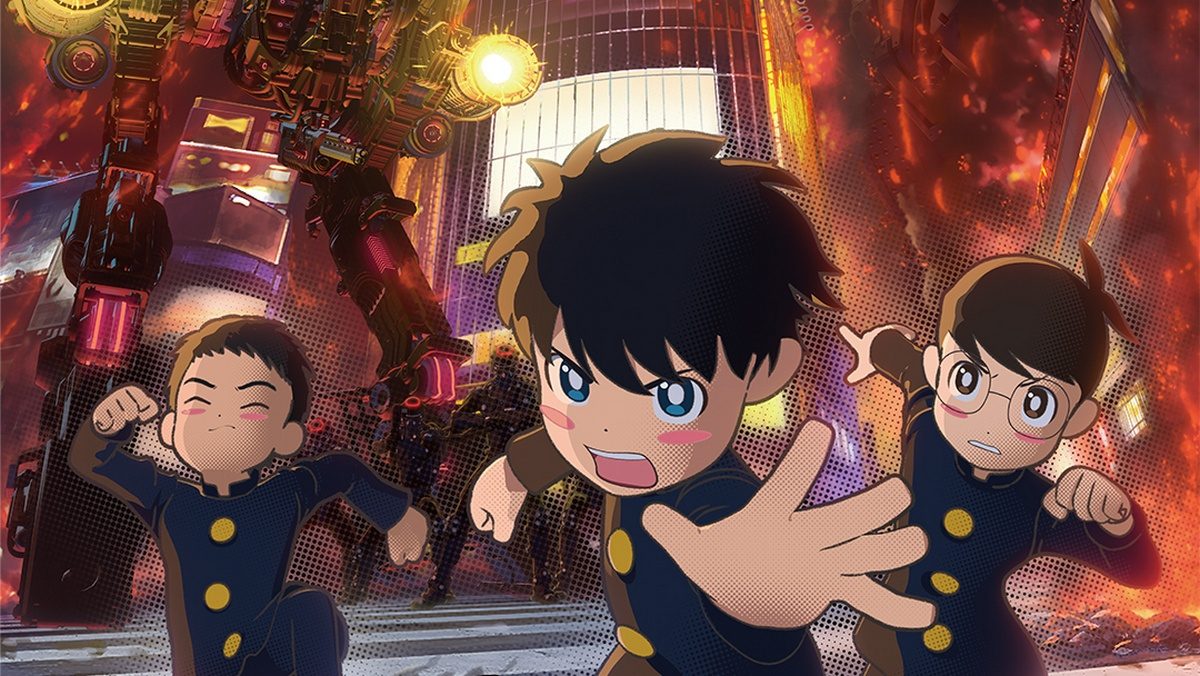
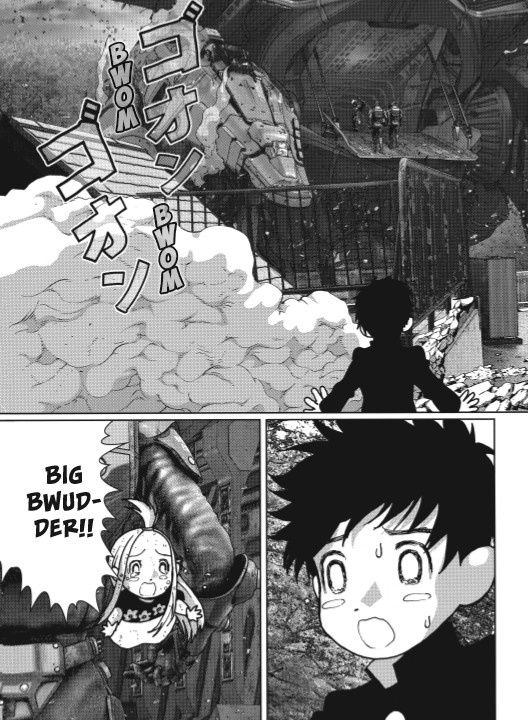
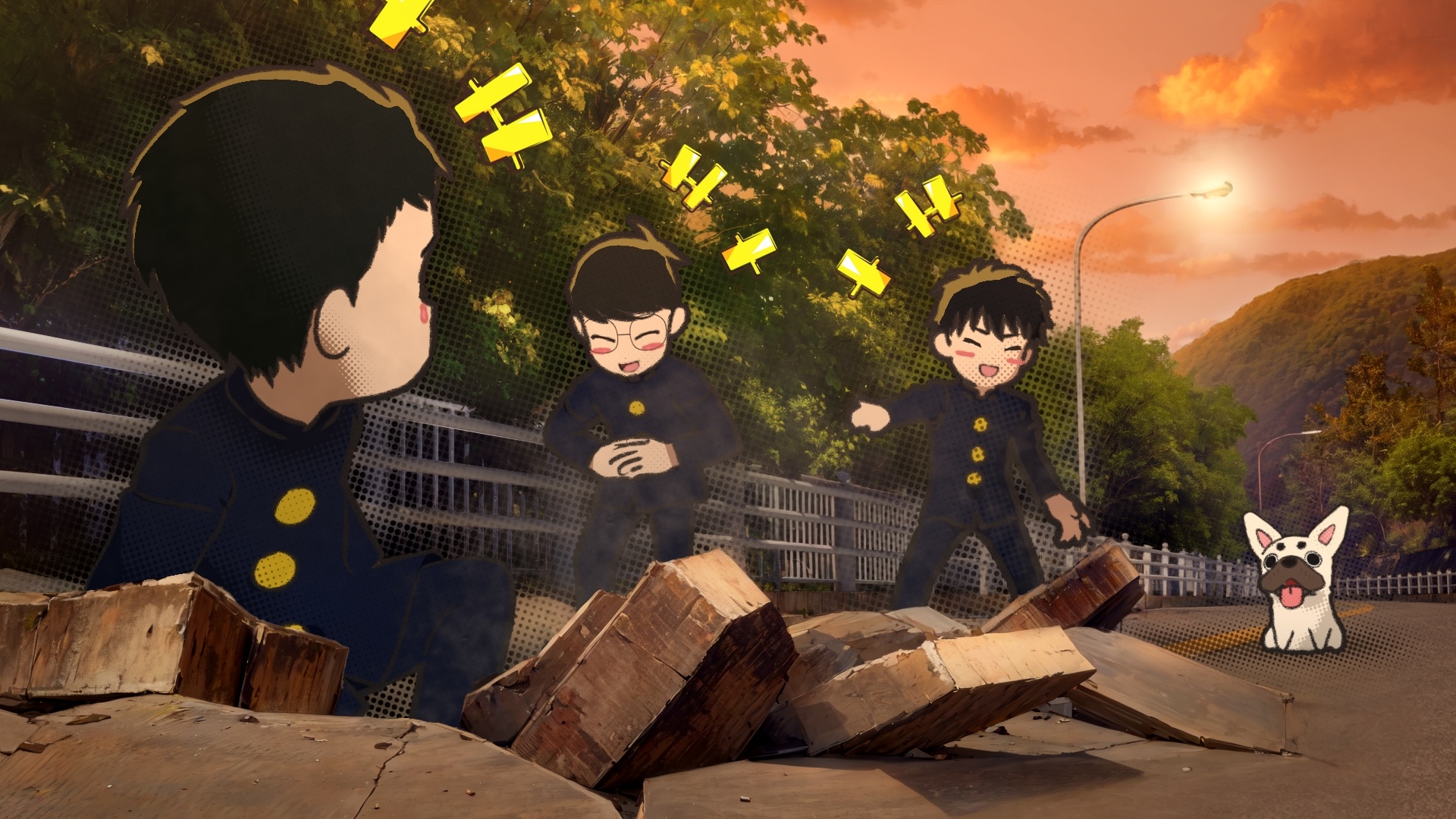
That is the basic setup of Thunder 3, an isekai mystery and science fantasy series that looks almost deliberately contradictory. Its central characters have the rounded, cartoony designs you might expect from a children’s anime, while the world around them has a far more realistic, heavily detailed visual style (there are moments where the whole thing looks like someone dropped a gag manga like Osomatsu-san into Gantz). That is the art style of Yuki Ikeda, the creator of the Thunder 3 manga that the anime is adapting from.
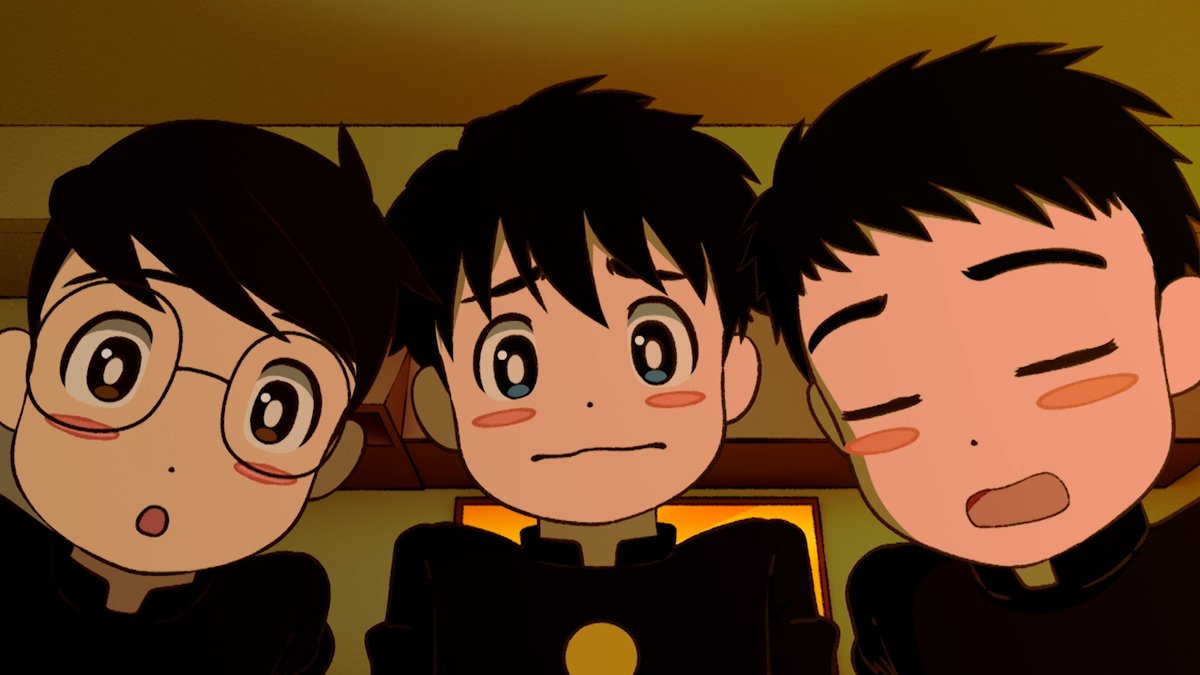
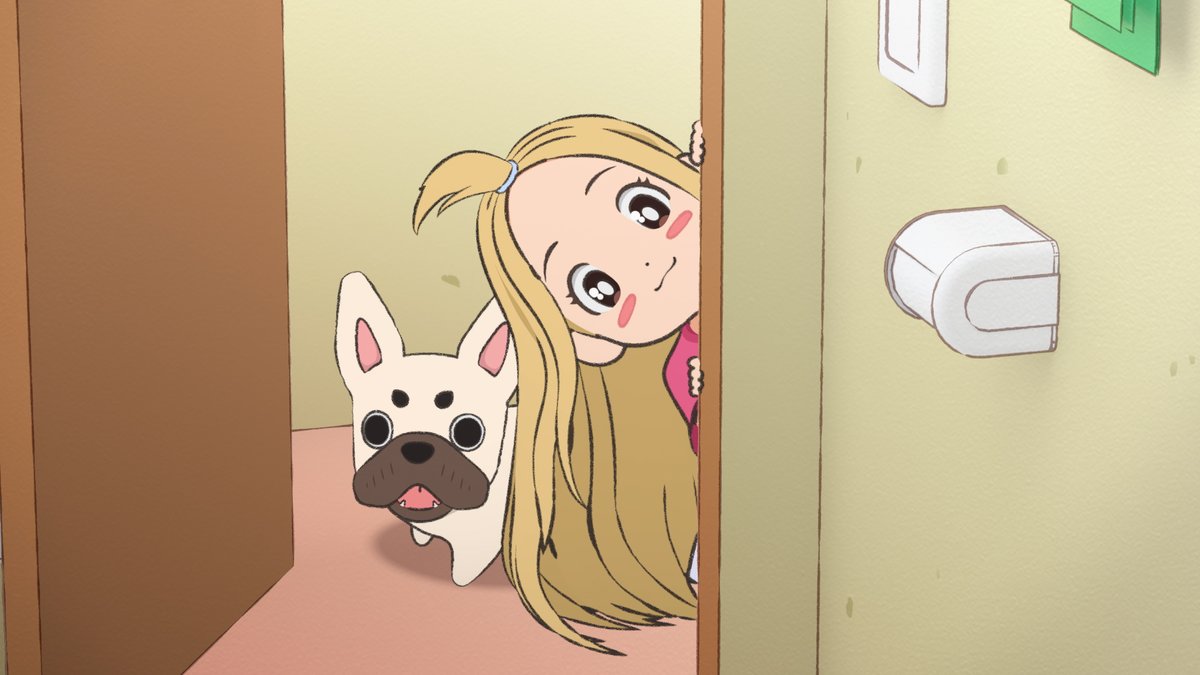
The story follows boys Pyontaro Tezuka, Hiroshi Ochanomizu and Tsubame Azuma, collectively known as the Small Three. After playing a mysterious disc borrowed from their teacher, Dr. Doc, the trio discovers a parallel world when a lifelike dragonfly emerges from their television. Pyontaro’s younger sister Futaba and their dog chase after it, only to be pulled into that other world and captured by its alien inhabitants.
The Small Three then have to team up with the humans living there to rescue Futaba and take on the extraterrestrial forces controlling the planet.
The anime is produced by UNEND, the independent creative studio founded by CG director Hiroyuki Seshita. Before starting UNEND, Seshita spent years at Polygon Pictures, where he directed Ajin: Demi-Human, Blame! and the Godzilla anime film trilogy. He now works at UNEND with a focus on digital production, 3D CG and highly stylised animation.
The series is also whose credits include absolutely massive juggernauts like Attack on Titan, Jujutsu Kaisen, Mob Psycho 100 and Chainsaw Man to name a few
So in this edition of IGN Otaku Update, I spoke exclusively with Seshita and Seko about the challenge of adapting Thunder 3’s unusual art style, the appeal of its surprisingly simple central story, and what it takes to turn a manga built on two very different visual worlds into an anime.
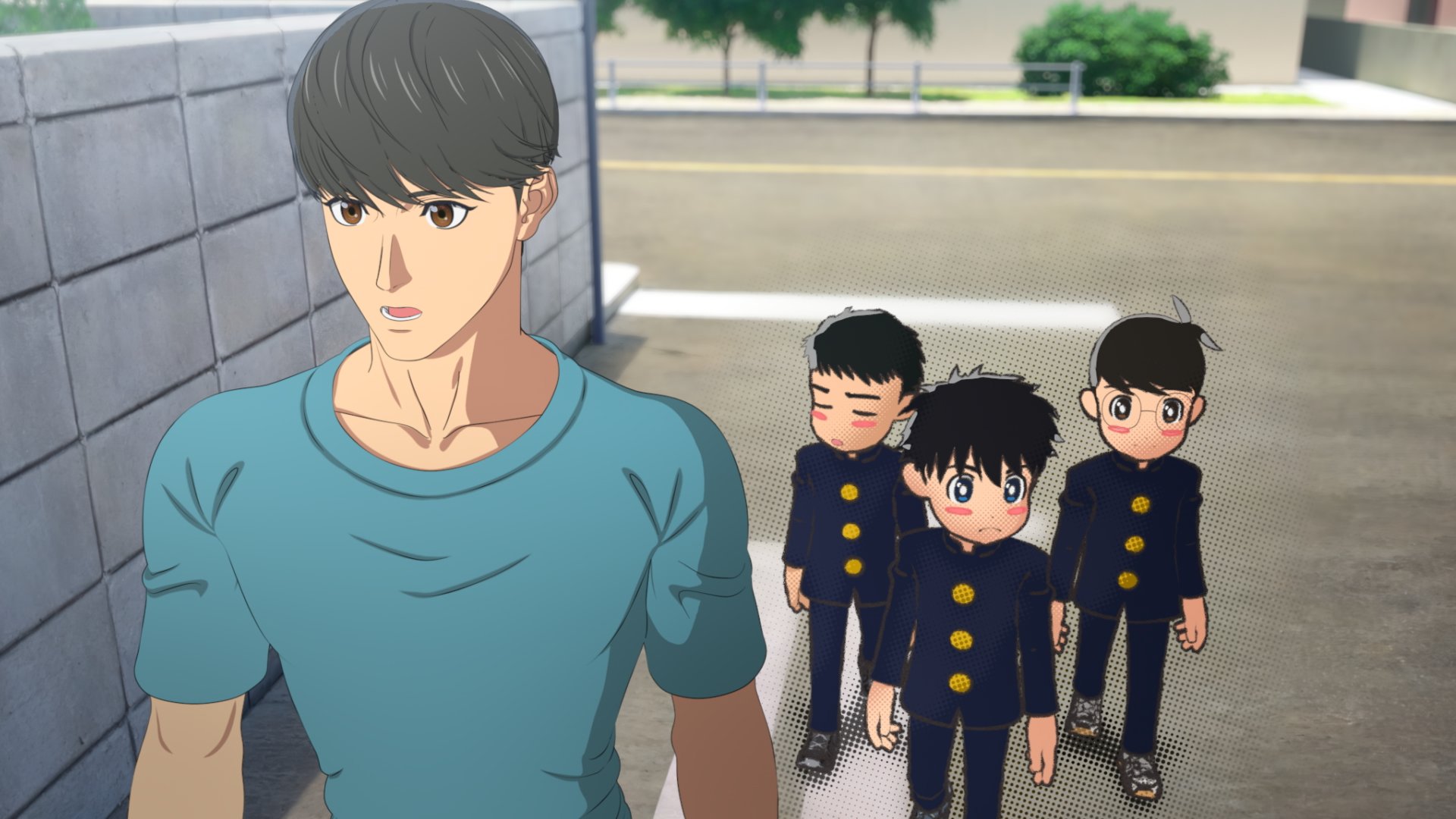
The central challenge of adapting Thunder 3, they tell me, was to preserve the charm of Ikeda’s manga while making two radically different visual styles feel like they belong in the same show. And judging from what Seshita describes, that was considerably more complicated than simply putting 2D characters into a 3D environment.
“It’s Like Making Two Productions at the Same Time”
For audiences who don’t know Thunder 3 at all, what’s the one element of this story, whether it’s the central mystery, the friendship between the Small Three, or something about the parallel world itself, that you think will be hardest to capture in a trailer or panel, but pays off best once people actually watch it?
Hiroyuki Seshita: It’s the fantasy itself. Comic and cartoon characters, and adorable little beings, saving the real world.
Hiroshi Seko: First and foremost, I think the idea of manga characters entering a realistic or photorealistic world is just wonderful.
But this work doesn’t derive its appeal from the novelty of that premise alone. At the heart of the story is a simple, straightforward and powerful narrative you could call classic: “going to rescue a kidnapped little sister,” or “fighting to take back an Earth ruled by aliens.” And I think the greatest catharsis lies in the feelings and the actions of the characters who fight for that cause, whether they’re manga characters or real-world characters.
On top of that, the Small Three, Pyontaro, Hiroshi and Tsubame, are unremarkable middle schoolers, and I absolutely love watching those three rise to the occasion and shine.
Seshita, you’ve previously talked about creative freedom when working with other companies. Where does UNEND’s own production of Thunder 3 fall on that spectrum? Are you the one setting the constraints now, or is it freer than anything you’ve worked on before?
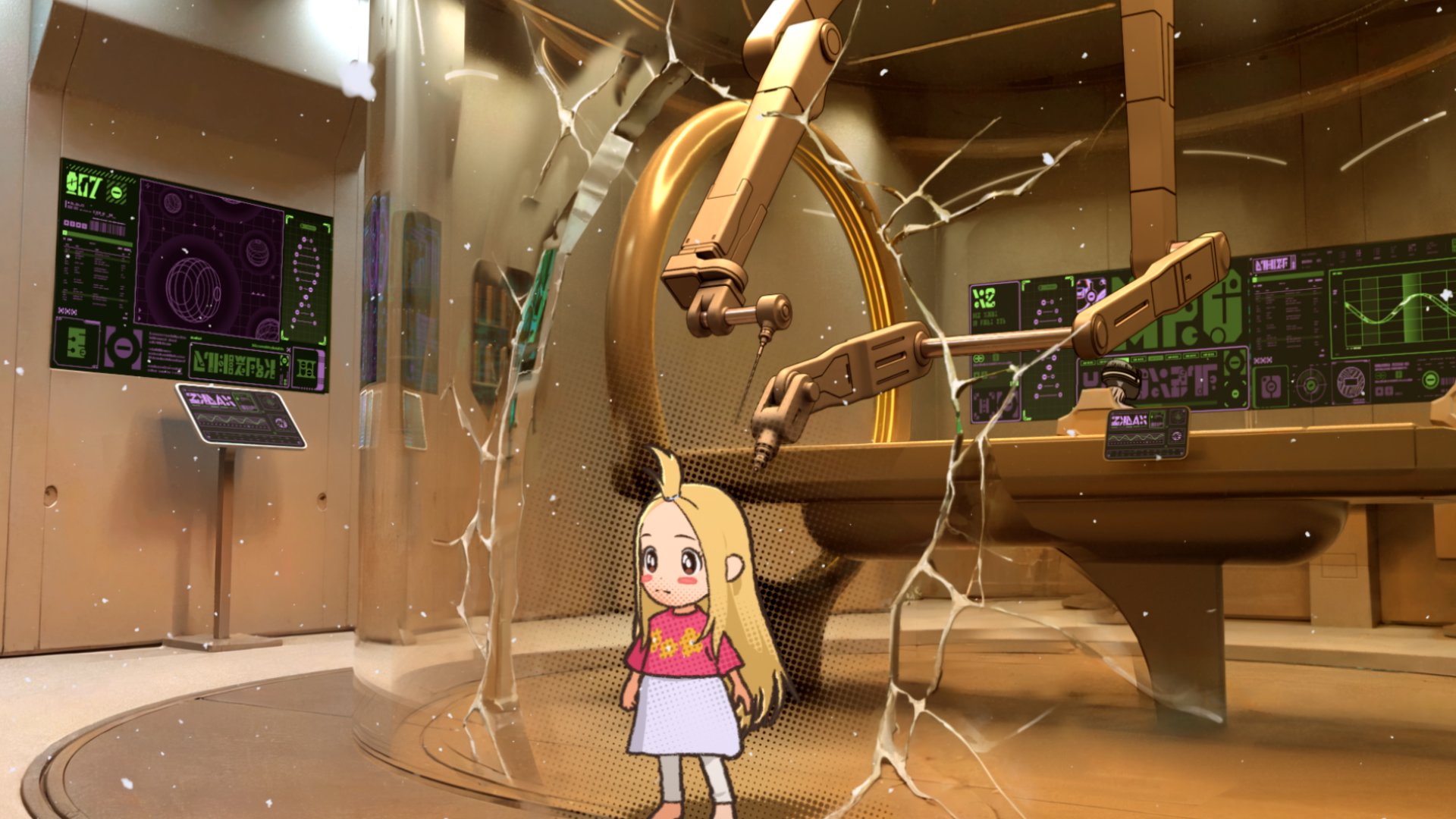
Seshita: Because two styles coexist here, meaning it’s like making two productions at the same time, the budget and schedule constraints are greater than I’d expected.
That said, as for creative freedom, thanks to Ikeda-sensei, the original creator, and everyone on the production committee, it’s turned out to be a very easy environment to work in.
Two Visual Styles
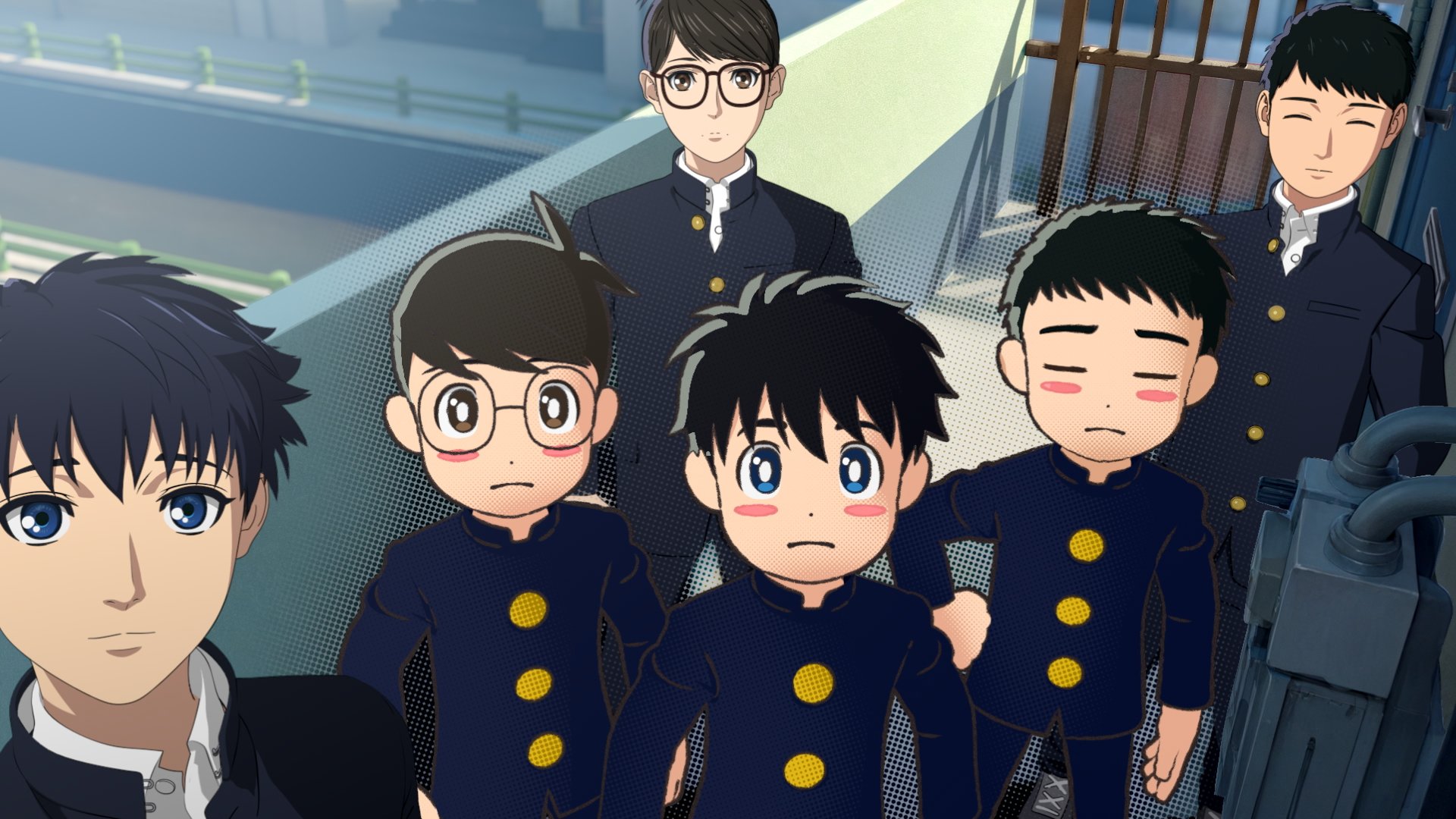
The Thunder 3 manga is known for being visually distinctive and twist-heavy in a very illustration-specific way. What was the actual translation process like, turning Yuki Ikeda’s particular art style into UNEND’s CG pipeline? Were there elements of the original art you found hard to preserve, and others that translated more naturally than expected?
Seshita: We started with test versions of the manga characters and used that style as the benchmark for setting the visual direction of the entire work.
Figuring out the style for the manga characters when they’re in the real world took a lot of trial and error, but we arrived at the halftone-dot style of the original manga’s cover, which you could call the point of origin.
The manga characters cost roughly twice as much as the realistic characters. There weren’t many elements that translated over smoothly.
You’ve made your name on shows where the danger is enormous and external, containing kaiju, demi-humans and post-human threats. Thunder 3’s danger is smaller and more personal, a missing little sister. Did that shift in scale change anything about how you think about tension and pacing as a director?
Seshita:There’s been no major change to my directorial philosophy, but I was able to rediscover the appeal of inherently weak, cute little beings summoning their courage and fighting with everything they have.
Seko, your résumé is dominated by some of the bleakest, highest-stakes shonen being adapted right now. What pulled you towards a project that’s fundamentally about three middle schoolers and a little sister, and how differently do you approach scripting something built on warmth rather than dread?
Seko:To begin with, for me, Jujutsu Kaisen, Chainsaw Man and Thunder 3 all fall within the same big category of “incredibly fun manga,” so I see them as the same kind of thing.
Every one of these works is incredibly fun, whether it has a dark worldview or is a story about “three middle schoolers and one little sister,” so the fact that I’m drawn to that fun doesn’t change. That’s how I’d put it.
On top of that, my approach doesn’t change at all, no matter which work I’m writing. I think about one thing only: “How can I make it the most fun when turning a manga drawn on paper into animation, a visual medium?”
Making the Manga Work as Animation
You’ve adapted other people’s worldbuilding before, but always within studios and production pipelines you didn’t run yourself. Working under Hiroyuki Seshita at his own studio, UNEND, is that a different working relationship for you? Is there more collaborative back-and-forth on structure, or does the writing process look basically the same regardless of who’s directing?
Seko: The writing process is almost the same no matter the production company or the director.
There are slight differences depending on the work, but those differences are all within the margin of error. To put it in baseball terms, no matter which team I’m facing, as a pitcher I “just throw my own pitches.” I do adjust how I attack a little depending on the batter, but that’s “within the margin of error,” wouldn’t you say…?
Series composition on a dense, plot-heavy shonen like Jujutsu Kaisen or Chainsaw Man is largely about managing exposition and stakes that never let up. Thunder 3 is built more around character relationships and a slower emotional throughline. Did you find yourself having to consciously dial back habits that work for those other shows, whether that meant pacing instincts or how much you front-load tension, to let this story breathe differently?
Seko:Each work has its own unique tempo, so I build the series composition to match it.
Even the two you cited, Jujutsu Kaisen and Chainsaw Man, don’t share the same tempo, and Thunder 3 has a tempo all its own, so I think about how best to make the composition suit that particular work.
This is almost the same as the idea I mentioned earlier: “How can I make it the most fun when turning a manga drawn on paper into animation, a visual medium?”
Rayan Sayyed is the deputy editor for IGN India who writes and speaks on pop culture, spanning from games, anime, manga to films and everything in between. You can reach out to him at rayan_sayyed@ign.com, or find him on Instagram @rayansayyed and Twitter/X @rayanaver
Got any news tips, or want to discuss a possible story? Email us at ign_india@ign.com (to reach out with confidential tips, click here). For the latest on gaming, entertainment, pop culture, anime/manga, follow IGN India on Instagram, X, Facebook, and <a href="https://whatsapp.com/channel/0029VaOY0yd1dAw8syRNPi0B” rel=”nofollow noopener” target=”_blank”>WhatsApp. For the latest videos, subscribe to us on YouTube.
