

As a child of the 1980s who watched a lot of television, I feel a sentimental pleasure when I catch a rerun of Cheers or stream an episode of Who’s The Boss? that I always loved. Sometimes, though, when I watch some of the best 1980s shows now, I see them in a completely different way than I did as a kid. Of course my perspective has changed a lot, but some of the shifts are to do with how society and our world has changed in a few short decades.
When I watched some reruns of 1980s TV shows recently, I was surprised by how much some of the writers must have been paying very close attention to where the country was headed, in some good and bad ways. Here are 12 shows that sometimes land differently now, and why.
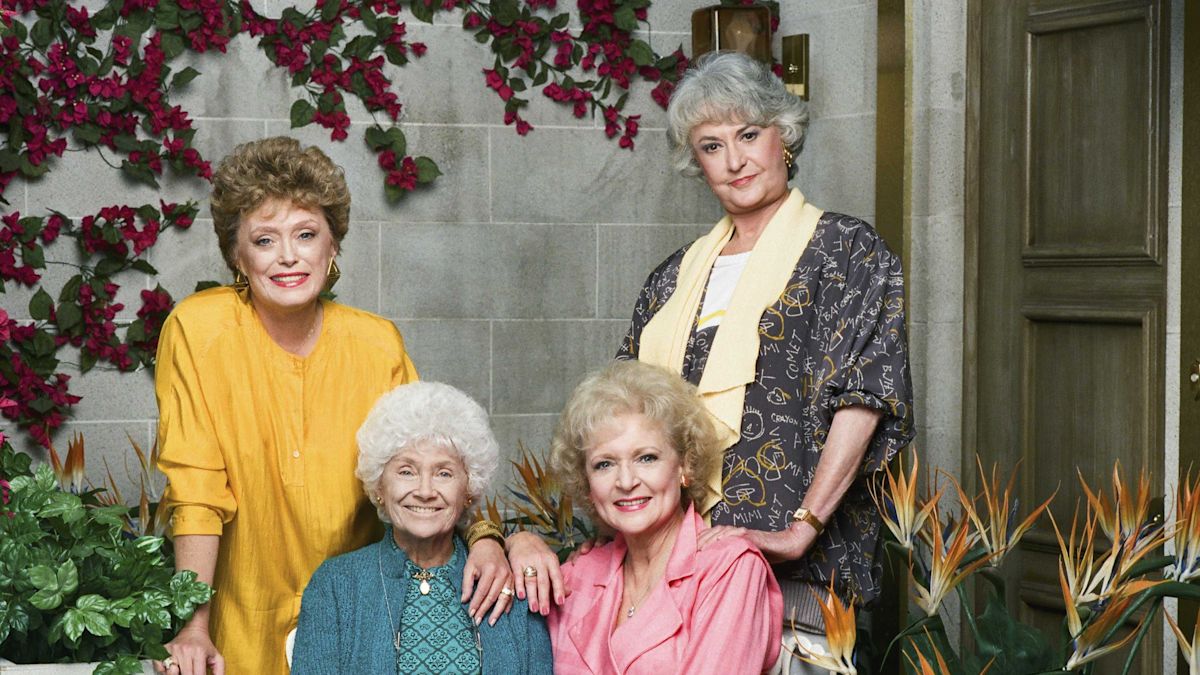
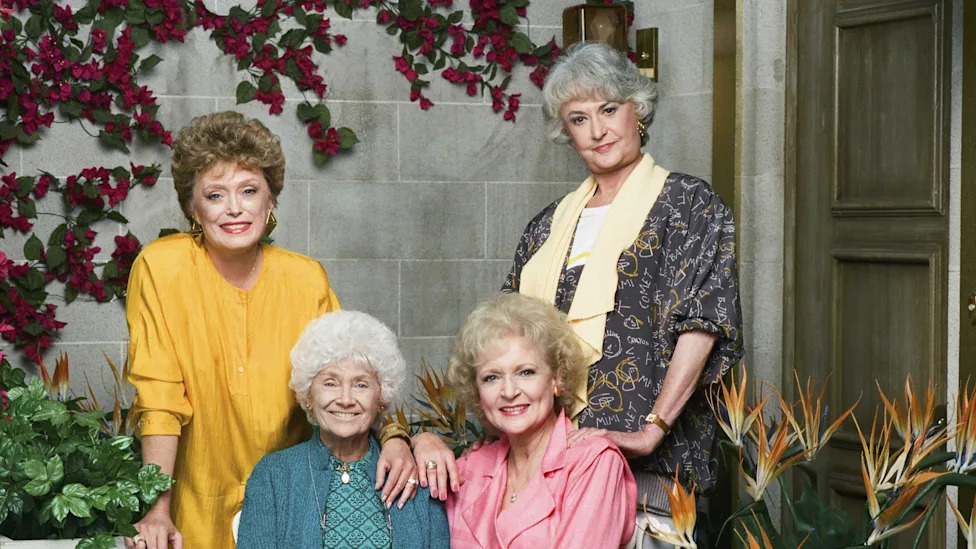
‘The Golden Girls’ would fit in with the shared-housing boom
The Golden Girls shined in the face of a lot of sexism on television in the 1980s. The premise was simple: four women split a Miami house because it’s cheaper than living alone, and of course over time their reasons shift and deepen quite a lot. That premise seemed novel in 1985, but in 2026, sharing a home is how many people are getting by.
KFF Health News recently reported that older adults are choosing The Golden Girls lifestyle for themselves. A Denver retiree who took on a housemate after a couple of falls worried her kids. HomeShare Oregon’s platform has attracted close to 7,000 providers and seekers across five years, and Portland rolled out a pilot program paying homeowners $1,000 to open up a spare room. It turns out that Blanche Devereaux, Dorothy Zbornak, Rose Nylund, and Sophia Petrillo were even more ahead of their time than we imagined back then.
‘Cheers’ understood the loneliness epidemic before it had a name
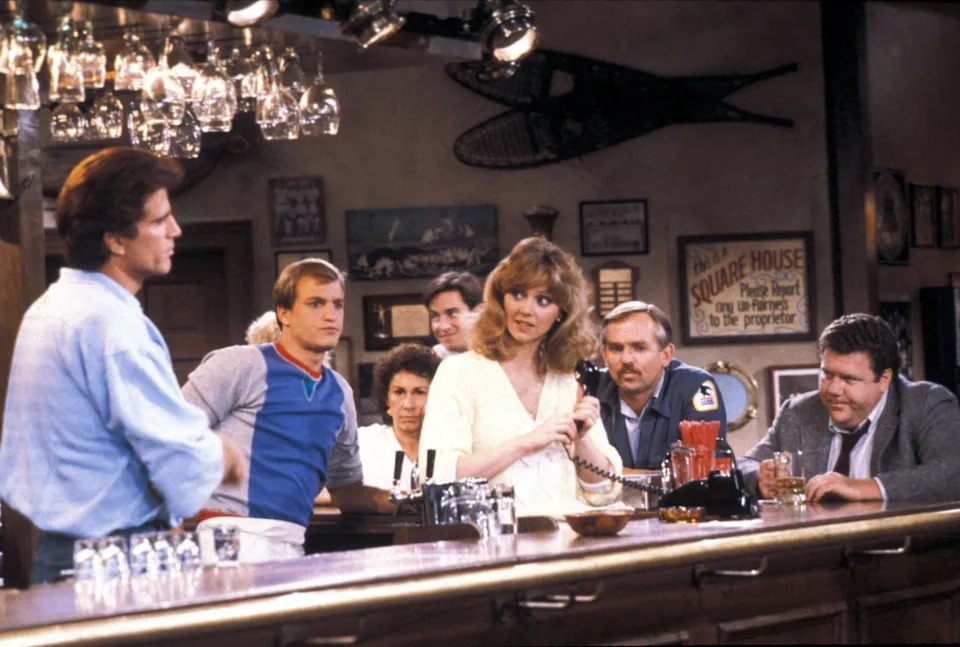
A place where everybody knows your name is the single most efficient description of what sociologist Ray Oldenburg called the “third place,” the ground between home and work where community actually forms. People have needed them throughout the history of our society.
This concept even became a public health matter. The 2023 U.S. Surgeon General’s advisory on loneliness found that roughly half of American adults experience loneliness, and that lacking social connection can raise the risk of premature death about as much as smoking up to 15 cigarettes a day. Project for Public Spaces has since documented how thoroughly third places have thinned out.
While I certainly wouldn’t recommend everyone go find a bar to hang out in all the time, Cheers showed how a sense of community formed there as a third place. Employees became genuine friends with customers, and they were there for each other through the years. It shows how friendships and chosen family can form in a third place.
Some of the beloved actors from Cheers have passed away. George Wendt (Norm Peterson), Kirstie Alley (Rebecca Howe), and Roger Rees (Robin Colcord) are among the beloved cast members who are no longer with us.
‘A Different World’ is the rare sitcom with measurable real-world impact
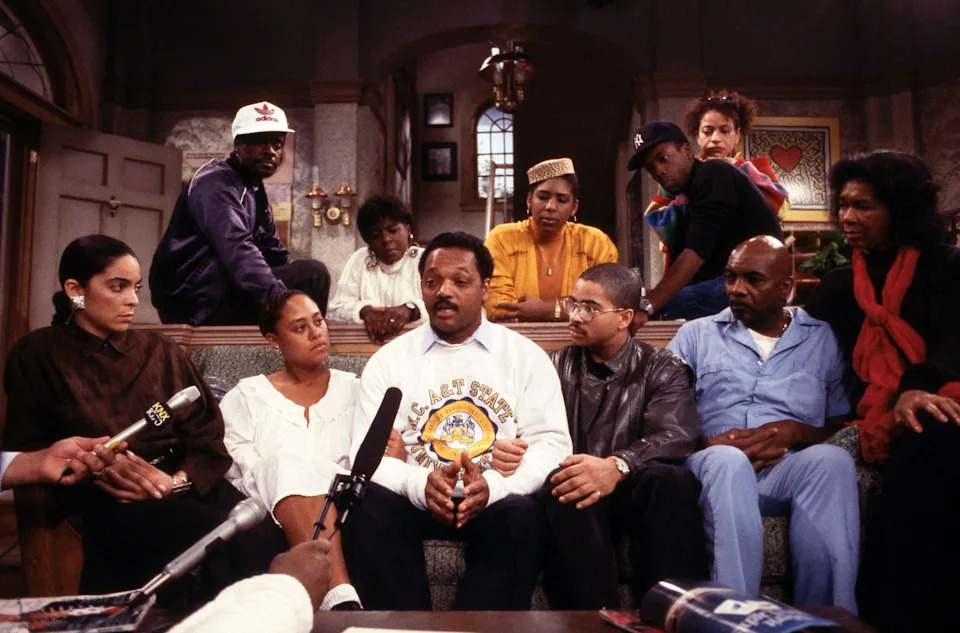
A Different World was very entertaining, and it also made an impact on society. Howard University has credited the series with raising awareness of HBCUs (Historically Black Colleges and Universities) nationwide, pointing to CNN reporting that HBCU enrollment climbed 26% between 1976 and 1994, with nearly all of that growth arriving between 1986 and 1994. After the 2024 cast tour of HBCU campuses, Howard reportedly logged a 12% jump in applications for the Class of 2028.
“Retrospective love, I have to say, it’s the best kind of love,” Jasmine Guy reflected at a Howard celebration covered by The Dig.
Also, Netflix’s sequel series premieres Sept. 24, exactly 39 years after the original debuted. “There couldn’t be a better time than now to reboot A Different World,” Debbie Allen shared with Netflix’s Tudum.
‘Growing Pains’ gave us a work-from-home dad in 1985
To kick off the series Growing Pains in 1985, Jason Seaver moved his psychiatry practice into the family home so his wife Maggie could go back to work as a journalist. Their three children were all in school, and she was excited to return to the career she loved. Carol and Mike Seaver are teens, but little Ben is still in elementary school and misses his mom being a stay-at-home mom at first.
Alan Thicke played Jason as a genuinely atypical TV patriarch, a work-from-home father who led with patience and parented with compassion. It helped set the scene for a different sort of TV father. This show also launched the career of a teenager named Leonardo DiCaprio.
‘Designing Women’ aired one of TV’s bravest half hours
On October 5, 1987, Designing Women aired an episode called “Killing All the Right People” about what happens when a young gay man asks the Sugarbaker women to design his funeral. Series creator Linda Bloodworth-Thomason wrote it after her mother contracted HIV through contaminated blood products, and she took the title from a remark she overheard in a hospital hallway. Bloodworth-Thomason told Today that she overheard a woman saying, “Well, if you ask me, this disease has one thing going for it. It’s killing all the right people. That just made me so angry. I immediately wrote a script by the same title.”
TheWriters Guild of America West singled out the episode in 2024 as one of the first sitcom half hours to confront the AIDS crisis when it honored her with the Paddy Chayefsky Laurel Award.
On Nursing Clio, Nels Highberg wrote of the episode, “Designing Women is the only series to put queerness front and center in their 1987 episode, ‘Killing All the Right People.’ As a queer teenager in his senior year of high school who watched this episode as it aired, I lived in deep dread. Every media mention of HIV/AIDS served as a relentless reminder that AIDS was likely going to kill me just like it was killing so many men like me. Sitcoms could not eradicate my fear, but they could complicate it. This episode of Designing Women has stayed with me for over thirty-five years because it was the first place I saw a gay man with AIDS loved by those around him.”
Highberg also shared, “Sitcoms are not the reason I am HIV-negative in 2022, but they were bright spots amidst the otherwise ruthless fear.”
‘Family Ties’ launched the man who changed Parkinson’s research
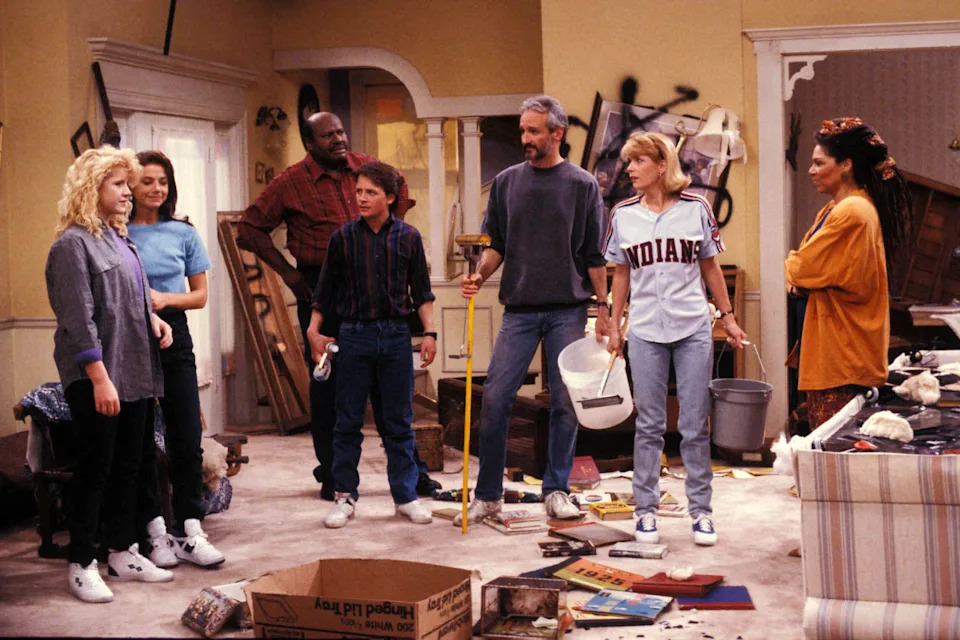
Alex P. Keaton, portrayed by Michael J. Fox, was the joke: a Reagan teenager in a house full of left-leaning, ex-hippies with a dad who worked in public television. What ultimately mattered was the love that the family members had for each other even if they didn’t always agree on politics or life itself. Several jokes in the series revolved around Alex having the opposite political beliefs of his parents, but Alex ultimately always had a heart of gold. He may have admired ruthlessness when it came to money, but he didn’t act ruthless himself.
Becoming TV’s biggest star didn’t mean that life has since been easy for Michael J. Fox who has famously battled Parkinson’s Disease for decades. He has done a lot to help others along the way, though. In fact, his foundation, The Michael J. Fox Foundation for Parkinson’s Research (MJFF), has now directed more than $2 billion toward Parkinson’s research, making it the world’s largest nonprofit funder of the science and putting it ahead of U.S. government spending on the disease, reported Parade.
Fox told TIME, “I’d like to see a world without Parkinson’s, and I think that will happen. I think in 30, 40 years, this will be done. Optimism is a powerful thing.”
The Television Academy announced this week that Fox will receive the Bob Hope Humanitarian Award at the 78th Emmy Awards. Among his other honors, he previously received the Presidential Medal of Freedom, the nation’s highest civilian honor, from President Biden in 2024.
‘ALF’ was a family sitcom about hiding someone from a federal task force
At first glance, ALF may have been a goofy family sitcom that entertained families on Monday nights in the 1980s. ALF, whose name sounds cute but is actually an acronym for Alien Life Force, crash-lands in a suburban garage, and a family takes him in and conceals him from the Alien Task Force, a branch of the U.S. military that specializes in recovering aliens, and from nosy neighbors who might report what they’ve seen. He can’t leave the house or be photographed. Four seasons of jokes rest on the possibility of him being discovered and taken.
The father hiding him, Willie Tanner, was a social worker. The show ran on NBC from September 22, 1986, to March 24, 1990, and the ending is where the rewatch really turns. “Consider Me Gone” was written as a season cliffhanger meant to pressure NBC into a fifth-season renewal
The pressure didn’t work. So the last thing millions of kids saw was Gordon Shumway surrounded on a hillside, moments from a rescue that never comes, and then nothing. The story stayed unfinished for six years until the 1996 TV movie Project: ALF.
The family sitcom ended with its most beloved character taken into government custody, and nobody explained it to the children watching. Talk about perplexing and painful to fans who had become so devoted to the show and its star character that lots of merch, and even a talking ALF doll, had been collected by kids across the country.
‘My Two Dads’ built a whole show around a mystery a $99 test would solve
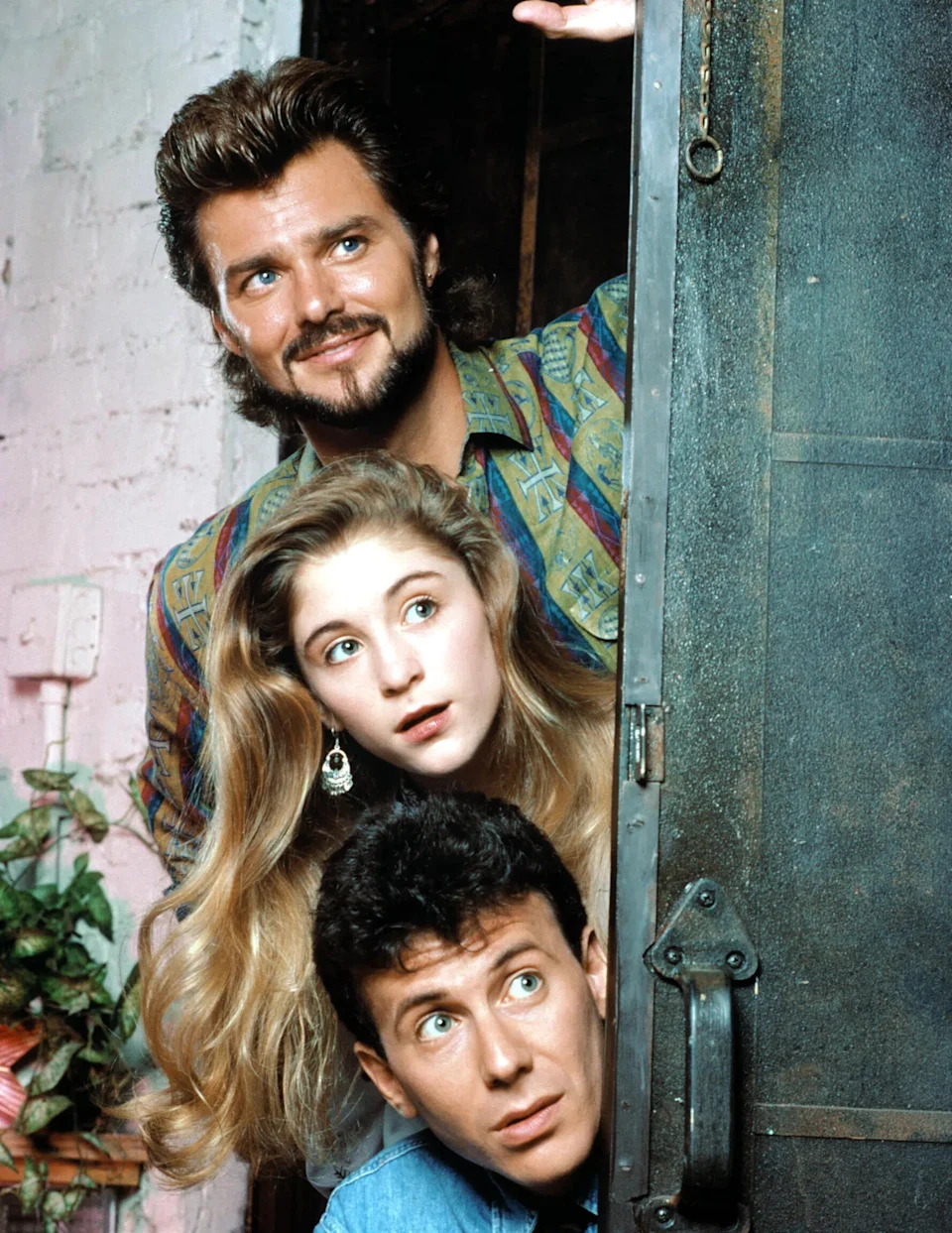
Here’s the setup. Michael Taylor, a buttoned-up finance guy played by Paul Reiser, and Joey Harris, a bohemian artist played by Greg Evigan, both dated a woman named Marcy 13 years earlier. Marcy dies just before the start of the show, and a family court judge hands them joint custody of her 12-year-old daughter, Nicole Bradford (Staci Keanan), because one of them is the father and nobody knows which. The series ran on NBC from September 20, 1987, to April 30, 1990, across 60 episodes, and the paternity question was never resolved.
Although there is a time in the show when Nicole can find out who her biological father really is, she decides not to do so. Of course now paternity tests could be done for under $100, and the premise of the show would be abruptly ended. That’s not necessary in the world of this charming show, though, and it’s very rewatchable although it only lasted three seasons.
Strip out the mystery and what’s left is the actual argument the series was quietly making, that the father is whoever keeps showing up. In an era when family courts, fertility clinics. and consumer DNA databases are all arguing about the same question from different directions, a network sitcom insisting that biology was beside the point is perhaps even more relevant today.
There’s also the title, which now means something to younger viewers that it emphatically did not mean in 1987. Michael and Joey were two straight men, and the show never suggested otherwise. Hearing that phrase in 2026 and picturing something else entirely is its own small measure of how much things have changed.
‘Star Trek: The Next Generation’ argued about AI rights in 1989
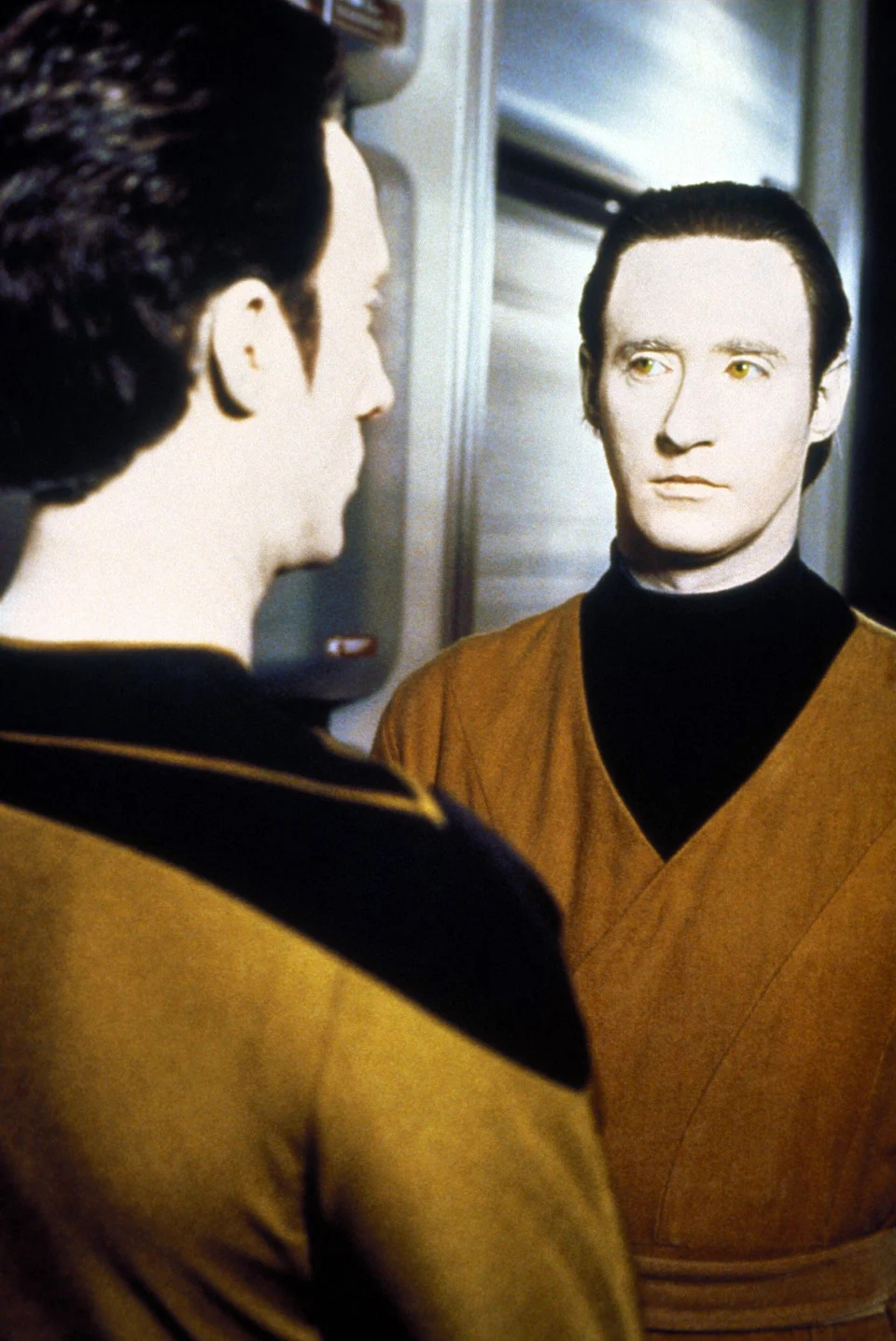
“The Measure of a Man” is a courtroom episode of Star Trek: The Next Generation about whether Data is a person or Starfleet property. It aired in February 1989.
Picard’s closing argument asked whether the court was prepared to “condemn him and all who come after him to servitude and slavery,” as The Companion recounted. The judge ultimately ruled that Data gets to choose for himself.
Watch it now, with the machine-consciousness debate running in newspapers and courtrooms, and the episode stops being science fiction. The crew also spent seven seasons handing each other flat glass tablets and talking to the walls, roughly two decades before either became an ordinary part of daily life. Star Trek: The Next Generation was always ahead of its time.
‘Who’s the Boss?’ asked a question America is still answering
Tony Micelli (Tony Danza) is a former professional ballplayer who becomes a live-in housekeeper for Angela Bower (Judith Light), a woman advertising executive. The title, Who’s The Boss?, was a running gag about whether anybody could accept that arrangement, although fans all say now that it’s obvious that Angela’s mother, Mona Robinson, was always the boss.
The numbers have moved a lot since the 1980s. Pew Research Center found that fathers now make up 18% of stay-at-home parents, up from 11% in 1989, though only about 23% cite caring for home or family as the reason, with more than a third out of work due to illness or disability.
A sequel series got as far as scripts before TVLine reported in October 2024 that it wouldn’t move forward at Amazon Freevee. Alyssa Milano had credited the cast chemistry for the show’s staying power in an interview with Entertainment Tonight, saying how the cast members “genuinely love each other.” I’d love to see a sequel show that stars all primary cast members who are still living.
‘Unsolved Mysteries’ invented the true crime show
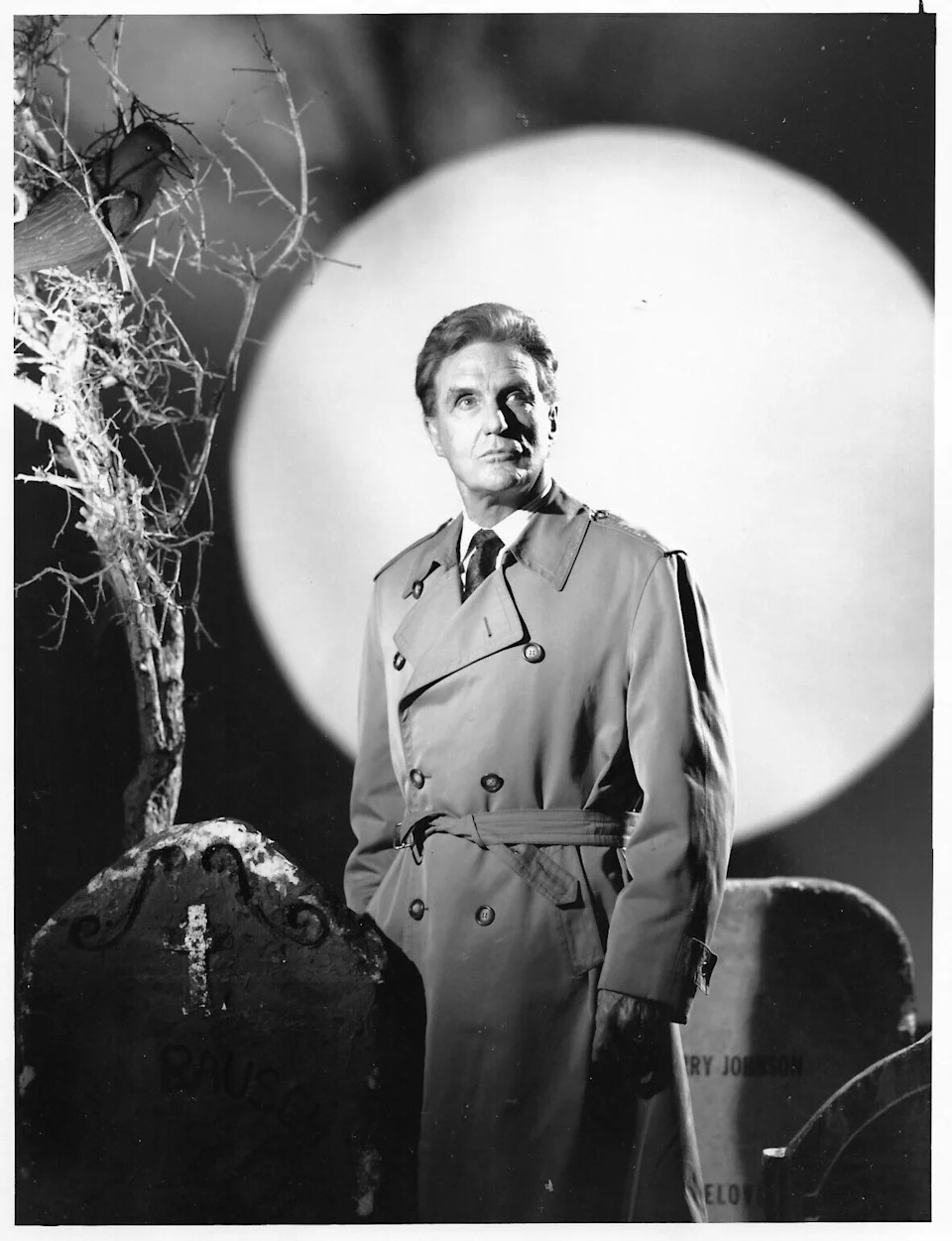
Robert Stack’s voice, his strong on-screen presence as he seemed to always sport a trench coat, and that unforgettable music set the scene for one of the most memorable shows of the 1980s. It was also among the first “reality” shows and first “true crime” shows told in documentary-style. Then there was also the irresistible suggestion that you personally might crack a case. Every podcast, subreddit and streaming docuseries currently competing for your attention descends from this show in one way or another.
Robert Stack himself understood the tension. He told The Los Angeles Times, “We’re trying to produce theater, and we’re trying to do a public service.” The show’s official site has claimed roughly half of its featured fugitive cases were solved, more than 100 families reunited, and seven wrongly convicted people exonerated. “We’ve solved over 260 cases,” co-creator Terry Dunn Meurer told Oxygen of the more than 1,300 the series covered.
‘Punky Brewster’ doubled as a public safety campaign
Ask anyone who was eight in 1986 about the television shows they remember, and Punky Brewster will probably be included. They’ll probably also be able to describe the refrigerator episode in unsettling detail. The episode, which was called “Cherie Lifesaver”, aired January 19, 1986, and put a small child in an abandoned fridge specifically so the show could teach proper CPR technique, according to a Mental Floss oral history. It worked because it terrified everyone watching.
Punky Brewster did this repeatedly. Another episode brought in Buzz Aldrin to help kids process the Challenger explosion. Although there was a lot of joy and cheer in the family show, there was also a very serious side, and it was educational as well as being entertaining.
Thank you for reading. Which 1980s shows hit you hard when you rewatch them? Let me know! I also invite you to follow me on Yahoo for more articles on nostalgia and television.
Robin Raven Creator
Robin Raven is a journalist who covers travel, entertainment, health, wellness and more. You can often find her writing songs, flying somewhere she’s never been, reading and listening to Taylor Swift.
Creators are not employed by Yahoo. Views expressed by creators do not reflect the opinions and position of Yahoo.Learn how to become a creator.
