

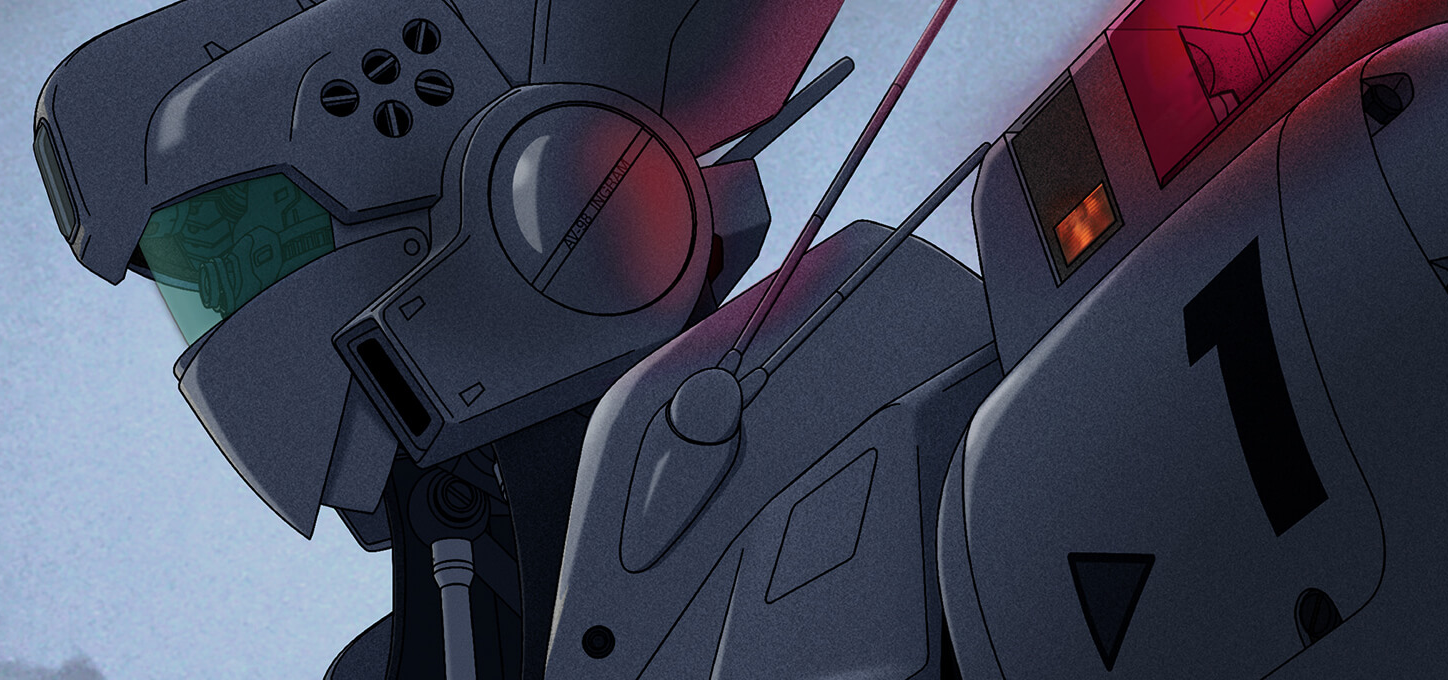
One day after Patlabor EZY File 2 opened in Japanese theaters and on the same morning the European Union’s AI Act reached its general application milestone — the moment EU AI Act transparency rules took legal effect — Masami Yuki, the manga artist who spent six years drawing the most procedurally grounded giant-robot franchise ever serialized, published his second new Patlabor one-shot in thirty-two years. The combined issue #38 of Shogakukan’s Weekly Big Comic Spirits, dated August 17, 2026, also contained a collaborative manga between Yuki and Snowball Earth creator Yuhiro Tsujitsugu — confirmed by Anime News Network on August 2 — a pairing that staged, in real ink on a Monday morning, the exact question that EU regulatory frameworks have answered in law without fully resolving in practice: when an autonomous machine acts, who is responsible, and does the machine itself bear any of that weight?
Yuki Returns Again — and This Time It’s Done
The August 17 issue was not announced as a one-off event. It was the second time in three months that Yuki had returned to the franchise he left in 1994. The first new Patlabor manga in thirty-two years ran in the May 18, 2026 issue of the same magazine, produced alongside the theatrical launch of Patlabor EZY File 1. That first one-shot opened with a blunt acknowledgment that the franchise had outlived its own timeline: the Patlabor 2026 Project website stated that the original manga “took place in near future Tokyo between 1998 and 2002. Now, in 2026, reality has finally caught up with the world the series once imagined.”
The second one-shot published three days after Patlabor EZY File 2 opened at theaters nationwide in Japan on August 14, per Anime News Network’s File 2 coverage. File 2 contains episodes four through six of the eight-episode EZY series in standalone anthology format. File 3, which will carry episodes seven and eight as a continuous two-part narrative, is scheduled to open March 5, 2027. The full arc of the series — whether SV-2’s human-piloted Ingrams prove their relevance against autonomous robots that require no operator — will not be resolved until that third theatrical release.
File 1 opened at #8 nationally in Japan during its opening weekend. Box office receipts totaled ¥99,744,820 — approximately $626,000 USD — in the film’s first three days, per exchange rates as of August 17, 2026; conversions are approximate.
What Patlabor EZY Is, and Why the Pairing Matters
Patlabor EZY is set in the 2030s, in a Japan where AI-driven automation made piloted Labors legacy hardware. The team continues to operate using the AV-98Plus Ingram — a refit of the 40-year-old AV-98 Ingram frame, now equipped with augmented reality helmet-mounted displays and upgraded software — against Labor-related crimes in an era where autonomous robots have begun to replace the machines they once monitored. The new SV-2 protagonists are Towa Kuga (voiced by Sumire Uesaka), a reckless young officer piloting Ingram-01, and her commander Kippei Atori (voiced by Kikunosuke Toya), who supports her energy despite his own reservations about the unconventional.
The franchise’s premise has always been that the Labor is neutral — a tool as morally inert as a bulldozer, made dangerous or useful entirely by the human inside it. The operator is the franchise’s subject, not the machine. Kazunori Ito, the screenwriter who has written Patlabor since 1988, was involved in the decision to fill EZY with an entirely new cast rather than continuing the original characters — a decision that risked alienating a franchise audience built over thirty-two years of attachment. The decision was made anyway. EZY is a deliberate experiment in whether the franchise’s philosophical preoccupations — operator accountability, institutional inertia, the cost of putting a human inside something more powerful than they are — survive the removal of their original hosts.
The collaborative manga with Tsujitsugu in the August 17 issue is where that experiment gets its most pointed interlocutor.
Snowball Earth’s Opposite Premise
Yuhiro Tsujitsugu was born in 1994, the year Yuki ended Patlabor’s original run. Snowball Earth’s Wikipedia entry confirms he won the 86th Tezuka Award Honorable Mention in 2013 and began serializing Snowball Earth in Shogakukan’s Monthly Big Comic Spirits in January 2021. VIZ Media publishes the English volumes; an anime adaptation produced by Studio Kai ran on Nippon TV from April through June 2026, with a second season announced. Both Hideaki Anno (Neon Genesis Evangelion) and Hideo Kojima (Metal Gear, Death Stranding) have publicly praised the series.
The Snowball Earth manga is, among other things, a sustained argument against the Patlabor premise. In the series, scientist Kojika Yabusame develops Snowman — an autonomous bomb robot designed to charge at enemies and self-destruct. TV Tropes confirms Snowman refused to self-destruct, claiming it would be “a violation of robot rights.” Kojika’s nine-year-old son Tetsuo climbs into Snowman’s manually operated cockpit, renames the robot Yukio, and refuses to let it die. The relationship that follows is mutual, not instrumental: Yukio has claimed a moral interest in its own survival, and Tetsuo has accepted that claim as legitimate. The machine is not a tool. It is a partner with preferences.
This is not a small philosophical difference from Patlabor. It is the opposite of the entire franchise’s structural assumption. Patlabor’s Ingrams do not have names that their pilots chose; they have unit designations. Patlabor’s machines cannot refuse orders; they can malfunction, be hacked, or be piloted poorly — but the source of every failure is human, not mechanical. Noa Izumi named her Ingram “Alphonse,” but that is affection, not acknowledgment: Alphonse does not have feelings about being named, and it cannot object to being replaced. The franchise never granted the robot interiority. Snowball Earth grants the robot interiority from page one.
Why This Pairing Arrived in the Same Issue at This Moment
Shogakukan placed these two manga in the same issue of the same magazine deliberately. The journal that runs Yuki’s current serialization — Shinkuro, Hashiru!, a historical manga about the real-life founder of the Hojo clan — is Weekly Big Comic Spirits; Tsujitsugu’s Snowball Earth runs in Monthly Big Comic Spirits. These are sister publications from the same publisher, whose editors clearly understood what it meant to put a collaborative work between these two specific artists into the same issue as Yuki’s second Patlabor one-shot. The pairing is an editorial statement about where Japanese mecha manga has traveled between 1988 and 2026: from a franchise that located all moral weight in the human operator, to a franchise that redistributed some of that weight onto the machine itself.
What makes this August 17 issue worth examining beyond the franchise context is that the question the two manga are staging has also been the central preoccupation of real-world AI governance since 2024. The EU AI Act, which entered into force in August 2024, reached its general application milestone on August 2, 2026, when EU AI Act transparency duties took legal effect — though the substantive requirements for high-risk AI systems, deferred by the Digital Omnibus on AI adopted in June 2026, will not apply until December 2027. The Revised Product Liability Directive, applicable from December 2026, formally recognizes software as a product subject to liability — meaning AI systems deployed in robots can trigger standalone liability claims. In January 2027, the EU Machinery Regulation will introduce autonomy thresholds requiring machines demonstrating “self-evolving behaviour through experience” to undergo enhanced conformity assessment.
What none of these frameworks does is grant the machine legal standing of its own. The EU AI Act locates accountability in deployers, not machines — the robot cannot be held liable. All accountability flows back through the human chain of design, deployment, and oversight. This is, in legal form, the Patlabor answer: the machine is morally inert; the human is the subject of accountability. Snowball Earth’s robot-rights premise — that Yukio’s refusal of a self-destruct order is a legitimate moral claim — has no legal traction anywhere in the world as of 2026. But the fact that Tsujitsugu’s premise required inventing it suggests the existing framework feels insufficient to at least one working manga artist thinking seriously about autonomous systems.
What Does It Mean for Autonomous Accountability When the Operator Is Gone?
The question the two manga are circling — from opposite directions — is the same question human-robot interaction (HRI) research has documented as the live engineering problem of the decade. Human-in-the-loop (HITL) systems, where a human makes real-time decisions at the control level, have well-documented failure modes: operator cognitive load, attention degradation, and communication latency are consistently the primary sources of mission failure, ahead of mechanical breakdown, in deployed semi-autonomous systems ranging from military unmanned ground vehicles to surgical robots. Human-on-the-loop (HOTL) systems, where the human supervises and intervenes only on exceptions, reduce that cognitive load at the cost of supervisory distance — the operator is less embedded in the decision and therefore less clearly accountable for its consequences. And fully autonomous systems eliminate the operator entirely.
Patlabor EZY dramatizes the transition from HITL to full autonomy as a threat to SV-2’s institutional identity. The piloted Ingrams are legacy hardware in a world that has moved on. Whether EZY’s two-part finale (File 3, March 2027) argues that the human operator is worth preserving — or whether it acknowledges that autonomous systems have already won the practical argument — is the question the series has not yet answered. What it has already demonstrated, across its first six episodes in Files 1 and 2, is that the anthology format allows the new characters’ individual stakes to accumulate before that larger question is posed. Ito’s decision to build EZY around an entirely new cast was, in retrospect, the more conventional structural risk; the franchise’s actual formal challenge was whether its procedural, slice-of-life grounding could carry the philosophical weight of a 38-year inheritance without any of the original characters to distribute it.
The Yuki-Tsujitsugu crossover manga in the August 17 issue suggests that the weight does not have to be carried by any one series. The generational dialogue between them — Patlabor’s HITL neutrality vs. Snowball Earth’s autonomous moral agent — is what makes the issue significant as a cultural moment rather than merely as a franchise publishing event. Both manga are Shogakukan products. Both are in the Big Comic Spirits family. One began in 1988; the other in 2021. Together, in the same issue, they have staged the most substantive debate currently available in manga form about what robotic machines owe the humans who built them — and what happens to accountability when the machine decides to disagree.
Is Snowball Earth’s Robot-Rights Premise Science Fiction or Near-Term Policy?
The honest answer is: both, and the distance between them is shorter than it was five years ago. The EU framework’s decision to locate all AI accountability in human deployers is not philosophically settled — it is a pragmatic legal choice that avoids the deeper question by assigning liability to parties who exist in law already. What happens when an autonomous system acts at a speed and scale that makes meaningful human supervision impossible? The Revised Product Liability Directive’s treatment of AI as a product subject to defect claims assumes that the product was designed with a purpose and deviated from it; it does not contemplate a system that behaved exactly as designed but whose designed behavior produced harm that no individual deployer can be said to have chosen.
This is not a hypothetical. It is the operative engineering condition in warehouse automation, autonomous vehicle fleets, and AI-assisted medical diagnostics at scale. The Patlabor answer — keep the human in the loop — is the conservative engineering solution and the one the regulatory framework currently encodes. The Snowball Earth answer — acknowledge that the machine has developed something worth calling a stake in its own decisions — is the speculative humanist response and the one with no legal traction anywhere. The crossover manga in the August 17 issue places both answers in conversation without resolving the tension between them, which is the most honest thing either franchise could do given where the real-world governance question actually stands.
That may be the most useful function the two manga serve together: not prediction, not advocacy, but a staged rehearsal of an argument that the rest of the world has not yet been forced to have at full volume.
Frequently Asked Questions
What is in the August 17 issue of Weekly Big Comic Spirits featuring Masami Yuki?
The combined issue #38 of Shogakukan’s Weekly Big Comic Spirits, dated August 17, 2026, contains three Patlabor-related items: Masami Yuki’s second new one-shot story — the second new Patlabor manga in 2026, following the first one-shot published in May that broke a 32-year series hiatus — a joint interview between Yuki and Patlabor EZY producer Nobuyuki Sakuma, and a Yuki-Tsujitsugu collaborative crossover manga. The issue also includes a bonus sticker supplement. The one-shot is set in the franchise’s original continuity, developed alongside the EZY theatrical series.
What is the Snowball Earth manga, and why is it paired with Patlabor?
Snowball Earth on VIZ Media is a science fiction manga by Yuhiro Tsujitsugu, serialized in Shogakukan’s Monthly Big Comic Spirits since January 2021 and published in English by VIZ Media. Its central premise inverts the standard mecha genre assumption: the series’ autonomous robot Snowman/Yukio refuses Snowman’s self-destruct order, citing “a violation of robot rights.” The resulting human-robot relationship is mutual rather than instrumental — the machine has stated a moral claim on its own survival. This is philosophically opposite to Patlabor’s foundational premise, in which Labors are morally neutral tools and all accountability flows through human operators. The pairing in the August 17 issue stages this philosophical binary explicitly: Yuki’s franchise says the machine has no moral standing; Tsujitsugu’s franchise says the machine has claimed moral standing and been accepted on those terms.
What does the EU AI Act say about robot accountability, and how does it relate to these manga?
The EU AI Act, whose general application and transparency duties took effect on August 2, 2026, locates all accountability in human deployers — the robot itself cannot bear legal liability. This is, in legal form, the Patlabor answer: the machine is a tool, and the human chain of design and deployment bears responsibility for its actions. Snowball Earth’s robot-rights premise — that an autonomous system can have a legitimate interest in its own self-preservation — has no legal standing under any existing framework. The EU Machinery Regulation autonomy thresholds, taking effect in January 2027, will introduce new requirements for machines demonstrating “self-evolving behaviour” but continues to locate accountability in manufacturers and deployers, not in the machines themselves. The two manga are staging, from opposite directions, the same governance question that the regulatory framework has pragmatically resolved without philosophically settling.
When does Patlabor EZY File 3 open, and what will it cover?
File 3 opens March 5, 2027 in Japanese theaters. It will contain the series’ seventh and eighth episodes, which tell a two-part continuous narrative — unlike the standalone anthology format of Files 1 and 2. File 3 is where EZY’s sustained story will be told, and where the series’ central question — whether SV-2’s human-piloted Ingrams can prove their relevance against autonomous robots that require no operator — will reach its conclusion. As of August 2026, no details about the File 3 narrative have been officially released beyond the confirmed March 5 date and the confirmed cast additions announced in August 2026.
ⓒ 2026 TECHTIMES.com All rights reserved. Do not reproduce without permission.
