



An influence that has spanned more than a century of Western art history and the Western imagination, from the Impressionists to manga, animation, and contemporary cinema: this is the central theme of“Visions of the East.” Japan and Japonism: From the Impressionists to Manga, the major new exhibition of 2027 atthe San Domenico Civic Museum in Forlì. Organized by the Fondazione Cassa dei Risparmi di Forlì in collaboration with the City Administration, the exhibition will be open to the public from February 19 to June 27, 2027, and will be curated by Rossella Menegazzo, Giovanni Gamberi, and Francesco Parisi, with the collaboration of Matthew Winterbottom and Enrico Colle. Cristina Acidini serves as chair of the scientific committee, while Gianfranco Brunelli is the project’s general director.
The exhibition aims to explore the extraordinary abilityof Japanese art to shape, over time, the Western way of observing, representing, and imagining the world, tracing the transformations of a phenomenon that has influenced painting, graphic arts, decorative arts, and, subsequently, cinema, animation, and popular culture.
In the mid-19th century, after nearly two centuries of isolation, Japan once again opened itself to the West. The discovery of Japanese culture and art quickly sparked enormous interest in Europe, especially in France. It was precisely in this context that the term “Japonism” emerged, used to describe the influence of Japanese art and style on European artistic movements between the second half of the 19th century and World War I. The term was first used between 1872 and 1873 by the critic Philippe Burty to describe a phenomenon that would gradually take on the characteristics of a true artistic avant-garde. The spread of Japonism was also fostered by the World’s Fairs, in which Japan participated with its own pavilions, beginning as early as the 1862 London Exhibition. Contributing to the understanding of Japanese culture were also the numerous shops specializing inFar Eastern artifacts and the magazine *Le Japon artistique*, published between 1888 and 1891 by the collector and dealer Samuel Bing.

One of the main vehicles for the spread of Japanese aesthetics wasukiyo-e woodblock prints, which offered Western artists a formal repertoire radically different from that of the academic tradition. Particularly significant was the transformation in the use of color. Japanese prints employed flat areas of color, devoid of traditional chiaroscuro variations, along with pure colors and sharp color combinations.
The conception of space was also innovative. In Japanese landscapes, the organization of the composition did not depend on Western scientific perspective but was constructed through chromatic relationships, rhythms, surfaces, and novel viewpoints. These approaches helped challenge the principles of traditional representation and spread rapidly beyond France’s borders, influencing artists in numerous European and American countries. Japonism thus became one of the elements that contributed to the formation of a new international artistic language.
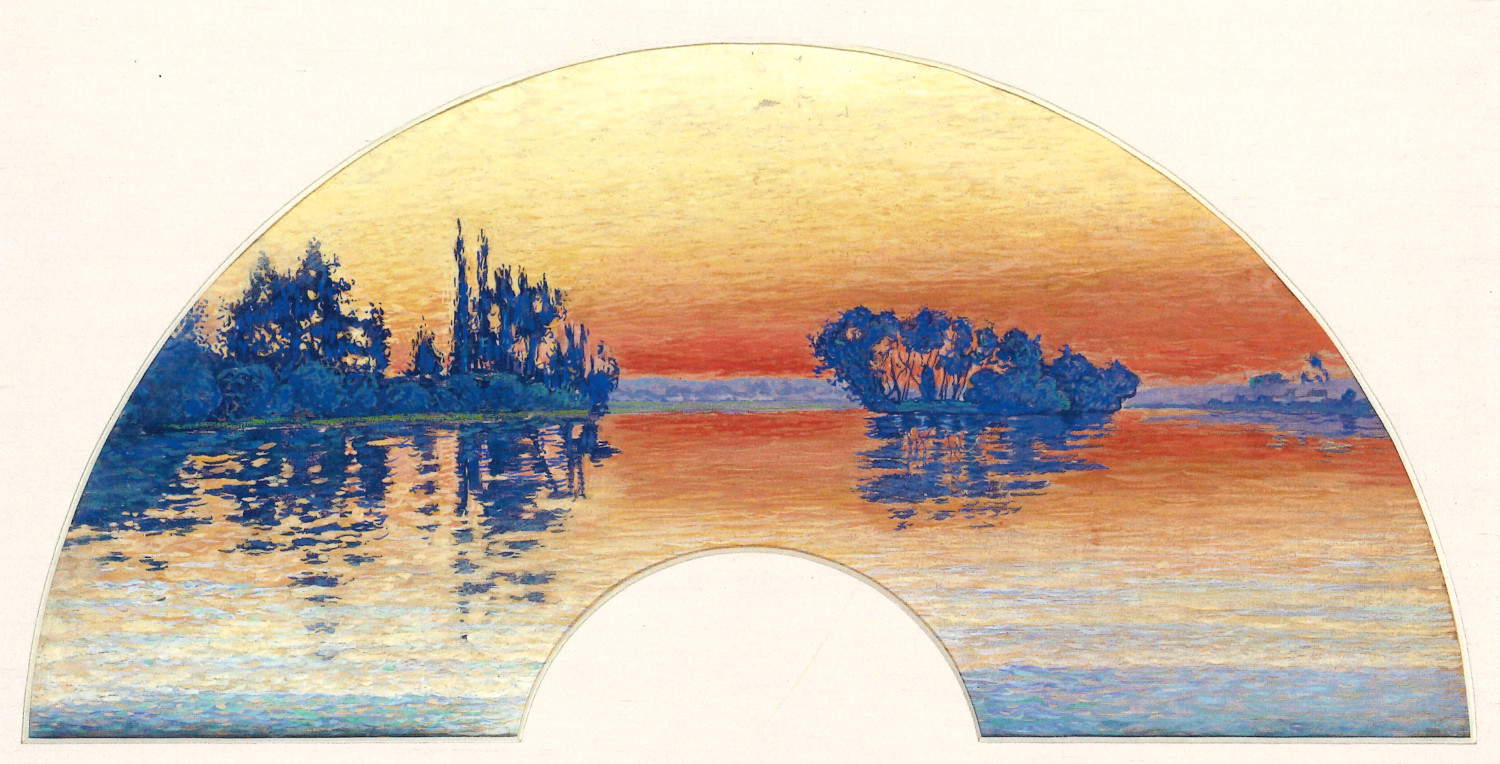
Among the European artists most interested in the East were the Impressionists and Post-Impressionists. From ukiyo-e prints, the Impressionists drew a new conception of beauty and the relationship with nature, along with the use of luminous colors, more pronounced contours, and a departure from the traditional perspectival organization of planes. The artists were particularly drawn to the possibilities offered by Japanese woodblock prints in terms of color and space. Among other elements, the Impressionists adopted the rapid lines and the characteristic asymmetrical composition. Gauguin and the artists of the Nabis group, on the other hand, focused primarily on the use of color, arranged in flat fields capable of enhancing its decorative and symbolic value, in ways that evoked the works of great ukiyo-e masters such as Hokusai, Utamaro, and Hiroshige.
The Japanese influence was not confined to painting. Decorative motifs, compositions, and stylistic solutions inspired by Japan also found their way into the world of applied and decorative arts. Elements attributable to Japonism are, in fact, recognizable in the glassworks of Émile Gallé, the Daum brothers, and Louis Comfort Tiffany, as well as in the jewelry designs of René Lalique and Philippe Wolfers.
The phenomenon was therefore not merely an external influence. Japonism acted, rather, as a true catalyst for Western modernity, accelerating transformations already underway and providing artists with new formal and conceptual tools to transcend the traditional paradigm of representation.
The exhibition in Forlì thus aims to highlight the international scope of Japonism and its widespread influence across Europe, demonstrating how engagement with Japanese culture took on different forms in various national contexts. The exhibition takes visitors through France, featuring artists such as Paul Gauguin, Henri de Toulouse-Lautrec, Pierre Bonnard, Paul Ranson, and Émile Gallé; Belgium, represented by James Ensor; the Netherlands, with Vincent van Gogh; Austria, through Gustav Klimt and Koloman Moser; Bohemia, with Alphonse Mucha; and England, with Albert Moore.
Special attention will also be given to Italy and the Italian artists who came into contact with Japonism, including Giuseppe De Nittis, Galileo Chini, Plinio Nomellini, and Giacomo Balla. The phenomenon also involved Italians working in Paris, such as De Nittis and Boldini, and extended to the Anglo-American world, demonstrating just how deep and widespread the circulation of ideas and images from Japan was.
The exhibition’s narrative is not limited to the historical period of 19th-century Japonism and its impact on modern art; rather, it traces the enduring influence of Japan, extending all the way to contemporary manga,animation, and cinema. From this perspective, the exhibition will explore a phenomenon that did not end with Impressionism or Art Nouveau, but has continued to evolve, entering the international visual imagination and contributing to the emergence of new ways of constructing images, characters, spaces, and narratives.
With *Visions of the East*, Forlì aims to offer a comprehensive journey through the history of Japonism, from the ukiyo-e prints that captivated 19th-century European artists to contemporary forms of visual expression, highlighting how the encounter with Japanese art played a decisive role in reshaping the history of Western art.
 |
| A Major Exhibition in Forlì on Japan and Japonism, from the Impressionists to Manga |

Warning: the translation into English of the original Italian article was created using automatic tools.
We undertake to review all articles, but we do not guarantee the total absence of inaccuracies in the translation due to the program. You can
find the original by clicking on the ITA button. If you find any mistake,please contact us.
