

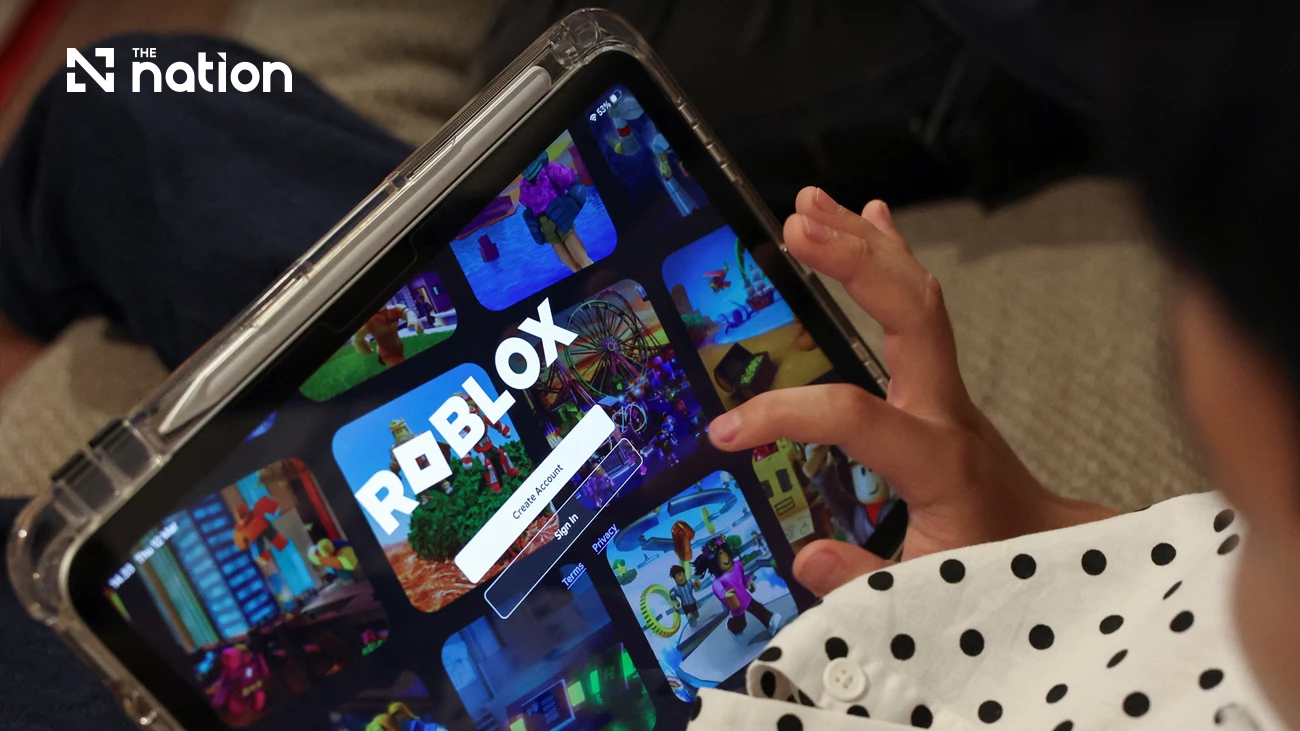
Thailand’s Digital Ministry is working with Roblox on identity verification, age checks and AI tools to strengthen protection for young online gamers.
Thailand’s Ministry of Digital Economy and Society is working with Roblox Corporation on stronger identity-verification and artificial-intelligence measures to protect Thai children and young people from risks in online games.
Digital Economy and Society Minister Chaichanok Chidchob held online discussions with Roblox representatives to explore measures for improving safety on the platform.
The ministry proposed establishing a joint working group to study and promote the use of technology in creating a safer digital ecosystem.
NDID and KYC proposed for Roblox accounts
One proposal is to connect Thailand’s National Digital ID, or NDID, and know-your-customer procedures with Roblox user accounts.
The system would improve the accuracy of age verification and give parents greater confidence in the safeguards applied to their children’s accounts.
The discussions also covered facial age-estimation technology and chat-moderation systems capable of detecting inappropriate messages.
Roblox is preparing to introduce the International Age Rating Coalition, or IARC, rating standard on its platform by 2027.
AI tools could identify risks before incidents
The ministry and Roblox will also study the use of pre-screening tools to examine content before it is published.
AI could be used to analyse game and user history logs to identify potential risk factors before an incident occurs.
The ministry also proposed developing a Family Zone where parents could participate more closely in protecting their children online.
The area could also provide young people with opportunities to develop skills in AI and coding.
Talks follow concern over youth violence
The accelerated discussions with Roblox come amid heightened concern over violence involving young people in Thailand, particularly following the school shooting at Debsirin Nonthaburi School.
The incident prompted public discussion over whether exposure to online media could encourage imitation.
Chaichanok clarified that police checks of the attacker’s online history found no evidence that he had accessed the dark web or consumed violent murder-related material, contrary to reports by some media outlets.
The user had watched general educational documentaries on YouTube, he said, describing the material as basic content that could not reasonably be blocked.
The minister assessed that the searches were likely to have taken place after the attacker had already made a decision to act.
Technology companies discuss stronger child safeguards
The Digital Economy and Society Ministry and the National Broadcasting and Telecommunications Commission have also held talks with major technology companies about protecting children online.
Apple is initially preparing to adjust its conditions and child-protection policy settings, while discussions with Meta and other platforms are continuing over measures to block inappropriate content.
After information emerged that the attacker had created a “gun shop” through an online gaming account, the ministry immediately contacted the gaming association.
Chaichanok stressed that the objective was not to ban or block games.
Instead, the ministry is seeking cooperation from gaming companies to monitor potentially high-risk accounts. Platforms would be asked to alert government agencies when users display unusually intense or concerning behaviour involving firearms, allowing officials to intervene at an earlier stage.
