

Posted in
News
on August 12, 2026
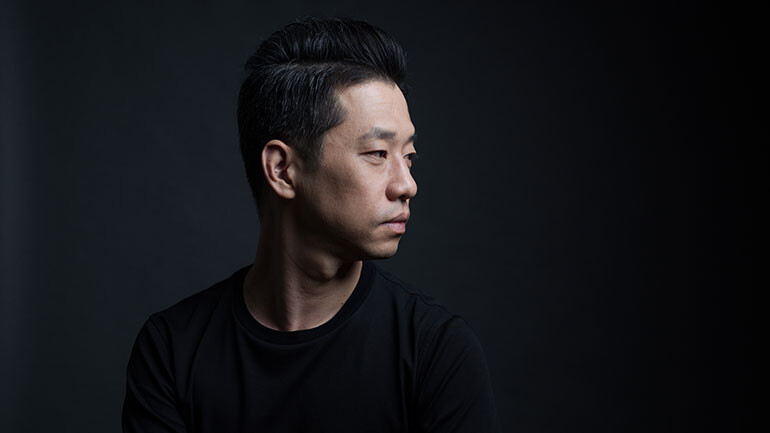
Using his lushly orchestrated melodies to add emotional depth and dimension to conventional storytelling, Los Angeles-based composer Takeshi Furukawa has been writing music for film, television and interactive media since the early 2000’s. His signature brand of stirring sound has brought the scores for major motion pictures and celebrated televisions series to life, but also a broad range of video games and advertising campaigns. That’s his inimitable music as heard in Avatar: The Last Airbender, Mythic Quest, Planet of Lana and The Last Guardian. He’s also contributed music to beloved series like Star Wars: The Clone Wars, Assassin’s Creed Shadows and Honor of Kings.
Furukawa’s remarkable work has been celebrated and recognized across the industry, notablyor Music of the Year, and the G.A.N.G. Award for Best Instrumental Composition, along with nominations from the BAFTA Games Awards, D.I.C.E. Awards, SXSW Gaming Awards, and the International Film Music Critics Association Awards
BMI caught up with Furukawa, on the eve of the release of his highly anticipated soundtrack to the video game, Planet of Lana II: Children of the Leaf, to discuss his amazing journey and his creative process. Here’s what he had to say.
Netflix’s Avatar: The Last Airbender S2 launched on June 25th. What was your creative process on that title? Did the score evolve from S1?
Logistically, the process on Avatar: The Last Airbender is similar to any other television series. I receive a cut—usually rough, or near-locked if I’m lucky—spot it with the show-runners, and then go off and write.
What makes Avatar special is the sheer scope of the production. Netflix gives us the opportunity to work with a large orchestra and choir, recorded in Vienna and Budapest respectively, along with an incredible roster of soloists. Musically, the score lives at the intersection of the Western orchestral tradition and a broad range of Pan-Asian influences.
The orchestral side is familiar territory because of my classical background, but many of the Asian instruments are foreign to me, no pun intended, so there’s a constant process of research, experimentation, and learning. Rather than pretend to understand what is idiomatic to every instrument, I lean heavily on the musicians who have spent their lives playing them.
At the beginning of each season, I hold sampling sessions where I’ll give a soloist a rhythmic groove or harmonic framework and ask them to improvise over it. I deliberately try not to be too prescriptive. Instead, I’ll supply an emotional prompt: “This is a dark moment,” or, “The characters are in peril—give me tension.” That allows the musicians to respond instinctively and gives me a vocabulary of performances that feels authentic to the instrument.
I’ll then edit those recordings, build them into Kontakt instruments, and use them as colors and embellishments around the orchestral writing. As the season progresses, we bring the soloists back to record more specific passages that I’ve composed for individual scenes.
Season 2 has been a natural evolution of what we established in Season 1. Familiar themes return and develop, while new characters, places, and stories give us opportunities to expand the score. We continue to draw inspiration from traditions across Asia, and this season the music team and I were particularly excited to explore influences from Central Asia.
I can’t think of many Hollywood films or television shows that meaningfully showcase the extraordinarily rich and diverse musical cultures of Central Asia, so it felt like both a tremendous privilege and a significant responsibility to help represent that heritage with care.
You composed the score for the Apple comedy series Mythic Quest. What was your experience going from a live-action comedy series to Avatar: The Last Airbender, an action-adventure series?
My experiences on Mythic Quest and Avatar have been both similar and very different.
Mythic Quest was actually my first television series. I was initially approached because the post-production team—particularly the editors—wanted a custom library of short, video game-inspired bumper cues for scene transitions.
The difficulty with that idea, of course, is that there’s no such thing as a single genre called “video game music.” It can be orchestral, electronic, aggressive metal—anything, really. It quickly became apparent that the show needed a composer rather than simply a library of cues, and I was fortunate enough to stay for all four seasons.
One of the things I learned on Mythic Quest was not to chase the joke. We generally played the comedy with a straight face. The music would treat whatever was happening as completely serious, and the juxtaposition between that sincerity and the absurdity on screen often made the scene funnier.
Avatar is an action-adventure drama, but there’s actually a similar philosophy at work. The original animated series has tremendous humor and levity, but in live action you have to be more judicious about how you support those moments. If the music starts winking at the audience every time something funny happens, it can very quickly feel forced.
Logistically, though, the two shows could not be more different. An episode of Mythic Quest might contain only five to ten minutes of score, and the music was produced entirely in the box. Avatar, on the other hand, can have anywhere from 40 to 60 minutes of music per episode, reflecting the sheer scope of the story and the cinematic world-building of the franchise. We’re fortunate to record virtually everything live—even the percussion—and once you include the orchestra, choir, soloists, and broader music team, well over 500 people contribute to bringing the score to life.
Planet of Lana II: Children of the Leaf launched on March 5, 2026. What can your listeners expect from this video game soundtrack?
The soundtrack just came out on August 7, about five months after the game—which was entirely my fault! I was tied up with other projects and simply didn’t have the bandwidth until recently to properly curate the soundtrack.
Like Avatar Season 2, Planet of Lana II presented the wonderful opportunity—and challenge—of writing a sequel score.
Listeners can expect familiar themes to return alongside new material, but the scale of the score has expanded with the story. This time we were fortunate to work with a large choir in addition to several soloists, which allowed the musical world to become much broader.
One element I’m particularly fond of is the use of nyckelharpa and kulning. Wishfully, the game’s developer, is Swedish, so incorporating those sounds gave us a way to pay tribute to their roots while expanding the musical language of Planet of Lana.
Along with your work as a composer, you’ve performed your music with some of the world’s most revered orchestras, including the London Symphony Orchestra, the London Philharmonic Orchestra, the Royal Philharmonic Orchestra and several others. Can you describe the experience of conducting and hearing your scores brought to life by these formidable musicians?
It’s an extraordinary privilege. I’m grateful whenever musicians agree to play something I’ve written, but there’s something surreal about standing in front of ensembles with that level of history and musicianship.
I’ve been fortunate to experience these orchestras both in the recording studio and in the concert hall, and they’re very different experiences. In the studio, one of the great pleasures is hearing an orchestra with a truly established identity. Unlike a session orchestra, where the roster can change from recording to recording, these musicians play together constantly. There’s a cohesion and character to the ensemble that you can immediately hear.
The concert side of my career, meanwhile, is entirely riding on the coattails of the wonderful video games I’ve been lucky enough to score. Video game music has developed an enormous concert culture, and many of the world’s great orchestral institutions have been incredibly generous in programming my work.
There’s something very moving about seeing music take on a life beyond the medium it was originally written for. A piece that began its existence accompanying a particular scene or moment in a game suddenly has to stand entirely on its own in a concert hall.
It also gives me an occasion to revisit older material. We often have to rearrange pieces for the particular size or configuration of an ensemble, and I love having the opportunity to look at something I wrote years ago and rethink it with a little more experience behind me.
And then there’s the audience. Video game music audiences are incredibly warm and enthusiastic. Many are obviously passionate gamers, but increasingly you also see people coming to these concerts simply because they love orchestral music. I think there’s a growing recognition that extraordinary music is being written for games, and it’s wonderful to see that repertoire embraced by both audiences and orchestras.
You’ve composed music for TV series and video games. Does your approach to writing music differ depending on what medium you are scoring for, or is it more contingent on the subject matter? What is your creative process for series versus video games?
For me, the medium itself doesn’t dramatically change the way I write. Part of that is because I’ve been fortunate with the games I’ve worked on: they haven’t required me to think too heavily about interactive musical structures while I’m composing. My audio directors have often said, “Just write the music the way you normally would, and we’ll figure out how to implement it.” So I tend to think less about whether I’m writing for television or games and more about discovering the musical identity of the project.
For me, the hardest—and most important—part of any score is finding its “it.” That might be the main theme, a particular harmonic language or an unusual chord turn, a unique synth patch, or even a single sound that suddenly makes the whole score coalesce.
I spend a disproportionate amount of time searching for that. But once you find it, you’ve established the musical DNA of the project. You know what belongs in that world and, just as importantly, what doesn’t. Once I round that corner, writing the rest of the score becomes much more intuitive.
What is your favorite part of that process?
Recording, without question. Whether it’s an orchestra, choir, or soloist, that’s the moment when the music stops belonging entirely to me.
Earlier in my career, I found recording sessions intimidating because I felt like I was relinquishing control. Now I see it completely differently. I’m handing the music to musicians who can bring something to it that I simply can’t.
There’s an incredible moment when someone interprets a phrase differently from how you imagined it—and it’s better. At that point, my job is almost to get out of the way. It’s a privilege to sit on the sidelines and watch others turn something I wrote into something greater than what was on the page—or, rather more accurately these days, in the sequencer.
Was there a specific moment, piece of music, or individual that inspired you to pursue a career as a composer?
Jurassic Park. Twelve-year-old boy. Dinosaurs. John Williams. Huge orchestra.
’Nuff said.
What advice would you impart to aspiring composers looking to emulate your path?
I’m always hesitant to give career advice because every composer’s path is so different. There isn’t really a blueprint. But one thing I do believe strongly in is the importance of developing your sensibility, not just your craft.
Composers are hired by filmmakers, show-runners, and game creators to be collaborators. The music has to be excellent—that’s the baseline. There are an extraordinary number of talented composers—there always have been—but the internet has made that talent more accessible than ever. Technique alone isn’t necessarily what distinguishes you.
What separates one composer from another is taste: your instincts, your perspective, the things you respond to, and the choices you make. And, for lack of a less marketing-oriented word, your “brand”—although what I really mean is your identity as an artist.
So my advice to younger composers is to expand your horizons beyond music. Travel. Eat extraordinary food. Go to museums. Listen to great musicians perform live. Read. Meet people who do completely different things from you. Absorb everything. And yes, every once in a while, splurge on a luxury.
All of those experiences become part of your internal vocabulary. They shape your taste, and eventually they find their way into your work by osmosis. You can study orchestration, harmony, and technology, but those things teach you how to write. Living a curious life helps determine what you say, and perhaps more importantly, what you don’t.
What role has BMI played in your journey thus far?
BMI has been absolutely amazing in its support. One of its fundamental roles is representing composers and songwriters and collecting the royalties that allow us to make a living from our work, but its impact on my career has gone well beyond that.
BMI has also been an important conduit for the composer community. Composing can be a surprisingly solitary profession—we spend an awful lot of time alone in rooms writing music—and BMI’s events bring composers, songwriters, filmmakers, and other members of the industry together in a way that creates a genuine sense of community.
For composers and songwriters beginning their careers, I couldn’t recommend BMI highly enough. They’ve been wonderful advocates for me and for our community. The organization and its people are simply the best!
The soundtrack to Planet of Lana II: Children of the Leaf is out now.
SOURCENewsTAGSClassicalFilm & TVLos AngelesTakeshi Furukawa
