

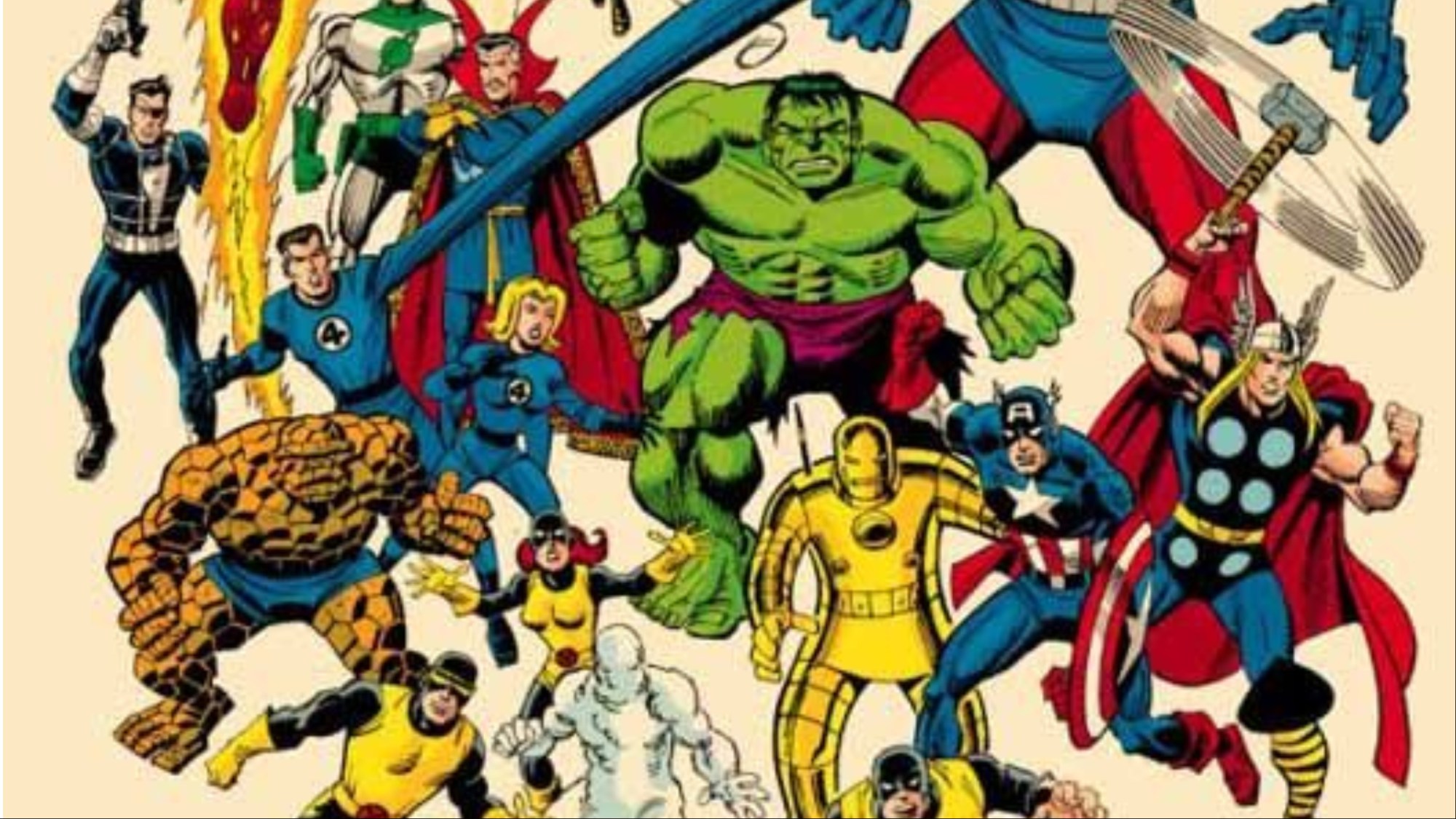
Marvel Comics action figures are so ubiquitous today that it’s hard to imagine a time when store shelves weren’t cluttered with the likes of Spider-Man, Captain America, or the Hulk. But in the “Marvelmania” days of the nineteen sixties, it was a different story: the publisher had just launched its interconnected comic book universe in 1961, and was still in the process of building up a readership base. Their characters were hardly household names, and wouldn’t appear outside the comics until September of 1966, when the no-budget animated “Marvel Super Heroes” debuted in first-run syndication on national television.
Videos by ComicBook.com
That same year, Marvel finally came to the toy aisle. Ideal’s Captain Action was an umbrella line including heroes from across publishers and IPs, and its initial batch of figures included Captain America and Sgt. Fury (who would seem like an odd choice until you realize that Captain Actionwas designed to emulate Hasbro’s popular G.I. Joefigures). But the first ever all-Marvel toyline wouldn’t come until the next year, when Marx Toys produced half a dozen unarticulated Marvel super-heroes. These toys make look unimpressive by today’s standards, but to a Marvel fan in 1967, they were the most exciting action figures ever produced, representing the first-ever toys of characters Thor, Iron Man, Daredevil, and the Hulk. Today, that historical significance makes them a major collector’s item, and a complete set like this one can cost up to $500 – one hundred times the fifty cents that each figure retailed for back in the sixties.
A Quick History of Marx Toys
In the 1950s and 1960s, Marx Toys was the undisputed top toy manufacturer in America. According to TIME Magazine, they were at one point responsible for twenty percent of all toys sold in the fifties. Their top-seller was plastic toy soldiers, with Marx popularizing the plastic “army-men” that are still omnipresent in grocery, drug, and dollar stores across the country. Given the toy soldiers’ overwhelming popularity, it was natural for Marx to diversify, producing not only figurines modeled off of contemporary militaries, but historical eras like the Old West and Medieval Europe. Another notable addition would be sets of cavemen and prehistoric animals in 1955. The Marx dinosaurs were the first time mass market dinosaur toys were ever sold, and copies of the molds for some are still in use to this day – virtually any kid who played with dinosaurs growing up will recognize this stegosaurusor this T-Rex.
In 1958, the line branched into a larger scale of six-inch figures – the first time this now standard size would be used for an action figure line. The six-inch Marx figures were still unarticulated and unpainted, and variations are commonly found in a rainbow of colors, as Marx felt casting the figures in variably-colored plastic increased their shelf appeal. The first licensed Marx items date back to the fifties, with “toy soldier” scale playsets based on popular TV shows like Disney’s Davy Crockettand movies like 1959’s Ben-Hur. Besides the Marvel line, the most famous licensed Marx figures are their 1963 Universal Monsters. The original figures are as desirable as Marx’s later Marvel characters, traded covetously among Universal Monsters fans for $30-60 apiece.
A Closer Look at the Marx Marvel Figures
It’s unknown why Marx acquired the Marvel license, especially as they are never known to have pursued the license for Marvel’s (then more popular) competitor, DC Comics. Most likely, Marx saw the growing readership for Marvel Comics, as well as Marvel’s newfound presence on television, and felt there was an untapped market for merchandise.
Their choice of characters was logical, with all six appearing regularly in monthly Marvel titles, and three headlining their own comics (the Hulk, Captain America, and Iron Man would be confined to shared space in anthology titles until 1968). The omission of the Fantastic Four, then some of Marvel’s most popular and established characters, was likely informed by the necessity of either splitting the team or having them occupy four slots in a set of six. Instead, Daredevil is given his only merchandising representation until Mattel’s 1984 Secret Wars line. The other five characters in the Marx series would become fixtures of later Marvel toylines, each receiving figures in Mego’s better-known World’s Greatest Super-Heroesline. Around the same time as the Marx figures, model manufacturer Aurora would produce kits based on Spider-Man, Captain America, and the Hulk.
All six are depicted in dynamic static poses, and their designs are fairly “evergreen,” with few bearing details that cement them as particularly “silver age.” Spider-Man is the most of his era, with his raised arms revealing the under-arm webbing that was a trademark of sixties art of the character, and which largely disappeared by the early seventies. The pronounced black circles of his mask’s eye-holes are also distinctly Steve Ditko-esque. Similarly, the Marx Hulk’s flat-top haircut and Frankenstein’s Monster features recalls the early Hulk of Steve Ditko and Jack Kirby. Thor is depicted swinging a Jack Kirby-styled Mjolnir with a long handle and narrow head.
Captain America is the most detailed of the set, with fully-sculpted chainmail armor. The sentinel of liberty is captured mid-stride with his shield in front of him, a favored pose of many Marvel artists then and now. Iron Man breaks a chain with his armored hands, an image that Marx likely took from a specific piece of reference art also used by Topps for a 1975 trading card. Daredevil wields his trademark billy-club cane, and looks poised to take to the air with it.
Marx’s Marvel Figures Today
The Marx Marvel line was apparently short-lived, producing no further characters and going out of production by the end of the decade. Despite this, it loomed large in the memory of sixties Marvel fans, thanks in large part to advertising in Marvel Comics throughout 1967. The molds were reissued, painted, in 1976 by Fleetwood Toys. These painted copies are rarer on the secondary market today, seeing reduced production and circulation compared to the originals. When they do come up for sale, the paint is almost always badly damaged, clinging to only the deepest grooves in the figure’s sculpt.
From either manufacturer, the figures are most commonly found today in played-with condition, usually missing a couple fingers or with scuffs on their plastic. A complete set in good condition may take years to piece together, making this sample on eBay now a rare find. Even at the premium price of five hundred dollars, the historical significance of the figures couples with their scarcity to make the listing a tempting proposition to a dedicated vintage Marvel collector.
Did you know about these early Marvel action figures? Leave a comment below and join the conversation now in the ComicBook Forum!
5 Obscure Characters You Forgot Existed in Toy Biz’s X-Men Line
More Collectibles
-
Luke Skywalker AM Headset Radio by Kenner. Collectibles
2 days agoThis Strange Kenner Star Wars AM Radio Has Finally Found Its Way Back Into the Spotlight
-
Collectibles
2 days agoRare Kenner Aliens Prototype Found, and It’s Being Given Away
-

Courtesy of Universal Pictures Collectibles
2 days ago$112,000 Just Bought a Collector a Key Piece That Helped Create Jurassic Park’s Greatest Scene
-

Collectibles
3 days agoThis Rare Complete G.I. Joe Playset Looks Like a Dream Find, But There’s a Catch
-
Collectibles
3 days agoYou Could “Watch” Star Wars at Home With This Ultra-Rare Kenner Toy, Just Not the Way You Think
-
Collectibles
3 days agoThis Original He-Man Poster Art Reveals A Version Of The Hero Fans Rarely See
