

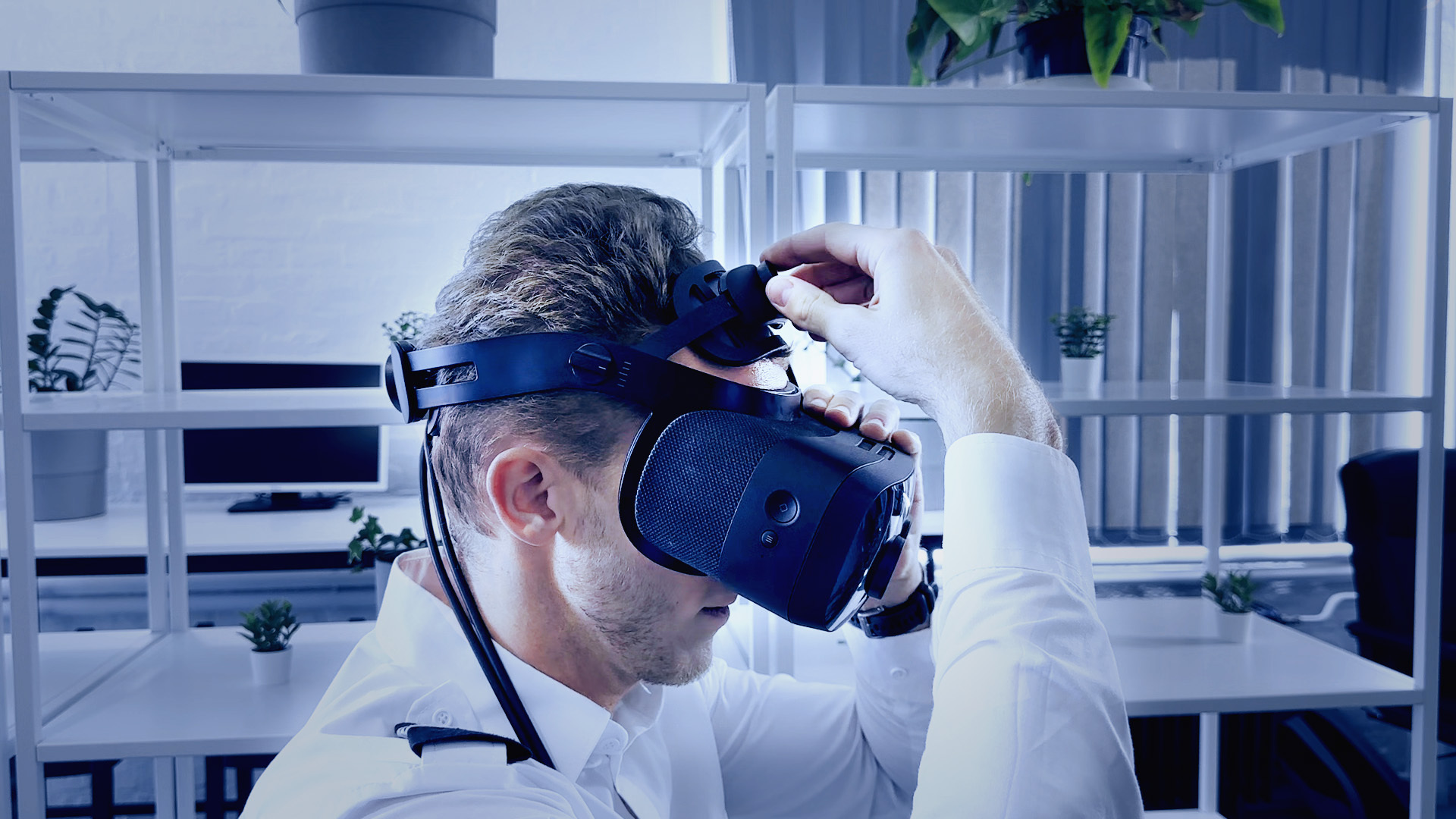

In this article, Christian Theuermann, member of the executive board explores extending the possibilities for future pilots with extended reality.
Extended Reality (XR) refers to Augmented (AR), Virtual (VR) and Mixed Reality (MR), which create immersive environments that combine or mirror the physical world, offering a level of immersion beyond traditional flight simulation methods.
As an example, AR can be used to overlay computer-generated information onto the user’s real-world environment, enhancing their perception. An AR system could project critical flight data, navigation information or pre-flight checklists onto the pilot’s field of view through a transparent display in the cockpit. This aids real-time decision-making without obstructing the trainees’ surroundings.
Alternatively, VR can create a completely immersive, computer-generated environment that users can interact with using a headset or goggles. When used in flight training, VR places the pilot inside a fully virtual cockpit, providing a 360-degree view and a sense of presence. This technology allows realistic training scenarios to be conducted in a safe environment, such as emergency procedures or navigating adverse weather conditions.
XR as an enabler for future pilots
Rather than replacing Full Flight Simulators (FFS), these technologies are improving existing training programmes by preparing future pilots more effectively before they enter the simulator.
XR technologies, such as portable VR headsets, allow trainees to practise cockpit familiarisation, standard operating procedures and emergency scenarios from almost any location. This flexibility reduces the need to travel to specialist training centres and enables pilots to build confidence and procedural knowledge before progressing to high-fidelity FFS sessions. As a result, valuable simulator time can be used more efficiently, helping training organisations accommodate greater numbers of students.
Artificial Intelligence (AI) further strengthens this approach by delivering personalised learning experiences. AI can analyse pilot performance throughout training, identifying strengths and areas for improvement to provide targeted feedback and support development. The latest training platforms are also beginning to incorporate AI-powered virtual instructors that answer questions, guide trainees through procedures and support multi-crew training without requiring additional personnel.
AXIS Flight Simulation launched its own VR solution in 2024, the Virtual Cockpit Procedure and Walkaround Trainer (VPT) with a built-in AI instructor.
Can regulation keep up with simulator innovation?
In July 2026, the European Union A introduced its biggest overhaul of flight simulation training rules in decades, replacing the traditional system of fixed simulator categories with a more flexible, capability-based framework. Under the new rules, simulators will be qualified according to what they can actually do, making it easier to integrate emerging technologies such as XR into pilot training
This is great for the future our industry as it means that simulator success will be measured less by qualification level and more by proven capability, relevant fidelity and training effectiveness, which are all being enhanced by VR.
Christian Theuermann is the executive board member at AXIS Flight Simulation, a leading innovator in high-fidelity flight training devices. With a background in business and mechanical engineering, he brings extensive expertise in financial management, operational strategy and technology-driven solutions to the aerospace sector. He led the launch of AXIS Flight Simulation’s Virtual Cockpit Procedure and Walkaround Trainer (VPT), a cutting-edge solution powered by virtual and mixed reality technologies. The VPT enhances pilot training by offering immersive experiences for system familiarisation, ground operations, flight procedures and emergency scenarios.
