

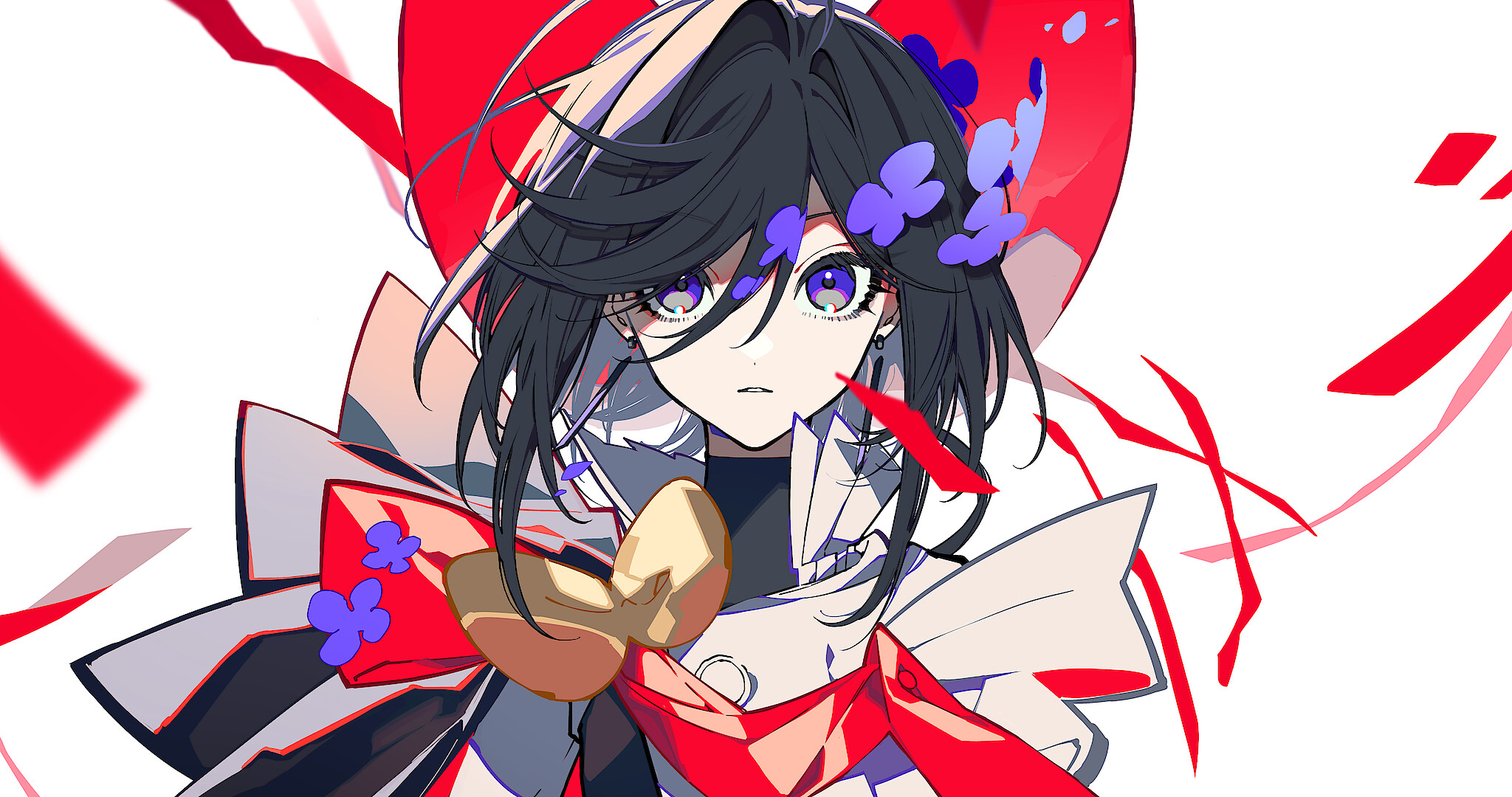
Netflix released the final trailer for The Ribbon Hero on July 30, including a full English-dubbed version and five new voice cast members — the last preview before the film premieres exclusively on Netflix worldwide on August 8, 2026. Eight days out from that premiere, it is worth explaining what most coverage has not: the film being adapted is not a minor franchise entry. Princess Knight (1953) is the manga that created the shōjo genre and gave every subsequent magical girl her transformation sequence, and The Ribbon Hero will be the first feature-length animation ever made of it.
That distinction matters beyond historical trivia. The core premise of the 1953 source — a princess born with both a “boy’s heart” and a “girl’s heart” — turns out to anticipate, with remarkable specificity, what neuroscientists studying gender identity development would spend the following 70 years establishing. Director Yuuki Igarashi has also made a significant revision to the original’s ending that the science now validates. Understanding both of those facts changes what you are watching on August 8.
Princess Knight Built the Shōjo Genre from Nothing in 1953
In 1952, a Kodansha editor asked Osamu Tezuka — who had already established Kimba the White Lion and Astro Boy — to create a manga aimed at girls that could replicate the drama of his adventure titles. Tezuka had grown up in Takarazuka City, Hyogo Prefecture, where his mother frequently brought him to performances at the Takarazuka Revue, an all-female theater company founded in 1914 in which women perform both male and female roles. The result was Princess Knight, which began serializing in Shōjo Club in January 1953.
Before Princess Knight, shōjo manga consisted primarily of short gag strips or educational material focused on domestic life. Tezuka introduced something entirely new: a heroine who fenced, rode, commanded armies, fell in love, and grappled over many chapters with fundamental questions about who she was. Scholars have called it “the first modern work” of the shōjo genre, the point where girls’ manga shifted from vignettes to narrative-driven adventure with a female lead at its center. ANN critic Martin Theron has written that its “influence is immeasurable, and in a real sense every lead action heroine who has followed is a direct or indirect spiritual descendant of Princess Sapphire.”
The manga is also, per Wikipedia’s entry on the magical girl genre, “seen as a prototype for the magical girl genre, as it set forth the appeal of girls who transform to do things they normally cannot perform.” The signature transformation sequence that defines every installment of Sailor Moon, Cardcaptor Sakura, and Puella Magi Madoka Magica — the luminous suspension between selves in which a girl exchanges one identity for a more powerful alter ego — traces genealogically to what Tezuka established in 1953. The Ribbon Hero‘s ribbon-powered transformation sequence is not an aesthetic choice. It is a citation of the entire tradition’s root.
The last animated project in the franchise before The Ribbon Hero was an 8-minute short shown at the “Tezuka Osamu World” exhibition in Kyoto Station in July 1999. Before that, the 52-episode Princess Knight TV anime aired on Fuji TV from April 2, 1967, to April 7, 1968. The 2026 Netflix film is the first feature-length animation of the property in 73 years of existence and the first ever at feature scale.
The Takarazuka Revue Gave Tezuka the Empirical Proof Before Butler Had the Theory
Tezuka’s debt to Takarazuka was direct and acknowledged. According to academic Natsu Onoda Power’s book God of Comics, “Takarazuka’s aesthetic is on full display in Princess Knight.” Tezuka did not merely borrow Takarazuka’s visual vocabulary; he borrowed its central empirical observation: that gendered behavior is performed and contextual, not fixed and essential.
The Takarazuka Revue structures its performers into two role categories — the otokoyaku (women who perform idealized male roles) and the musumeyaku (women who perform idealized female roles). Crucially, the otokoyaku do not perform realistic men. They perform an idealized, heightened version of masculine qualities: dashingness, gallantry, emotional reserve, physical confidence. And audiences — predominantly women — respond with genuine romantic investment in those performances.
What Tezuka observed at Takarazuka as a child was not theater. It was a 30-year running empirical demonstration that the same person could perform multiple genders, that the performance was what constituted the identity in each context, and that an audience could find both performances fully real. The philosopher Judith Butler would articulate this academically in Gender Trouble (1990): gender is not a natural expression of an inner essence but a performance constituted by repetition of socially legible acts. Takarazuka had been demonstrating it on stage, practically, since 1914, and Tezuka had been watching it since childhood.
Sapphire’s premise — a princess who performs prince during court, princess at the ball, and knight in battle — is Takarazuka’s central insight given a cosmological architecture. The “two hearts” are not magical nonsense. They are a 1953 manga artist’s way of dramatizing what his theater-going childhood had shown him: that the same person contains and deploys multiple identity registers, and that the social demand for exactly one of them is the problem, not the person.
What Neuroscience Has Established Since 1953 About the “Two-Heart” Premise
Tezuka’s 1953 metaphor turns out to anticipate, with considerable specificity, what endocrinology and neuroscience have spent the past 70 years establishing about gender identity development.
In 1995, Dutch researchers Zhou, Hofman, Gooren, and Swaab published a study in Nature showing that the volume of the central subdivision of the bed nucleus of the stria terminalis (BSTc) — a limbic brain structure essential for sexual behavior — is larger in men than in women, and that male-to-female transsexuals have a female-sized BSTc. Critically, the size of the BSTc was not influenced by adult hormone levels and was independent of sexual orientation — meaning the difference was structural, not the product of current hormones or behavior. A follow-up study published in the Journal of Neuroscience in 2002 found that BSTc differentiation continues into adulthood, demonstrating that sexual differentiation of the human brain is not a single discrete prenatal event but an extended developmental process.
What this research establishes is that gender identity develops from the interaction of chromosomal sex, gonadal hormone exposure across multiple fetal development windows (including a prenatal testosterone window roughly at weeks 8 through 24 of gestation), and brain structural differentiation across several brain regions. Different neural circuits respond to different hormonal environments across different developmental phases. The consequence: it is biologically possible for the same person’s brain to carry gender-relevant organization that does not resolve neatly into a single binary category.
That is not Tezuka’s “two hearts” exactly — the manga’s model is still essentialist, treating gender identity as a discrete colored object that can be removed. But the scientific evidence means that Tezuka’s 1953 intuition about identity complexity was pointing in a real and defensible direction, even if his fictional mechanism was premodern. The central claim that a person might carry genuinely dual gender-relevant neural organization — and that demanding they surrender one is a socially imposed demand rather than a biological necessity — is now grounded in peer-reviewed structural neuroscience.
Why the 2026 Film’s Ending Is the Scientifically Correct One
This is where The Ribbon Hero‘s creative revision matters most.
The original Princess Knight manga concludes with Sapphire permanently losing her “boy’s heart.” She marries Franz, the prince of neighboring Goldland. Multiple critics have interpreted this ending as confirmation that “her true happiness comes from being in a traditional female role” — academic Natsu Onoda Power’s formulation — and that Tezuka “created an exquisite world of indecision” without ultimately resolving it in the heroine’s favor.
That ending was a product of 1953 Japan. Shōjo Club was a girls’ magazine, and the conclusion needed to satisfy the genre expectations of the moment: adventure resolved into domestic happiness, the gender-bending safely bracketed as a childhood or exceptional circumstance.
Based on trailer footage and the film’s official synopsis, The Ribbon Hero makes a different choice. Sapphire does not appear to lose her dual-identity at the film’s close. The ribbon transformation is framed not as a temporary workaround that resolves back to conventional femininity, but as the source of her heroic power — a permanent feature of who she is rather than a defect requiring correction. The film’s synopsis describes Sapphire as becoming “the Ribbon Hero” when Nergal devastates her kingdom; her dual-identity is precisely what enables her to protect Goldland. It is her armor, not her problem.
What the 1953 source’s ending implicitly claimed — that dual-identity must eventually resolve into one sanctioned form — is the claim modern neuroscience’s stability research directly refutes. Studies consistently find that gender identity is among the most stable, early-formed, and cognitively central elements of human self-modeling, resistant to social reassignment precisely because it is not merely a performed role but a feature of how the nervous system organizes subjective experience. The push in the original ending to “remove” one heart was not biologically necessary. It was social compliance. Igarashi’s version declines that compliance, and the science that accrued in the 70 years Tezuka did not have backs the decision.
Igarashi’s Debut and What OUTLINE Brings to the Material
Yuuki Igarashi founded Studio OUTLINE in July 2022, affiliated with Twin Engine, with The Ribbon Hero as OUTLINE’s first feature project. He came to the project as one of the most distinctive animators working in Japanese animation — recognized globally for the first ending sequence of Jujutsu Kaisen Season 1, which he key-animated alone, and as the director of “Lop & Ochō” in Star Wars: Visions, which received widespread acclaim for its delicate storytelling and cinematic confidence.
The character design architecture pairs Kei Mochizuki (Fate/Grand Order) for original designs with Mai Yoneyama — ending director of Cyberpunk: Edgerunners and Lazarus — for character concept collaboration, and Issei Arakaki as animation character designer. Art direction is by Cedric Herold. The visual grammar is deliberately modern: Mochizuki’s lineweight and Yoneyama’s color/form vocabulary produce a film that looks substantially different from Tezuka’s 1950s Disney-influenced round characters — which accounts for the fan anxiety about departure from the source aesthetic noted when the first key visual appeared in May 2026.
The music is composed by Satoru Kosaki and Ryuichi Takada of MONACA, whose credits span work across the Sword Art Online and Tales series. Theme song “Reborn” is performed by Girls Archives, a Japanese/Korean group. The English dub cast, announced on July 30, includes NIJISANJI VTubers Mito Tsukino (Hecate) and Debidebi Debiru (Tack), alongside Yoshimasa Hosoya (Rock), Yuusuke Tezuka (Chorogy), and Lunlun (Chick). The lead, Sapphire, is voiced by Saya of comedy duo Lalande — her first-ever leading role in a feature-length animated production.
Nergal Was One of the First Named Gods in History, and The Ribbon Hero Uses That Deliberately
The antagonistic force in The Ribbon Hero‘s plot carries a name that rewards attention. Nergal is one of the oldest named deities in recorded human history, attested in Sumerian texts from approximately 2900–2800 BCE. He is the god of war, pestilence, death, and the underworld; his epithets include “raging king” and “the burner.” His main cult center was the city of Kutha in northern Babylonia.
The narrative pattern most associated with Nergal is the Epic of Erra, in which Erra (Nergal’s alter ego) brings catastrophic destruction to Babylon before eventually being calmed. The structure: civilization is devastated, survivors are scattered, restoration is long and uneasy. This maps with precision onto The Ribbon Hero‘s plot — Nergal destroys Silverland, driving Sapphire into exile, and threatens to repeat the destruction in Goldland.
The name is not incidental worldbuilding. It activates a specific ancient cognitive technology: giving catastrophe agency and intention rather than leaving it impersonal. In Mesopotamian religion, identifying plague, drought, and invasion with Nergal’s anger preserved cosmological order — the universe is governed by intention — even amid meaningless destruction. Osamu Tezuka writing in 1953, eight years after the atomic bombing of Hiroshima and Nagasaki, would have understood without research what naming a catastrophe provides: the possibility of confronting it as a will rather than enduring it as a weather event.
Igarashi inherits and reactivates that mythology. Sapphire does not survive a natural disaster. She survives a god. The distinction is the difference between trauma as accident and trauma as something that can be faced.
What Netflix Anime Subscribers Get on August 8
The Ribbon Hero will stream exclusively on Netflix worldwide on August 8, available with both the original Japanese audio and English subtitles and a full English dub. Netflix subscribers worldwide can access it simultaneously.
For viewers unfamiliar with thebus in English by Kodansha USA in August 2022 and is available in print and digital formats. The 1967–1968 TV anime is available on home media through Nozomi Entertainment in North America, though in an edited version. The film does not require prior knowledge of either; its official synopsis is designed as a standalone entry point
For viewers who know thest structurally faithful to the original’s adventure-and-identity core while significantly revising the ideological conclusion that most critics have found the original’s weakest element. That revision is the most substantive editorial choice the film makes, and the preceding 4,000 words have been an attempt to explain why it is the right one
Frequently Asked Questions
Why does The Ribbon Hero change the ending of Princess Knight?
The original 1953 manga concludes with Sapphire permanently losing her “boy’s heart” — surrendering her dual-identity to marry Franz and settle into a conventional female role. Multiple critics including academic Natsu Onoda Power have noted that this ending implicitly validates the social pressure the story spent 100 chapters questioning. Igarashi’s 2026 film, based on trailer footage and the official synopsis, appears to revise this conclusion by framing Sapphire’s dual-identity as her heroic power rather than a condition requiring resolution. Modern neuroscience research on gender identity stability supports this revision: the BSTc research of Zhou et al. (Nature, 1995) and subsequent work demonstrates that gender identity is among the most stable, early-formed elements of human self-organization, resistant to social reassignment because it is structural, not merely performed. Removing one “heart” was never biologically required — it was a narrative concession to 1953 genre expectations.
What is Princess Knight, and why does it matter for the magical girl genre?
Princess Knight (1953, Osamu Tezuka) is the manga that transformed shōjo from short domestic gag strips into long-form adventure narratives centered on a capable female protagonist. Wikipedia’s entry on the magical girl genre describes it as “a prototype for the magical girl genre, as it set forth the appeal of girls who transform to do things they normally cannot perform.” Every subsequent magical girl transformation sequence — Sailor Moon, Cardcaptor Sakura, Madoka Magica — descends genealogically from what Tezuka established in 1953. The Ribbon Hero is the first feature-length film ever made of this foundational work.
When does The Ribbon Hero come out, and who directed it?
The Ribbon Hero premieres exclusively on Netflix worldwide on August 8, 2026. It is directed by Yuuki Igarashi in his feature-length directorial debut, produced at his studio OUTLINE (founded 2022) in partnership with Twin Engine and distributed by Netflix. Igarashi previously directed “Lop & Ochō” in Star Wars: Visions and solo key-animated the first ending sequence of Jujutsu Kaisen Season 1.
How does the Takarazuka Revue connect to the science of gender identity?
The Takarazuka Revue — the all-female Japanese theater company Tezuka grew up watching, and Princess Knight’s primary inspiration — has operated since 1914 as a practical demonstration of what philosopher Judith Butler later theorized in Gender Trouble (1990): that gender is constituted through performance rather than expressed from an essential inner state. Women performing idealized men, and audiences investing genuine romantic feeling in those performances, demonstrates that gendered behavior is contextual and enacted, not fixed. Neuroscientific research since the 1990s has established a structural biological basis for this variability: BSTc differentiation, prenatal hormone exposure across multiple developmental windows, and the independence of gender identity from adult hormone levels all support the view that gender organization is complex, multi-stage, and not reducible to a single discrete assignment. Tezuka’s dual-heart cosmology, inspired by Takarazuka, pointed toward this conclusion 70 years before the peer-reviewed structural evidence arrived.
ⓒ 2026 TECHTIMES.com All rights reserved. Do not reproduce without permission.
