

The introductory scene of Induchoodan in Narasimham (2000) has been the subject of debate ever since the Malayalam blockbuster hit theatres. Directed by Shaji Kailas and starring Mohanlal, the film features the hero making a dramatic entrance by emerging from a river after an extended underwater wait, timed perfectly to his sidekick’s lengthy monologue. While fans celebrate it as one of Malayalam cinema’s defining mass entries, others have long questioned its sheer impracticality, and how Induchoodan managed to hold his breath for so long.
Twenty-five-year-old Rohit Milan saw the scene differently. The Pune-based Malayali artist imagined it not as live action, but as an anime sequence created with artificial intelligence.
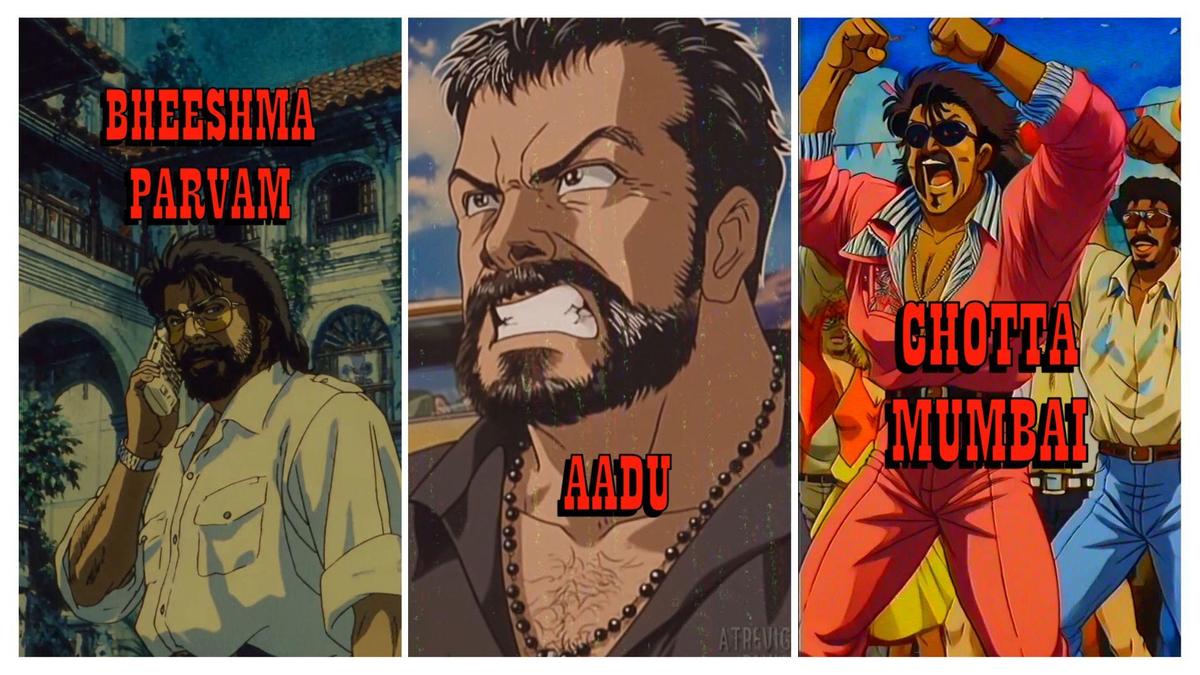
Over the past few months, Rohit’s anime reinterpretations of iconic South Indian films have gone viral on Instagram through his page, @LofiAsKo. Whether it is reimagining Mohanlal’s Aadu Thoma from Spadikam with the muscular aesthetics of He-Man or transforming Rajinikanth’s Sivaji: The Boss into an anime, he blends familiar cinematic moments with distinct animation styles.
Rohit Milan
| Photo Credit:
SPECIAL ARRANGEMENT
“I’m an artist and an aspiring filmmaker,” says the Thiruvananthapuram native, who left a career in finance to pursue storytelling. The short-form videos, he says, began as a creative outlet but have also helped him build an audience for his original anime project, Kiva.
“I initially created anime-style advertisements featuring characters like Goku from Dragon Ball Z,” he says. “Later, I realised iconic Malayalam film scenes lent themselves beautifully to this format.”
The process
Each video begins with selecting a scene and deciding which anime aesthetic best suits it. Rohit feeds reference images into Midjourney to replicate a particular visual style before generating stylised frames from the original film. Those images are then animated using AI video-generation tools such as Seedance. He also relies on Claude and ChatGPT to refine prompts and streamline different stages of the workflow.
Minnal Murali as an anime
| Photo Credit:
SPECIAL ARRANGEMENT
For Rohit, AI is just another creative tool, even if it raises difficult questions about the future of artistic labour.
“I always wanted to pursue an artistic profession,” he says. “When I saw AI evolving, I realised no one could stop it. It’s changed the industry irreversibly, so I’d rather learn to use it than ignore it.”
He compares the technology to the invention of photography. “Portrait artists lost work when cameras arrived, but photography also became a new art form. AI is another medium of artistic expression. That said, jobs are being affected, and I recognise that.”
“The criticisms against AI are valid and I am not half as talented as all the creatives out there who inspire me,” says Rohit. “However, at the same time, I think that decisions on these new tools should be based on their technical merit and not on bias against change. I am just another creator on the internet who wants to tell stories and these tools are the best options for me to do so.”
A fan of Attack on Titan, Rohit now hopes to recreate the texture and nostalgia of retro anime in his own work.
While juggling client projects, he continues developing Kiva, a passion project that remains a work in progress.
“It’s a long-form story,” he says. “I’m still deciding whether to begin with a mini-series because, until now, I’ve only worked with 30-second videos. I’d like to experiment with something longer.”
He adds, “AI is powerful too but still far from perfect. While I try to bring the output as close to the vision I have in mind, there’s still a long way to go. Even with detailed prompts, the model can interpret things differently from one generation to the next. Maintaining visual consistency from one scene to the next is more difficult than creating a single beautiful image.
The story’s broad framework is in place, but much of the world-building is still evolving. “I’ve written the skeleton of Kiva, but the characters still need to be fleshed out,” he says. “I also want to involve my Instagram followers by using some of them as inspiration for supporting characters. It would make the project feel more collaborative.”
Rohit’s content is shared on his Instagram handle @lofiasko
