Some of my clearest memories from when I was a kid are coming home from school and jumping on my bean bag while still in my school uniform. I would turn on the TV, grab my snacks, and settle in for my favorite shows before my afternoon nap.
I grew up in the early 2000s, and I was extremely spoiled for choice when it came to what I could watch on TV. Shows like Blue’s Clues, Clifford the Big Red Dog, Higglytown Heroes, and Angelina Ballerina were staples in my weekly routine. If I wanted something calming, there were shows for that: slower-paced, usually set outside the city or designed with calming music and colors. If I were looking for the opposite, I would turn to shows with weird, colorful, funky characters and space adventures that pulled me into their imaginative worlds, like Jollitown, Sineskwela, or Foster’s Home for Imaginary Friends. There were even Filipino dubs of anime like Naruto, Digimon, and Pokémon.
I graduated from Benilde’s animation program last year, and I can honestly say that having these shows during childhood shaped my love of storytelling and animation. Even if the stories were simple, they never talked down to kids. They promoted a love of learning, curiosity, and looking after your community. They also taught me how to talk to my parents about difficult topics I was encountering for the first time, like insecurity, jealousy, and frustration. This, along with important moral lessons about empathy, helped me realize how valuable caring for the people around me was, even if we were different.
One thing I appreciate, looking back on them now, is how much care and love were put into giving kids something to take away, no matter how weird the show was. Jojo’s Circus was a stop-motion animated show on Disney about a young clown and her lion learning life lessons and skills. Courage the Cowardly Dog was baby’s first gateway into horror, but it never forgot to emphasize the importance of doing things even if it scared you. Higglytown Heroes was about Russian nesting doll-shaped kids that highlighted everyday heroes like firefighters and teachers. Even Dora the Explorer broke gender roles and helped kids learn Spanish. There was a focus back then on giving kids the chance to learn.
So about that time Steve went off to college… #BluesClues25pic.twitter.com/O8NOM2eRjy
— Nick Jr. (@nickjr) September 7, 2021
Times have definitely changed. There are so many distractions in our technology-laden world that everything seems to battle for our focus, and it’s no different for children. With the rise of short-form media and the popularity of platforms like YouTube and TikTok, kids’ content shifted over to the likes of Cocomelon, which relies on bright colors, repetitive jingles, and rapid scene changes to keep kids engaged despite their short attention spans. Gone are the moral lessons and storylines; instead, with how overstimulating they can be, shows like Cocomelon are the equivalent of jangling keys in front of kids’ faces.
As Jacque Manabat, the project lead of Agos, Ang Batang Isla, puts it, “Children’s media must reflect their stories. It must be a story that looks like them, speaks like them, and shows where they are.”
“I also believe in slow storytelling for the children,” she adds. “While the media available online is fast-paced, there is beauty in telling a story to the children and being able to breathe in between, to think in the pauses.”
In fact, research has shown the importance of low-stimulation shows and movies for kids. A 2011 study by the American Academy of Pediatrics compared the performance of kids who only watched high-stimulation shows versus those who watched low-stimulation shows. The first group performed worse and had problems concentrating or relaxing afterward.
Slower-paced shows, meanwhile, can help children slow down, reduce stress, and relax their bodies and minds. Many parents are even turning to older shows from the ‘90s and 2000s, such as Little Bear,Franklin, and Arthur, to find the low stimulation their kids need after a busy and tiring day.
Children’s media must reflect their stories. It must be a story that looks like them, speaks like them, and shows where they are.
Looking back on previous iterations of children’s media, Manabat reflects, “My only wish is that the young Filipino generation would have a role model their age that they could say is theirs. For the millennials, they were Kuya Bodjie and the Sineskwela kids, and we could also add in Princess Sarah, a cartoon we adapted from the international media.”
Locally, the National Council for Children’s Television has started producing more educational shows such as Awit ng Pina, a retelling of the Alamat ng Pinya;Meriam’s Online World, which highlights online literacy; and Mang LaLakbay, which showcases our country’s natural wonders.
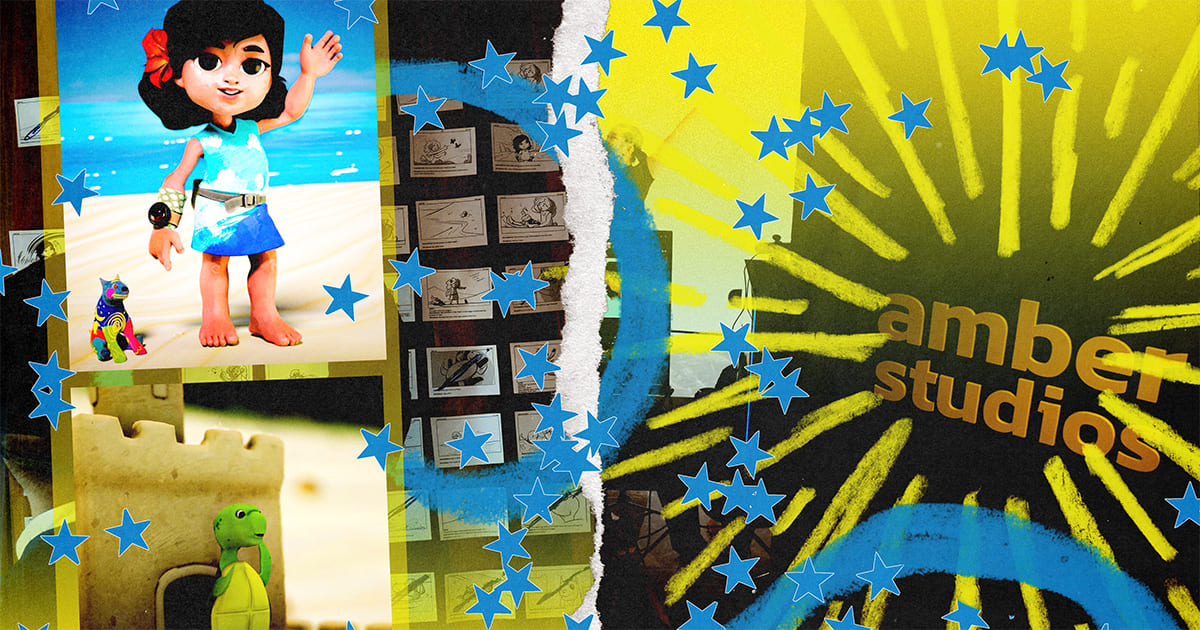
Yet another exciting local project is Manabat’s Agos, Ang Batang Isla, about a five-year-old exploring a childhood in the Philippine islands. The idea was born after she realized the growing gap in literacy and choice in children’s entertainment. The current generation, Manabat explained, often gets its entertainment from other countries like the United Kingdom, whose government subsidizes children’s shows. With Agos, the creators hope that Filipino kids will further embrace their own culture.
Others include the web series Sun Chaser, created by Bernard Badion and Bobby Pontillas, and the upcoming animated film Forgotten Island, written and directed by Joel Crawford and Januel Mercado—which all play a part in showcasing and celebrating Filipino culture.
It’s frustrating, as an animator and someone passionate about children’s media, to see how many media companies globally no longer value kids and their world. What kids see, hear, read, and are exposed to are the building blocks of who they’ll become as people.
Kids deserve characters and worlds that help them feel seen and make sense of their new emotions. What message are we sending when we continue to pull funding from kids’ programs and stop producing educational content for kids? How can children be the future of our world if they are not given meaningful stories and ways to learn about it in the first place?
But all is not lost. The rise of kids and parents turning back to slower-paced, story-forward entertainment signals a desire for entertainment with a meaning to teach.