

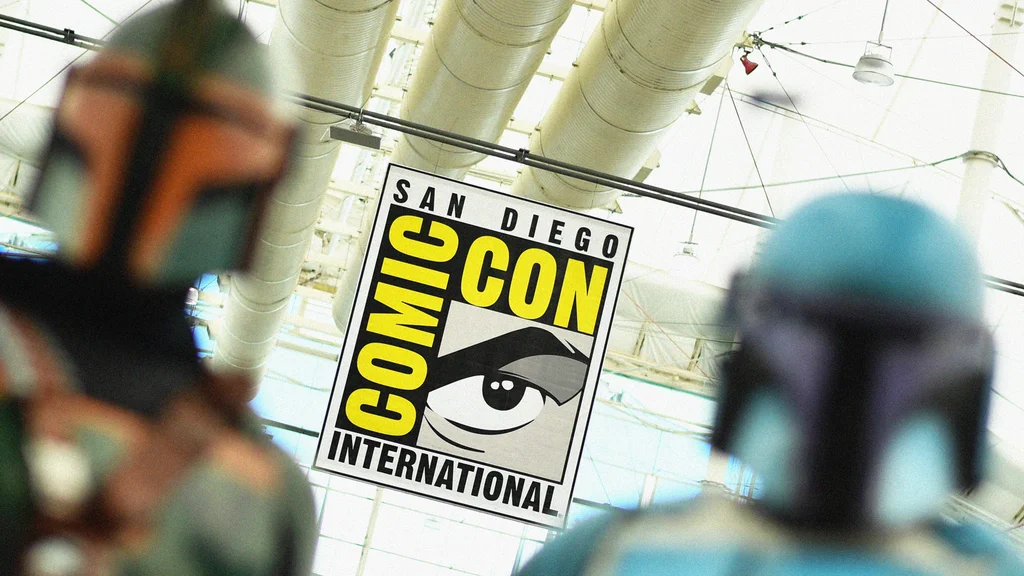
The Surprising Business Lesson Hidden in Comic-Con’s $100 Million Success
The world’s biggest pop-culture event began with fans in a hotel basement and a question most companies still get wrong.
EXPERT OPINION BY ROBIN LANDA, PROFESSOR, KEAN UNIVERSITY @RLANDA
Listen to this ArticleMore info
0:00 / 0:00
As I write this, the doors open on another Comic-Con International: San Diego. More than 130,000 people will fill the convention center and spill into the streets of the Gaslamp Quarter. Hotels sold out months ago. Studios are saving big announcements for the Comic-Con International stages. For one week each July, an entire city reorganizes itself around people who love something enough to gather with strangers and celebrate it together.
Yet none of this began with Hollywood. In 1970, a group of teens and young adults organized a one-day gathering in the basement of the U.S. Grant Hotel. They did something most companies still resist: They built for a desire that already existed instead of trying to manufacture a new one.
Fandom wasn’t new in 1970. People had been collecting comics, debating storylines, and publishing mail-order fanzines for decades. But being a fan was often something you explained away or practiced quietly. The mavens who founded Comic-Con simply gave their passion a room. Then a bigger room. The desire did the rest.
That’s the master class, and it applies far beyond pop culture. Many innovation efforts begin with the wrong question: How do we get people to behave differently? The more useful question is: What are people already trying to do?
An Inc.com Featured Presentation
Once you see it, you see it everywhere. People were already devouring DVD box sets and reading novels until 3 a.m. Netflix aligned its service with that behavior by making continuous viewing effortless. Uber transformed getting a ride into a few taps instead of a sequence of hailing, calling, and paying. DoorDash made takeout feel almost immediate by removing the steps between craving dinner and eating it.
Behavioral scientist BJ Fogg has shown why this works: When motivation already exists, making a behavior easier to accomplish changes what people do far more reliably than subjecting them to another persuasive message. Harvard legal scholar Cass R. Sunstein calls the needless obstacles “sludge”—the forms, waits, and logins that stand between people and what they already want. Removing sludge changes behavior without changing anyone’s mind.
But Comic-Con illustrates the most powerful version of this strategy, subtler than adding convenience: legitimizing a hidden behavior.
