


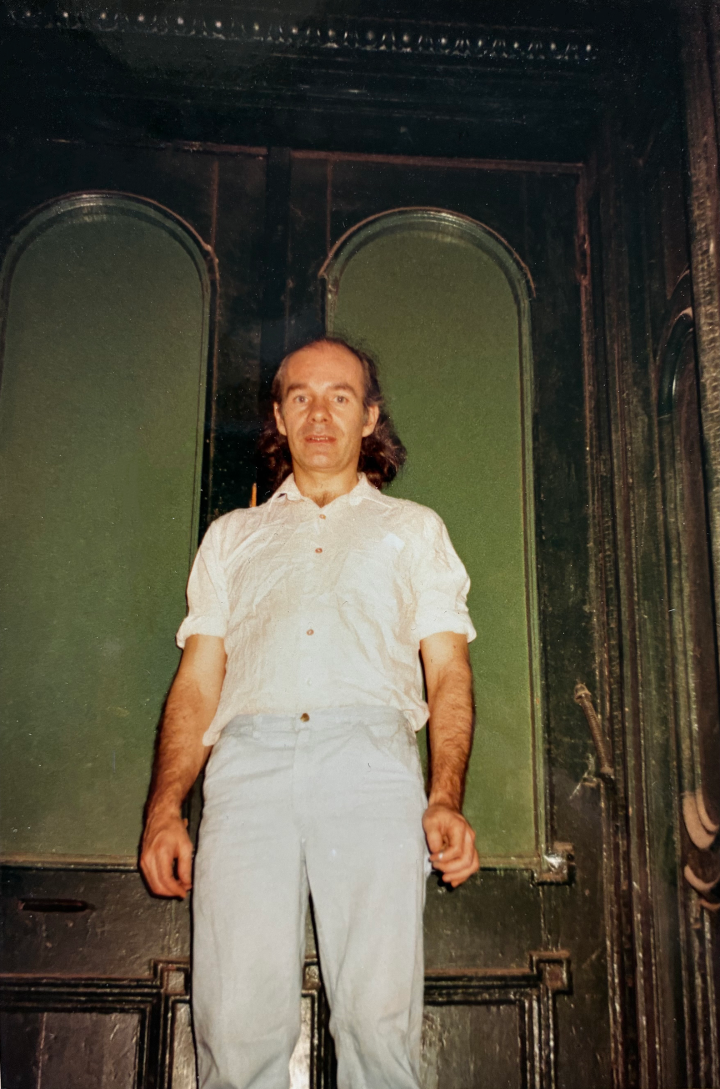
“Jerry was Jerry. He was different, you know?”
— Fred Moriarty, talking about his brother Jerry
Jerry Moriarty, the artist and educator who taught for 50 years at New York’s School of Visual Arts (SVA), died of natural causes on March 25, 2026, at his home in Binghamton, N.Y. He was 88 years old. His death was confirmed by his younger brother, Fred Moriarty.
Moriarty was a singular artist whose haunting and poetic “Jack Survives” comic strips meshed the seemingly incongruous worlds of Edward Hopper with Ernie Bushmiller, creating a form of art he coined “paintooning.”
“‘Jack Survives’ was literally a painted cartoon and each page took a month,” he wrote in Comic Art magazine in 2007. “It was done with black ink and white acrylic on 18 x 24 [inch] Arches paper.”
In 1980, after an earlier career with illustration work and years of abstract expressionist paintings, he broke into the comics world when his initial “Jack Survives” strips appeared in the first, and subsequent, issues of Art Spiegelman and Françoise Mouly’s avant-garde comics magazine RAW. Moriarty’s comics were unusual, even for RAW, which itself was an extremely unusual publication. The strips were presented in an extremely minimal form, yet were heavy with a poignant nostalgia (and sly humor) that made them unlike anything else. They were funny and lonely and great works of art.
“Jerry was one of the greatest cartoonists of the past 100 years,” said Chris Ware.
It was work that fit perfectly in the world of RAW. In a recent Zoom conversation, Spiegelman said that Moriarty’s contributions to the early issues helped him and Mouly define the hard-to-articulate role the publication was trying to occupy. Both Spiegelman and Moriarty were working at New York’s School of Visual Arts (SVA) in 1979 when a co-worker there, Marshall Arisman, encouraged Spiegelman to go look at Moriarty’s work.
“When [Arisman] heard that we were making a thing called RAW, he said, ‘Oh, you’ve got to meet Jerry, he’s an interesting cartoonist.'” Spiegelman said. “I went to meet Jerry and had my mind blown … [It was] exactly what we were looking for when we were doing RAW.We were trying to figure out where the space was between just publishing funny pages or obscure comics pages, or whatever. And there was Jerry, perfectly poised to be a personification of what we were trying to make. … He sat in the interstices between what you would consider ‘wall art’ and what you would consider ‘comics’ and he functioned in both orbits.”
Jerome Brein Moriarty was born on Jan. 15, 1938, in Binghamton, N.Y., to Jack and Esther Moriarty. The house he grew up in was the very one he would later die in, in front of a television set, nearly nine decades later.
“He had repurchased the home in 2013 when he was advised that the 28thStreet building in NYC, housing the studio loft he occupied for 49 years, was being sold to developers,” said his brother, Fred Moriarty.
Moriarty had left Binghamton in 1956 to attend the Pratt Institute in Brooklyn and had spent the majority of his adult years working at SVA and living nearby in a West 28th Street Manhattan apartment/studio. The studio occupied one of five neighboring buildings that formed the heart of Tin Pan Alley at the turn of the twentieth century. Long after the music publishers moved on, the old offices found a second life as artists’ studios. Earlier tenants of Moriarty’s studio included Zero Mostel and Henry Kallem. Moriarty’s space was filled to the brim with his large paintings, art supplies, filing cabinets, empty coffee cans, arcane scrapbooks, old comics and magazines, and many other items of curiosity. He was an obsessive collector whose inventory included many original art pages of Ernie Bushmiller’s Nancy, as well as curated examples of stories by the psychotic cartoonist Fletcher Hanks, clipped from their source and organized by his own system. His Fletcher Hanks mania led to an appearance by the artist in RAW#5 (1983), as well as later collections published by Fantagraphics.
“I’m grateful that he pointed out Fletcher Hanks to us,” said Spiegelman. “He had all these comics, he had tear sheets, he was thoroughly invested in it. … He discovered somebody really basic and important to understand. I admired his collecting instincts, they were really smart. To see all of that Fletcher Hanks stuff at once was quite a revelation. But he had giant collections of whatever his obsessions were, including photographs, Life magazines, whatever. They were his friends. He lived among that stuff pretty fully.”
“I am a ‘recovering’ collector, knowing that if a new passion arises it will consume me until it becomes art,” he wrote in Comic Art in 2007. And so, he mostly kept to himself, and his things. For those who knew him, he could accurately be described as an eccentric loner who dressed in bright multi-colored garments and created his work at night while sitting in an ancient hospital wheelchair. He never sold any of his art.
“As a ‘loner’ artist, RAW was the closest thing I have ever experienced to an artist’s community,” he wrote in Comic Art.
He kept an unorthodox work schedule as well. On days he wasn’t teaching, Moriarty would begin painting at midnight and work until 3 a.m., have breakfast and watch television, and then sleep until the early afternoon.
“Loner and loneliness are not the same,” Moriarty told Chris Ware in a 2009 interview for The Believer. “Everybody has been lonely, but not everybody is a loner. Jack is alone, but he is not a loner. I am a loner and I fully understand why that makes me strange to society. I am not lonely. Being alone is total freedom for me. My lights are on all night long because I go to bed at 7 a.m. and get up at 1 or 2 p.m. Very little of this time is spent on art, but I am always ready to work whenever ‘art guilt’ overcomes me. My internal voice is not interrupted and all thoughts can be carried to conclusion.”
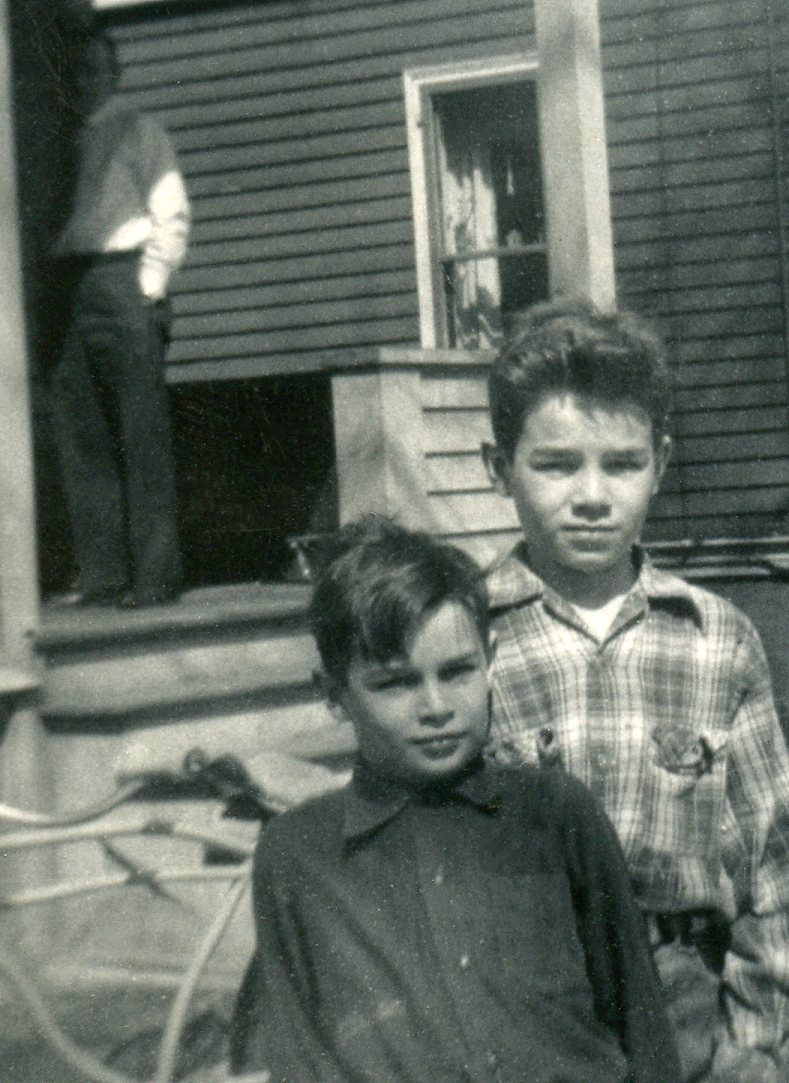
As a boy, Moriarty enjoyed comics, Roy Rogers films, and the Superman radio programs. There was no artwork in the Moriarty household, but Jack Moriarty “got a kick out of the drawings I did so he would bring home from work pencils, erasers, and paper for me,” he wrote in Comic Art in 2007. “[My father] was a white collar, working-class guy who knew nothing about art but even so encouraged me to make pictures. One Christmas I got an oil paint set and a bunch of white enameled painted shirt cardboards because the guy at the store told my dad that it was as good as canvas to paint on with oils. I was eleven years old.”
“From the very beginning it was clear that Jerry was unique,” said Fred Moriarty. “He perceived just about everything a little or a lot differently than others, especially as it related to him and in most cases his logic was hard to question. This led to challenges, especially for [our] parents. Dad was the most understanding of Jerry and was the first, and possibly the only one, in the household to fully appreciate Jerry’s talent as an artist. At age 8, Jerry made a remarkable freehand drawing of Superman that led [our] parents to realize he had a gift and they needed to find formal training for him.”
At age 15, he enrolled in the Famous Artists Course, a mail-order correspondence program whose ads were advertised in the back of comic books and other publications of the day. He completed his Famous Artists assignments in a makeshift studio his father had constructed in the family’s cellar.
“When I was a kid my ‘studio’ was in our cellar, in a former coal bin,” Moriarty told The Believer. “It had a bare lightbulb, a fold-up easel, and an old kitchen table. Nearby was a gas furnace, dad’s workbench, and things stored all over. It was dank, low, and funky, but I loved the cellar because no one came down there unless they had to. Sometimes my dad came down after supper and watched me paint, still in his shirt and tie from work.”
In 1956, Moriarty left Binghamton to enroll in the Pratt Institute, where he studied design, illustration and painting, earning his BFA in 1960. While at Pratt, he joined the Army Reserves and in 1961 served his duty time at Fort Dix, N.J.
“When they learned he was an artist, he was reassigned to paint murals in buildings on the base,” said Fred Moriarty. “Jerry never missed an opportunity to play his ‘art card’.”
During the summers of 1959 and 1960, Moriarty worked as art director at the Berkeley Carteret Hotel in Asbury Park, N.J. He began getting work as an illustrator, with art appearing in young readers publications for Scholastic Books, and magazines, including Seventeen, Esquire and GQ. Moriarty said that he did illustrations for a variety of men’s magazines of the time.
“[I] got my first freelance illustration jobs at different ‘girlie’ magazines,” he wrote in Comic Art. “In my free time I was painting abstractly. By 1962, I finally faced the fact that I wasn’t an abstract painter after all. Still loved jazz music, so I wasn’t totally uncool.”
He began teaching at SVA in 1963 and stayed for 50 years. During that time, he taught generations of young artists and was a familiar character on campus.
“I took Jerry’s class my second year of SVA specifically because I had seen his comics in RAW,” said Sam Henderson. “The faculty was almost all working professionals and like most teachers I had, he was <a href="https://comicvibe.com/netflix-reveals-top-10-most-watched-shows-of-2026-no-1-is-no-surprise/” title=”Netflix Reveals Top 10 Most Watched Shows of 2026 & No. 1 Is No Surprise”>surprised I knew who he was. His class was called “Drawing Anything: Especially From Your Head,” which required working on the same drawing the whole year with a ballpoint pen. I doodled in the margins, basically the same style I do now, more than thirty years later, which he said I should use for the cartooning courses I was taking. … A student once commented on the clothes he wore, each article of which was usually a single primary color. He told them he based it on a bag of Skittles, which I think might have just been a stock smartass reply. As he told everyone, ‘I’m more arty than you’.”
His teaching career at SVA came to an abrupt end in 2012 when he said he was fired by the school; after 50 years of teaching at SVA, the school did not renew his class and in various interviews Moriarty said he was told the school had “no need for a class that involves drawing without using photo references.” He later worked briefly at Parsons, before purchasing his childhood home and moving back to Binghamton, where he continued to paint, and lived out the rest of his life under the care of his nephew Kevin Moriarty.
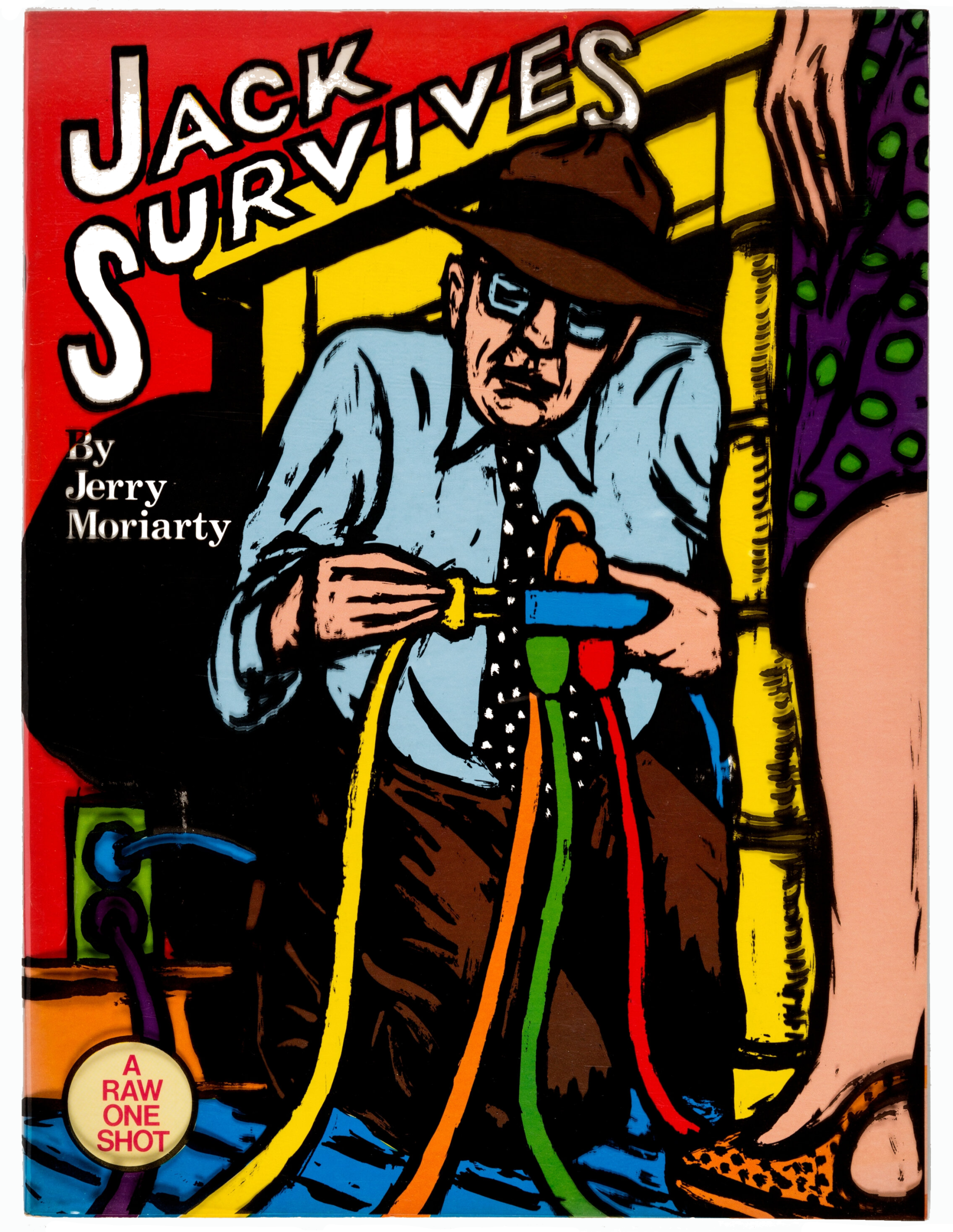
In Moriarty’s most famous work, his protagonist Jack is based, at least visually, on his father John “Jack” Moriarty.
“I never knew my father as a man,” Moriarty told The Believer in 2009. “He died ten days before my fifteenth birthday. I have invented and reconstructed him from the core of my memory but not as an obsession. Sometimes when reading a 1940s Life magazine from my collection, an issue he probably read, I imagine us talking about Harry Truman or the Brooklyn Dodgers. ‘Jack Survives’ is a whimsical, one-sided conversation with my father where I am 99 percent of it. All the Jack pages are from my experiences, and only one is based on him. Dad is in Jack as a quiet presence who survives Jack’s frustrations far better than I do.”
His father, Jack, was born in 1900 in Syracuse, N.Y. Two years later, Jack Moriarty’s mother died while giving birth. His father worked as a railroad brakeman, and when constant travel made it impossible to care for him, Jack was placed in a Catholic orphanage at the age of two. After a fire damaged the orphanage seven years later, he was adopted by his Uncle Will and Aunt Kate in Canandaigua, N.Y. Jack’s Uncle Will also worked for the railroad, and the family lived in a company house beside a telegraph tower. Jack grew up around telegraph operators and learned Morse code well enough to make it his profession. He joined the Associated Press, transmitting play-by-play reports of sporting events to radio stations, then later went to work for AT&T in Rochester. In 1931 he transferred to AT&T’s new communications building in Binghamton, where he remained until Jan. 5, 1953, when he died suddenly of a heart attack at his desk. He was fifty-two years old.
“Jerry was in a school assembly, was called out of the assembly by his older brother to say his father had died,” said Fred Moriarty. “As far as either Jerry and I can remember, it was the first death we’d ever known of anybody that we knew.”
Moriarty’s mother, Esther (Turner) Moriarty, was born in Blossburg, Pennsylvania, in 1902, the daughter of Welsh coal-mining immigrants. She left school after the eighth grade and went to work sewing shirts for soldiers during World War I, then spent several years selling magazine subscriptions. Like many young women of the period, she embraced the flapper era enthusiastically enough to publish a short piece in Flapper Magazine in 1922. While living in a Rochester boarding house she met Jack Moriarty, whom she married in 1924. After Jack’s death, Esther returned to work, eventually becoming a longtime sales clerk at Binghamton’s largest department store, where she remained until the store closed when she was eighty. She died in 1991, four days after her eighty-ninth birthday.
Esther Moriarty was another character who sometimes made her way into Moriarty’s art. So was his late sister sister, Patricia (who he renamed “Sally” in his stories).He referred to them as the “dead Moriartys.” Patricia, as Sally, is featured prominently in his 2017 book, Whatsa Paintoonist?. She died in 2005. An older brother, John Jr., died in 2015.
“When I draw and paint my parents, they are friendly guides that have a history I know — and they know me,” Moriarty told The Believer. “Their essence is true to my memory, but the situations are symbolic of actual events. I have had new experiences with both my mom and my dad that have come entirely from painting.”
Moriarty was a curious figure in the comics community in that he didn’t seek out success, at least not in the terms that most would consider the term. He rarely, if ever, sold his work and the only people that I know of who own original pieces of his art are Patrick McDonnell and Chris Ware. With no children of his own, he considered his physical painting his “children.”
“I don’t know any other artist who was as focused, and as without worldly concern about what he was focused on, than Jerry was,” said Spiegelman. “He was about as pure an artist as I’ve ever known.”
The bulk of his published comics output consists of his appearances in RAW, the magnificent RAW One ShotJack Survives collection (1984), a gorgeous remastering of the “Jack Survives” work that was published by Buenaventura Press in 2009 called The Complete Jack Survives, and two later books by Fantagraphics, Whatsa Paintoonist?(2017) and Visual Crime (2021).
Beginning in 1986, the SVA commissioned Moriarty to create a series of subway posters, five in all, produced over the next 13 years. Three featured Jack, while another drew on memories of his mother, Esther. The posters became part of a traveling exhibition of notable SVA designs shown at museums and galleries in the United States and abroad. In 1999, SVA mounted Jerry Moriarty: Paintoonist, an exhibition devoted to the paintings Moriarty developed alongside and beyond “Jack Survives.” Executed in brush, ink, acrylic, and oil, the work returned to the people and places that shaped him—his studio, his years as a pin-boy, neighborhood garbage collectors, and remembered scenes from his family life.
“I did a subway poster for SVA’s fiftieth anniversary and turned it in to Silas Rhodes, the founder of SVA; he said, ‘If you were a girl, I’d kiss you,'” Moriarty said in The Believer. “That encouraged me to burst out with, ‘How about giving me a retrospective at the SVA Museum?’ Silas got on the phone and it was done. No one at that time — I was almost sixty — would have ever suggested a show for me. In my fashion, I do ‘take care of business.’ I’m proud that, when necessary, I am proactive, because these are my children.”
In 2004, the CUE Foundation had an exhibit that included his “Sally’s Surprise” series of paintings, curated by Spiegelman. While he never sought out recognition, Moriarty also didn’t recoil from it.
“He liked it,” Spiegelman said. “He really liked it. I mean, we did manage to print [his art] and make a book out of it and stuff, and he wasn’t fighting it in any way. And he liked having that show that we set up for him through the School of Visual Arts at a gallery. It wasn’t like he didn’t want it, it’s just it was peripheral to the main concern, which was just making another picture.”
“I recall in 2009 attending Small Press Expo (SPX) for the first time and Jerry was there as a special guest,” said Noah Van Sciver. “I was stunned to meet him in person! At the time I was living in Colorado, hadn’t traveled much and hadn’t met a lot of other artists. I was star struck in a way. The next morning I was at a McDonald’s and saw Jerry sitting alone eating a McMuffin. Almost solemnly. It did bring me down to earth.”
Perhaps part of his solitary lifestyle stemmed from the fact that he could also be famously prickly and capable of suddenly ending friendships, seemingly for little logical reasons. In my own case, after I had to cancel a scheduled meeting with him, due to a family medical emergency, he never spoke to me again. That’s just who he was.
“He was a cantankerous person,” said Spiegelman. “It was hard to survive the various moodiness and ups and downs of him, but we stayed friends through just about all of it. … He was a character. He lived in a bubble, and I was looking into the outskirts of that bubble. I was just glad to know him and have his work around us.”
In the early 2000s, I spent many hours at Moriarty’s studio, listening to him talk, and talk, and occasionally pull out truly bizarre artifacts from his archives to show me. He was, without a doubt, one of the strangest and most interesting people I have ever met and I cherish the memory of the time I spent with him. I have many hours of tapes of those conversations with him and am planning a much expanded version of this story for a future issue of my own publication, Dummy.
In the space below, some of those who knew him share their memories.
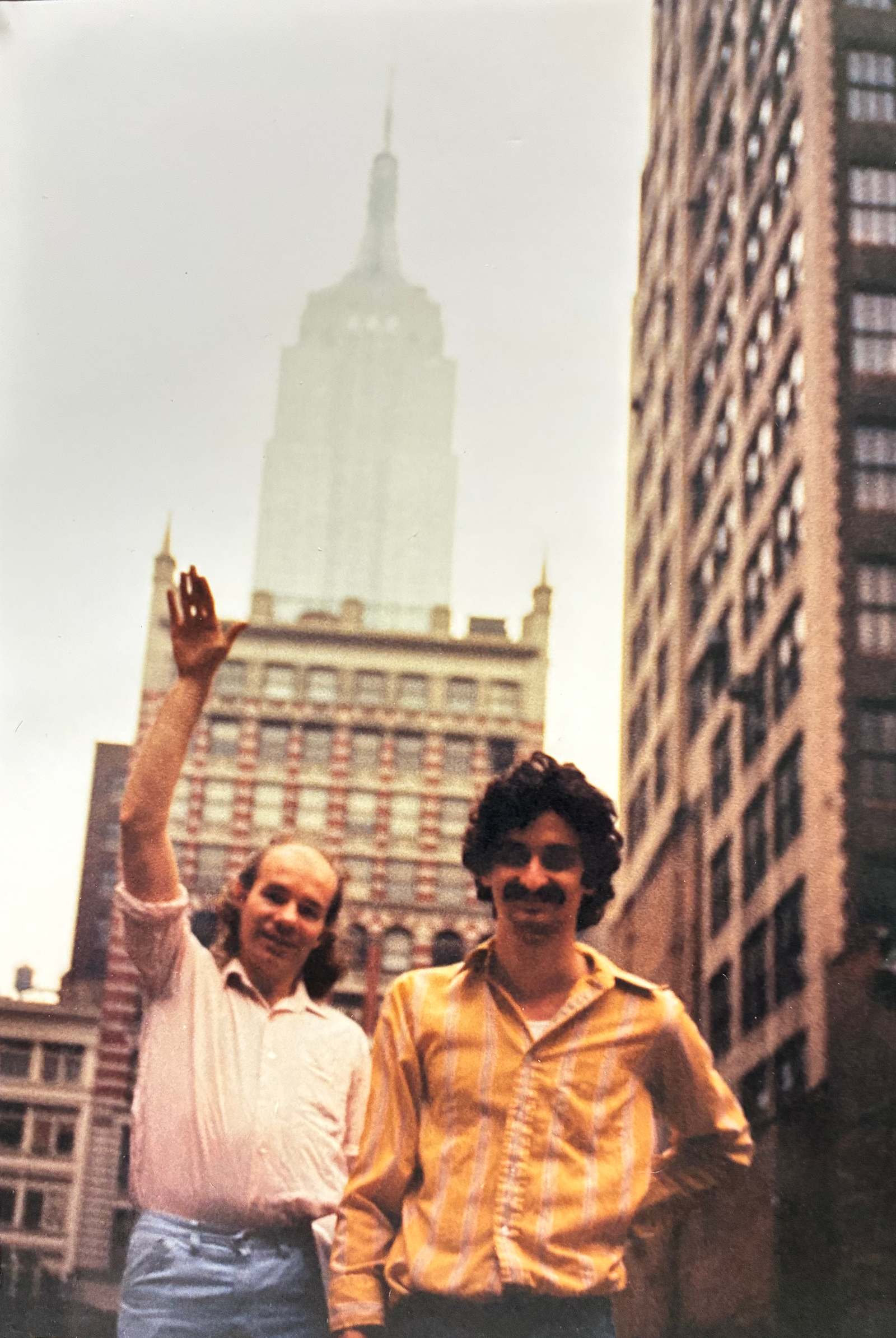
Patrick McDonnell
cartoonist/former student
I met Jerry in 1974 as a student in his “Drawing from Memory” class at the School of Visual Arts. Although I was exploring all the art options at SVA, a love of comics and comic strips was at my core. At that point, the illustrator in Jerry was just beginning to think about sequential art. With that shared interest we soon became friends.
Every Wednesday, on my walk back to Penn Station, I’d stop by Jerry’s apartment on 28th Street. Anyone who had the pleasure of being there knows how unique it was. It was like stepping into another time, another world. Actually, time didn’t exist there. A “short” visit would last hours. We talked about art, music, his cat, and comics. These times with Jerry were a major influence on my life.
I watched Jerry invent his comic strip masterpiece, Jack Survives. It was based on his father, Jack, whom Jerry lost at an early age. He had been a major force in encouraging the artist in Jerry.
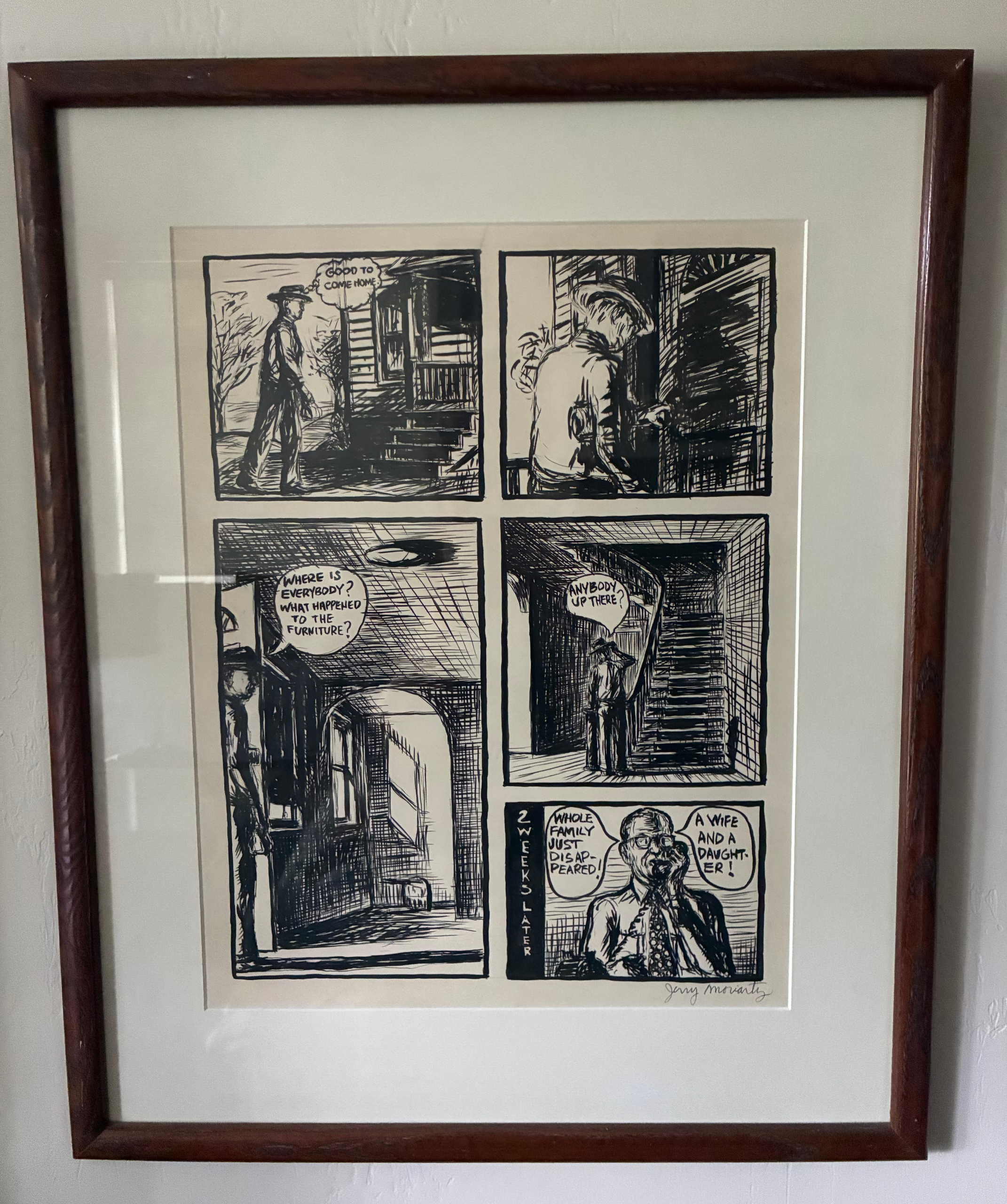
Like all great artists, Jerry would often surprise himself. I remember him eagerly showing me the latest full-page Jack comic, and we would both laugh. Those strips are funny, gorgeous and powerful on so many levels. Like all of Jerry’s work, he wasn’t thinking about getting them published. His focus was what he could learn from them and on the joy he had creating them. Looking back now, I realize I was witnessing art history.
Jerry had a keen eye and a singular vision. We would go to the early New York City comic conventions together. I was with Jerry when he discovered Fletcher Hanks and Stardust. Later, through Art Spiegelman’s RAW magazine, this eccentric comic would be introduced to a new audience.
Other than for teaching, Jerry rarely left his apartment. He bragged about never going above 42nd Street. But amazingly, one summer he took a vacation to a small country town in upstate New York. There he got the local newspaper and began a love affair with a girl named Nancy. Ernie Bushmiller’s Nancy.
Jerry was perhaps the first artist who recognized the genius of that strip. Somewhere in Jerry’s estate there’s a cassette tape of a phone conversation he had with Ernie. There’s also a Nancy Sunday page written and drawn by Jerry. An illustrator friend of his was dating the head of United Feature Syndicate who offered Jerry a chance to take over Nancyafter Ernie Bushmiller passed away.It was probably good for everyone that it didn’t work out.
Jerry also played alto saxophone. During my days at SVA, I was in the punk band Steel Tips along with fellow classmate and painter Joe Coleman. We played at CBGB’s and Max’s Kansas City and, occasionally, Jerry would join us on stage. He called himself “The Plastic Tip.”
When Karen (also from the Tips) and I got married, Jerry came to the ceremony at Saint Patrick’s Cathedral in New York City, but couldn’t make it to the reception across the river in New Jersey. So, when the festivities were over, Karen and I went back to New York in our wedding outfits to surprise Jerry with a piece of wedding cake. Jerry, a talented photographer, took pictures of us that night. They became our favorite wedding portraits.
After Jack Survives, Jerry returned to his magazine-illustration roots and created Visual Crimes. But this time he wrote the stories as well as illustrating them—funny, strange, Twilight Zone-like vignettes. Jerry would make cassettes of himself reading them as if they were old-time mystery radio shows.
From Visual Crimes, Jerry went back to his first love: painting. He created paintings of past memories and a series called Sally’s Surprise(an incarnation). These works were composed in sequential panels, making him, by his own description, a “Paintoonist.”
Illustrator, painter, cartoonist, musician, photographer, videographer, paintoonist. They are all just different names for artist.
Jerry Moriarty was a true artist in every sense of the word. His father would have been proud.
It’s hard to believe that Jerry is gone.
In my mind, he’s still happily making art back in that dusty 28th Street apartment … where there was no such thing as time.
Jerry Moriarty was a genius, a groundbreaking artist who lived alone, worked alone, yet channeled an affection for family and home into everything he ever did. From the formidable accomplishment of his “Jack Survives” and the indispensable, awkwardly-named Whatsa Paintoonist? —I think one of the top five greatest graphic novels ever — to his disquieting and moving narrative paintings, he was the first cartoonist to listen to the bold loudness of comics and find a way to redirect it into some of the quietest, gentlest and most moving strips ever drawn. That he did so at a time when the majority of painters were still afraid to “picture” anything out of fear of critical mockery is all the more remarkable. His work from the early 1980s feels and looks as fresh as the day it was first published.
I remember coming across “Jack Survives” in an issue of Art Spiegelman and Françoise Mouly’s RAW when I was 15, finding it in the back room of the The Dragon’s Lair in Omaha, Nebraska. It rode home with me in my grandmother’s car, and it was in her house I first discovered “Jack Survives.” Where Gary Panter’s, Charles Burns’ and Mark Beyer’s work more or less completely freaked me out, the easy familiarity of Jerry’s strips felt strangely comfortable, especially with me discovering it in the warmth of her home, with its similar fabric lampshades and upholstered armchairs. Jerry’s strips’ stark boldness, however, confused me; was he trying to look messy? Was he making fun of old people? At the time I only vaguely knew who Edward Hopper was, and knew absolutely nothing of German expressionism — or, really, anything at all beyond superhero comics and science fiction. Which, it turns out, is a fairly receptive state in which to actually see something clearly for the first time.
Over the pre-internet years of growing up and becoming a cartoonist myself, I pieced together a picture of Jerry from the stories and anecdotes of the New York artists who knew him or had been his students at the School of Visual Arts — Richard McGuire, Ben Katchor and, of course, Art and Françoise — with the chance to finally meet him in 2004 at a gallery show of his work that Art had curated. I’d expected a quiet, reserved Jack-like dad but instead got the real Jerry: an animated sprite (it seemed to me) who hopped between the paintings, his brightly-colored clothes like off-register colors separated from the images themselves. Jerry’s long white hair trailed behind him, giving him the air of a hip necromancer, and he spoke unpretentiously of the people in his paintings as subjects and as friends, if not even as his alter egos. His paintings were the first I’d ever seen which worked just as well for looking as for reading, and, like Bushmiller’s “Nancy,” they were harder not to read than to read. He also clarified to me who Jack was: “Jack was my dad’s name. I started “Jack” when I turned 40, about your age, and it dawned on me that my father was 40 when I first remembered him. So Jack is me as my father.”
Jerry and I met again at a party a few years later, again thanks to Art and Françoise, where we talked for a long time about comics and how his solitary life let him make his work without impediment. I remember he wore wire clips in his hair just like my mother had and he spoke animatedly and energetically about everything, from his own work to the comics he loved. I hadn’t realized until that night that he was the one who’d “liked that band first” when it came to Fletcher Hanks: our little cartooning corner of the world had been expanded by his finding the infinite in Bushmiller and seeing the grotesque eternity of Hanks, to say nothing of how he’d incorporated those revelations into his own work. Though I stupidly never visited his Manhattan studio, publisher Alvin Buenaventura made the trip with the cartoonist Jonathan Bennett in 2006 when Alvin was discussing with Jerry the possibility of producing a new edition of Jack Survives, the photos Alvin sent me showing Jerry amongst his archives of comic strips and books and paintings and drawings and originals. Jerry never sold his work and the only pieces which made it out into the world were gifts, which he’d later buy back if he found they’d come up for sale. He even collected secondhand copies of the original RAW Jack Survives book which Art and Françoise had produced in 1984 because it reminded him it had “actually happened.” His art surrounded, if not insulated him from the world, and, I believe, provided companionship.
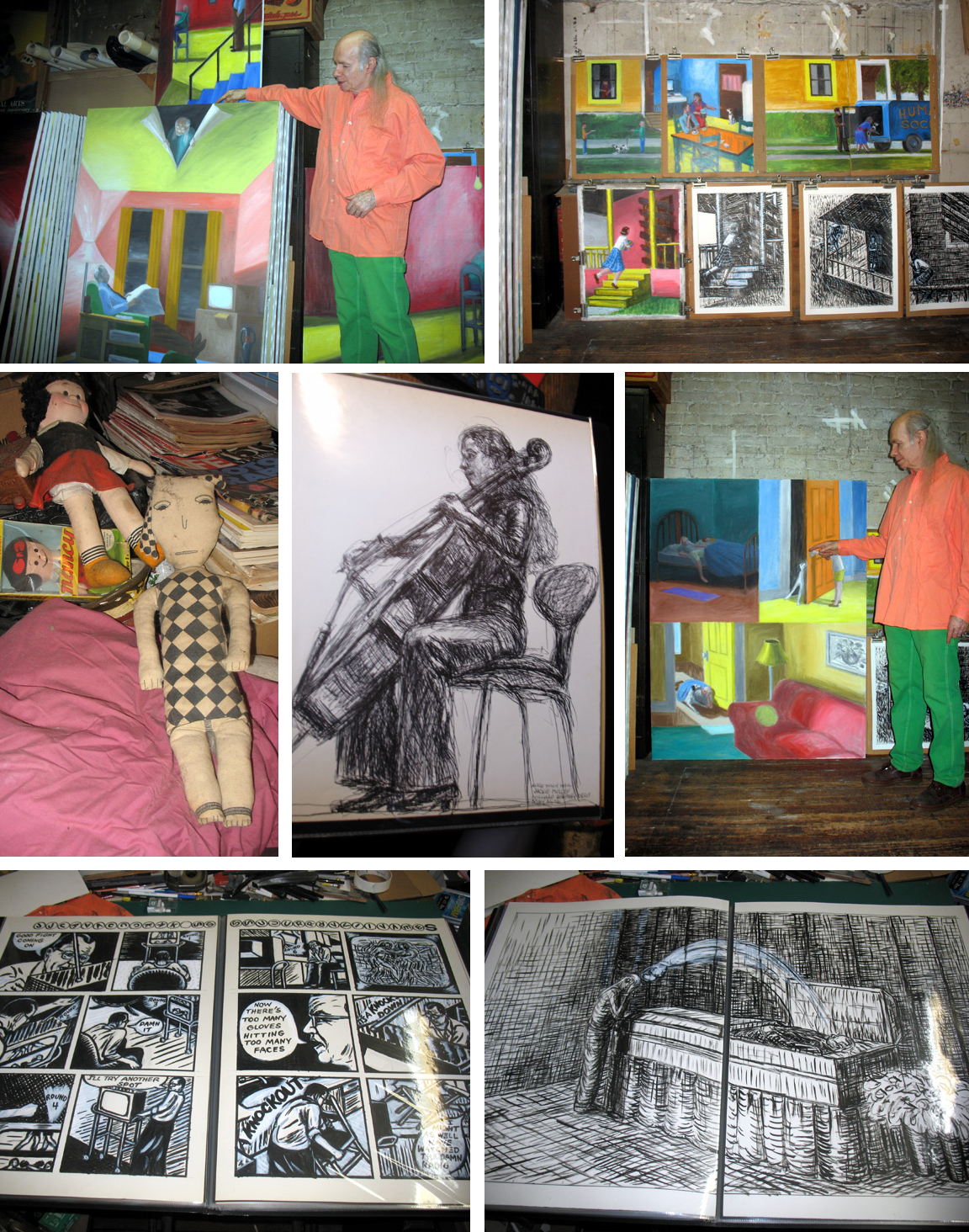
Jerry sometimes even referred to his artwork as his “children.” Apart from meeting him in person on those two brief instances, we spent the balance of our time in correspondence. He wrote enthusiastic emails — revealing surprising biographical details, such as in one note from February of 2008, wherein he recounted his days of schooling at Pratt when he drove a “hot rod” and looked like a “greaser, in the Fonz manner,” adding that in his junior year he had married his high school sweetheart after she became pregnant — or, rather, didn’t, as the test turned out to be a false alarm, “no baby after all. She wouldn’t come to Pratt to live with me. … [But even if I’d] had a kid at 20 years old then I think I would have been responsible and [given] him a comfortable life.” A couple of months later, he added: “Painting doesn’t want storytellers, and comics does, so I go where I can tell stories … Also I don’t have to sell my art to exist in the Faustian deal one makes with a gallery. Rich people don’t have their way with you. If I made abstract art I might feel differently instead of all this easily traceable personal history stuff. There is some weird shit that happens when you turn noticeably old and haven’t achieved cultural success. It is not the same as when the dream can happen in the next 10 years. It is more of a panic that it will never happen and that you always were marginal. I don’t think my art deserves that but that is because I am its parent.”
Alvin had given Jerry carte blanche for the 2008 Jack Survives, Jerry adding new material and choosing to print the originals as full-color images rather than the high-contrast pages with which we were all familiar. This production choice illuminated how his image-finding on the page also seemed to form his narratives, the pencil lines sometimes visible through his layers of acrylic white and black, all blending into various grays; it’s almost like watching memories form right before your eyes. Following Art and Françoise’s initial beneficence, thirty years later Alvin Buenaventura did much to try to bring his work to a new audience with the second edition of Jack Survives, the notion of which Jerry at first was cautious, then receptive and, ultimately, thrilled and grateful to Alvin for doing it. Gary Groth finally took up the publishing reins, printing Jerry’s last two books, including his masterpiece, Whatsa Paintoonist? for which Gary deserves plaudits and great thanks. Jerry told me that one of Groth’s first questions to him was “Why are you so prickly?”and admittedly, Jerry’s default setting was one of caution if not outright defensiveness, perhaps because he had taught for so long, where both the barbs of students and fellow faculty could get under one’s carapace. Also, working within the generally hostile climate against “representational” art (and, of course, comics) of his time, he was always ready to be ridiculed. At some point he seemed to have decided that retreating from the world in general was the best option for him and his art, which, in Alvin’s words, “Jerry will protect no matter what the consequence.” As a thank-you to Alvin, he gave him one of only two JackSurvives pages he ever let out into the world.
Jerry gave me the other after I’d included him in an exhibit I curated for the Phoenix Art Museum, a masterpiece which has shamed and bolstered me from my studio wall for over twenty years. I never fail to marvel at how it tells an entire story of a person and a generation if not our entire nation in only seven words and six panels: its Hemingway-macho war bravado, its youth-versus-old-age and even of the national memory of slavery itself, as Jack ascends up to his attic — which is the memory of any house — to both get away from what annoys him as well as to dwell on the music he prefers, even though it’s a music that was essentially thieved, just as were the people who made it. Amazingly, it’s also (almost) funny. Jerry’s younger brother, Fred, told me that was the only Jack page set in the house in which they all grew up, in Binghamton, New York.
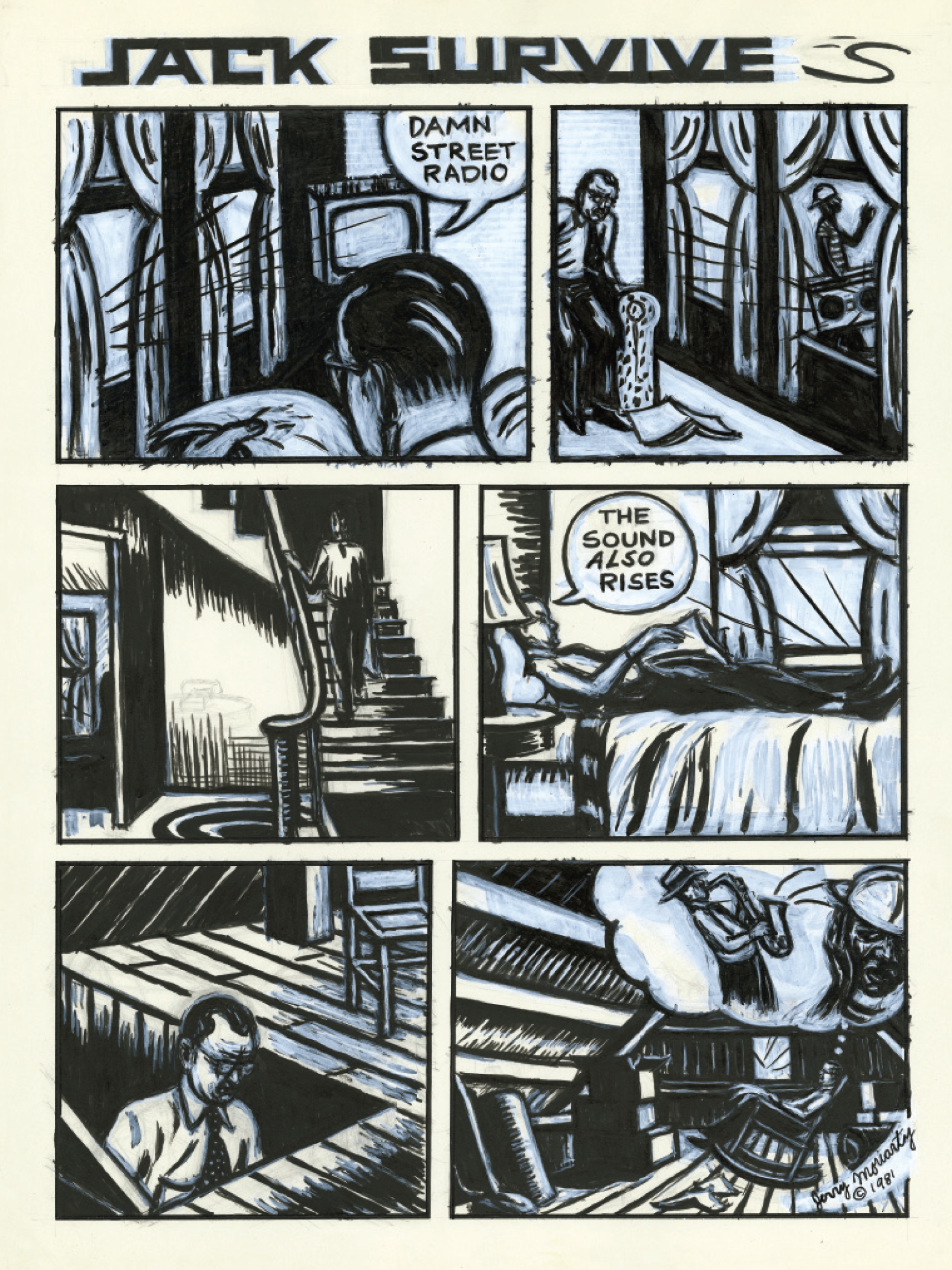
There’s no way to overstate the important role that house played in Jerry’s life. It’s of course not only where he spent his childhood, but it’s also where he died. He did not inherit it: after his retirement from teaching when his N.Y. loft became too expensive, in 2013 Jerry discovered it was up for sale, so, however improbably, he bought it and … moved back in. In July of 2014, he wrote me from within its walls: “Greetings from my childhood home that I now live in and am its master. From the source of the REAL Jack and the cellar he watched me paint in. And the attic my mother climbed after her death. My first surprise in Bingo was that I forgot how to ‘house live’ you know like different rooms for everything … bedroom, kitchen, bathroom, living room, cellar, attic, sunporch. In NYC my loft was one long open studio with a bed place, a kitchen place, a toilet closet and a shower closet…Getting started on art in my new/old home has been more difficult than I imagined it would be. After several false starts I finally realized that I couldn’t do anything based on this house as a new experience. It’s too soon. Today as I was lamenting that fact with my 15-year-old cat on my lap it hit me that this is Jack’s Cat too.”
He had already been painting and drawing narratives of himself as a child-sized old man visiting and speaking with his father and mother, middle-aged and thus pictured younger than him, in that house; now he had returned in person. He did mange to continue to work in the basement cellar where he’d learned to paint as a boy, there finishing Whatsa Paintoonist? Again, I think this is his masterpiece, collecting all of these strips and images into what is the most moving and transcendent work about death yet in our medium; spending his last years in conversation with the memories of his mother and father, it was in the pages of this book that Jerry finally let them go. In recent years his nephew Kevin, a retired local police officer, kindly looked in on him for years as Jerry became too tired to make his work, taking him out for meals, arranging medical appointments and even going bowling with him. It was Kevin who discovered Jerry collapsed this March when he came by to get Jerry’s weekly grocery shopping list. Living and working alone, Jerry nonetheless had died surrounded by family — his drawings, paintings and comics.
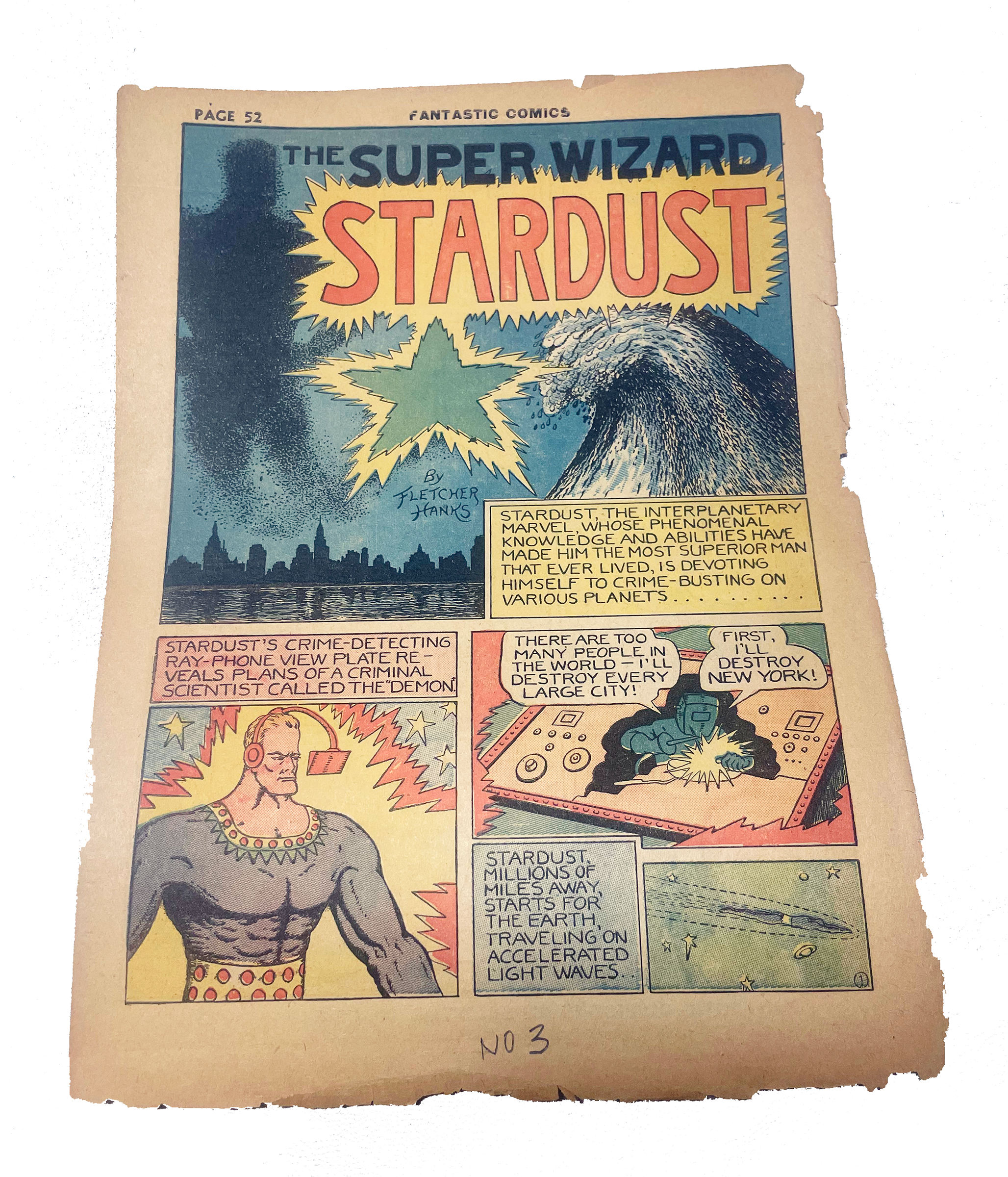
Many people knew Jerry Moriarty as a cartoonist, teacher, and iconoclastic hermit. But in his intense privacy, he dove deeply into his obsessions and to see things — and artists — other people could never see.
In 1980 I was Associate Editor of Art Spiegelman and Françoise Mouly’s RAW magazine when, Jerry Moriarty, who had contributed the sublime “Jack Survives” comics to the publication, showed up at the office one day and, with a wicked smile, plunked a stack of elderly comics on a table cluttered with coffee cups and ashtrays.
Golden Age comics, we thought, shrugging. We knew them all.
We were so wrong. Hidden in these comics were the works of a Golden Age superhero artist completely unfamiliar and completely insane. Work that was simultaneously surreal and bolted to the earth, ethereal and graphically violent, beautiful and bludgeon(ly) crude.
The artist, working at a gallop during the first three years of the comic book (1939 – 1941) before abruptly stopping, used many noms de plume over his brief career – Hank Christy, Lance Ferguson, Barclay Flagg, Chris Fletcher, Hank Fletcher, Henry Fletcher, Fletcher Hanks, Bob Jordan, Carlson Merrick, Charles Netcher, Chas Netcher – to sell his work to as many comics publishers as possible. He drew science fiction tales for one, superhero tales for another, and even a series about a lumberjack who spends most of his panels beating the daylights out of other he-men.
Rifling through back issue boxes at comic book stores and conventions, Jerry Moriarty noticed a distinctly uncommon common style between these different stories published by different third-rate publishing houses and connected the dots. Jerry tapped a signature on a “Tabu: Wizard of the Jungle” splash panel, certain that the cartoonist’s real name must be Henry Fletcher. To Jerry, it sounded the least fake.
In their usual editorial brilliance, Art and Françoise immediately recognized that, whatever this guy’s name was, the work was inspired. RAW published him as Henry Fletcher.
About a decade later abetted by the internet, I tracked down the artist’s son and unearthed the artist’s real name. He was, of course, Fletcher Hanks.
Unlike the dogged Jerry, who wore down shoe leather going to comic book shops and conventions flipping through untold Back Issue boxes, I sat in my studio laptop and ID’d all 53 of Hanks’ stories. While it did take ensuing years to find collectors willing to scan those stories for me, and then to assemble them with some commentary, Fantagraphics eventually published them. The first volume was given an Eisner Award and Fletcher Hanks was outed.
Since then, I’ve seen Fetcher Hanks t-shirts, action figures, and tattoos; once I got sent a box of Fletcher Hanks cookies with individual panels rendered in edible icing. Last year, Turn Loose Our Death Rays And Kill Them All!:The Complete Works of Fletcher Hanks came out in a paperback edition to blow and rot the minds of a new generation.
Jerry was not particularly happy that the reprints widely popularized Hanks’ work, rerouting it from an underground tributary to the mainstream. He was suspicious about anything that the hipsters and the bourgeoisie found popular. Plus, he had fabricated an entire life story for Henry Fletcher in his mind that was richer than reality.
R. Crumb accurately called Fletcher Hanks, “…a twisted dude”, but many would also cite him as among the greatest comic book artist of all times.
Hanks hadn’t been forgotten. He had never been recognized in the first place. In stacks of decaying newsprint that nobody else noticed for decades, Hanks was unearthed by a great cartoonist and a scavenging hunter with refined taste: Jerry Moriarty.
One thing he did that was really great, I wish I’d had a concrete example of it, but as you probably know, he was also playing the saxophone a lot. So, after he’d finished a picture, he’d actually perform a saxophone solo that accompanied that picture and recorded that. So, it was another phase of this totally inward-facing world that he was living in … soundtracks for his pictures.
There’s no getting around it, Jerry Moriarty was a piece of work. And there’s no getting around that Jerry and his work were of a piece, one continually seeping into the other through a complicated system of hydraulics that might take a master plumber a lifetime to untangle.
I first became aware of Jerry as a School of Visual Arts freshman in 1978. He was pretty hard to miss around the place: purple or orange jumpsuits, stringy shoulder-length grey hair, mousey mustache, typically seen sprinting up or down multiple flights of the East 23rd Street building in Day-Glo sneakers with a thermos bottle in hand. I never had a clue how old Jerry was (he would have only been around 40 at the time) but he always seemed ancient yet spry.
Spiegelman & Mouly’s RAW was well underway by spring 1980. As a student in Art’s “Language of the Comics” class, I was tapped to contribute a strip and also recruited as the nominal editorial and production intern on the first issues. I recall early in the game Art filled me in about an SVA painting teacher who was reportedly making some “peculiar” comics that “nobody has ever seen.” Several weeks later I was duly knocked out at first exposure to Jack Survives,Jerry’s self-styled fusion of Hopper and Bushmiller (two of my favorite cuisines.) Decades later he codified this approach as “Paintooning.”
In my junior year I was excited to enroll in Jerry’s long-running “How To Draw Anything From Your Head” class only to discover that the class had nothing to do with drawing anything from your head (or anybody else’s except Jerry’s). Furthermore, students were expected to fabricate a large hand-stitched portfolio to enshrine the suite of “process” (laborious, observational, repetitive) drawings that were to come that semester. Aspiring teachers: instructing your students on week 1 to go down to the NYC garment district and “haggle a bolt of medium-weight black canvas duck” is a sure way to get them to drop your class. At least I did, and I don’t think Jerry ever quite forgave me.
Fast forward to 1987: Paul Karasik and I were co-teaching an SVA class of our own and working on an essay about Nancy,based on some of our lectures. Jerry and I had long since bonded over our devotion to that strip(he had improbably once tried out for a gig as one of Ernie Bushmiller’s ghost artists). We reached out and were invited to Jerry’s vast, magical, overstuffed midtown loft one Saturday afternoon to talk Nancy and emerged completely dazed some 12 hours later from what felt like a visit to an alternate universe.
This was my first full-blown Jerry Moriarty experience. After trudging up too many flights, Jerry cordially waved us in and we got right down to it. He launched into several freeform saxophone solos to get us “in the mood” and we were presented with a thick stack of Nancyoriginals to paw through (to this day easily the finest assembly I have ever seen). An occasional decoy strip of Jerry’s had been randomly slipped in without notice and stood out like very sore thumbs. Jerry watched us carefully as we scrutinized those strips. We were being tested. I assume we passed, because he then played us cassette recordings of cold-calls he had made to raspy old Bushmiller (“So you do a kid-strip?”)
Next up a marathon of seemingly random video selections (Jerry spent serious man-hours dubbing and re-dubbing his favorite movies and TV shows on VHS tape, eliminating any shots, scenes or even cast members that he didn’t fancy and repeating the ones that he did, almost endlessly). Then on to a tour of a few of his sundry collections: oddball golden age comic book stories filed into binders and grouped by artist (Jerry is responsible for the “rediscovery” of Fletcher Hanks). Funky pulp illustrations and “men’s sweat” magazine spreads. Vintage porn (sliced, diced and categorized by body types, body parts and hair color among other fastidious groupings.) And god knows what else. (Jerry had the third eye and lived adjacent to the 26th Street flea market where he got first pick of the secondhand goodies there for decades.)
This show-and-tell was mingled with an unveiling of some of his latest work. Large-scale drawings followed by more drawings followed by paintings and then by strips, at various stages of completion and in various iterations, all intertwining and interdependent, part of some vast, cosmic narrative web that could circle the globe a half-dozen times before it could even begin to be fully digested. Jerry provided running commentary throughout, and somehow it all made perfect sense. Day became night and we eventually departed Jerry Island to the cold dark street below. Forty-odd years later and the visceral excitement and sheer sensory overload of that day still lingers.
As the years passed, Jerry continued to inspire. When he began crafting his own pulpy short-short fiction pieces in Ben Katchor’s Picture Storiesthat work really helped free me up to think about my own text and images in new ways and pointed me towards a deeper engagement with the text block. (I never got a chance to tell him that and I’m sorry I didn’t.)
Jerry played the artist-philosopher naturally and he loved nothing better than holding court to attentive ears. I recall numerous screeds about the perils of surviving as an artist in NYC and how anything was possible if one was only “crafty” enough. Jerry had been living the “crafty” artist’s dream since his beatnik days, and began teaching in SVA’s illustration department (while phasing out his own illustration career) when I was still in diapers. For many decades he seemed to successfully negotiate his (limited) interactions with the outside world on his own highly exacting terms. I really don’t know anybody else who pulled off that kind of high wire act so spectacularly, and for so long.
It’s no secret that Jerry was a sensitive, cantankerous soul and notorious for dropping his confidantes at the drop of a hat. While I kept his work close, I generally kept my distance and we were able to remain collegial through the years. Eventually he even dropped Nancy(“Listen Mark, I’m over Bushmiller!”) as well as Fletcher Hanks (“Hank Christy!!!”) after they became more widely appreciated, perhaps precisely because they had crossed that irrevocable boundary-line of Jerry’s personal universe and into ours.
After nearly half a century Jerry dropped SVA (or rather, vice versa) and briefly went on to teach at Parsons, where I also went on to teach (also briefly). The last time we connected was well over a decade ago at a Parsons event where he took the stage to talk about his career and latest book project. He was the final speaker of the night, it was already late, the event was winding down, but Jerry wasn’t. House lights were soon flickering, chairs were being turned upside down on tables and the crowd was putting on their coats, but Jerry, like the Energizer Bunny, kept on going.
He was somehow eventually coaxed off stage and a few of us wound up in a nearby Spanish restaurant where Jerry continued to pontificate (first to the table, and eventually just to me) about Art, Life, Death, Jack, survival, memory, the scents of aging newsprint, gender roles, Tootsie Rolls,Tootsie Roll Pops,Captain Tootsie,Captain Marvel,WPIX vs WNEW parade coverage, Balthus, Guston,upstate New York weather,hospital gowns,Kafka, Gunsmoke,Coleman Hawkins, store-brandroot beers, synchronicity, amnesia, alien abductions, flan (and, of course, Paintooning) deep into the night. Shorty afterward he left Parsons, and then NYC, and I never saw him again.
Kaz
cartoonist/animator/former student
I had Jerry as a drawing instructor at the School of Visual Arts in NYC in the early 1980s. He was the first person I ever heard talk about Ernie Bushmiller’s Nancy. Nancy!? I was in tune with him right away. “I’m Moriarty, I’m more arty than you,” he’d say. And he was. One afternoon seeing him leaving school, out of curiosity, I tailed him. He walked on the curbs on the sidewalks the whole way back to his loft. He walked on the edge.
After I dropped out of art school I got to know him better through my association with Art Spiegelman, RAW magazine, and Patrick McDonell. I was a regular visitor to his loft throughout the 1980s. He was the first truly eccentric artist I ever got to know. We’d talk comics, painting, animation, and movies. I was DJing on WFMU at the time, so music was another interest we had in common. Albert Ayler when it came to jazz.
Jerry was a fun host. He would screen Betty Boop cartoons on 16 millimeter (Boopers, he called them). He was very protective of his work and wouldn’t always share his paintings and drawings. But when he did, it was a treat. He was very proud of his art collections and readily shared those: original Bushmiller’s and Men’s Adventure art, stacks of scrapbooks filled with Fletcher Hanks, toilet paper advertising through history, porn, etc. Even his kitchen was art. He had tons of price stickers for cuts of supermarket chicken all over his fridge. “Chickens I Have Known,” he called that piece.
He taught me that one of the greatest gifts someone can give you is sharing. Sharing the things they’re excited about, their personal epiphanies, laughs, and best of all, if they’re an artist — their art.
I spent a lot of time with Jerry – as a student in the early ’70s, as friend and collaborator through the 80s and 90s and for a year or so, in the 2000s at Parsons when I hired him to teach a drawing class. Here’s one memory:
Jerry Moriarty’s seemed to consider every detail of his daily life for its aesthetic possibilities. He regularly baked a particular peanut/oatmeal cookie that was designed to have no soft sections — in his mind, the undesirable part of a cookie. They were large, about 6 inches in diameter, and thin so that all of it was crispy — the best part of a cookie, to his taste. An exact number of these wide cookies could fit on the largest baking sheet that could fit into his oven. These cookies were served with coffee of a particular brand, brewed in an old fashioned percolator. These choices seemed to be as important to him as choices in drawing, painting and storytelling.
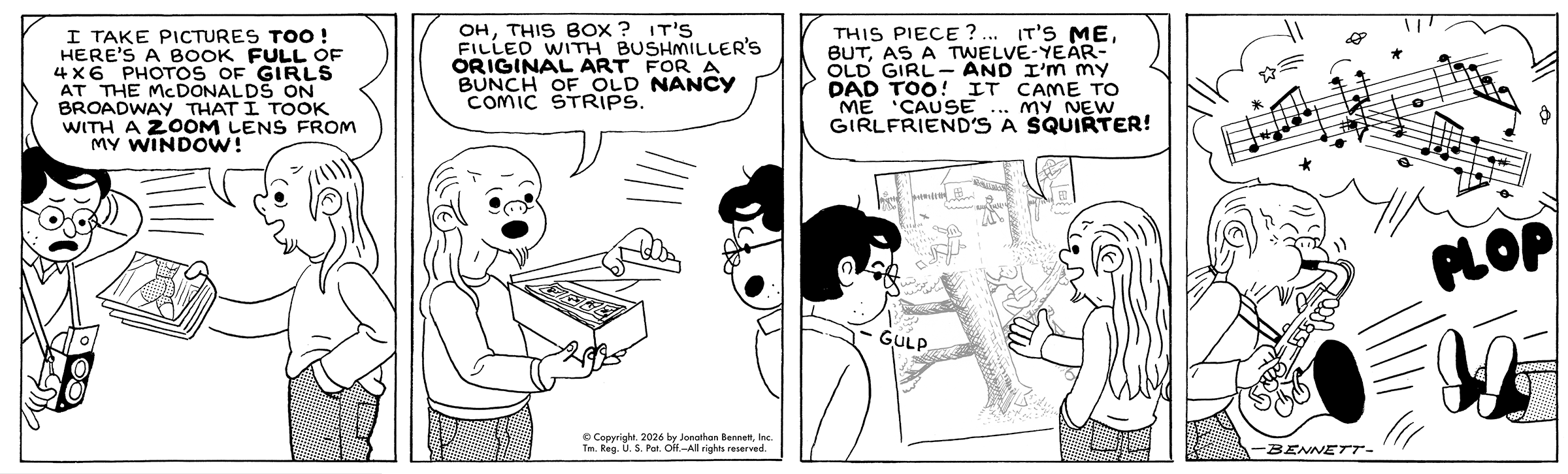
Robin McConnell
comics historian
Jerry Moriarty was truly one of the greats. I got to know him quite well after I first interviewed him back in 2010 for the rerelease of Jack Survives. He loved that edition of the book. The reason the original RAW edition was so hard to find, was because he was buying them all up so people could only read the later edition. He rarely to never sold art. His art was also his memory and his life. He lived in the same New York city loft in the famous Tin Pan Alley on 28th st. Because he had lived there since the 1950s, he paid pretty much no rent as able to leverage his occupancy to be able to buy his childhood home in Binghamton New York where he spent the last chapter of his life.
His second book, Whatsa Paintoonist, is a powerful work. It’s a meditation on his own life and his loved one. While he spent his life in New York, his family in Binghamton was always close to his heart. The passing of his sister was quite hard and she found her way into his comics. Paintoonist is a mix of extremely large form paintings and smaller drawings done with a Bic pen.
There are few books that really explore age in such way. While he still had many years of life after the release of that book, you can still see how he thought about the life that he lived and his place in it.
Jerry was full of energy and enthusiasm. Every inch of his home was a reflection of his obsessions.
He liked to tell me about how he never understood why people would want to take him out for dinner. He was a simple guy that ate very specific food and would rather have someone save the money and come over for a visit. He liked a cold bottle of Corona or an ice cream float with Mug Root Beer. He loved his routine and lived comfortably in it.
You can find short videos Jerry put together on YouTube. They would often featuring Jerry playing the tenor saxophone over a slow montage of his illustrations.
There is a lot to say about Jerry and the unique place he had in comics. He was the guy who found those Fletcher Hanks comics. He once told me a great story about trying to get Steve Ditko to give a lecture to his class.
RIP Jerry.
Craig Hankin
artist/historian
In the early spring of 1987, I was busy pulling together materials for an exhibition I was curating at School 33 Art Center in Baltimore. RAW: Images from the Graphix Magazine That Overestimates the Taste of the American Public would feature 50 original works of art by 18 of RAW’s greatest artists, including Robert Crumb, Bill Griffith, Art Spiegelman, Gary Panter, Charles Burns, Drew Friedman, Kaz and Mark Newgarden, and would travel to the Kansas City Art Institute and the New York Institute of Technology.
Spiegelman and Françoise Mouly, RAW’s founders and publishers, had been extremely helpful in contacting the various artists, as well as soliciting and collecting submissions at their home office in SoHo. There was one artist, however, whom Spiegelman had not been able to deliver: Jerry Moriarty. (“He’s funny that way,” Art told me. “You’re going to have to pay him a visit and sell him on the idea.”)
Walking up the well-worn stairs to Moriarty’s rent-controlled West 28th Street loft, I was having doubts about my ability to persuade him to participate. Looking like a gentler, more elfin version of George Carlin – they shared that mercurial, Irish eye-twinkle – Jerry welcomed me into the dark, cavernous space. As my eyes adjusted to the dim lighting, I could see his drawing table, painting supplies, ancient saxophones, dumbbells and barbells. (He remained lean and fit his entire life.) Much to my relief, we conversed easily and before long Jerry brought out his lovingly compiled scrapbooks of daily Nancy cartoons and complete childhood collection of Pep cereal comic strip pinback buttons. (Try not to think about what they might be worth today.) Reasonably convinced that we were playing on the same team, he agreed to lend two exquisite, ink and white-out Jack Survives pages and a four-color proof of the cover of his first Jack Survives book, a RAW imprint. Somehow, I managed not to jump out of my skin with glee.
A true New York character, Jerry took no small amount of pride in wearing only tertiary colors. As he pointed out to me that day, his shirt was yellow-green, pants were red-violet and socks were yellow-orange. We covered a lot of conversational ground — he seemed unsurprised that at least four of the artists in the show referenced Nancy — and I was particularly fascinated by the tale of his ill-fated attempt to succeed Ernie Bushmiller. (The syndicate didn’t find Jerry’s strips particularly amusing and, after drawing a dozen of them, he knew he’d never be able to keep up with a daily deadline.)
“My appreciation for Nancy came late, about ten years ago,” he explained. “I remember despising Nancy as a kid. I would look at the strip each day to see what was wrong with it. By the time you had decided not to read it, though, you’d read it! But I finally got over my sense of superiority — which, in a way can be very seductive — and I realized that this guy had all the comic devices down. The strip printed very well. It was designed damn near to symbolic level, each panel used completely with nothing wasted. And the story, whether good or bad, always came across.
“Bushmiller created a kind of humor that didn’t have to be funny … I believe that there’s a formula of Hume, Humor and Humest. Ernie Bushmiller and I are Hume. Nancy also left many big questions unanswered. What were you supposed to think, for instance, of Sluggo being a nine-year-old boy who lives all alone in a broken-down house? I sort of liked those questions. Bushmiller stretched your belief.
“Bushmiller also had that lack of shame that often marks a genius or a hack. Basically, his work is very accessible. Nancy and Sluggo are recognized immediately and this makes them quite malleable in the hands of other cartoonists.”
As Jerry was speaking, I caught a glimpse of a recently completed “Jack” painting that was still on the easel. No more than 24 inches tall, it felt iconic and somehow monumental. Before we parted ways, I had to ask. “Would you be willing to sell that painting?”
“No,” he replied. “Because if I sold it to you, then you’d have the painting and all I would have is money. I’d rather have the painting.”
I told him I understood. And as a painter myself, I really did.
A few months later, after the RAW show had closed in Baltimore, I paid Jerry another visit. He greeted me like an old friend and, once again, we fell easily into conversation.
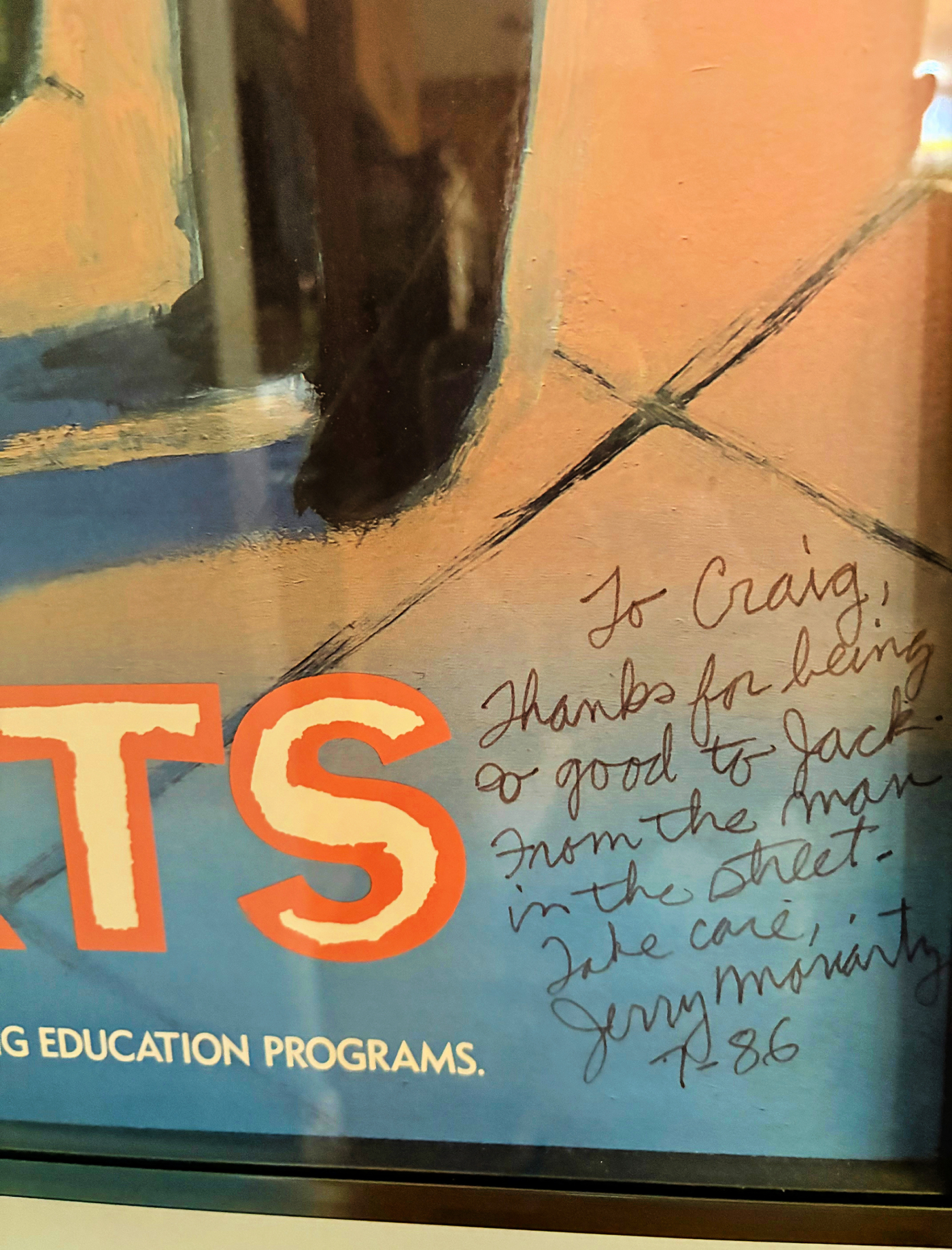
“Oh,” he said. “Before I forget, I’ve got something for you.” From a large cylindrical roll he pulled one of his famous School of Visual Arts subway posters. Grabbing a Sharpie he wrote on it: “To Craig, Thanks for being so good to Jack. From the man in the street. Take care, Jerry Moriarty.”
In 1985, my father was in poor condition and was having terrible operations that didn’t seem to do him any good. I had to stop going to certain classes during my semesters at SVA, to be by my father’s side. Because of being worried about my father’s condition, I did a lot of angry and foolish things. At SVA, I flunked some classes and did decent in others. I had to help my father by running his art supply store on East 54th Street, which I was being primed for, but didn’t want.
I wanted to be a cartoonist. I was by my dear father’s side when he passed on May 20, 1986.
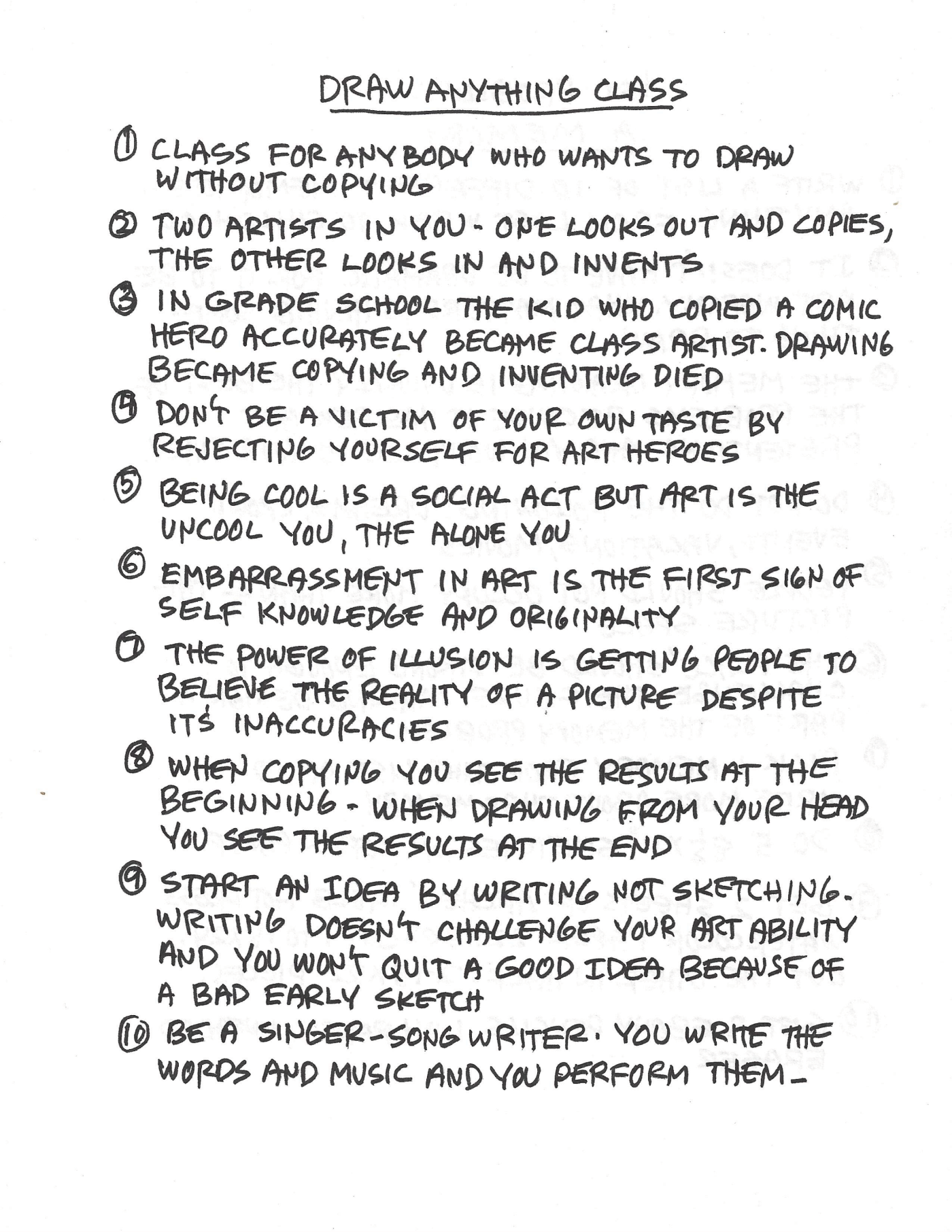
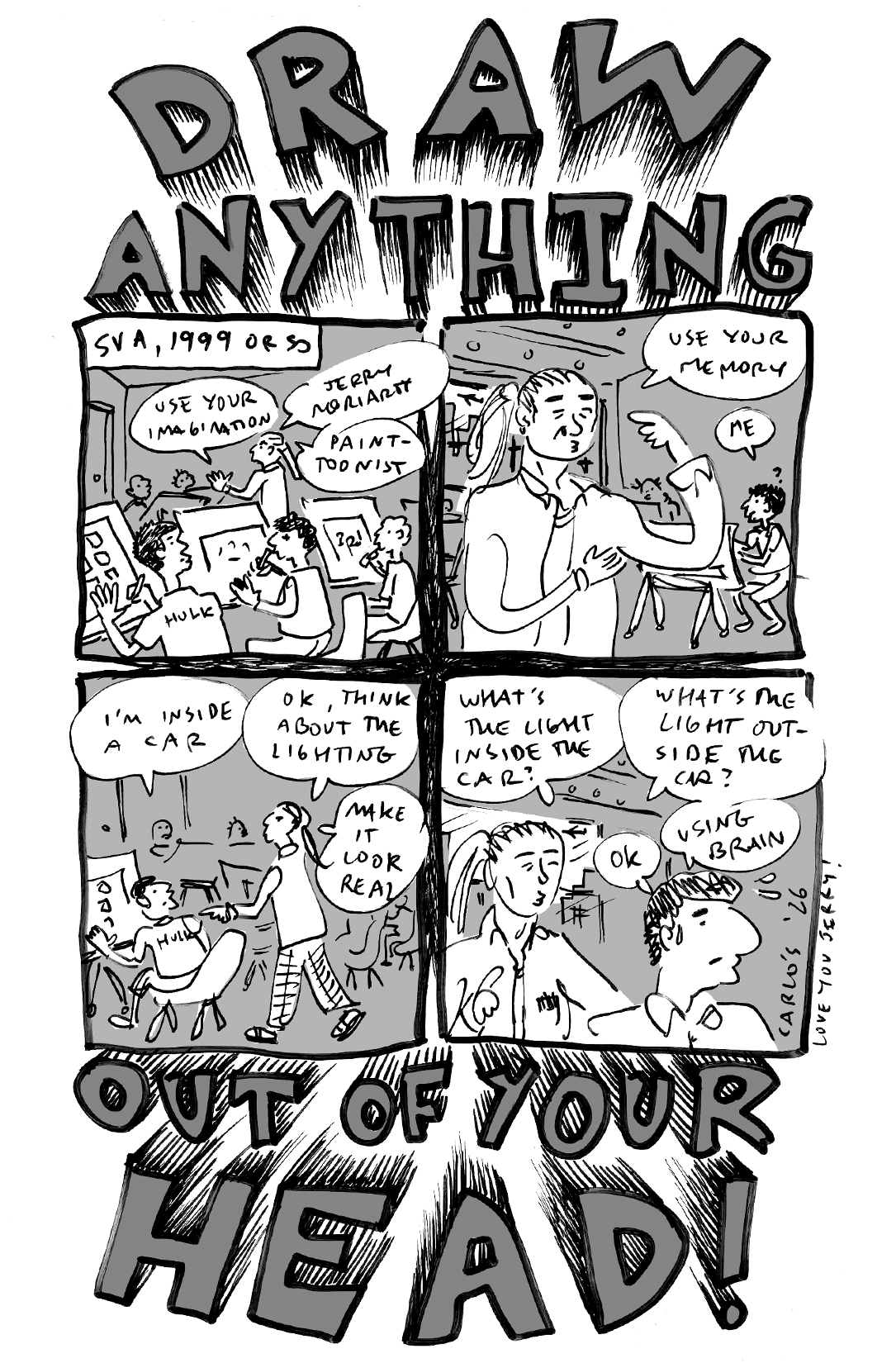
Some months prior, one of the last classes I took and was able to attend during the 1986 SVA semester, was with “fine artist” Jerry Moriarty. I had no idea who he was and his class was called, “Drawing From The Right Side Of The Brain.” I liked his class and he was a very kind person. I told him what was going on with me, and my father’s condition. He told me he had done a book for Art Spiegelman’s RAW Press, titled, Jack Survives. It was a tribute project about his father, Jack.
I went and bought it from St. Marks Comics in the Village and brought it to the next class. He signed it for me. I recently found the copy of Jack Survives that Jerry signed for me in class all those years ago. It’s signed March 19, 1986, exactly two months before my father passed away.
Jerry created something really wonderful for his father. It shows how much he truly loved him. I can relate.
God Bless Jerry Moriarty (1938-2026).
Mark Arsenault
former student
One day Jerry stopped me in the stairwell at the main SVA building to tell me how awesome he thought Tuna Casserole was. Tuna Casserole was a comics anthology that me and Sam Henderson (and previously Tom Hart) edited. Jerry’s comment blew my mind. I didn’t know how we were even on his radar. I learned so much from Jerry about composition and narrative and color. I flat out stole his contrasting blues and oranges for several pieces.
Another time (it was probably either the last or second to last day of class) Jerry flipped the class’ usual programming and put on a VHS video tape he had made on bits from Star Trek. He had cut out all the scenes with either Spock or Kirk (it’s been so long that I’ve forgotten which) and he repeated, and repeated, little clips from them to the point where it was hilarious and maddening. Definitely one of my best days at SVA.
Jerry’s birthday … you know, I always thought that it was maybe symbolic of something, because he was born the day before the first Benny Goodman concert at Carnegie Hall. That was on January the 16t, 1938, which was the very first time jazz was ever played in Carnegie Hall. That was Jerry’s first day on earth.
