

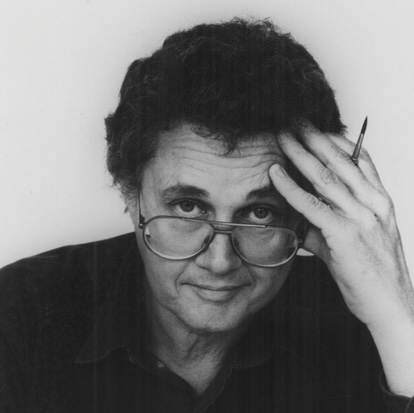
Near the end of his long career, the cartoonist Pat Oliphant, who died on July 13 at the age of 90, gave a chalk talk to several hundred fans. He took questions from the audience while drawing on an overhead projector. He had just started drawing vice presidential candidate Sarah Palin when someone in the audience asked if his opinions had softened with the passage of time. In response, Oliphant finished his picture by drawing Palin on her hands and knees having sex with a large Alaskan moose. Her face suggested she was enjoying the experience. As soon as the talk ended, fans stampeded the stage to try to buy the Palin drawing but Oliphant’s wife quickly snatched it off the projector and confiscated it, never to be seen again.
Oliphant’s famously caustic opinions remained undiminished even after 60 years. He said, “You have to wake up every morning angry.”
His outlook was forged in a small town near Adelaide, Australia, where he was born in 1935. He was raised in a cabin in a rugged terrain populated by snakes and scorpions. His father was a draftsman employed by Australia’s Ministry of Lands and Oliphant was educated in a one room schoolhouse, but school never captured his imagination. He found work early as a copy boy in a small Adelaide newspaper. By the time he turned 20, he was contributing cartoons and drawings to the Adelaide Advertiser.
Self-taught, he learned from observing the work of Australian artists such as the cartoonist Paul Rigby and the illustrator Norman Lindsay. Cartoonist David Low proved to be a particularly important role model. Low was born in New Zealand, but his talent brought him better jobs in Australia, and from there to England and world renown. Low became famous for his fearless attacks on both sides; both Hitler and Winston Churchill suffered under his lash. Both tried unsuccessfully to censor him but Low refused to back down, a lesson that was not lost on Oliphant.
These artists persuaded the young unschooled boy that marvelous things could be accomplished with images. As he expanded his vision beyond Australia, he discovered the great British cartoonists Ronald Searle and Leslie Illingworth. Searle’s bold line and inventive distortions had a permanent impact on Oliphant’s style.
Oliphant became eager to see what the larger world beyond Adelaide had to offer. He visited Great Britain and the United States, and based on his travels, decided he wanted to settle in the United States.
He began looking for jobs and in 1964 learned that The Denver Post had an opening for a cartoonist. He sent in samples of his work and got the job. The editor of the Post later recalled that he was impressed by the drawing, but also that he was amused by the audacity of the young Aussie. He selected Oliphant over nearly fifty U.S. applicants. In 1964, Oliphant left Australia and moved permanently to the U.S. with his wife and two children.
It turned out that Oliphant’s talents were perfectly suited for the U.S. in the 1960s. If he had come to America today, when the newspaper industry is anemic and editorial cartoonists are on a tighter leash, he might have fallen flat and the world would’ve been deprived of thousands of brilliant and witty drawings. But the 1960s were a time of great political ferment and artistic audacity, a time of Richard Nixon and the Vietnam war, a time of Lyndon Johnson and Barry Goldwater and nuclear posturing.
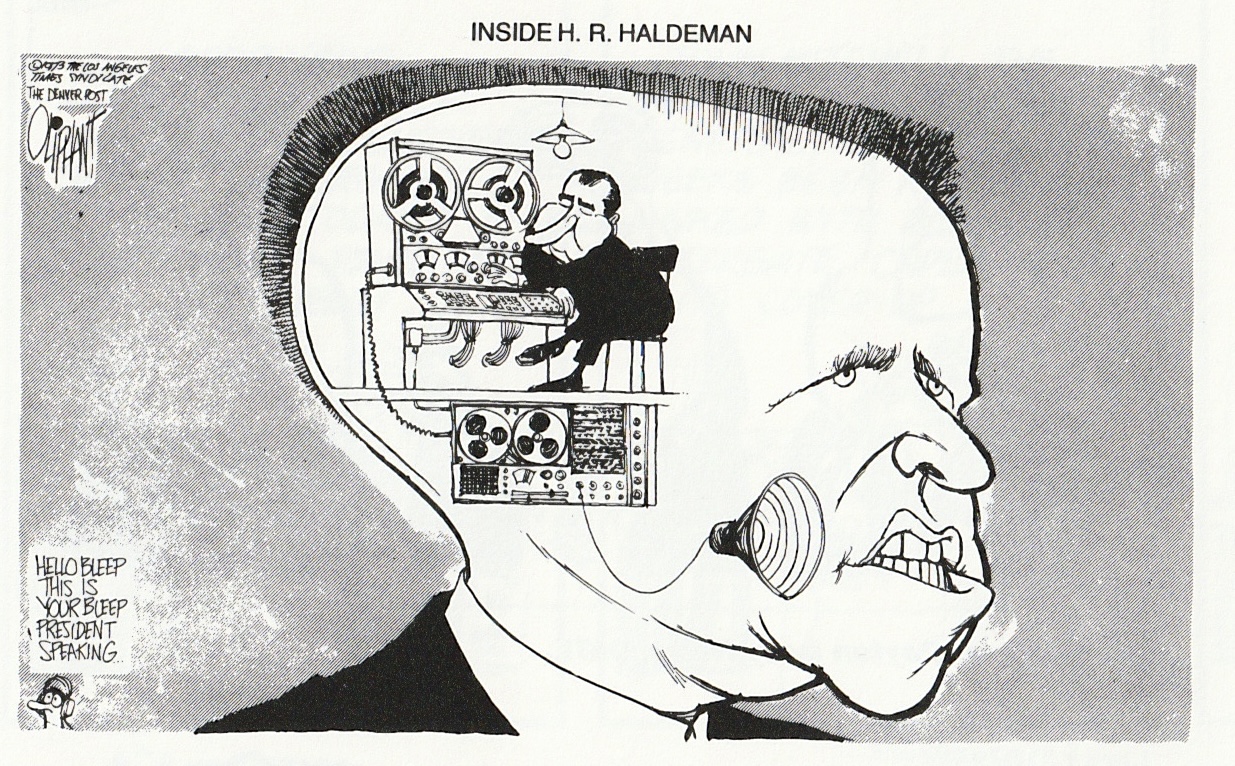
The combination of Oliphant and 1960s America proved combustible chemistry. Within months he was attracting national attention and within four years he was awarded the Pulitzer prize for editorial cartooning. With the arrival of the Watergate scandal, most political cartoonists were in heaven but Oliphant’s work stood out from the crowd. His cartoons were featured in more and more newspapers across the country, and then internationally. In 1975 he moved to Washington, D.C., the center of political action, where he joined the Washington Star newspaper. In 1980, he switched syndicates, joining universal press syndicate. By 1983 he was the most widely syndicated American political cartoonist, appearing in more than 500 newspapers.
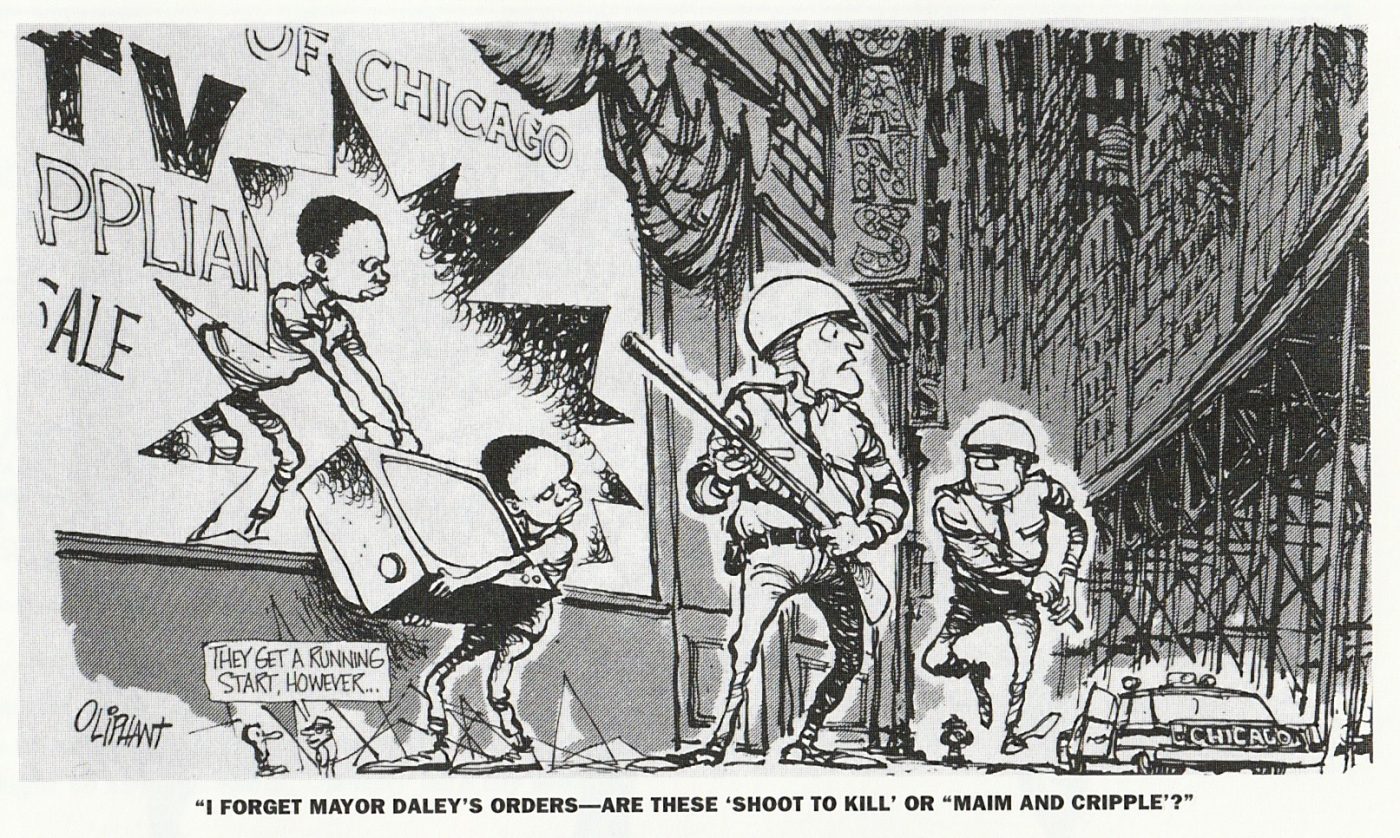
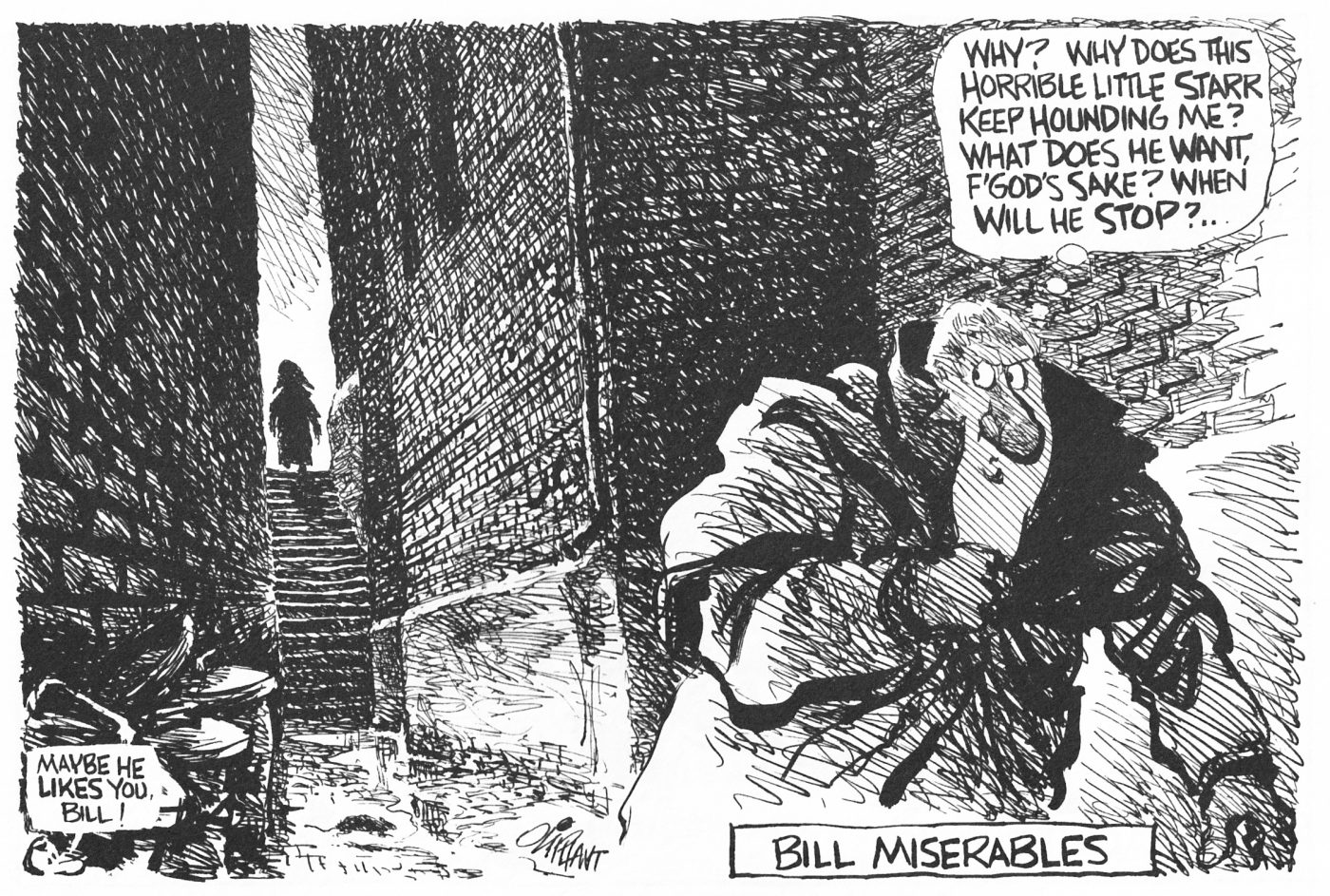
Oliphant clearly had liberal sympathies. His savage treatments of Nixon (repeatedly drawn naked), Reagan (drawn clueless), and the military/industrial complex were legendary. At a Washington reception with President Ford, Oliphant walked up to Ford unannounced and drew a bandage on his forehead to make fun of the fact that Ford had fallen down the stairs. The Secret Service was not amused. But Oliphant also treated Democrats with the same savagery and received death threats from both sides of the spectrum. He trashed Jimmy Carter, depicting him as small and weak. He hammered Ted Kennedy following the Chappaquiddick scandal, and drew Bill Clinton as a shady character. Some of his cartoons taunting gays and women have not aged well.
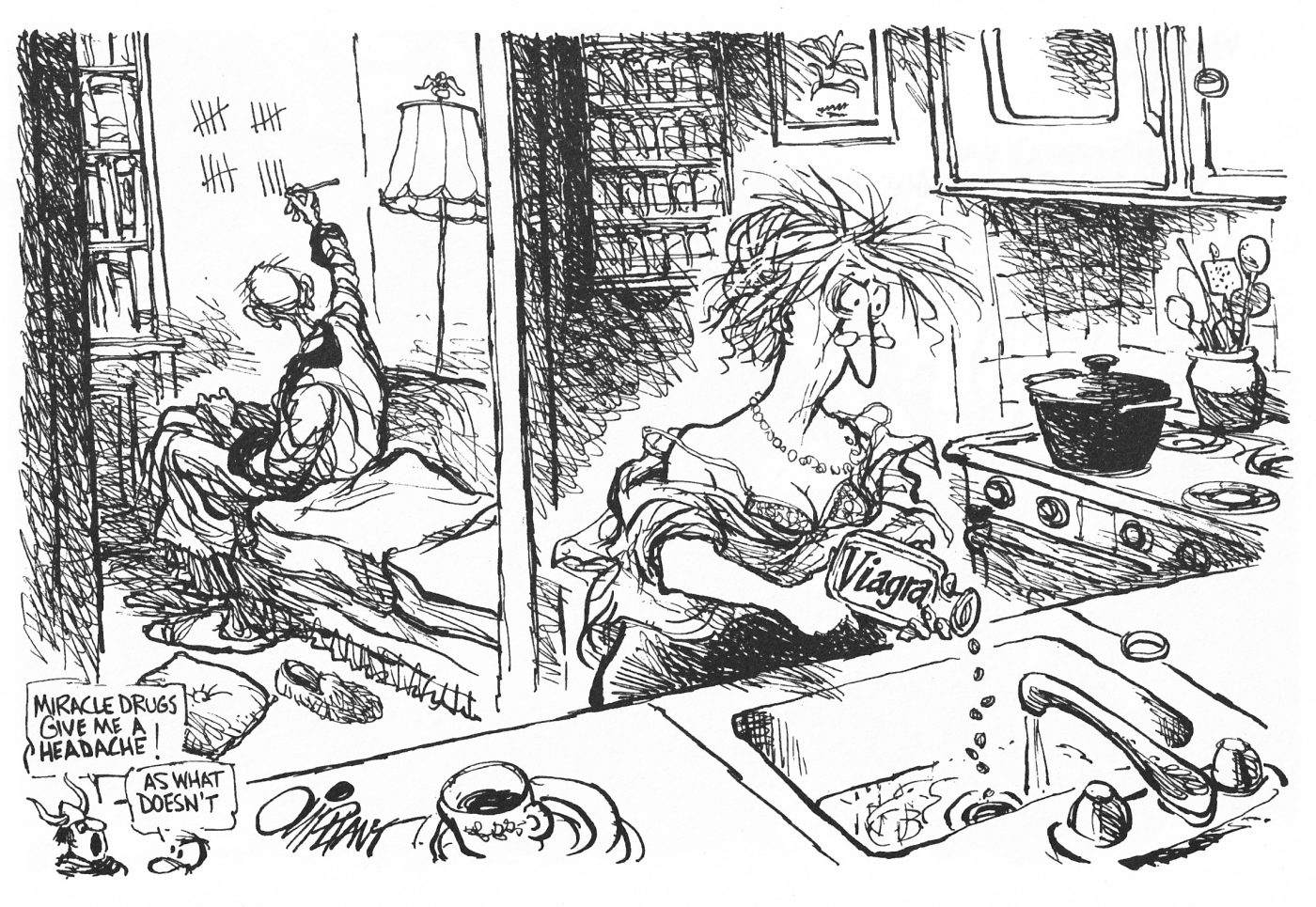
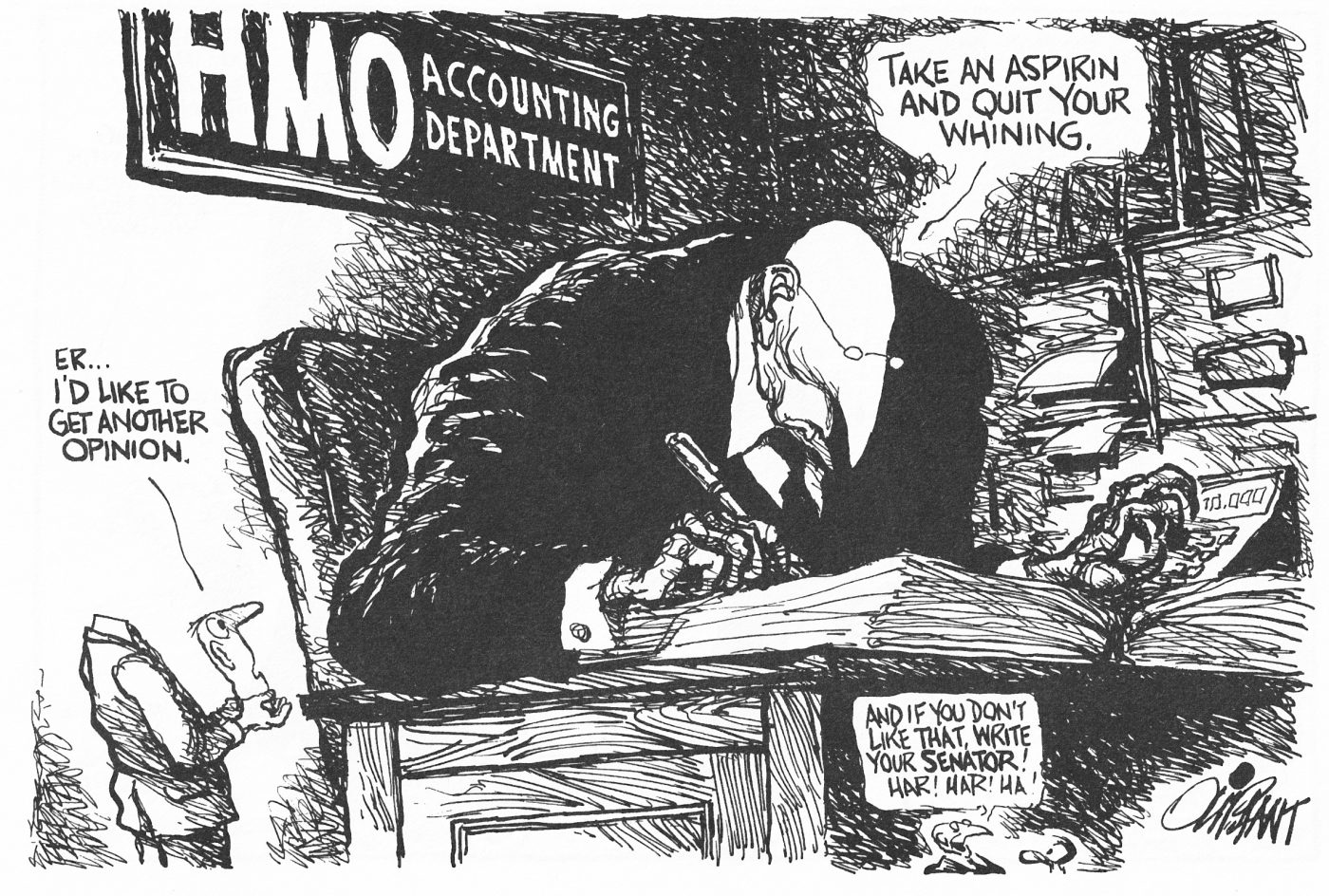
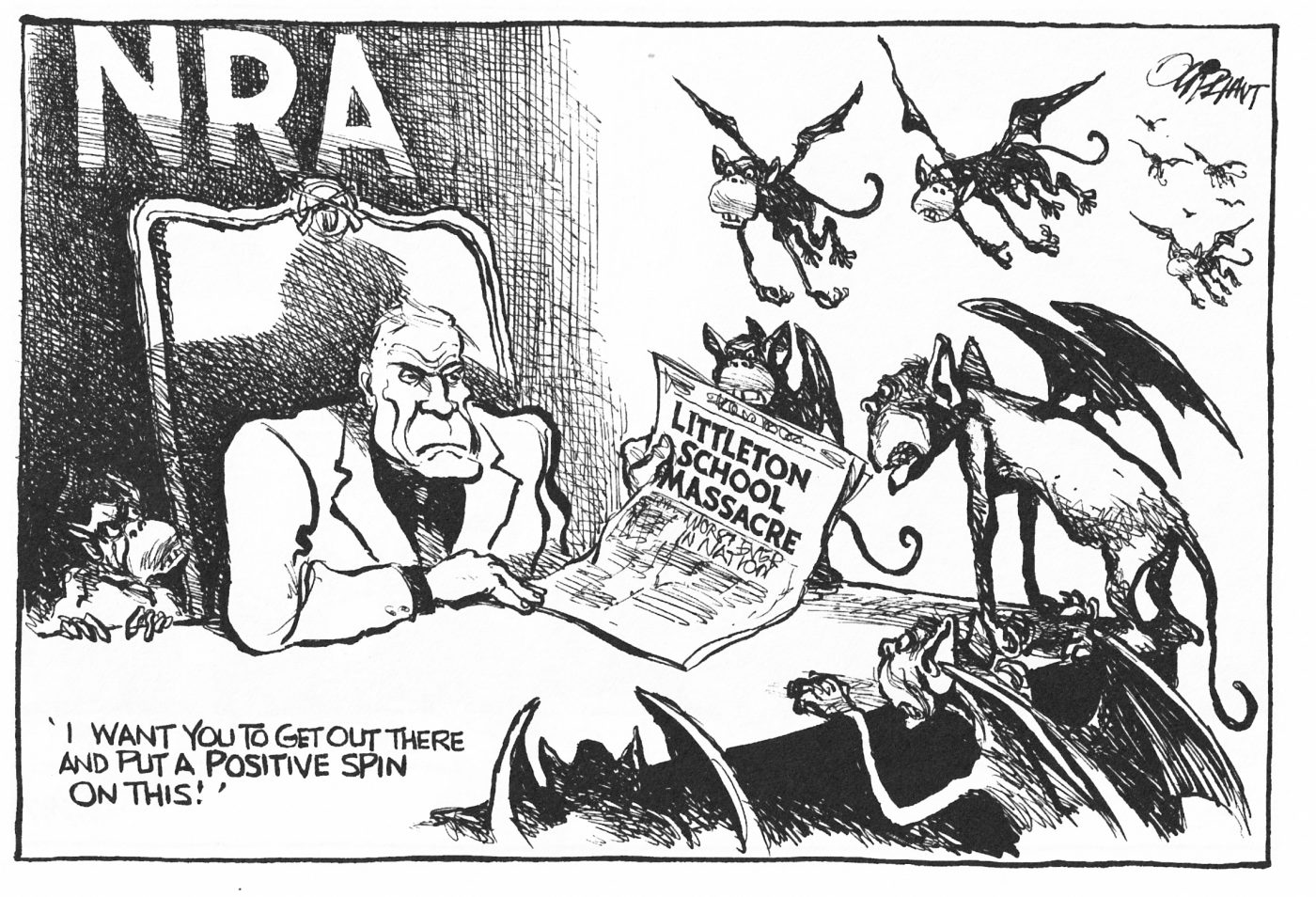
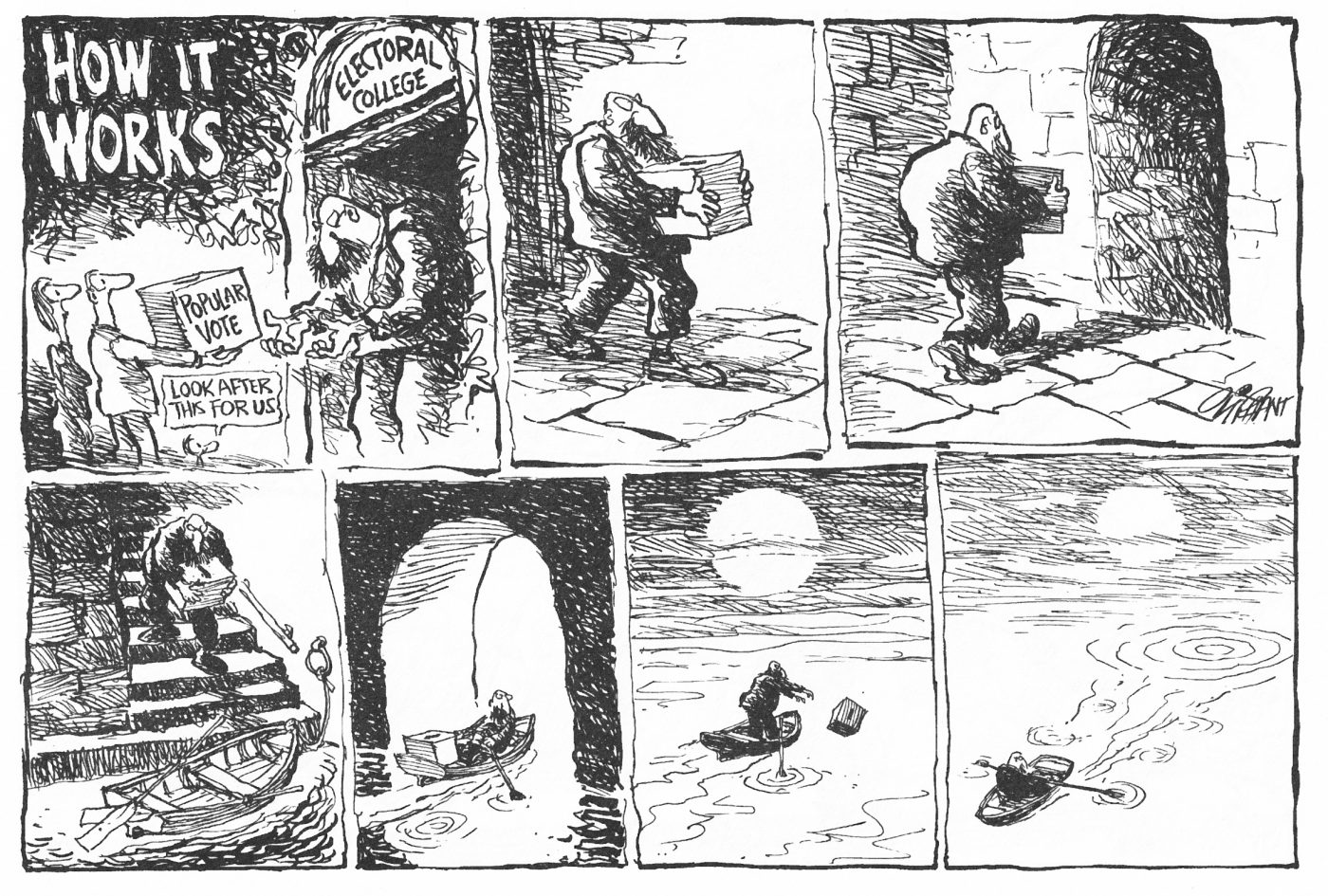
At the peak of his popularity, he diversified into painting, lithography and sculpture. He continued to make time for life drawing from the model, and applied a fine artist’s use of perspective and anatomy and composition in an era when many political cartoonists worked in a very simplistic style. The strength of Oliphant’s drawing gave his cartoons an authority that helped support ideas that might have seemed outlandish.
He said he was inspired by “fine” artists such as Daumier and Rodin. Like Daumier, Oliphant didn’t draw a bright line between his cartoons and fine art. Unlike Daumier, Oliphant was never jailed for his cartoons lampooning powerful leaders.
As he aged, he increasingly enjoyed visiting museums and when he remarried later in life his third wife, Susan Conway — an art museum conservator for the Phillips Museum and gallery owner — helped nourish that interest. She took over managing his career and promoting his work.
Starting in 1995, Oliphant began cutting back on the number of cartoons he drew each week. He moved from Washington to Santa Fe, New Mexico, where he bought an old adobe home on an historical street. There he spent the rest of his life, constantly drawing and working on his bronze sculptures. In 2015, he retired from publishing cartoons, as glaucoma and macular degeneration robbed him of the eyesight he needed to do quality work.
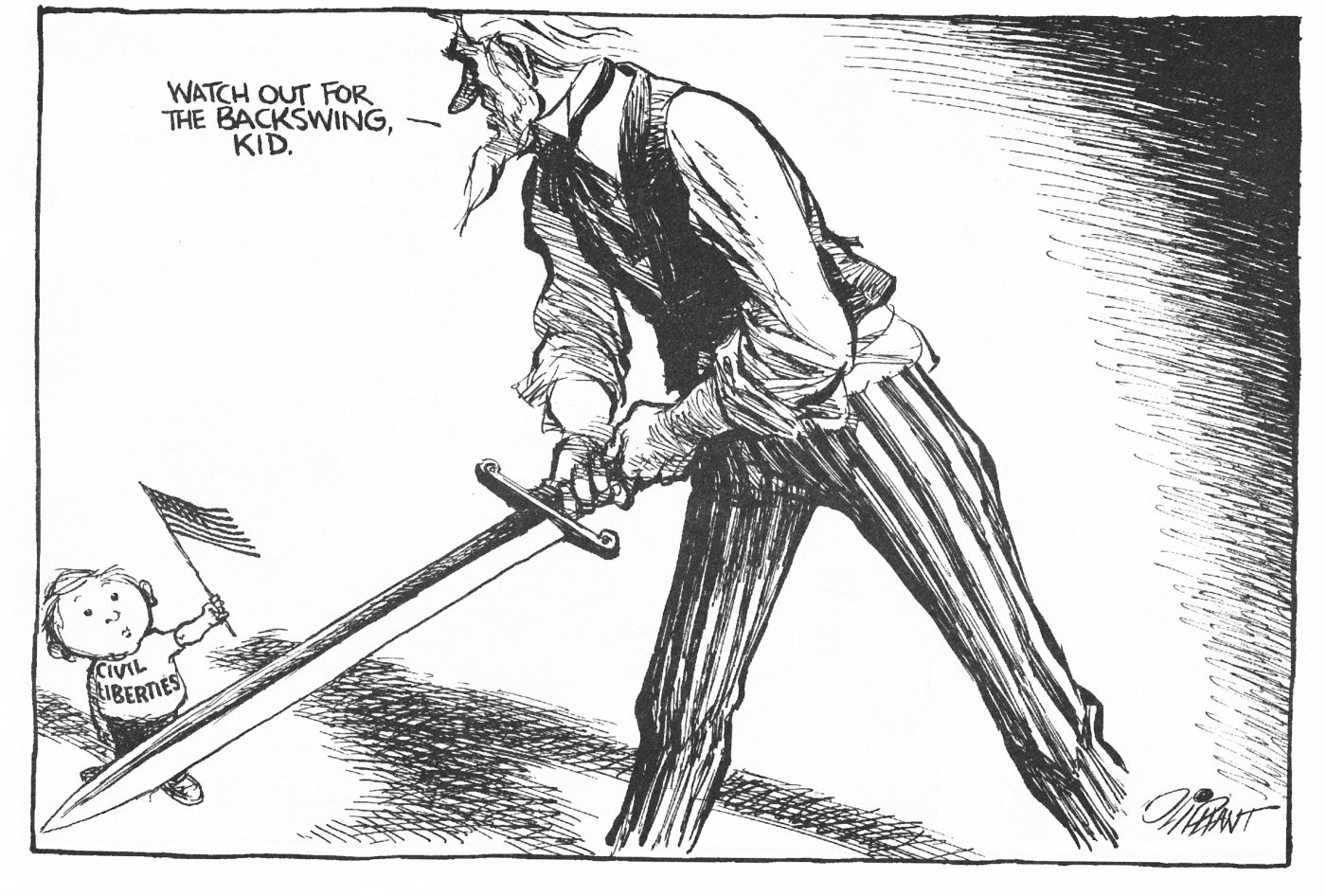
Close friends who spent years with him in Santa Fe recall that Oliphant was a quiet man who remained keenly interested in events but never participated in political discussions. “He was more an observer who kept his thoughts to himself,” said one friend. “He always said a cartoonist should be seen and not heard.”
Looking back over his shoulder, Oliphant concluded, “If I can leave a legacy of humor and drawing, I think that will be OK.”
