

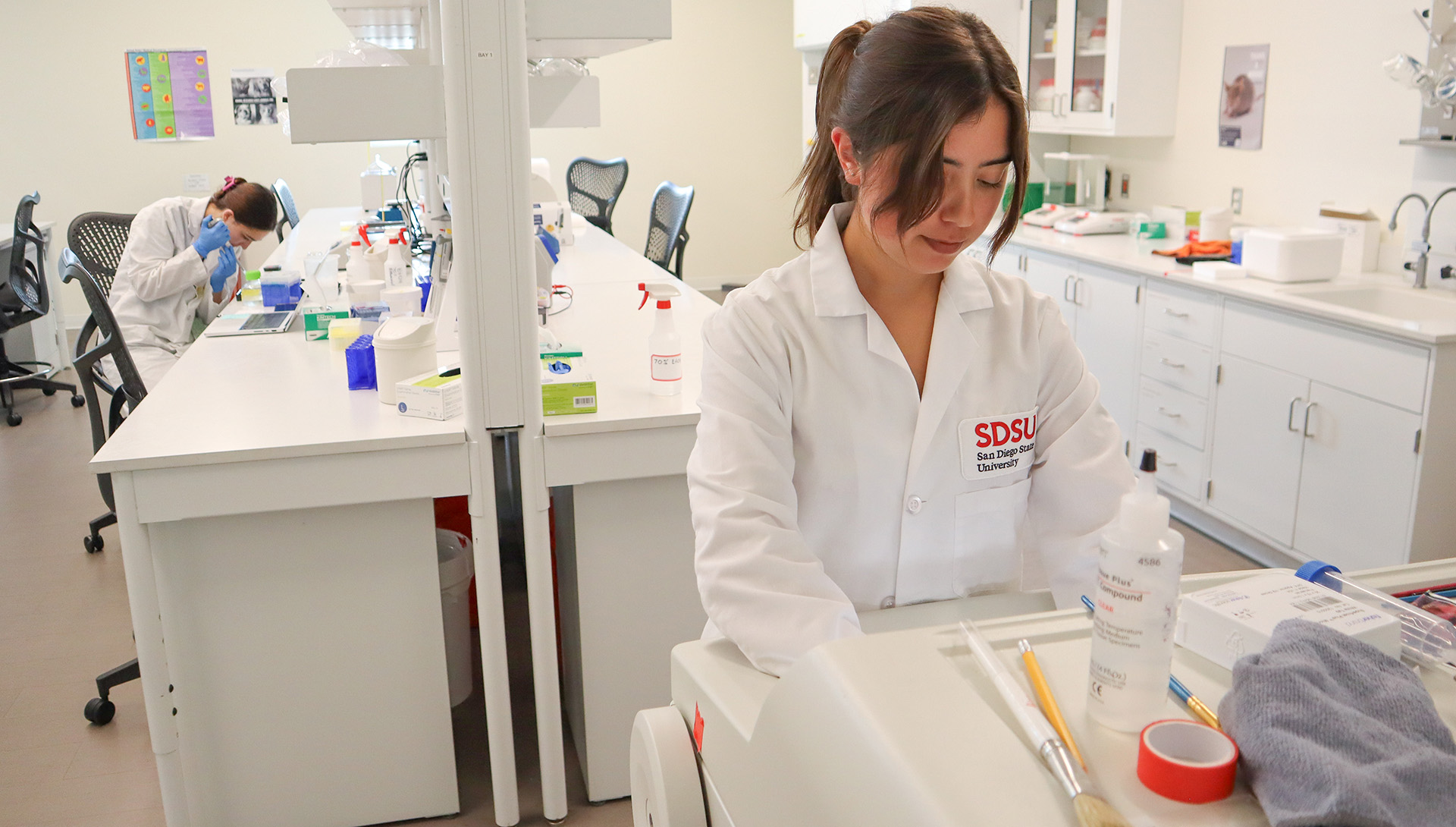
Neurobiologist Elena Blanco-Suárez applies her expertise on brain development and repair to “The Mandalorian” series. See our complete list of other SDSU participants.
From comics censorship in schools to the use of comics in historical inquiry, San Diego State University faculty and staff this week will again bring their wide-ranging expertise to panels at San Diego Comic-Con..
Assistant professor of biology Elena Blanco-Suárez joins fellow scientists, engineers, child development specialists and a local Star Wars aficionado for “Grogu’s World: The Science Behind the Mandalorian,” a panel organized by Fleet Science Center in Balboa Park.
These experts will discuss how Baby Yoda’s brain development in the “Star Wars” spinoff compares to that of human children, what it would take to create Mando’s armor in real life and the father-son bond between the two characters.
“Grogu is called Baby Yoda, but if you think about his emotional intelligence, skills and level of cognition, he doesn’t seem like a toddler to me,” said Blanco-Suárez. “He understands several languages, he can communicate with humans, other alien species, droids. Maybe he walks like a toddler, but I think that’s more his anatomy because he jumps and flips in the air and is very skillful in other senses.”
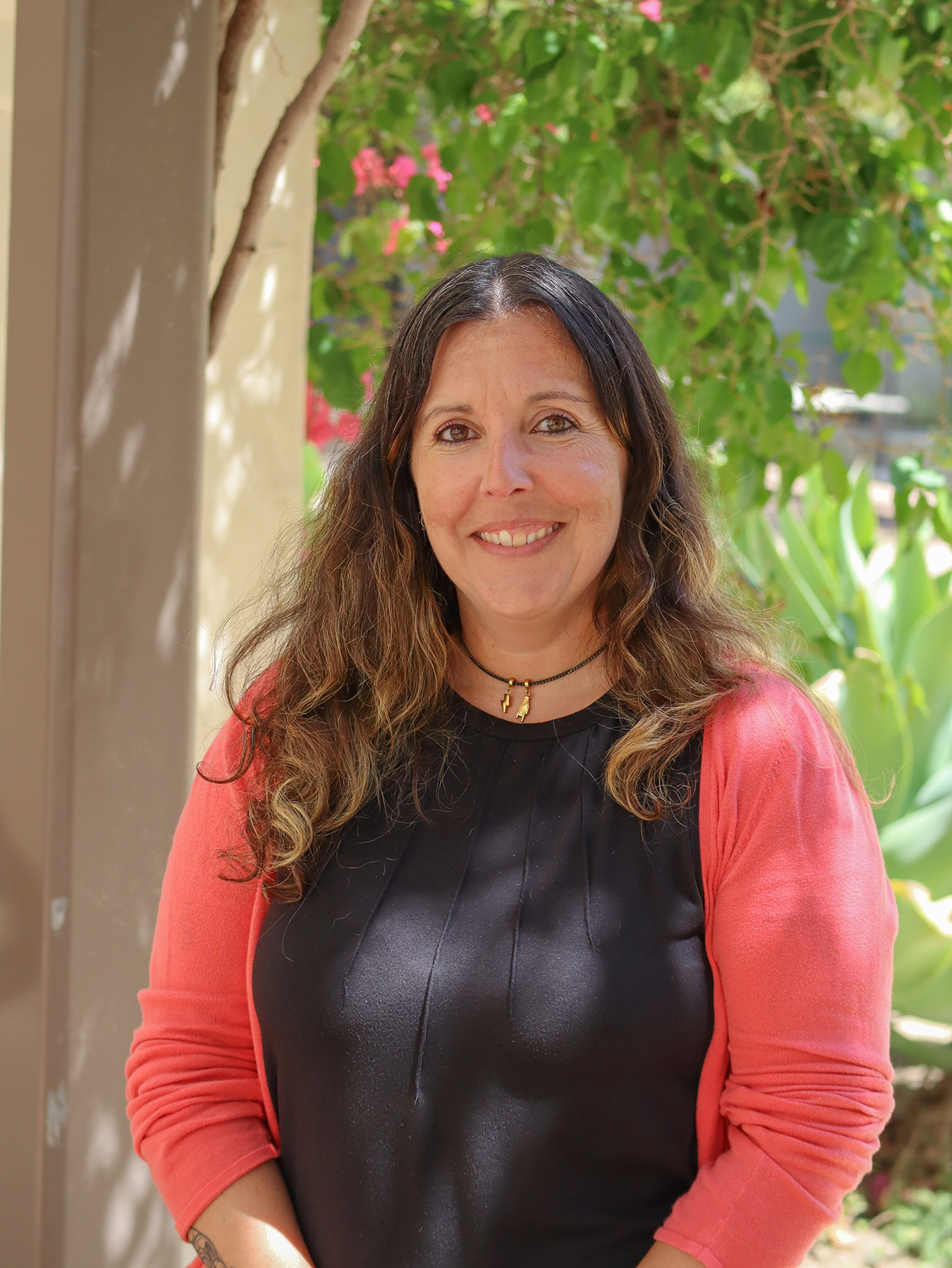
At SDSU, Blanco-Suárez studies neuroplasticity, or how the brain changes in response to outside influences. Some adaptations can be positive, such as those that enable someone to learn a new language or heal after a brain injury.
Others have a negative effect. Maladaptive plasticity occurs when the brain rewires in a way that inhibits beneficial adaptations. For example, when stroke patients lose mobility in one arm, they rely on the other arm more, which strengthens the neural circuits controlling that arm and prevents healing in the circuits that control the affected arm.
“We are trying to figure out how to find that balance, to help the brain repair itself more efficiently,” Blanco-Suárez said.
Her lab specifically targets astrocytes, a type of brain cell that supports plasticity, to enhance healing in people who have been affected by stroke. The methods they develop could also be applied to treating neurodegenerative diseases such as Alzheimer’s.
“The Mandalorian keeps getting blows to the head and he wouldn’t be able to just get up and keep fighting like nothing happened,” she said. “Even if he’s wearing a helmet, just like football players, those blows accumulate over time and that can impair the ability of the brain to heal itself and in the long term cause more serious damage, like developing dementia.”
With people living longer and neurodegenerative diseases occurring more and more often, Blanco-Suárez says brain research is more relevant than ever.
“There was no Alzheimer’s disease when people were dying at 40. Now we are living more than twice as long, so we are developing neurodegeneration,” she said. “The brain is still a huge mystery. New diseases are going to come through. Neurodegeneration is the next research frontier.”
Blanco-Suárez’s panel, which includes Audrey Hokoda(professor emerita, College of Education) is scheduled for 7:30-8:30 p.m. Saturday, July 25, in room 5AB of the San Diego Convention Center.
SDSU faculty members participating in additional panels at Comic-Con include.
Panels, Pages, and the Past: Using a Comics Archive to Teach Cultural and Historical Inquiry 10:30-11:30 a.m., Room 26AB
Elizabeth Pollard(chair of history; co-director Center for Comics Studies);Pamela Jackson(comic arts librarian; co-director Center for Comics Studies); Mary Stout(lecturer of history and Weber Honors College); Laurence Grove (former College of Arts and Letters visiting scholar-in-residence in the Center for Comics Studies)
A Comics Reading Club… for Faculty!
5-6 p.m., Shiley Special Events Suite, San Diego Central Library
Pamela Jackson and Elizabeth Pollard; Conor McLaughlin (staff development manager, Center for Inclusive Excellence); Van Tarpley (lecturer, Department of History).
San Diego On Screen
2-3 p.m., Room 5AB
Jake Rowlett (undergraduate program advisor and lecturer in the Department of Geography)
Invincible: The Price of Power and the Strength of Connection
8:30-9:30 p.m., Room 29CD
Sara Roldan (lecturer, Department of Psychology)
What Now?!: Comics Censorship in Schools and Libraries
3-4 p.m., Shiley Special Events Suite, San Diego Central Library
Mary Stout
Star Wars Tourism: Visiting the Galaxy Far, Far Away on Earth
6-7 p.m., Room 7AB
Jake Rowlett
Pop Culture Exhibited: Comics, Film, And Other Fandoms On Display!
2:30-3:30 p.m., Room 25ABC
Pamela Jackson
Leslie L.J. Reilly contributed to this article.
