


In my 30+ years of playing video games, I’ve seen plenty of poorly implemented or wholly unnecessary high-score systems.I enduredBalloon Fight’s miserly scoring, which infamously refused to award extra lives no matter how many points you racked up. I’ve experienced the half-baked accounting of Mega Man’s North American release, which nominally awarded points for defeating bosses, but never actually showed your score. I’ve seen glitches and exploits ruin the entire justification for even having a scoreboard (like in the now-defunct Little Rescue Machine on Android, which let you achieve unbeatable numbers by breaking key parts of the game). But after all these years, I have unearthed a high score system so ill-advised and conceptually incoherent as to transform the game to which it is attached.
The culprit? Pong: The Next Level, an otherwise unassuming 1999 Game Boy Color title
My point in excavating this justifiably forgotten gaming artifact is not necessarily to mock its one unthinkably odd design choice. It’s bad, to be sure, but in a profoundly interesting way. My intention, therefore, is to consider the bizarre incentives of its high score system and the experiences it engenders. What is it like to have counterintuitive play rewarded? What kind of unexpected play emerges from a system that gives its participants incentive to go against everything the original game – and their own concepts of expertise and mastery – have taught them?
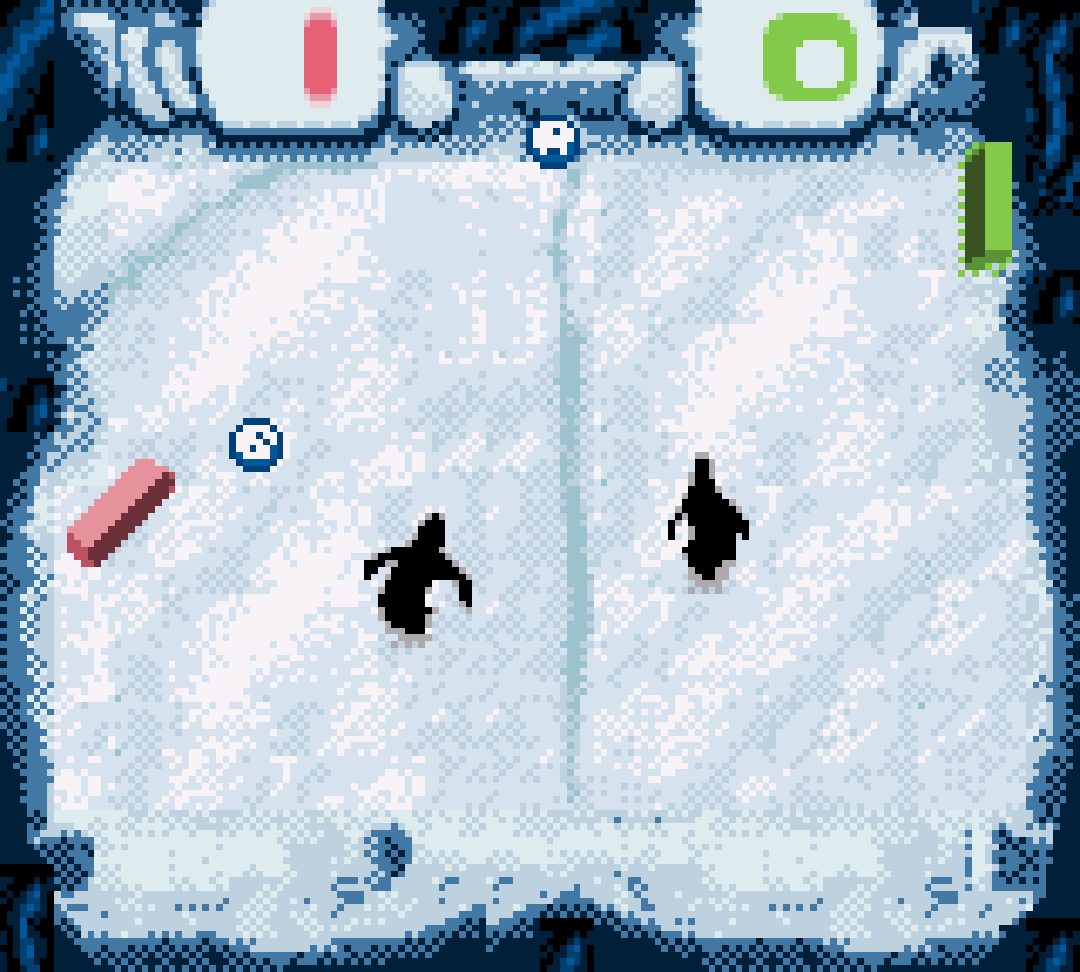
Some notes on Pong: The Next Level are in order. It’s a Game Boy Color port of the PC and PlayStation title of the same name, a remake of the Atari arcade classic. The PC and PlayStation versions were delightful, featuring a variety of modes, bright and appealing graphics, and fun multiplayer modes
The GBC edition was not
In his scathing review for IGN, Craig Harris graded it a 2 out of 10 (“Painful”), dubbing it “a horribly lacking port that looks like it was thrown together in a month.” It’s easy to see why. The GBC edition lacks any multiplayer options, despite Pong famously being a two-player affair. There are only four modes, including a reproduction of the classic black-and-white arcade setup. (For comparison, the PSX version has six times as many modes, with additional options and objectives for each one). There are no options to customize each game beyond deciding whether or not to silence the background music. The UI is poorly constructed, and its controls are perplexing. To cap it off, the AI is remarkably deficient even at the highest difficulty levels, such that there really is no greater challenge involved in beating the hardest opponent than the easiest.
Yet this regrettable piece of software, thanks to its outlandish high score system, remains a noteworthy gaming artifact
To articulate what makes the high score system in Pong: The Next Level so bizarre, we first need to explain how Pong works in principle. Broadly speaking, the rules of Pong mimic those of table tennis. The two contestants volley a ball back and forth using their paddles, intending to drive the ball off the side of the table their opponent defends. Successfully doing this nets the player one point. In general, once one player scores 11 points, the game ends. However, a prospective victor must win by at least two points. Therefore, if the score is tied at 10-10 or greater, someone needs to score two unanswered points to emerge victorious.
This latter detail is where Pong: The Next Level’s lunacy happens
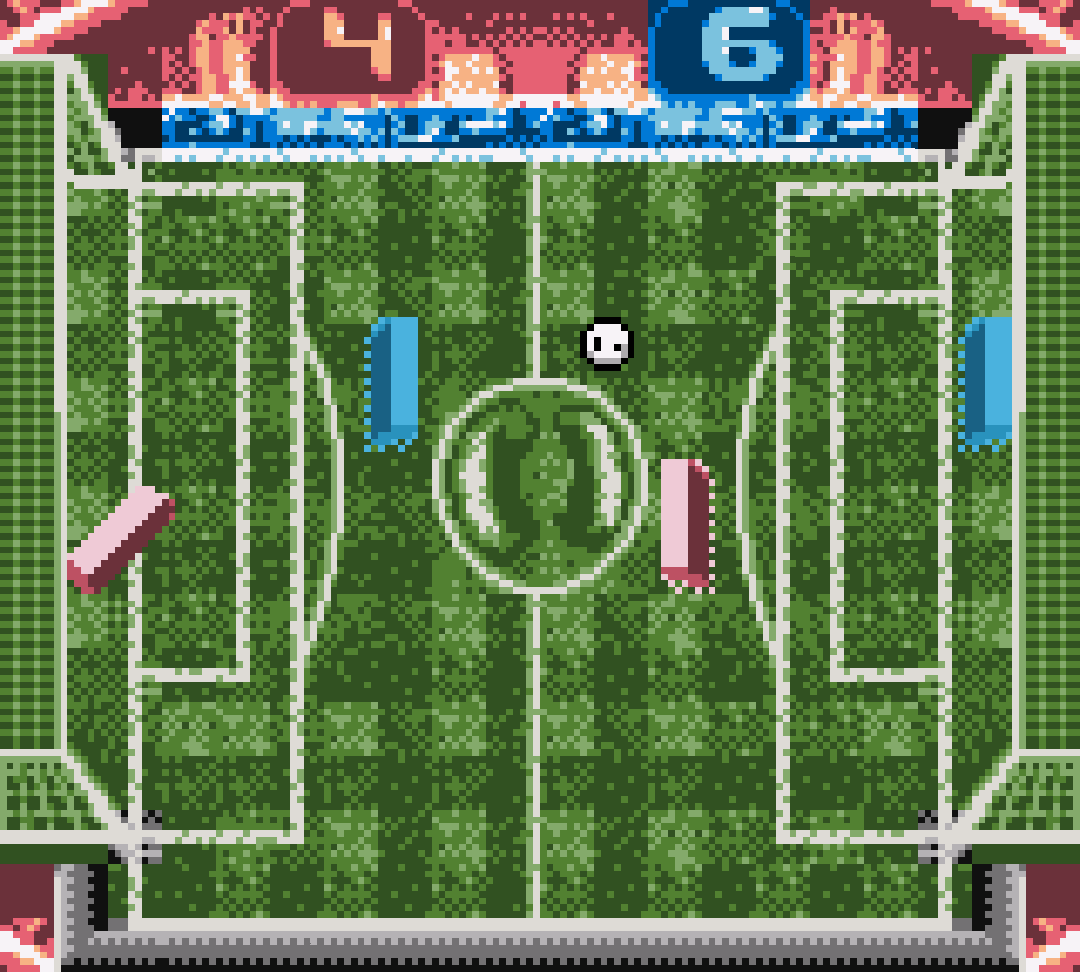
In certain arcade-inspired games, you can continue driving up your score following a successful campaign. In the NES Donkey Kong, for example, there are only three levels to complete, but finishing the third takes you back to the first, allowing you to play through the game again at a slightly greater difficulty to pad your point total. This does not happen in Pong: The Next Level. As soon as you win, the game ends, and you’re stuck with whatever score you had at the buzzer – which, per the rules of Pong, is almost always 11. In fact, since Pong: The Next Level awards no bonuses for point differentials or shutting out your opponent, a perfectly played game will only net 11 points.
This makes the inclusion of a high score table particularly strange, if not slightly insulting. It’s going to record a lot of 11s. And, for inexplicable reasons, each of the game’s four modes shares the same high score table, despite their wildly varying mechanics
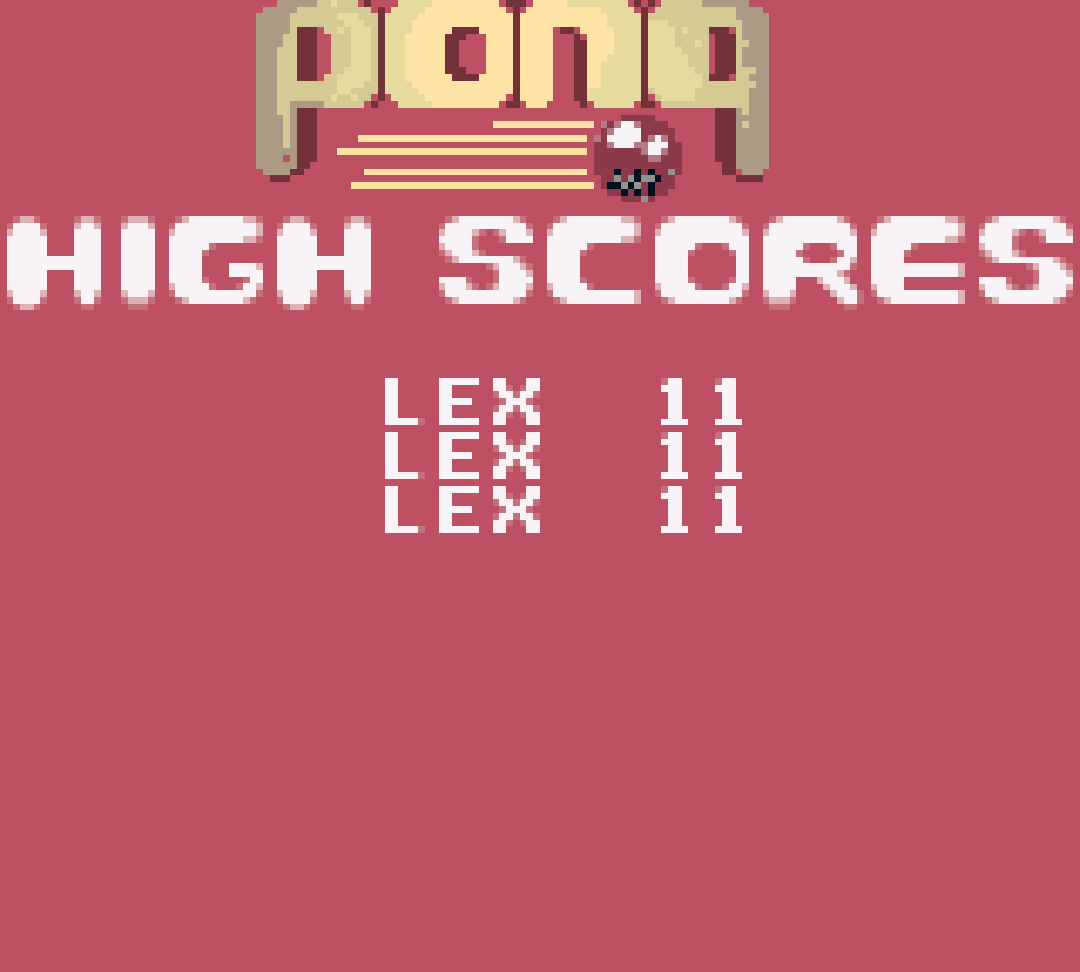
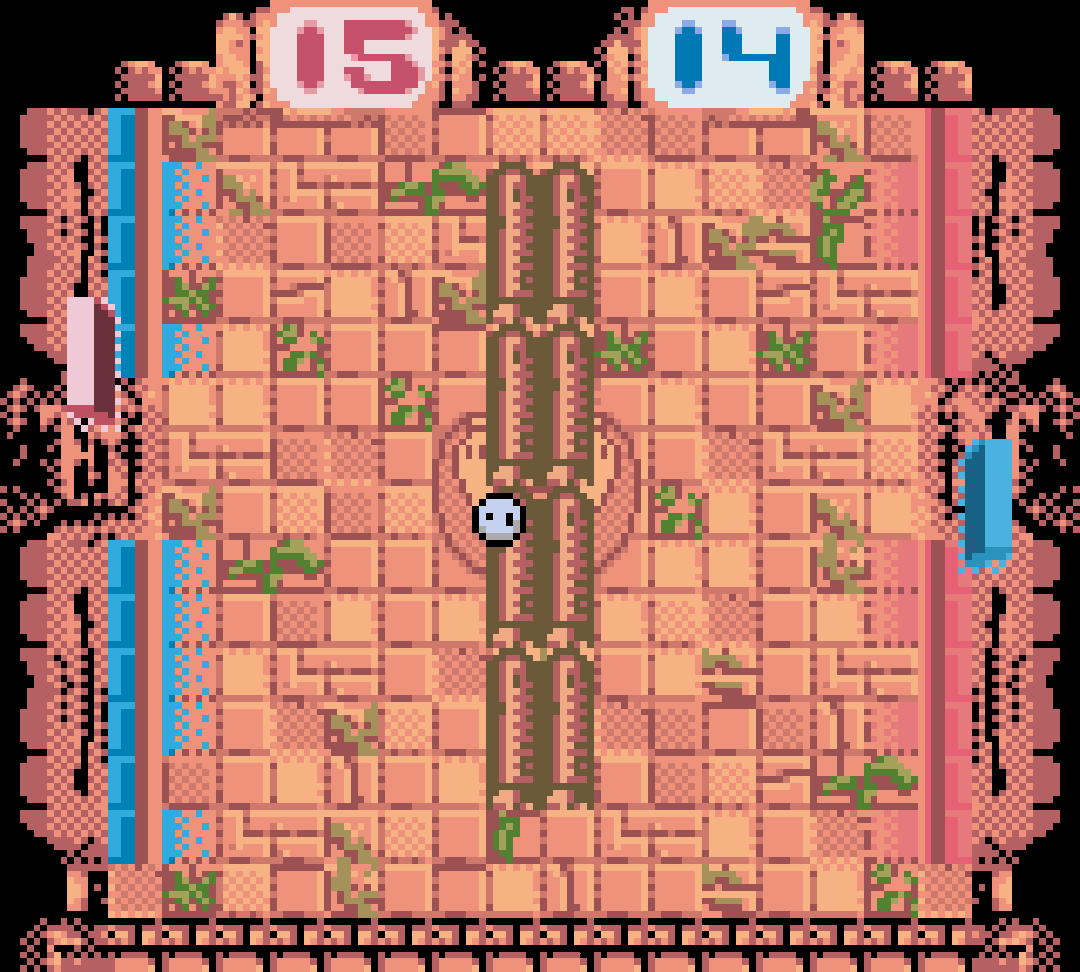
The matter becomes even stranger when you realize that it’s possible to attain scores greater than 11. A game tied at 10-10 might end in a score of 12-10. Similarly, a 15-15 tie could finish 17-15. Higher scores therefore come from an inability to subdue your opponent – in other words, not from playing well, but from failing to play well
Yet these higher scores receive greater prominence on the cartridge’s high score table than a perfect game’s 11-0 statline. Imagine chess rewarding players for deliberately losing pieces in the name of drawing out the game, and you have a sense of the absurdity of Pong: The Next Level’s scoring system
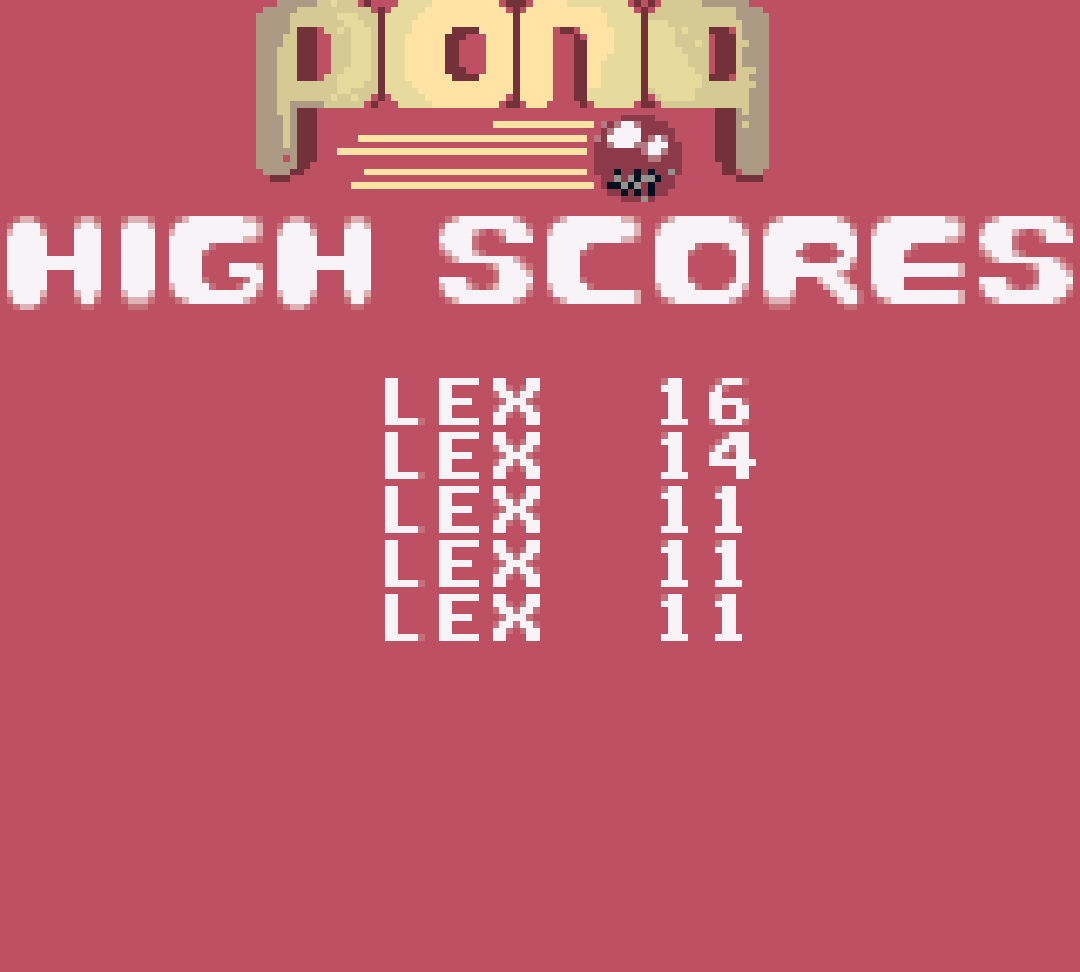
It’s not quite fair to say that Pong: The Next Level rewards sucking (though it’s not entirely inaccurate, either). But thanks to its odd scoring logic, the game creates strange and unexpected incentives that go violently against the grain of how Pong is meant to be played. By framing higher scores as somehow desirable, Pong: The Next Level thereby encourages the conditions that yield them. This means that, instead of defeating an opponent soundly and by a comfortable margin, the game rewards living on the edge – of staying the slightest bit ahead of your opponent so that you might tease more points out of them, while operating with the tiniest margin of error possible. After all, if you slip up during the precarious state of an extended tie, your AI opponent is then one goal away from winning. Fighting your way back from that is a higher-pressure situation than most you’d otherwise encounter.
The result is that Pong: The Next Level morphs its source material into an entirely different sport. It re-imagines Pong not as table tennis, but as a bullfight: The prolongation of conflict against an opponent who wants to end you as quickly as they can – and who has the capacity to do exactly that. Each high score therefore commemorates and celebrates a similar set of virtues as what bullfighting is said to cultivate: The grace and serenity to maintain steely nerves under consistent pressure, the skill and sensitivity to avoid overwhelming an opponent and cajole them along by lingering at the limits of their abilities, the courage to dance with defeat, and the mastery not to falter.
The great irony, however, is that no high score can survive turning off your gaming device. The game has no saving mechanism, because the cartridge – like so many corner-cutting Game Boy Color titles – was manufactured without a battery-backed memory unit as a cost-saving measure. As Retrospekt’s photographs indicate, the cartridge has the dreaded transparent top that, as any Game Boy Color owner remembers, was the surest indicator of a low-quality production. Yet this failure, too, has its profound aspects. If Pong: The Next Level views the high-scoring game as a long, well-choreographed dance, then the high score is itself a kind of performance art. In the same way that a theatrical production or a ballet performance exists only in memory once the curtain closes, a Pong: The Next Level high score is designed to stay with you as an experience rather than a trophy, a remembrance rather than a record.
Whether something can be lost to time is no true gauge of its value. Such is where Pong: The Next Level leaves us: Having endured an unusual, memorable experience that foils – yet rewires – our expectations, like any good art should. And in that regard, this odd little GBC cartridge represents one of handheld gaming’s most unintentionally fascinating packages
