

If ARM-based PC gaming is to find its footing, it will require a cash-rich figure with the kind of clout to push publishers to support the platform. Nvidia could be the Daddy Warbucks that gaming on ARM needed all along
Nvidia touted its RTX Spark PCs as a gaming platform and not just a Windows version of a MacBook. The one missing piece is developer support, but that appears to be incoming. On Wednesday, <a href="https://blogs.nvidia.com/blog/japan-ecosystem-2026/#sega” rel=”nofollow noopener” target=”_blank”>Nvidia said it had cajoled Sega to bring the upcoming fighting game Virtual Fighter Crossroads to RTX Spark. In addition, “future Sega titles” are expected to land on Nvidia’s ARM-based platform. This is more significant than it seems on its face. ARM’s RISC-based architecture is a different ballgame than the standard x86 supported by the vast majority of games. We’re now seeing more publishers promising to support ARM-based PCs than ever before.
Nvidia already has a ton of clout within PC gaming. Team Green has promised partnerships with Capcom, Konami, Riot Games (Valorant,League of Legends), Remedy (Alan Wake II, Control), and Warhorse (Kingdom Come: Deliverance II) for RTX Spark. Nvidia has told Gizmodo they plan to push for even more native game support for major AAA titles
These are not exclusive deals. Companies like Capcom have already worked with Apple to port their games, including most of the recent Resident Evil games, to ARM-based MacBooks. Just this year, Remedy pushed a Mac and iPad-native version of Control. Qualcomm has also pushed support for games like Hogwarts Legacy and Paradox titles, including Stellaris. And despite all those efforts, gaming on Apple and Qualcomm’s platforms is still iffy. It’s not just performance. Compatibility still remains ARM PCs’ biggest hurdle.
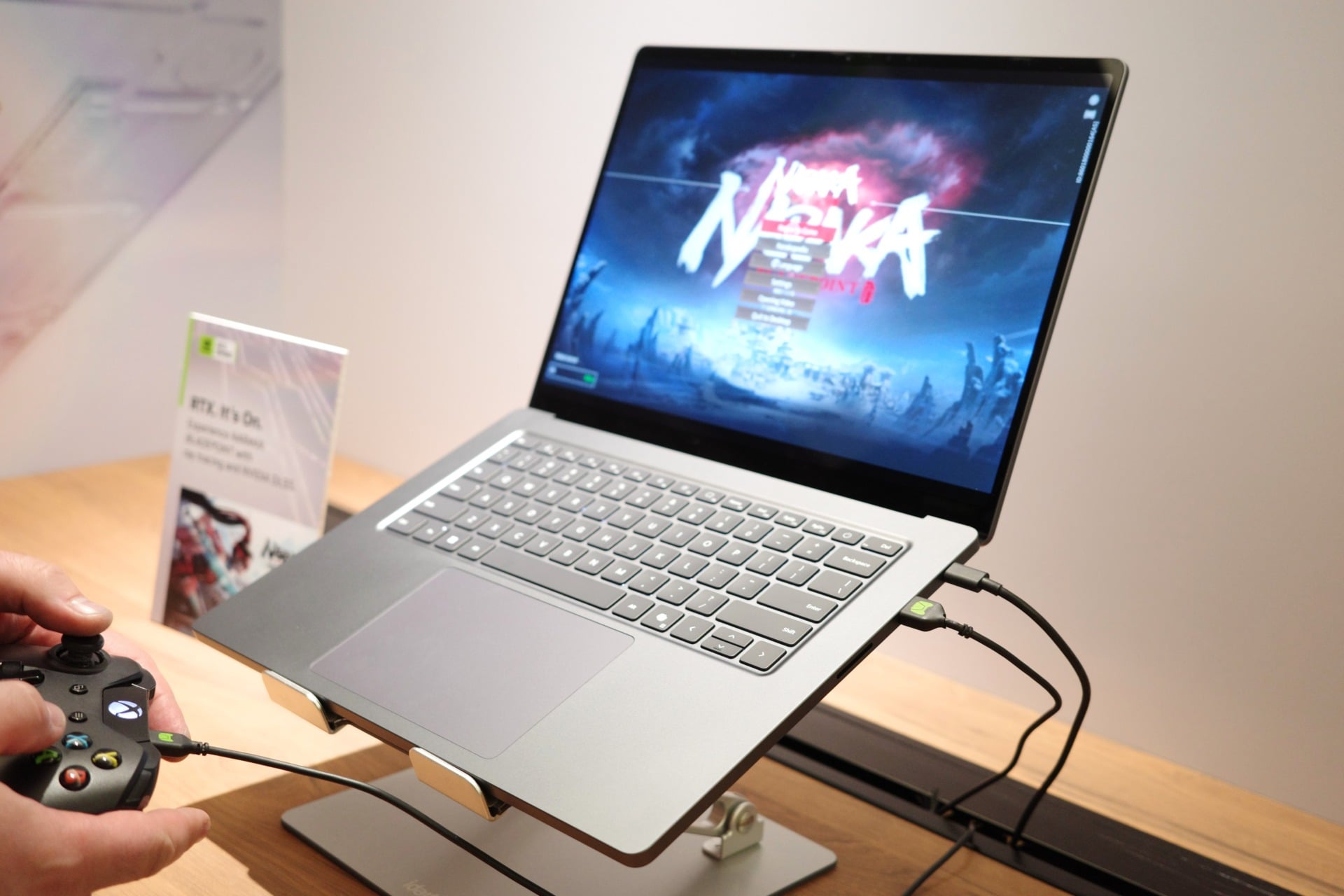
I’ve been through several briefings with Nvidia about what we can expect from gaming on RTX Spark PCs. Back at Computex 2026, Nvidia showed me multiple games running on an early prototype of an upcoming Microsoft Surface Ultra. Again, this month, Nvidia showcased Alan Wake II hitting a playable frame rate of over 90 fps on one of these PC builds. The game was running with ray reconstruction and DLSS upscaling, but it was also employing 2X frame generation to make it feel smoother. Nvidia has not made any specific claims about RTX Sparks’ gaming benchmarks, at least none that don’t also employ upscaling or the oft-derided “fake frames.”
Nvidia will need to rely on all its upscaling technology to help games run smoothly. Not all Capcom games will see ARM support, such as Pragmata, which I last saw runninggame is running in a software environment meant to emulate the standard x86 microarchitecture ruled by AMD and Intel
To become a stable gaming platform, the RISC-based ARM architecture needs consistent support for future titles. Nvidia has claimed it’s in it for the long haul, and that may prove necessary. Qualcomm has pushed compatibility as far as it could take it over the past two years. The competing chipmaker’s Snapdragon X and Snapdragon X2 platforms didn’t support many big games at launch, but late last year it finally enabled support for Fortnite
Qualcomm further claimed it had worked on support for major anti-cheat software, like Denuvo and Tencent’s Anti-Cheat Expert. Without support for anti-cheat programs, many multiplayer games simply won’t run. Nvidia has also promised to support all major anit-cheat systems. Sure, a rising tide raises all ships, but if Qualcomm is a sturdy two-masted schooner, Nvidia is a 363-foot megayacht (probably owned by Gabe Newell) in gaming circles. Either way, the mood is shifting. Say what you want about Nvidia, but I’ll be happy to finally see ARM-based gaming kick off if it means there are more places to play.
