

Not the Marvel creator compensation thing again? Oh yes.
Even as we’re getting all excited for the premiere of Spider-Man: Brand New Day and the return of the MCU, the provenance of a supporting character has once again been traced to the comics.
One of the cooler things about the MCU has been how they scour the pages of Marvel’s vast library to find characters for the movies. And the comics have them all. Need a scientist to explain some experiment? Marvelhas one.Need a military man to create problems for the hero? Marvel has one.Need a French guy who leaps around? Marvel has one.And so on and so forth. Giving even tiny cameos a comics-related origin is part of the reason for the long “Special Thanks” credits that roll at the end of superhero movies, naming the various creators who had a hand in making these characters.
Of course, sometimes it isn’t a cameo, it’s the whole damn movie. And that raises the issue of compensation. By now we’ve figured out that having one’s character appear in a Marvel or DC movie isn’t life changing money for the creators involved. While dollar one participation for a character who has a few lines isn’t realistic, creators who very clearly contributed major characters have often had to complain very publicly to get anything more than a handout
Ed Brubaker, co-creator of the Winter Soldier, and Jim Starlin, creator of Thanos, are examples of creators who have loudly spoken out. Brubaker famously said he got more money for a cameo in The Winter Soldier than for creating the character.And Starlin launched a PR campaign touting his undeniable creation of Thanos that ended with him “walking away happy” with his compensation
But a typical creator’s compensation is a bit different, and laid out in a “special character agreement”. This is a vague document that creators who introduce a new character into a comic book are asked to sign. Another THR article lays out the basics:
$25,000 for a theatrical film appearance, $2,000 for an episode of TV over 30 minutes, and $1,000 for an episode of TV 30 minutes or less. For action figures, the agreement entitled her to $5,000 for one figure released in a single year, $10,000 for two, or $25,000 for three or more. For video games, there would be a maximum of a $30,000 pot to be shared among all the creators who had characters in the game
But as Devin Grayson – co-creator of Yelena Belova – learned, those are just guidelines that Marvel can – and usually does – scale down. She expected $25K for creating Yelena (YELENA! One of the most beloved characters in the MCU!) ad got quite a bit less
In practice, Marvel’s standard for compensation for the use of minor characters is $5000, but it’s presented in a different way, as the Guardian reporteda few years ago:
According to multipleMarvel film, the company’s practice is to send the creator an invitation to the premiere and a cheque for $5,000 (£3,600). Three differenton to attend the premiere, or to use the $5,000 for travel or accommodation;as due
I’ve actually had this practice confirmed to me a few times: the money is presented as a stipend to “attend the premiere.” Which is nice, I guess, but some creators feel it’s still a pretty small amount – and some actually DO have to travel to the premiere with a partner, and don’t have much left for mad money after airfare and hotel.
One creator who has complained about this whole system is Joe Casey, who came out and said he has never been paid for the use of America Chavez in Doctor Strange and the Mountains of Madness. Chavez, co-created by Casey and Nick Dragotta, was the co-star of the movie, which grossed $955.8 million worldwide. Casey never signed the special character agreement, and went public in THR once again:
Several years ago, when Casey learned Marvel intended to include America Chavez in the Doctor Strange sequel, he contacted the publisher to request paperwork that would also cover her previous appearances in animated TV episodes and video games
Marvel publishing sent over a special character agreement for him to sign that included a cash offering. Casey ultimately declined to sign the special character agreement, and his lawyers expressed his dissatisfaction with the offer. Though Casey declined to say how much Marvel offered, the sums for other creator agreements is said to be in the $5,000 range, though a source on the Marvel side disputes that figure, saying they are generally higher. Marvel is not legally obligated to pay creators when their work is adapted; however, it is customary for them to invite creators to movie premieres and give them cash compensation for appearances.
(Casey talked about this quite a bit more in a video interview with The Beat from a few years ago.)
And now, Casey writes in his newsletter, it’s happened again – but with a surprising twist.
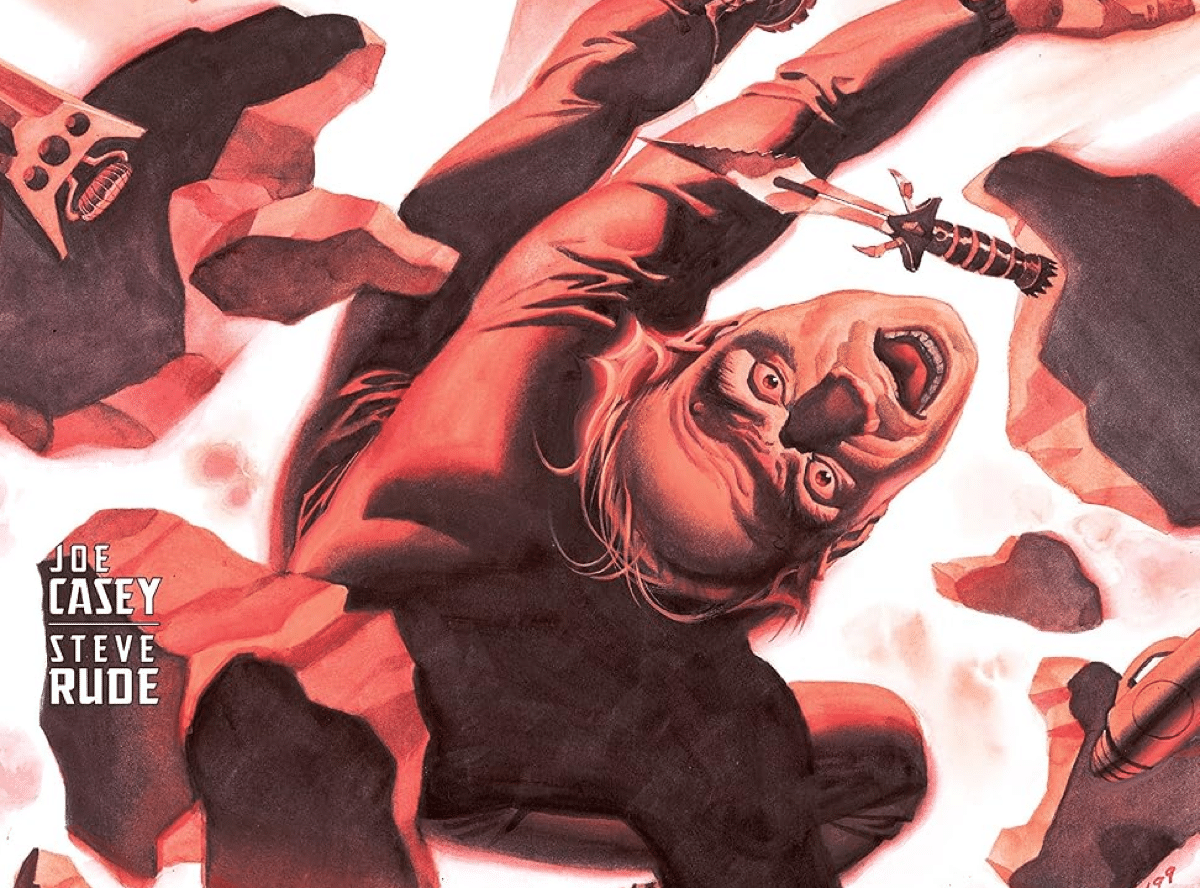
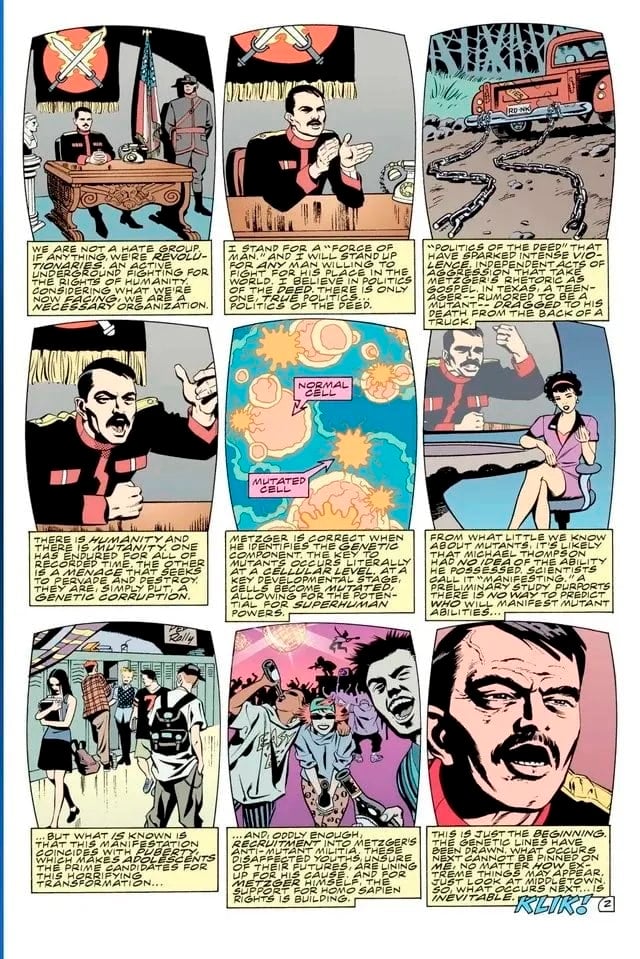
Spider-Man Brand New Day appears to be the start of laying the foundation for the arrival of the X-men in the MCU – and part of that is the character of William Metzger, leader of the Anti-Mutant Militia, and played by Tramell Tillman. Metzger was created by Casey and artist Steve Rude for the X-Men: Children of the Atom mini series back in ‘99. And Casey, who is not shy about voicing his opinions, notes that once again, there was no notice from Marvel:
Now we come to the big questions: Did Marvel — either the film division or the publishing division — give me any kind of heads up that they were using the character? Of course not. Did either of them reach out to even discuss any kind of financial compensation — fair or not — based on Steve Rude and I having created the character? Of course not. That’s typically not the Marvel way
The twist here is that Metzger is being played by Tillman, a Black actor. Which is a switch from the original because:
And, if they are, one of the more curious aspects of this entire thing is that the character — as originally depicted in X-Men: COTA — was white, intentionally modeled (and obviously named) after real life white supremacist racist scumbag, Tom Metzger (in basic concept, if not appearance… I’m not sure if Steve Rude really knew from Tom Metzger). The move to cast a black actor in the role was an… interesting choice on Marvel Studios’ part. So I’m not convinced that anyone there was fully aware of the character’s inspiration. But if it serves as a cool “f**k you” to other racist shitheads out there (who perhaps idolized Tom Metzger, God knows why), even better.
As you can see from the above page, the allusions were not particularly subtle in the comic. According to Casey, Tillman has been signed for several movies, and seemingly he’ll play a part in fomenting anti-mutant sentiments across a swath of films. Although he met his demise in the original comic, who knows what kind of exo-skeleton he might eventually don.
Is $5000 a reasonable compensation for creating characters in the comics who go on to become cinematic mainstays? When a movie grosses nearly a billion dollars, it’s easy to think…..maybe not.
In the THR piece about America Chavez, Casey explained his public ourcry:
“For me, it’s not about money. It’s not even about the respect. I would never expect to be respected by a corporation,” says Casey. “If I’m in a position where I can afford not to take their insult of an offer, and be able to talk about it, maybe the next guy — where that kind of money could change their life — would get a fair shot of receiving that money.”
And here yet again is The Big Lie in action. Comics publishers pursue media adaptation endlessly, even as comic book movies and TV shows have changed the face of entertainment – but the actual creators – the people putting the words and drawings on the paper – are rarely the ones who get to share in the jackpot.
Ironically, Casey’s Chavez co-creator Dragotta has hit the jackpot in a very different way: comic book royalty payments from DC. As he told THR, drawing Absolute Batmanhas been very, very good to him.
Two days into his marathon signing with Johnson, I ask Dragotta what the biggest change in his life in the wake of the book’s success. He chuckles, and replies candidly: “Money.”
Perhaps that’s the endpoint of this story: an artist getting paid well to draw popular comic books. It’s a shame that doesn’t happen more often.
As for Casey, I think he’s okay. He continues to work for Marvel despite his ornery blasts, and his work on the new Skybound all-star comic Terminal should net him a reasonable payout. Also, he co-created Ben 10, with his Man of Action colleagues, and that worked out just fine for him. It turns out creating characters that people love to read and watch can be something you can make a living at – IF you sign the right contracts.
INCREDIBLY IRONIC ADDENDUM: Children of the Atom from 1999 is an example of the kind of high profile, a-list creator mini series that Marvel used to publish – and as Metzger’s use shows, it provides fodder for further storytelling. You’d think a solid story like this would be in print, with a movie looming, right? Well you would think wrong. I did an Amazon search for the book and it’s apparently out of print – although you can buy the individual issues in their digital Kindle editions. Two used paperbacks are listed as selling for $490 and $599.
Maybe if Marvel kept sturdy perennials like this in print, they’d have enough money to pay creators more?
