

5 Best Game Boy Advance Games Of All Time, Ranked
By Gabran GrayJuly 13, 2026 8:00 pm EST
Was there a better time for handheld gaming than the Game Boy Advance era? The wealth of games that came out for the Nintendo DS and beyond might argue otherwise, but the power of nostalgia is going to convince plenty of gamers that the GBA was the handheld king. Regardless of what the best handheld console ever made really is, there’s no denying that the GBA deserves to be talked about with some reverence
For gamers in 2001, the GBA was basically a miracle. The GBA has access to all the best Game Boy games ever made, and Nintendo made sure to beef up its back catalog even more. The company ported a slew of beloved NES and SNES games over to the GBA, so one tiny handheld, powered for several hours on just two AA batteries, can play a virtually endless supply of old games. Of course, that wasn’t the end of the GBA’s appeal. The handheld also had games of its own, and while plenty of them haven’t stood the test of time, others are now regarded as classics. The GBA helped push the handheld gaming revolution, and decades after its debut, the best GBA games ever made still make us want to bust out our old handheld and trusty supply of batteries.
5. Mario and Luigi: Superstar Saga
Nintendo
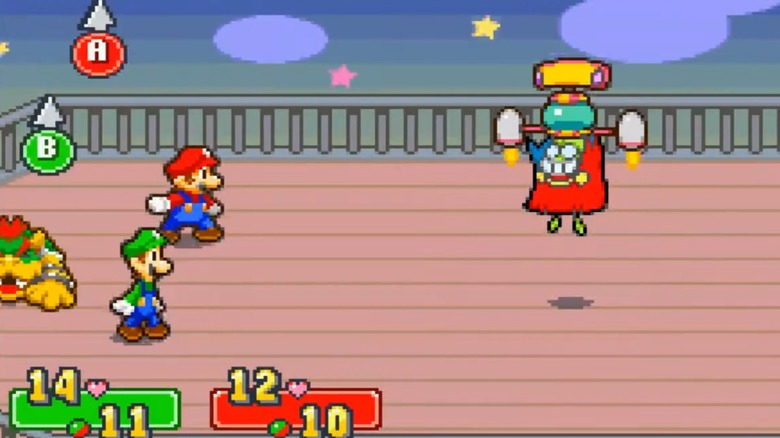
When “Mario and Luigi: Superstar Saga” was released for the Game Boy Advance in 2003, the idea of a Mario-themed RPG was still relatively new. “Super Mario RPG: The Legend of the Seven Stars” launched in the ’90s, but most Mario fans still didn’t associate the character with anything other than platforming action. “Super Star Saga” helped popularize the RPG approach in the Mario universe, and the “Mario and Luigi” spin-off series has been growing ever since
Players control both brothers while exploring the overworld and fighting through the game’s turn-based combat sequences. Thanks to combos called Bros. Attacks and timing mechanics, “Superstar Saga” has a genuinely engaging combat system. While later games introduced smoother gameplay and more mechanics, plenty of fans feel like the story and pacing of “Superstar Saga” has yet to be surpassed. The story introduced two Mario villains more powerful than Bowser when it sent the titular brothers on a quest to the Beanbean Kingdom to save Princess Peach from the evil witch Cackletta and her student Fawful. Nintendo released a remake of “Superstar Saga” for the 3DS in 2017, which just goes to show how fantastic this GBA game really is.
4. The Legend of Zelda: The Minish Cap
Nintendo
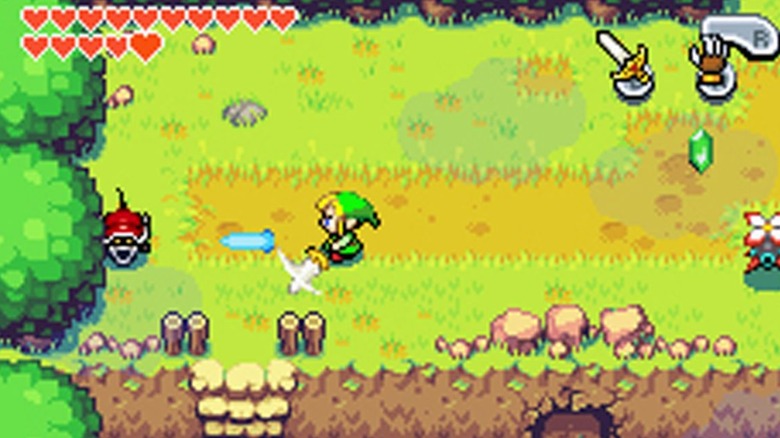
The Game Boy Advance was a fantastic console for fans of “The Legend of Zelda.” Thanks to ports, gamers could play through the original titles from the Nintendo Entertainment System, and they could play the Super Nintendo’s “A Link to the Past,” which remains one of the best “Zelda” games of all time to this day. Nintendo didn’t just leave GBA players with ports, however. The company also released an original “Zelda” game for the handheld in 2004, and it still holds a place in the heart of many gamers.
“The Minish Cap” is a top-down adventure game where players control Link, who’s trying to save Princess Zelda and the kingdom of Hyrule after an evil swordsman named Vaati unleashes monsters and chaos on the land. The game follows a similar structure as other “Zelda” titles from that era, with players exploring the kingdom, fighting through dungeons, and collecting powerful items that unlock new areas to explore. The game’s most unique mechanic is its titular hat, an item that Link receives early on which has the power to shrink him down to miniature size, opening up all sorts of exploration opportunities.
The story, classic structure, and miniaturization mechanics all add up to a delightful experience. More than two decades after the release of “The Minish Cap,” fans were still urging other gamers to check the game out
3. Pokemon Emerald
Nintendo
GameBoy Advance players had a plethora of “Pokemon” options to choose from when they were deciding what to play. The system got remakes of “Red” and “Green”, but it also got three brand new games of its own. “Ruby” and “Sapphire” debuted simultaneously in 2002, and two years later they were followed up by the well-loved “Pokemon Emerald.” Fans were already used to that release structure at the time, and as they expected, “Emerald” incorporated all the “Pokemon” from the previous two games while also introducing new creatures and features for players to engage with.
Initially, “Emerald” plays like most other “Pokemon” games of its time. Players start in their character’s hometown, choose one of three starter Pokemon, and then get going on a quest to become the greatest trainer of all time. The game is light on plot, but it’s really the endgame mechanics that make “Emerald” stand out in the memories of so many gamers
“Emerald” has nearly 400 Pokemon, including more than half a dozen different legendaries, for players to collect. It also introduced the Battle Frontier, which massively increased the amount of endgame activities available from “Ruby” and “Sapphire.” Players had no shortage of Pokemon to catch or things to do once they finally completed their dream team. Some of the mechanics introduced in “Emerald” became mainstays of the series, so in a way, the game perfectly sits between two eras of beloved “Pokemon” games and commands a wealth of nostalgia because of that position.
2. Castlevania: Aria of Sorrow
Capcom
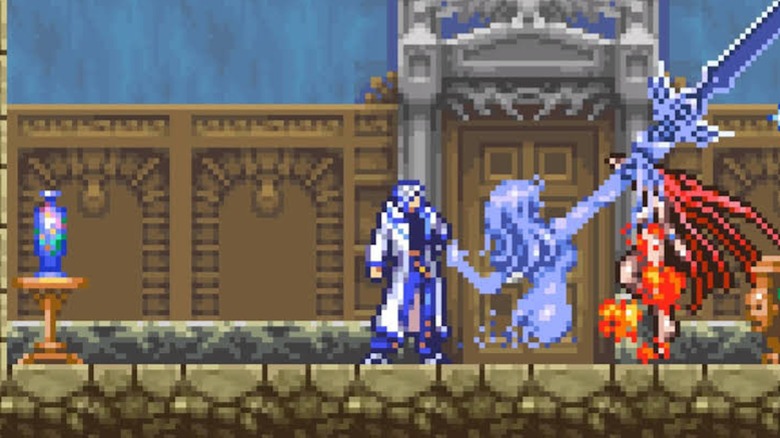
“Castlevania: Aria of Sorrow” sits at No. 2 on our ranking of the greatest Game Boy Advance titles of all time, but it could just as easily slide into the top slot. The “Castlevania” game series has had plenty of highs and lows over the decades, and its GBA era is a microcosm of its entire history. GBA players got three new “Castlevania” sidescrolling adventures for the system: “Circle of the Moon,” “Harmony of Dissonance,” and “Aria of Sorrow.” Each of them has their own appeal, but most players will agree that “Aria of Sorrow” stands head and shoulders above them all.
“Aria of Sorrow” launched in 2003, and “Castlevania” fans were destined to fall in love with it. The game has a massive castle full of secrets and shortcuts for players to discover. There’s a wide range of creatures to fight and powers to use, and the game borrows some of the RPG elements introduced to the series by 1997’s “Symphony of the Night.” Pair that with a Boss Rush Mode and multiple playable characters that can be unlocked by beating the game, and you’ve got a mechanically perfect “Castlevania” game with plenty of replayability on offer.
The game’s story is particularly memorable for “Castlevania” fans. Unlike most titles in the series, “Aria” is set in the 20th century after the canonical death of Dracula. Its futuristic plot follows a teenager named Soma who’s pulled to Dracula’s castle for mysterious reasons and begins unlocking occult secrets as he explores
1. Metroid Fusion
Nintendo
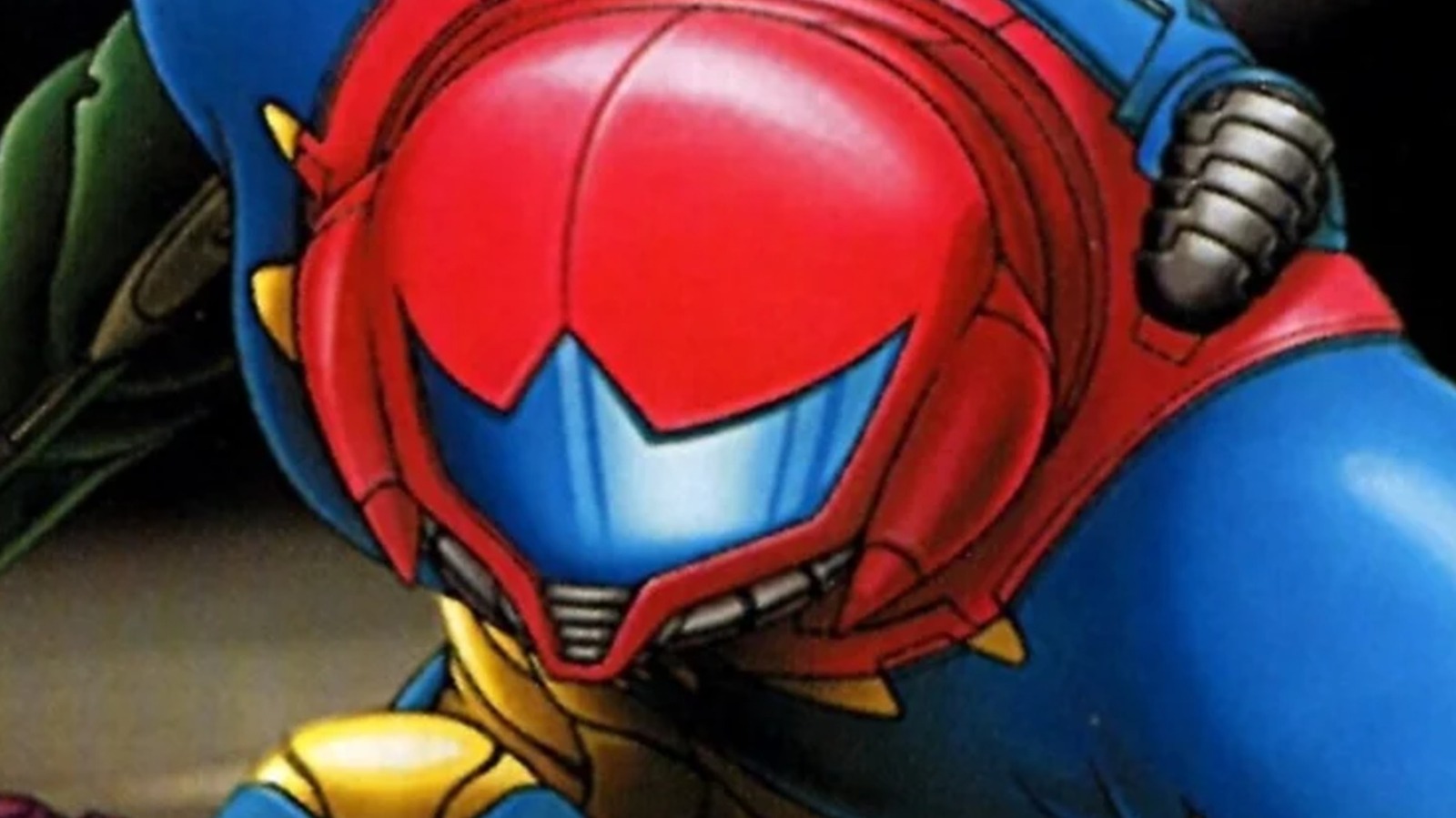
Nintendo has released some truly great “Metroid” games over the years, but in many ways “Metroid Fusion” feels like the pinnacle of the franchise. The game debuted on the Game Boy Advance in 2002, the very same year that “Metroid Prime” launched on the Game Cube. The two games could be connected via the somewhat gimmicky Link Cable, and players who went to the trouble could unlock the original “Metroid” and a “Fusion”-themed suit within “Prime.” The release timing is especially strange looking back: “Prime” launched a new era of 3D “Metroid” games, whereas “Fusion” incorporated and perfected all the elements that had made the series’s 2D sidescroller era so beloved.
Nintendo fans hadn’t gotten a new “Metroid” game since 1994’s “Super Metroid,” and jumping into “Fusion” must have felt like picking up a conversation with an old friend. The game’s controls essentially mirror those from the earlier titles, and the hook of laser-blasting aliens while searching for secrets and power-ups is as effective as ever. “Fusion” gives players a gorgeously designed derelict spaceship to explore, and it puts more of an emphasis on storytelling than previous “Metroid” games.
Because of that narrative focus, the map of “Fusion” is separated into cohesive sections, which makes it a little easier for newcomers to sink into the open-ended exploration that the series is known for. The streamlined exploration, sci-fi plot, and stunning boss battles make “Fusion” one of the best, most memorable “Metroid” games of all time and a sure contender for the best Game Boy Advance title ever produced
