

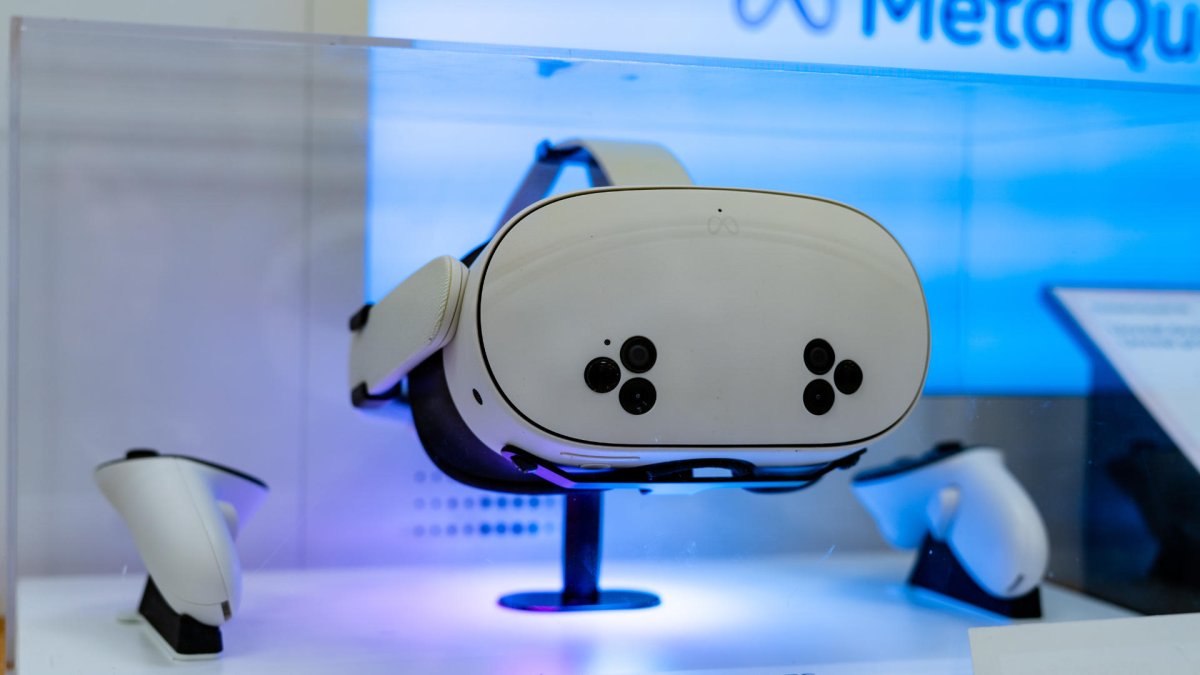
The year 2026 began with a bang for the VR gaming industry: In mid-January, Meta spokesperson Tracy Clayton announced that the company was shifting investments away from the metaverse and towards wearable devices like smart glasses, which resulted in the layoff of around 1,500 jobs in Meta’s Reality Labs division. Approximately ten percent of the workforce had to go, a large portion of them from the VR gaming sector. Three in-house game studios had to close their doors: Armature, known for “Resident Evil 4 VR”; Sanzaru, the creators of “Asgard’s Wrath”; and Twisted Pixel, most recently responsible for “Marvel’s Deadpool VR”. At the studio Camouflaj, which had developed “Batman: Arkham Shadow”, one of the best VR games ever, only a handful of employees remained, who were assigned to other departments. Meta also stopped the production of new content for the fitness app “Supernatural” before the founders bought it back and changed the focus of the expensive metaverse project “Horizon” from VR to mobile.
This marked the end of Meta’s internal game development for VR headsets, and it quickly became clear: an entire industry was dependent on the corporation and now had to regroup
Many observers immediately proclaimed the end of virtual reality. Palmer Luckey, founder of Oculus VR and now CEO of the defense technology company Anduril Industries, took a contrary position after the restructuring. Meta still employs significantly more people in VR development than all other market participants combined, and that won’t change anytime soon. However, the company’s subsidy policy had distorted the market for years and displaced independent developers. The market can now cleanse itself. In doing so, he touches a sore spot. An ecosystem that depends on a single corporation was never stable.
(Image: Tomislav Bezmalinovic)
The VR gaming market, especially during the pandemic, expanded beyond its means – just like the entire gaming market, which today suffers from similar symptoms across multiple platforms. Meta sold over 20 million Quest 2 units during this period. No comparable device has ever come close to those numbers again. Blindsided by success, Zuckerberg and co. poured more and more money into development and personnel. Subsidized studios scaled up accordingly. The employees are now paying the price
Coray Seifert, co-founder of the new publishing service provider Dark Arts Syndicate and formerly at Meta in Developer Relations, sees the withdrawal less as a VR-specific problem. In an interview with heise online, he explained: The move “has very little to do with VR and more to do with AI.” Meta looked into the crystal ball and saw a future where generative AI is simply a better investment than Spatial Computing
Was fehlt: In der rapiden Technikwelt häufig die Zeit, die vielen News und Hintergründe neu zu sortieren. Am Wochenende wollen wir sie uns nehmen, die Seitenwege abseits des Aktuellen verfolgen, andere Blickwinkel probieren und Zwischentöne hörbar machen
- Mehr zum Feuilleton “Missing Link”
Meta’s VR platform numbers don’t look bad at first glance. For 2025, Meta reported that over 100 titles grossed more than a million dollars. In-app purchases increased by 10 percent. However, according to market research firm IDC, Quest shipments decreased by 42 percent in the same year. Without new hardware and VR hits, the success figures propagated by Meta are unlikely to be repeated in the current year. Growth in the overall XR market is now driven by smart glasses, and that’s precisely where the majority of Meta’s Reality Labs money will flow in the future. The reasons for the radical cut in the metaverse are therefore primarily due to the numbers.
Since Meta has reported Reality Labs as a separate division since 2020, the losses have accumulated to around 73 billion dollars. In the first quarter of 2026, the pattern continued: 402 million dollars in revenue contrasted with four billion dollars in losses. From an economic and strategic perspective, the decision is therefore understandable. However, for the VR gaming industry, it changes everything. Meta not only ceased its own game development but also cut funding and publishing support for external studios. Hundreds have lost their jobs since then. Some studios even closed down completely.
nDreams, one of the most prominent VR studios, announced in March the layoff of 78 employees and the closure of two locations. Vertigo Games, one of the largest VR studios worldwide, closed its Amsterdam location in early June, which had developed “Metro Awakening”. CEO Richard Stitselaar called the VR market “challenging”. The company is now shifting its focus to classic screen games with the remake of “The 7th Guest” and a non-VR version of “Arizona Sunshine”. The renowned Skydance Interactive is not developing any VR games for the time being. After the merger of Skydance Media and Paramount, the VR projects no longer stood up to scrutiny. Previously, the studio had generated over 100 million dollars with its “Walking Dead” titles, according to industry figures, but the subsequent major project “Skydance’s Behemoth” could not build on these successes. Rumor has it that Skydance was supposed to develop a Quest-exclusive Harry Potter VR game, which no longer had a future without Meta’s subsidies.
(Image: Vertigo Games)
The second and third tiers are also in crisis. Cloudhead Games developed the established rhythm shooter “Pistol Whip”. In early January, the Canadian studio laid off 40 out of 56 employees. CEO Denny Unger spoke of a lack of platform funding – an unusually direct statement that named the core problem: the most important financier withdrew overnight. Combat Waffle Studios, developer of the extraction shooter “Ghosts of Tabor”, also reported layoffs. CEO Scott Albright referred to an unnamed “large platform partner” who had withdrawn support.
Polyarc, creator of the “Moss” series – one of the few established VR brands – lost about two-thirds of its team after a major project was halted. The studio is now porting the “Moss” games to classic screens. The Polish studio Kluge Interactive (“Synth Riders”) halved its staff from 100 to 50. Mighty Coconut, developer of the successful “Walkabout Mini Golf VR”, cut a quarter of its workforce, increased prices for expansion packs, and halved its release rhythm
Although the consequences for internal and external studios are enormous, the claim that Meta has completely abandoned VR is too simplistic. The company continues to work on hardware and its own operating system, HorizonOS. Internally, a compact XR glasses for entertainment purposes is reportedly in development under the codename “Project Phoenix”. Meta has not yet confirmed official details. A Meta Quest 4 is also considered realistic in the industry. The company is not completely withdrawing from software either. It has merely redefined its function. Meta will henceforth be a more passive platform operator, leaving the gaming stage to others.
Samantha Ryan, responsible for the content ecosystem, justified the change in February on the official developer blog: 86 percent of usage time on Quest headsets is accounted for by third-party apps anyway. Meta therefore wants to strengthen the external developer community through partnerships. In 2025, the company invested nearly 150 million dollars in corresponding programs. This sum is unlikely to be even a fraction of the subsidies that the aforementioned studios will have to forgo in the future.
At the Game Developers Conference 2026, Chris Pruett, Meta’s Director of Games, went a step further. Large-budget narrative games in the Hollywood style are simply too expensive for the VR market. This is a significant statement: When the most important platform operator publicly declares that elaborate VR productions are not profitable, it affects every publisher and every investor. Major first-party productions serve as lighthouses. They show what a platform is technically capable of and inspire third-party manufacturers. If these productions disappear, not only are the main attractions for customers and investors missing, but also role models for future developers.
The reason why the major first-party games didn’t work is likely also due to a misinterpretation of demand. “Asgard’s Wrath 2”, the role-playing game developed by Sanzaru Games on behalf of Meta, advertised over 130 hours of gameplay, including side quests. But precisely this scope deterred many users, and very few likely experienced the full extent of the game, the development of which must have consumed enormous resources. The game illustrates the problem of large VR productions: Meta tried to transfer structures and game concepts from classic screen gaming to VR. Narrative action-adventures and role-playing games with budgets in the double-digit millions met a target audience that plays differently in VR.
(Image: Another Axiom)
The most successful VR titles were and are games like “Beat Saber” or “Superhot VR”. Experiences that hit the medium in their spatial core, can be enjoyed in short sessions, and exist exclusively in a VR headset in this form. Meta itself had never produced such genuine VR experiences. Instead, the company acquired studios that had already landed hits. A strategy that Sony and Microsoft also pursue in the classic console market and must constantly correct themselves. In the young VR market, which never had the chance to develop organically, it did not work out.
Seifert indirectly confirmed this assessment. When asked what kind of VR games have the best chances today, he replied: The most consistent successes were achieved by titles that offered “strongly embodied experiences with large movements” and gave them a new twist. By this, he means games that challenge the whole body. Those that complement this model with social presence and a sense of community have had resounding success. At the same time, he warns developers against joining the free-to-play hype in the Quest Store: You either hit the jackpot or you come away empty-handed. The 99 percent of free games that find neither an audience nor revenue are simply not seen.
Who is now taking over the publishing work and developer support that Meta is scaling back? Partly the same people as before. At the end of May 2026, Dark Arts Syndicate was launched with three former Meta employees as founders: Melissa Brown, until January Global Head of Developer Relations at Meta, Dónal Gordon, and Coray Seifert. The company sees itself as a hybrid service provider. It advises on strategies, secures capital, negotiates contracts, helps with marketing, and produces trailers
When asked what market gap Dark Arts wants to fill, Seifert answered briefly and concisely: “First and last mile.” They are best at identifying promising prototypes and bringing them to platforms and partners. They also support teams in the final sprint, especially with large marketing campaigns. Most developers are good at the middle part of production. They just let them work. The goal is to become a full-fledged game publisher – from financing to promotion to the ongoing operation of published titles. The need for outsourced publishing expertise still exists.
Seifert’s assessment of the overall situation is optimistic. He calls the current moment “the ultimate investment opportunity.” VR gaming has a user base that has been steadily growing for years, while the largest publisher is withdrawing. This leaves an enormous opportunity for independent VR game publishers. Also remarkable is Seifert’s assessment of Meta itself, which laid him and many colleagues off: The company has destroyed nothing, but on the contrary, has created new competitors like Dark Arts. Every former Meta employee who has carried their own game idea with them is now forging their own plans. The next wave of investment, likely targeting lightweight AR glasses, will be prominently shaped by former Meta personnel.
Comparing the current strategies of the affected studios reveals a pattern. Most are shrinking to a on all platforms – whether VR or not. Many, especially smaller developers, are focusing on live services instead of one-time purchases. Pure VR exclusivity is unlikely to be affordable for any major studio in the coming years, unless there are paying partners
Seifert recommends studios to start radically cross-platform. Then they should follow up on those platforms that show the most potential. His most important advice to VR developers: start experimenting with augmented reality immediately. Even small projects for glasses like Ray-Ban Displays or the Snap Specs launching in the fall could position studios before the next investment wave rolls in. While there is hardly any consumer revenue in AR at the moment, there is a “maelstrom of investment” that will soon come to developers with experience in this technology.
What’s missing: In the fast-paced world of technology, we often don’t have time to sort through all the news and background information. At the weekend, we want to take this time to follow the side paths away from the current affairs, try out other perspectives and make nuances audible
- All our the “Missing Links”
VR is by no means dependent on Meta alone, Seifert emphasizes. Some titles generate relevant revenuetwo to three million devices, is significantly smaller than that of Quest. Valve is also on the verge of releasing a new gaming-focused VR headset, the Steam Frame, which could give many VR studios another boost. The platform landscape is diversifying, even if Meta, with its installed base, remains the largest single platform
Until the situation stabilizes, the VR gaming market will primarily be driven by individual developers and small indie studios. They continue to generate revenue in the Quest Store, but not with story-heavy major productions, but with games that embody what’s special about VR. The big question remains whether enough creative minds and studios will survive in the meantime to deliver the necessary content when better hardware and new platforms expand the audience again
Don’t miss any news – follow us on
Facebook,
LinkedIn or
Mastodon
This article was originally published in
German.
It was translated with technical assistance and editorially reviewed before publication
