

by Sean P. Aune | July 11, 2026July 11, 2026 11:30 am EDT# Retro Toy BoxToys
There was a time when getting an action figure was exciting, but getting the playset felt like acquiring real estate
A figure gave you a character. A vehicle gave you movement. But a playset gave you a place
That distinction matters
Vintage playsets felt bigger because they were not just accessories. They were worlds you could own. A castle, a headquarters, a sewer, a firehouse, a command center, a space station, a villain base, or a folding city could turn a toy line from a handful of figures into a place where stories happened. The best playsets did not merely sit behind the action. They changed the action
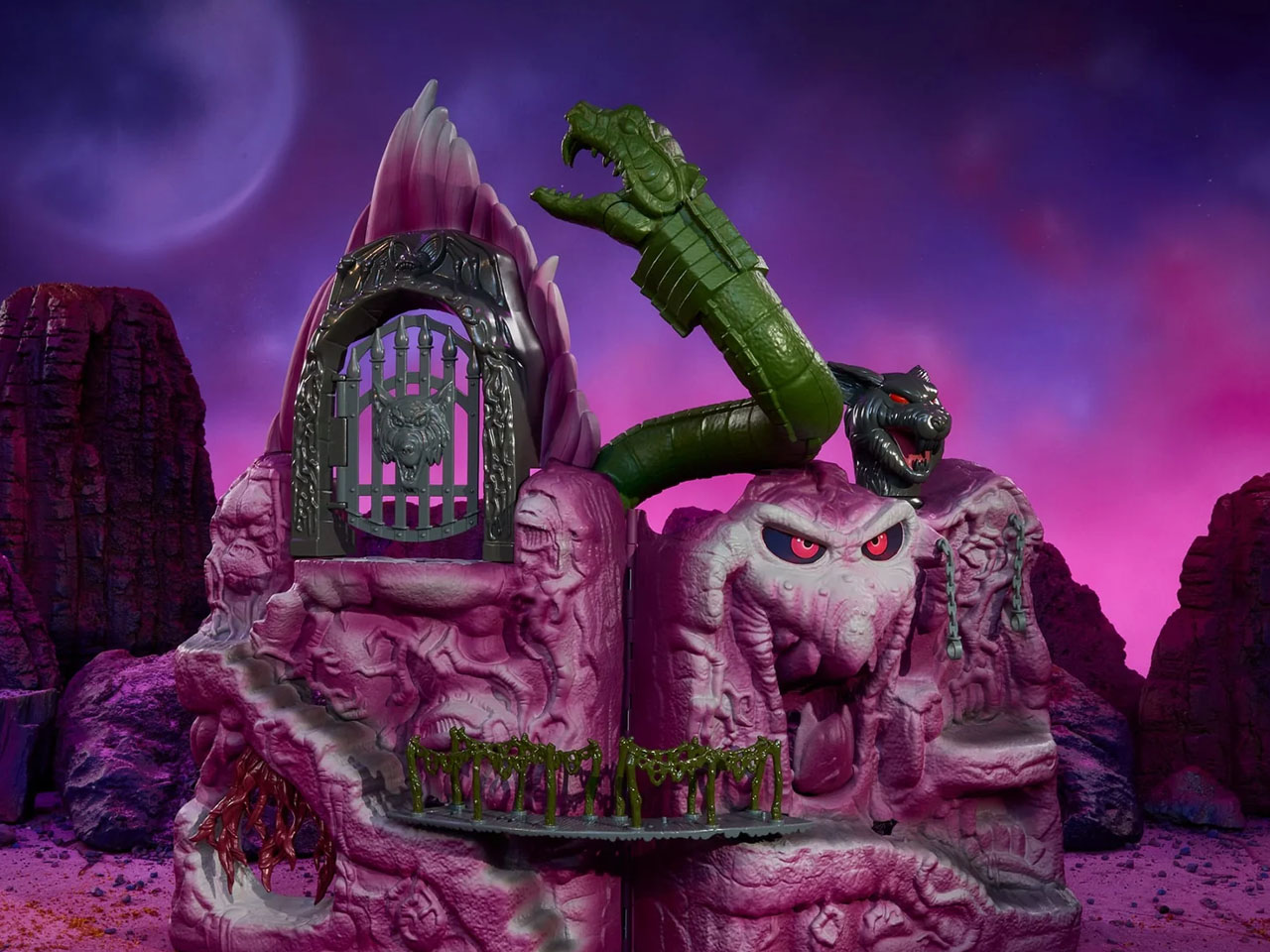
That is why so many collectors still remember them with such intensity. Castle Grayskull was not just where He-Man stood. The G.I. Joe Headquarters was not just a backdrop. The Ghostbusters Fire House was not just a building. The Technodrome was not just a big round bad-guy vehicle that looked like it had been designed by someone who deeply distrusted architecture
They were destinations
And when you were a kid, owning the destination felt different from owning the character
The USS Flagg playset from the G.I. Joe toy line
Playsets Were Where the Toy Line Became Real
The simplest way to understand the power of a playset is this: it made the toy line feel real
Not realistic. That is different. No one looked at Castle Grayskull and thought, “Yes, this is a sensible headquarters for the heroes.” The point was not realism. The point was presence
A playset gave the toy line a center of gravity. It gave the figures somewhere to go, something to defend, something to attack, something to escape from, something to fall into, and something to stand on when the bedroom floor needed a little more drama
That was especially important for action figure lines. Individual figures could be fun, but they could also float around without context. A hero, a villain, and a vehicle already created a play pattern. Add a playset, and suddenly the toys had a geography. There was an inside and an outside. A top and a bottom. A trap and an escape route. A control room. A jail cell. A garage. A command post. A place where the story could begin and end
That kind of structure mattered to kids because it made imagination easier to organize
The playset did not tell the whole story. It gave the story a stage
Scale Was Part of the Magic
One reason vintage playsets felt so big is that many of them were physically large enough to make a child feel like the toy line had crossed some invisible boundary
Figures were toys. Vehicles were toys. But a playset felt like furniture for the imagination
It took up space. It needed floor room. It had to be opened, assembled, folded out, carried, or negotiated with a parent who had already stepped on enough missiles for one lifetime. A good playset was not something you casually tossed into a bin. It had a footprint. It became part of the room while it was out
That footprint made the toy world feel more serious
When a child spread figures around a large playset, the scale did psychological work. The characters seemed to belong somewhere. The play pattern slowed down and expanded. Instead of one fight between two figures, there could be a siege, a rescue, a patrol, a trap, a prison break, an invasion, or the kind of complicated scenario that made sense only to the child narrating it under their breath
That is why playsets often felt larger than their actual plastic. They reorganized the room around themselves
The Best Playsets Had Jobs
A great playset did not just look like a place. It had jobs
It could trap figures. Launch figures. Hide figures. Store figures. Drop figures through floors. Raise elevators. Open doors. Fold into another shape. Reveal weapons. Hold vehicles. Display accessories. Create levels. Create danger. Create reasons for one character to be somewhere other than standing next to another character waiting to be punched
That is the difference between a backdrop and a playset
The best playsets were full of verbs. Open. Drop. Capture. Launch. Spin. Collapse. Hide. Escape. Transform. They gave kids actions to repeat and rearrange. Those actions became the rhythm of play
This is also why even simple features became memorable. A trap door did not have to be mechanically impressive to feel important. A cardboard wall did not have to be luxurious if it suggested a bigger environment. A jail cell did not need much engineering if it gave the villain somewhere to put the hero. Kids were very willing to do half the work themselves if the playset gave them the right invitation
That invitation was the magic
Playsets Made Collecting Feel Like World-Building
Action figure collecting often starts with characters, but playsets change the nature of the collection
Once a child had a headquarters or a base, every new figure had a role inside that world. The collection stopped being a lineup and became a population. Heroes needed somewhere to report. Villains needed somewhere to scheme. Vehicles needed somewhere to park, launch, crash, or threaten the structural integrity of the carpet
That is why playsets were such powerful retail objects. They made the rest of the line feel more necessary
A figure on its own could be a purchase. A figure connected to a playset became part of a system. The more figures you owned, the more alive the playset felt. The more vehicles you owned, the more important the base became. The more accessories you had, the more the entire thing looked like a world rather than a pile
That is toy-line psychology at its most effective
Buy the character, then want the vehicle. Buy the vehicle, then want the base. Buy the base, then realize the base looks underpopulated. Congratulations, the toy company has built a small plastic economy in your bedroom
Why Castles, Headquarters, and Lairs Worked So Well
The most memorable playsets often fell into a few basic categories: the hero base, the villain base, the mysterious castle, the city environment, the vehicle garage, the command center, and the trap-filled lair
Those categories worked because they were instantly understandable
A hero base meant safety, planning, and defense. A villain base meant danger, capture, and bad decisions made near glowing machinery. A castle meant mystery. A sewer meant secret movement. A firehouse meant the team had a job. A space station meant scale. A command center meant something important was happening even if the child had no idea what half the molded computer panels were supposed to do
Kids did not need an instruction manual for the emotional logic of these places
That is one reason playsets could cross genres so easily. Fantasy, science fiction, superheroes, military adventure, ghost comedy, mutant animals, and space opera all needed places. The details changed, but the psychology stayed the same. Give the characters a home, and the whole toy line feels more complete
Packaging Made Them Feel Even Bigger
Vintage playset packaging did a tremendous amount of work
The boxes were often huge compared to figure cards, and that size alone made them feel important. A playset box under a Christmas tree had a different gravitational pull than a blister card. It looked like an event. It looked like the sort of thing that might require floor space, adult assembly, and several warnings about not losing the small parts
The box art made the fantasy even larger
Painted action scenes, dramatic photography, callouts, feature panels, and cross-sell images all told kids that the playset was not just a hunk of plastic. It was the heart of the line. The packaging usually showed the playset fully alive: figures everywhere, vehicles nearby, traps in use, battles happening on multiple levels, and every feature presented as if the fate of the universe depended on whether one small plastic lever still worked
That was good selling
It was also good storytelling
Many children experienced the full fantasy of a playset before the box was ever opened. The packaging showed the ideal version: every figure, every accessory, every scene, every feature. The actual playset might be less crowded once it was on the bedroom floor, especially if the child only owned three figures and one of them was missing a hand weapon, but the box had already planted the bigger world in their head
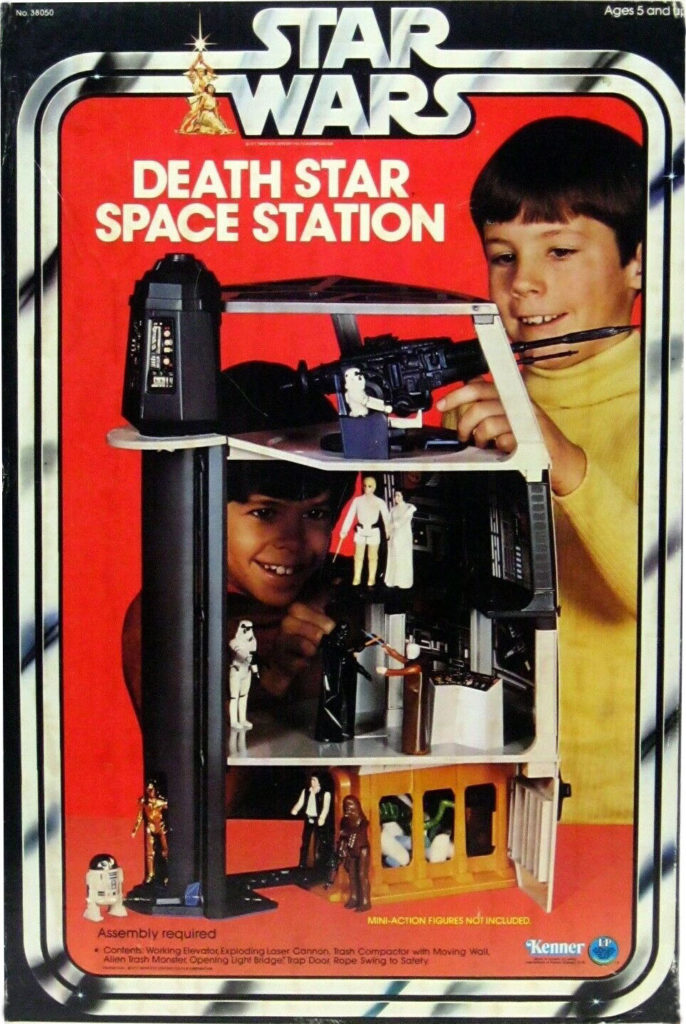
Death Star Space Station from the Star Wars toy line
Why Cardboard and Plastic Still Worked
Not every vintage playset was a towering monument of molded plastic
Some used cardboard backdrops, printed walls, stickers, ramps, clips, platforms, or simple fold-out structures. By modern collector standards, some of those materials can feel fragile or cheap. But for the original audience, they often worked perfectly well because the goal was not permanence. The goal was suggestion
A printed control panel was still a control panel. A cardboard wall still created a room. A sticker still made a blank surface look like machinery, stone, slime, metal, danger, or whatever else the toy line needed that day
That is something adult collectors sometimes understand better after years of chasing complete examples. The fragile parts were part of the original magic and part of the modern frustration. Cardboard inserts got bent. Stickers peeled. Clips snapped. Rails disappeared. Tiny accessories migrated to another dimension
But when they were new, those mixed materials allowed toy companies to make playsets feel larger, busier, and more visually specific without turning every release into a giant block of expensive plastic
They made the world affordable enough to exist
How Playsets Fit the 1980s Toy Aisle
The 1980s were a golden age for toy-line ecosystems
Action figure brands were not just trying to sell characters. They were trying to sell worlds. That meant figures, vehicles, creatures, roleplay items, cartoons, comics, weapons, carrying cases, and, if a line was strong enough, a playset that could become the center of the entire collection
Playsets were especially valuable because they gave a toy line visual dominance. A wall of carded figures could be impressive, but a large boxed playset looked like a serious commitment. It was the kind of item that anchored a shelf, filled catalog pages, dominated commercials, and became a birthday or holiday target
They also gave children something to aspire to
Most kids did not get every playset. That was part of their power. The big set could live in the imagination for months. You saw it in a catalog. You saw it in a commercial. You saw it on the back of a card. You saw another kid with it and immediately reevaluated the fairness of the universe
That longing became part of the memory
In some ways, the playsets people did not own can be just as emotionally powerful as the ones they did. Desire is a very durable collector foundation
Why Playsets Became Harder to Make Central
Playsets never disappeared, but they became harder to make central in the same way
There are practical reasons for that. Large playsets take shelf space. They take tooling money. They can be expensive to ship. They ask retailers to gamble on big boxes. They ask parents to pay more for something that may also need a lot of floor space at home
Changing play habits matter too. As video games, screens, and more fragmented entertainment options claimed more attention, the idea of a child spending hours building a physical world around figures had more competition. Toy companies still make playsets, but the retail math is different than it was when a major action figure line could expect a headquarters, a vehicle fleet, and multiple waves to work together on the shelf
Collector culture has also changed the equation. Some modern large-scale environments are aimed more at adult collectors than children, which changes the purpose. They can be gorgeous, detailed, and expensive, but they are often display pieces first. Vintage playsets were usually designed to be handled, opened, closed, slammed, stickered badly, and played with until some tiny critical part vanished forever
That difference matters
The old playsets felt big because they were built for play first, even when they looked great on a shelf
Why Collectors Still Care About Vintage Playsets
Collectors still care about vintage playsets because they represent the fullest version of a toy line’s promise
A figure can remind you of a character. A vehicle can remind you of a scene. A playset can remind you of an entire childhood afternoon
That is why complete playsets can be so compelling. They are not just harder to find because of size, breakage, stickers, cardboard, and missing parts. They are harder to find because they were often heavily used. Kids did not treat the big set like a collectible. They treated it like the main stage
That use leaves a mark
Yellowed plastic, worn stickers, missing railings, cracked hinges, bent cardboard, broken tabs, and incomplete accessory trees all tell the same story: this thing was played with. Maybe abused. Definitely loved. Possibly involved in a battle that made no narrative sense but lasted three hours
For collectors, restoring or completing a playset can feel different from completing a figure. It is not just about replacing a weapon. It is about putting a world back together
The Playset Was the Promise
The reason playsets used to feel so much bigger is that they carried more emotional weight than their physical dimensions
They were big, yes, but size was only part of it. They felt big because they gave the toy line a home. They turned characters into a cast. They turned vehicles into support pieces. They turned a bedroom floor into a battlefield, a sewer, a castle, a headquarters, a firehouse, a space station, or whatever impossible place the toy company had managed to fold into a box
That is why the best vintage playsets still matter
They were not just things you owned. They were places you entered
And for a kid, that difference was enormous
Further Retro Toy Box Reading
- Why Masters of the Universe Toys Became a Toy Aisle Powerhouse Again
- Why M.A.S.K. Toys Still Have One of the Best Gimmicks of the 1980s
- Why The Real Ghostbusters Toys Were Stranger Than the Cartoon
Image Suggestions
- Main image: A group of vintage toy playsets, such as castles, headquarters, lairs, or command centers. Alt text: Vintage toy playsets including castles headquarters and command centers
- Secondary image: Castle Grayskull or a fantasy-style action figure playset with figures arranged around it. Alt text: Vintage fantasy toy playset with action figures arranged around it
- Secondary image: A headquarters-style playset with multiple levels, ramps, or command areas. Alt text: Vintage action figure headquarters playset with multiple levels and accessories
- Secondary image: A boxed vintage playset showing dramatic packaging art and feature callouts. Alt text: Vintage toy playset box with dramatic artwork and feature callouts
- Secondary image: A partially complete vintage playset showing stickers, platforms, and small accessories. Alt text: Vintage toy playset with stickers platforms and small accessories
