

The Justice Society of America was the first superhero team, first coming together in All-Star Comics #3, released on November 22, 1940, just two years after Superman solidified the genre as a whole. The JSA would go on to define the Golden Age of heroism, and now stand as the grandfathers of DC’s superhero community, representing the era when costumed crime-fighters first picked up cape and cowl to protect the innocent from injustice. They literally wrote the book on what team-up comics would look like for years, with their shared adventures setting a standard that later teams, such as the Justice League and Avengers.
Videos by ComicBook.com
However, as much as the JSA contributed to the idea of superheroes working together in groups, it also opened a door that nobody acknowledges, but was just as important in the long run. The formation of the JSA marked the first inter-company crossover, as the characters actually came from two of the parent companies that would go on to one day form DC Comics. The JSA didn’t just establish that superheroes could work together across books, but that heroes could bridge company-wide chasms to fight crime together, and it’s them we have to thank for the golden age of crossovers we now live in.
All-American and National Allies Coming Together for the First Time
Back in the earliest days of superhero comic books, publishing houses were a lot smaller and much more numerous. Two of the biggest names in the industry were National Allied Publications and All-American Publications, which were leaps and bounds ahead of the competition. National Allied controlled the heaviest hitter in the game, Superman, and many other smaller heroes such as the Spectre, Doctor Fate, and the Sandman. All-American, meanwhile, had the original Flash, Green Lantern, Atom, Hawkman, and even Wonder Woman under its belt. Together, these are some of DC’s most foundational characters, but way back in the earliest days of the 1940s, they actually didn’t even exist in the same world.
Or, at least, they didn’t until All-Star Comics #3, which united many of these characters together in one super-team. This set a precedent not just for heroes coming together, but for companies working together to build one bigger universe, which would become a staple of the next several decades as DC Comics formed and grew, drawing other publishers under its umbrella. It established that the superhero world could always expand to include new members, priming fans to not just accept, but yearn for heroes from across the publishing pond to hop in and join in saving the day. From Captain Marvel to Captain Atom and Blue Beetle, tons of iconic DC heroes didn’t actually start in DC Comics. The JSA set the trend for these heroes joining teams to establish themselves as part of the universe, which most of the biggest names would go on to do, but that’s just looking at the heroes who stayed with DC permanently.
The New Age of Inter-Company Crossovers
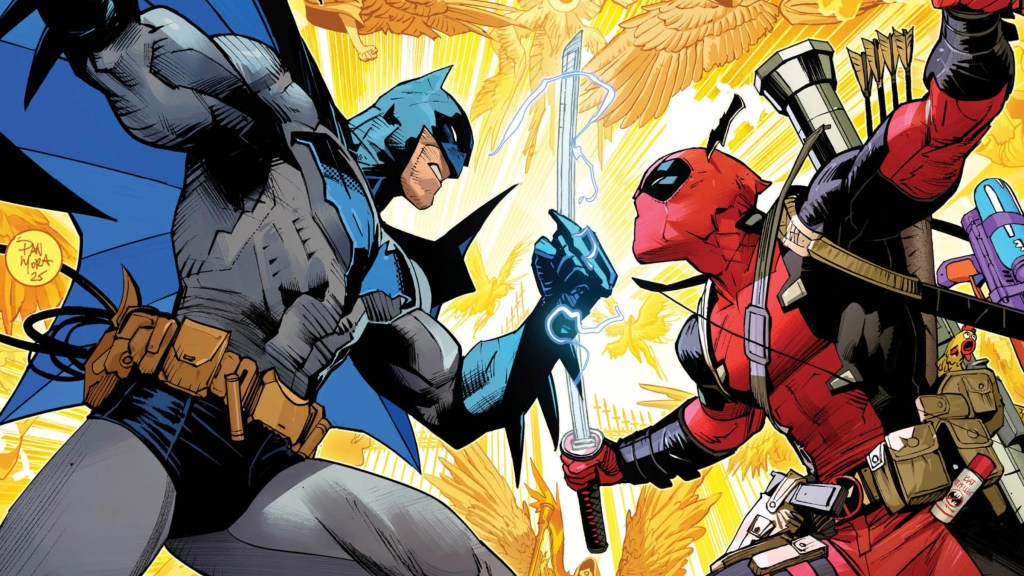
While many publishing houses rose and fell, the Big Two of DC and Marvel have long stood the test of time, folding others into them as they all but monopolized commercialized superherodom. They have often been painted as rivals, but that interpretation emerged mainly from fans until the early 2000s. Most of each company’s employees have worked at the other at one point or another, with generations of creatives forming the backbone of these different but similar universes. It was only natural that these companies would cross over. The first team-up across universes came about in Superman vs. The Amazing Spider-Man: The Battle of the Century, which released on January 2, 1976. It sparked a whole wave of other crossovers between the Big Two, creating fan-favorites and classics like JLA/Avengers and the Amalgam Universe.
However, the mid 2000s saw an end to this phenomenon and cooperation, with executives like Dan DiDio pushing the idea of a rivalry to draw lines in fans and cultivate a competitive following. The companies wouldn’t unite again until DiDio left DC, a twenty-one-year drought finally broken by Deadpool/Batman. Ever since, DC and Marvel have seen fit to publish even more crossovers, opening the doors to an infinite array of possibilities of seeing our favorite heroes fight crime together. We live in a renaissance of superhero crossovers, but it couldn’t have started at all without the JSA opening the doors. They defined what superheroes should look like on a massive scale, and they deserve all the credit they get and so much more.
What’s your favorite superhero crossover between two companies? Let us know in the comments below!
10 Toughest Members of the Justice Society, Ranked
More Comics
-
Image Courtesy of Marvel Comics Comics
1 day agoDaredevil Has Been Unmasked More Times Than You Can Count, and He’s Still Not Learning
-

Image Courtesy of Marvel Comics Comics
2 days agoSpider-Man’s Biggest Mistake Has Come Back to Haunt Him & It Could Kill the Most Important Person in His Life
-
Collectibles
2 days agoJust 50 Copies of Vampirella’s Debut Comic Exist in This Grade or Better, Making This Auction a Rare Opportunity
-
Image Courtesy of DC Comics Comics
2 days agoDC’s Next Great Superhero Could Come From Atlantis (But It’s Not Aquaman)
-
Image Courtesy of Marvel Comics Comics
2 days agoEmma Frost’s Darkest Secrets Are Coming Back to Haunt Her, and the X-Men May Never Recover
