

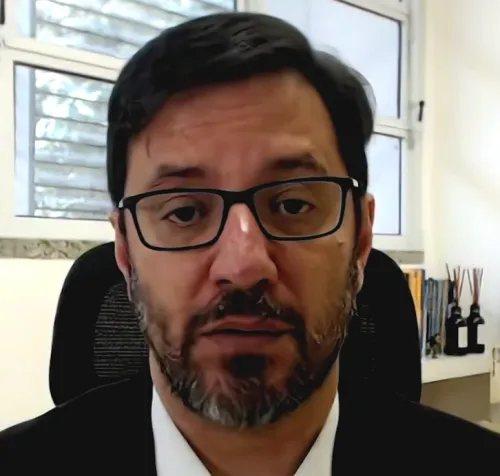
Feliciano de Sa Guimaraes, Associate Professor at Institute of International Relations of University of Sao Paulo: BRICS countries want their voice to be heard louder
Santosh Mehrotra, Human development economist: Creation of BRICS Pay needs to be accelerated
Oleg Kobyakov, Director of FAO Liaison Office to Russian Federation: Role of BRICS countries in global food production is steadily growing
Balthasar Staehelin, ICRC Representative: We see BRICS as a format for addressing global challenges
Founder of Eastern Nigerian International Film Festival Ujuaku Akukwe: “Film becomes more than entertainment”
In an exclusive interview with TV BRICS, the filmmaker spoke about the development of African cinema, the role of cultural heritage and opportunities for international cooperation in the film industry
The Eastern Nigeria International Film Festival is taking place for the seventh time in 2026. How has the festival evolved since its first edition in 2020, and what are its main ambitions today?
When we started ENIFF in 2020, the immediate need was visibility. We wanted to create a credible platform in Southeast Nigeria where filmmakers could show their work and feel that they did not always have to leave the region before their work could be taken seriously. Seven editions later, the ambition is much bigger.
Today, I see ENIFF not simply as a place where films are screened but as part of a creative ecosystem. The screening is important, but what happens around the screening matters just as much. Who does a young filmmaker meet? What do they learn? Can that conversation lead to a collaboration, a grant, a job, funding, a new film or access to another market? That is why our work has expanded into training, industry conversations, international partnerships, youth engagement, and opportunities that continue beyond the four days of the festival.
For me, the long-term ambition is to help build a stronger film and creative economy in the Southeast region that is connected to the rest of Nigeria, Africa, and the world. I want a young filmmaker in Enugu, Awka, Aba, Owerri or anywhere in this region to believe that being geographically outside Lagos does not mean being outside the industry. We are building from where we are, but we are not building only for where we are.
You have been working in the film industry for more than 16 years. Do you remember the moment when you first realised that you wanted to dedicate your life to filmmaking? What led you to that decision?
I don’t think there was one dramatic moment when I said, “This is what I will do for the rest of my life.” It was more gradual.
I grew up in a family where storytelling was simply part of life. My father told stories. My grandmother told stories. Stories were how we passed on memory, explained things, entertained ourselves and made sense of the people and world around us.
And I think that is true for many Africans. We communicate so much through stories. Before we ever called it filmmaking or content creation, stories were already carrying our history, humour, values, warnings, beliefs and experiences from one generation to the next.
What kept pulling me towards film was the power of taking that very natural way of communicating and giving it another form. I became fascinated by the fact that you could take something deeply personal, something from your family, or your culture, put it on a screen and suddenly someone thousands of kilometres away could recognise something of themselves in it.
As an Igbo woman and as a Nigerian, I was also very conscious of how much of our history, memory and everyday life can disappear when we do not document it ourselves.
So, over the years, filmmaking stopped being simply about making films for me. It became about whose stories survive, who gets to tell them and who gets access to the tools and platforms that allow those stories to travel.
That is also why my work eventually expanded beyond filmmaking into training, festival building, impact producing, and creating opportunities for young storytellers and other creatives. I have come to realise that making my own films is important, but helping to create an environment where many more people can tell their own stories can have an even greater impact.
Over time, I became increasingly interested not only in the story itself but also in what the story can do once it enters the world. Can it change a conversation? Can it help people see an issue differently? Can it influence policy, preserve memory or simply move someone to act?
This year’s festival focuses on African cinema, women’s experiences, social transformation, new media and artificial intelligence (AI). Why have you chosen these particular themes, and what do they reveal about the current priorities of African filmmakers?
Because these are not separate conversations anymore. An African filmmaker today is thinking about story, of course, but they are also thinking about funding, technology, distribution, ownership, gender, audiences and how their work survives in a rapidly changing media environment.
African cinema is also becoming much more confident about complexity. We are moving beyond the idea that there is one African story or even one Nigerian story. A woman in Enugu, a filmmaker in Nairobi and a young creator in Johannesburg may all be African, but their experiences, languages and perspectives are different. Our cinema should have room for all of that. Women’s experiences remain important because women have always been central to our communities, but they have not always had equal power in deciding which stories are financed, produced, distributed, or remembered.
Social transformation matters because film does not exist outside society. The films we make respond to migration, unemployment, identity, politics, gender, climate, technology, family, and changing cultural values.
Then you have new media and artificial intelligence changing both how stories are made and how people discover them. So, for me, these themes reflect the real question facing African filmmakers now: how do we use all the tools becoming available to us without losing ownership of our stories and our cultures?
Your films explore Igbo culture and the relationship between tradition and modernity. How can filmmakers preserve cultural heritage while showing the changes taking place in contemporary African societies?
I don’t believe preserving culture means freezing it. Culture has never been static. Our parents lived differently from their parents, and our children will live differently from us. The responsibility of the filmmaker is not to pretend those changes are not happening.
For me, preservation begins with truth. If I am telling an Igbo story, I am interested in the language, the worldview, the humour, the family structures, the rituals, the spirituality, the food, the music and all the small details that make that world recognisable. But I am equally interested in what happens when that world meets migration, technology,urbanisation, social media or a younger generation asking different questions. That tension is not a threat to culture. It is part of the culture.
One mistake we sometimes make in “African” storytelling is thinking that cultural authenticity requires us to present Africa as it existed fifty or one hundred years ago. A young woman speaking Igbo while running a technology company in Enugu is also part of Igbo culture today.
Our job is to document both memory and movement. If we do that well, film becomes more than entertainment. It becomes an archive of who we were, who we are and who we are becoming.
ENIFF 2026 places particular emphasis on artificial intelligence and new media. How do you see AI changing African filmmaking? Could it make film production more accessible to independent filmmakers?
Absolutely, but I think we have to approach AI with both excitement and caution.
For an independent Nigerian filmmaker, some of these tools can remove barriers that have existed for years. A filmmaker with limited reion, subtitling, pre-visualisation, marketing, audience analysis and many other parts of the production process
That matters enormously on a continent where access to capital remains one of the biggest challenges for filmmakers. But accessibility should not become exploitation. We have to ask difficult questions about copyright, consent, employment, cultural ownership and the material on which these systems are trained.
We must think about ownership. If African stories, languages, images, music, and cultural knowledge are being used to train or improve these technologies, then African creators and communities should not be left out of the benefits.
There is also another issue that concerns me: representation. If the data shaping these technologies does not adequately understand Africa, then the technology can reproduce stereotypes or simply misunderstand us.
So I don’t see AI as replacing the African filmmaker. I see it as another tool. The filmmaker still needs imagination, judgement, cultural understanding, nuances and something meaningful to say. Technology can reduce the distance between an idea and its execution, but it cannot decide why the story deserves to exist.
Our challenge in Africa is to become users, builders, and owners of this technology, not simply consumers of whatever arrives from somewhere else.
Which forms of international cooperation, in your opinion, offer the greatest opportunities for African filmmakers: co-productions, festival exchanges, professional training, or partnerships between film schools?
I would actually say we need all four, but they solve different problems.
Training gives people skills. Festival exchange gives films visibility and filmmakers networks. Film-school partnerships can build knowledge over a longer period. Co-production can open access to finance, technology, talent and markets.
But for me, the most valuable international cooperation is cooperation that leaves something behind. I am less interested in a partnership where somebody flies into Africa, conducts a workshop and leaves, and everybody takes photographs. What happens six months later?
This could include filmmakers developing projects with international producers, students in Enugu collaborating with students in other countries, films reaching new audiences through festival exchanges and African creators gaining access to international markets. Above all, cooperation must be reciprocal.
International cooperation should not always mean Africa receiving knowledge from somewhere else. Nigeria has one of the world’s most remarkable filmmaking cultures. We are doggedly brilliant. Nollywood is proof of that. We built an industry under conditions that many established film industries would have considered impossible, often with limited resources, weak infrastructure and very little institutional support. That ingenuity is one of our greatest strengths. We know how to make something out of very little, how to adapt quickly and how to keep creating even when the system around us is not built to make the work easy. There is knowledge here too. The best partnerships recognise that and create a genuine exchange between equals.
Beyond entertainment, can cinema contribute to economic development by creating jobs, promoting tourism and supporting local creative industries? What examples have you seen in Nigeria?
Very much so. One of the things I constantly try to communicate is that when you finance a film, you are not financing only the director and the actors.
You are paying a cinematographer, an editor, a sound person, a costume designer, a makeup artist, a production assistant, a driver, a caterer, a location manager and many other people.
Then look beyond the set. A production needs accommodation. People eat in restaurants. They use transportation, buy fabric, rent equipment, build sets, and hire security. They sometimes employ local artisans and businesses. That is an economic chain.
Nigeria already demonstrates this through Nollywood. The industry has created entire professions and businesses around production, exhibition, distribution, fashion, music, and digital media.
I also think we have barely scratched the surface of film tourism in Nigeria. Imagine what happens when audiences repeatedly see Enugu, Cross River, Lagos, and Kano presented beautifully on screen. Locations become part of cultural memory. People become curious about the food, language, history and places behind the films. This is why I believe government should stop looking at film only as entertainment.
Film is culture, but it is also employment, tourism, intellectual property, technology, small-business development, and international image. It is soft power. When a country understands that, investment in cinema stops looking like support for artists and starts looking like economic strategy.
What opportunities do you see for stronger cooperation between Nigerian filmmakers and media organisations, universities, and film festivals in other BRICS countries?
There is enormous potential, particularly if we move beyond simply showing one another’s films.
The first opportunity is circulation. One of the biggest problems African filmmakers face is that a film can be successful at home and still struggle to reach audiences in other parts of the world. Media organisations and festival networks can help create new routes for Nigerian films into markets across the Global South, while Nigerian audiences also gain greater access to films from those countries.
The second is co-production. Nigeria has stories, talent, locations and an enormous production culture. Other countries bring different strengths in technology, financing, infrastructure, animation, distribution, or technical training. There is no reason those strengths cannot meet around projects that are genuinely shared.
Universities are another important part of this. I would like to see more student exchanges, joint research, collaborative productions, visiting lecturers and stronger relationships between film schools and creative-technology programmes. I am especially interested in transnational cinema because it allows filmmakers and students to learn across borders without losing the specificity of where they come from. I have seen that firsthand through the Transnational Cinema Week collaboration involving LP House of Creatives in Nigeria, Bournemouth University in the UK and Film University Babelsberg KONRAD WOLF in Germany. In June 2026, that collaboration took us to Sheffield DocFest, where three emerging Nigerian filmmakers participated in the programme and I chaired a conversation titled “Letter Across the Channel: Five Years of Transnational Filmmaking and Education.” For me, that experience showed what international cooperation can look like when it is built around real exchange. Nigerian filmmakers were not simply being invited to observe. They were part of the conversation, bringing their own experiences, stories and perspectives into a space shared with filmmakers and educators from other countries. The future of filmmaking increasingly lies at the intersection of cinema, technology, gaming, animation, and new media, so universities should be part of that conversation.
Festivals can also become much more deliberate about exchange. It should go beyond simply saying, “Send us a film.” We should be creating reciprocal showcases, filmmaker residencies, labs, jury exchanges, collaborative learning programmes and spaces where producers can actually meet and develop projects together. For me, that is where international cooperation becomes meaningful. It is not just about visibility. It is about access, relationships, knowledge exchange, and creating pathways that continue after the festival or programme has ended.
And finally, media cooperation matters because whoever controls distribution also influences what the world knows about us.
For too long, African countries have often encountered one another through media produced somewhere else. I think there is a real opportunity for Nigeria and other countries across the Global South to communicate more directly with one another.
For me, that is the most exciting possibility: not replacing one centre of cultural influence with another, but creating many more routes through which our stories can travel.

Russian President’s Special Representative for International Cultural Cooperation, Mikhail Shvydkoy: “Each of BRICS countries represents its own culture”
TV BRICS to further develop communication between regions of BRICS+ countries
Russia announces results of “Golden Tower” International Film Festival
Winners of International Film Festival “Crossroads of Civilisations” were announced in four categories
International Children’s Film Festival concludes in China
Russian theatres and museums present their projects in Thailand

ASEAN countries agree to establish centre for extraction and processing of critical minerals
This cooperation will help to develop production, strengthen supply chains and support the transition…

Brazil prepares for 6G with focus on digital inclusion
One of the priorities will be to expand mobile coverage on motorways

China tests new 19-passenger electric aeroplane
It took to the skies for the first time with pilots on board in the city of Binzhou, Shandong Province…

Trade between India and Thailand increases by 12.6% over one year
Representatives from both countries discussed how to streamline the flow of goods, attract more…

South African President Cyril Ramaphosa celebrates 74th birthday
Throughout the year, Ramaphosa has strengthened South Africa’s international partnerships and…

Food production grows in Russia
The strongest growth was recorded in the oil and fat and dairy industries, as well as in the…
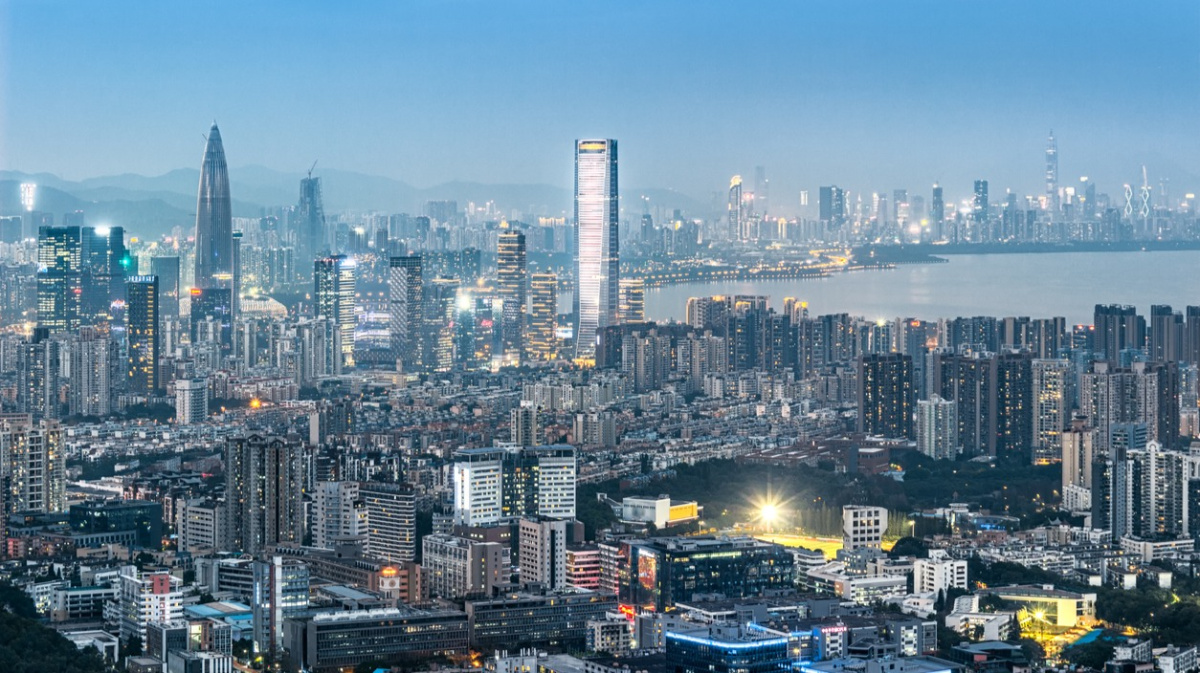
China to showcase achievements in high-tech trade at APEC summit in Shenzhen
China will host the organisation’s flagship event for the first time in 12 years

India and Egypt intend to increase trade turnover to US$12 billion
The parties will set up a working group to examine the terms of a possible preferential trade…

Hector Kenneth Kumar, Executive Editor of ANI: “It is very important for us to be part of …
In an exclusive interview with TV BRICS, the executive editor discusses the evolution of international…

Trade between Central Asian and Gulf countries to grow by further US$4.9 billion by 2030
The EAEU–UAE agreement simplifies the export of goods

Russian scientists create maps to locate deposits of gold, uranium and other metals
A new methodology has made it possible to identify promising areas for geological exploration…

BRICS leaders’ initiative on sports cooperation to advance through new international television…
The new series will introduce viewers to the history and distinctive features of the sporting…

China builds world’s largest renewable energy system
The country accounts for 60.1 per cent of installed renewable energy capacity and 63.6 per cent…

Indonesia to expand area of marine protected areas to 97.5 million hectares

Thailand increases rice exports to ASEAN by 109% over nine months
Malaysia and the Philippines have become key export destinations

Zimbabwe’s aquaculture sector generates US$3.6 million in annual economic benefits
An international development programme has supported more than 4,200 fish farmers and increased…

Tunisia steps up wind energy development to reach 35% renewable electricity by 2030
The country is focusing on improving infrastructure, land-use planning and regulatory procedures…

Abou Dhabi begins using new method for detecting food intolerances
The technology allows the reaction of small intestine cells to food to be monitored directly…

Kyrgyzstan’s GDP grows by 10.8% in first nine months of 2026
Growth in goods-producing industries reached 18 per cent in the first nine months of 2026

Iran proposes to Uzbekistan and Turkmenistan that they expand railway cooperation
The countries intend to simplify the transit of goods and develop trade links

BRICS brings new opportunities for trade and investment cooperation to UAE
Participation in the group helps the Emirates to develop business ties and identify new avenues…

Brazilian researchers identify eight exoplanets with potential to host liquid water
The study analysed more than 6,000 planets beyond the Solar System, with GJ 1002b showing 98…

Technology Olympics 2026 uncovers new talent in Iran
The event brought together engineers, programmers and young researchers from around the world…

“One Belt, One Road” and BRICS: points of convergence between two initiatives
Why is the interaction between two independent platforms – BRICS and the “One Belt, One Road”…

UAE and China to establish smart transport centre
It will serve as a permanent platform for developing cooperation between the two countries

Trade between Kyrgyzstan and Russia reaches US$3 billion in 2026
According to President Sadyr Japarov, Russia remains one of the largest investors in Kyrgyzstan’s…

Expert: Belarus ranks among top 10 countries for production of synthetic diamonds
Diamonds in Belarus are made from natural and synthetic diamonds

OSC Secretary-General: COP32 in Ethiopia to serve as platform for Global South to coordinate th…
Countries intend to broaden the climate agenda through cooperation in the extraction and processing…

China successfully tests world’s first flying wind turbine
The turbine is designed for densely populated regions

Brazil to expand use of solar energy in Amazon
The programme aims to reduce greenhouse gas emissions and the reliance of certain communities…

Daniel Francisco Chapo
Mozambican President
“We have excellent relations with Brazil, Russia, India and China, as well as with our neighbour, South Africa“- Vladimir Putin
Russian President
“Construction of the Bushehr Nuclear Power Plant continues. We are also cooperating in the humanitarian sphere; the number of Iranian students studying at our universities, for example, has reached about 10,000. In late September and early October, a series of vibrant events was held in various Russian cities as part of the Iranian Culture Festival – namely, in Moscow, Kazan and Astrakhan“ 
Abdel Fattah El-Sisi
Egyptian President
“Today, we are striving to strengthen Russia-Egypt strategic partnership and hope to expand cooperation between our countries across various sectors – primarily in the economy and trade, as well as in areas related to grain supplies, which are of great importance to our nation“- Andrey Denisov
Chairman of the Federation Council Committee on Foreign Affairs
“Today, BRICS is not simply a dialogue platform for member countries but a genuine mechanism for coordinating positions on sustainable development and reforming global financial and economic institutions“
TV BRICS to further develop communication between regions of BRICS+ countries
The media network has begun a partnership with the Brazilian educational television channel …
BRICS leaders’ initiative on sports cooperation to advance through new international television project TV BRICS
The new series will introduce viewers to the history and distinctive features of the sporting…
Russia and Africa develop business communications within TV BRICS media space
TV BRICS will provide information support to the development of Russian-African business ties…
Founder of Eastern Nigerian International Film Festival Ujuaku Akukwe: “Film becomes more than entertainment”
In an exclusive interview with TV BRICS, the filmmaker spoke about the development of African…
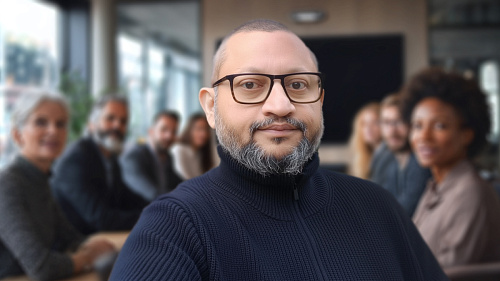
Hector Kenneth Kumar, Executive Editor of ANI: “It is very important for us to be part of Eurasian information space”
In an exclusive interview with TV BRICS, the executive editor discusses the evolution of international…

“One Belt, One Road” and BRICS: points of convergence between two initiatives
Why is the interaction between two independent platforms – BRICS and the “One Belt, One Road”…
BRICS countries call for expansion of climate finance
Representatives of the group also proposed expanding developing countries’ access to financial…
Ethiopia increases coffee export revenue by 15%
The country earned US$878.52 million from coffee exports in the first three months of the fiscal…
Russia increases plant-based drink exports by 16% in first nine months
Kazakhstan to be the largest importer in 2026

