

The mid-2000s saw the rise of HD gaming on flat panel displays. In the realm of home consoles, the PlayStation 3 was Sony’s first HDMI-compatible system, and it took tremendous advantage of the leap from low-resolution standard-definition gaming to full HD, up to 1080p (though many games ran at just 720p or even lower).
The transition from the PS2 era to the PS3 years was massive. Visuals could be more detailed than ever, and engines like Unreal 3 were revolutionary . On the other hand, the PS3’s CELL architecture was infamously difficult to work with. However, for the development studios that managed to unlock its full potential, they were able to produce some truly incredible-looking games that pushed the system to its limits.
Let’s take a fond look back on the PlayStation 3 and some of its most visually-impressive games. These titles would have been simply impossible to realize on older generations of hardware, and they all still look amazing today. Here are five PS3 games with great graphics that were absolutely gorgeous in their time and still look excellent now.
Uncharted 3: Drake’s Deception
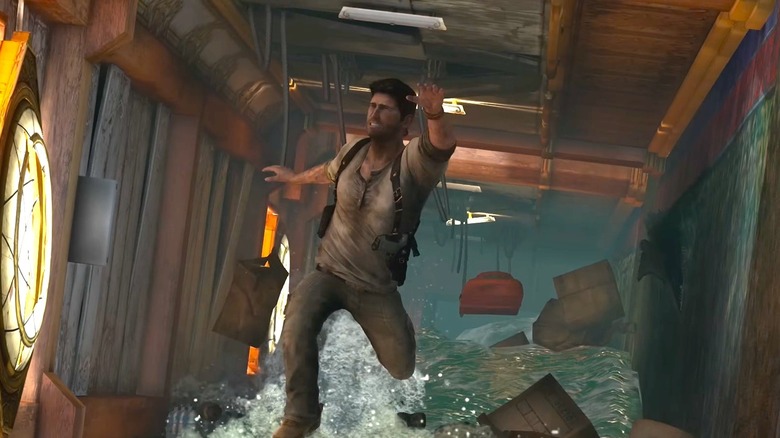
The original “Uncharted” was the innovator, and “Uncharted 2” perfected the formula, but “Uncharted 3” was Naughty Dog’s victory lap, a display of their prowess as masters of the PlayStation 3 hardware.
“Uncharted 3” features levels set across a variety of settings, including a French jungle, an Arabian desert, and even a cruise ship during a raging storm, just to name the more notable locations. The desert levels utilize advanced particle physics for sand simulation that goes above and beyond what “Uncharted 2” achieved with snow effects, and the French levels feature Nate and his pal, Sully, being attacked by a swarm of spiders, all of which are rendered in real-time.
But the real showpiece in “Uncharted 3” is the cruise ship level. In order to achieve the realism of fighting bad guys on a boat in turbulent waters, the whole ship itself is placed in a water simulation, with real-time waves rocking the boat and making the level feel different every time you play. Physics-based objects, including dead enemy bodies, skitter across the deck with every wave. It’s a wonderful flex of the PS3’s hardware and a testament to what a gifted studio like Naughty Dog could achieve on Sony’s most ambitious gaming machine.
MotorStorm: Pacific Rift
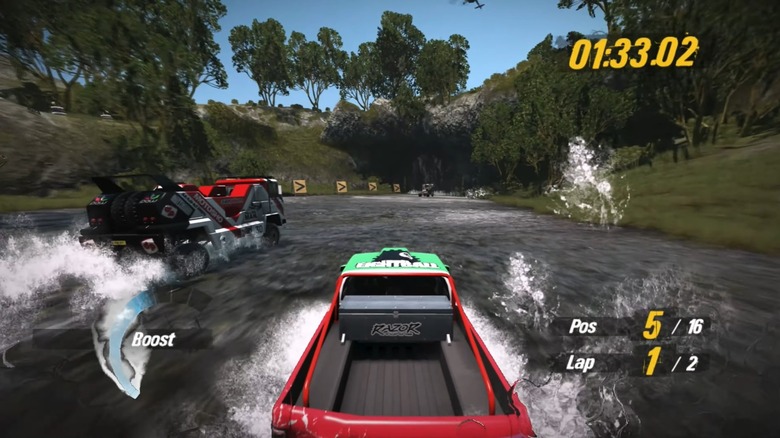
Racing cars is fun, but these days, it seems like racing games are more about speed and exploration than arcade action. If you want a game that captures the childhood joy of smashing Hot Wheels cars together, I recommend 2008’s “MotorStorm: Pacific Rift.”
Set in a sunny Pacific island, “Pacific Rift” is not a conventional racing game. Like in its predecessor, 2006’s “MotorStorm,” you can drive a wide variety of vehicles, from zippy motorcycles to mighty big rigs and everything in between. Tracks are wide and contain many paths that intersect. If you’re in a motorcycle or ATV, you can slip through tight corridors where massive trucks can’t fit, but if you’re in a bigger vehicle, you can give and take a ton of damage without losing control. The result is chaotic, strategic, and so much fun.
“MotorStorm: Pacific Rift” is a visual spectacle unlike anything else before or since. When the environment gets smashed up during a race, the debris stays on the track on subsequent laps. When you inevitably crash, you don’t just get some smoke on the engine block; your vehicle gets smashed to pieces and your driver can be thrown around like just another physics object. It’s bone-crunching, wince-inducing, and absolutely delightful. If you like “Pacific Rift,” there was a sequel, “MotorStorm: Apocalypse,” though its dilapidated urban hellscape setting is less colorful and inviting than the island paradise of “Pacific Rift.”
John Woo Presents: Stranglehold
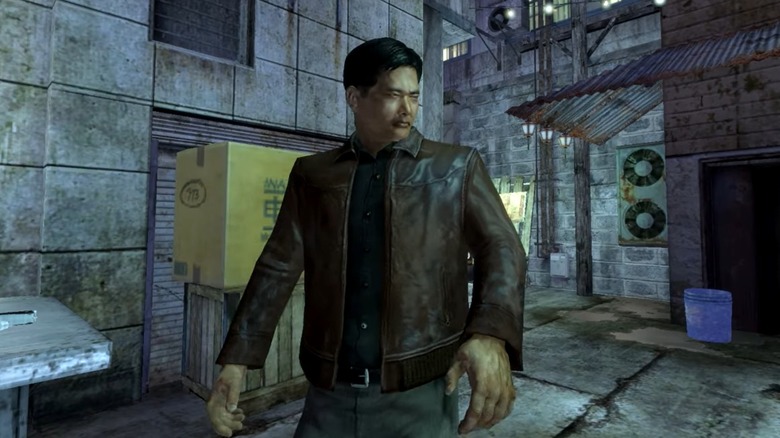
At a glance, “John Woo Presents: Stranglehold” isn’t much to look at. The character models are blocky, the color palette is kind of drab, and the framerate is nothing to write home about. But when you’re playing, something magical just clicks. Nearly every object in the world can be broken apart by gunfire, and enemies go flying in glorious ragdoll physics. When you shoot someone with a video game shotgun, you want them to practically go into orbit, and “Stranglehold” is all too happy to make your most violent daydreams come true.
“Stranglehold” is a great example of how ‘base’ visuals are one thing, but interactivity can be a literal game-changer. “Stranglehold” is a good shooter, but its visuals elevate it to legendary status. There’s nothing like diving through the air in slow-motion and blasting a bad guy, with stray bullets causing nearby objects to break apart. Meanwhile, the unlucky thug gets propelled into more breakable objects in a glorious display of video game physics and particle effects.
The legend goes that a sequel to “Stranglehold” was in development that would have featured co-op gameplay with none other than Vin Diesel as the Player 2 character, potentially reprising his role from the video game “Wheelman,” but alas, it was cancelled.
God of War: Ascension
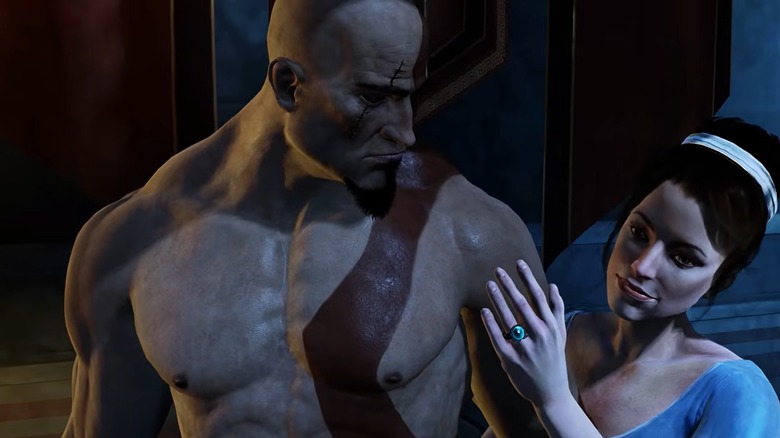
After “God of War III” showed off the incredible power of the PS3, while ending the series on a high note, developer Santa Monica Studio decided that they could make one more adventure featuring Kratos. Unfortunately, “God of War: Ascension” is widely regarded as one of the weaker entries in the series. As a prequel, it carries little narrative weight while also offering a less interesting story than the PSP game, “Chains of Olympus,” which was also a prequel following Kratos as a human before the events of the original “God of War.”
However, “God of War: Ascension” had a secret weapon in the form of its awe-inspiring visuals. The game is based on the same tech as “God of War III,” but it has even more ambitious levels and setpiece moments. While the story and overall gameplay of “Ascension” may be somewhat forgettable compared to other games in the series, the game has moments that are unforgettable and make you feel like your PS3 might spontaneously combust.
As impressive as the giant World Snake is in the 2018 “God of War” revival, it can’t hold a candle to the grandeur of the mechanical snake featured in “Ascension.” This PS3 swan song also dares to play around more with the dynamic camera, bringing it in closer than it ever dared in previous titles, while still boldly zooming out to highlight massive spectacle moments. Overall, while the formula may have been tired by the time of “Ascension’s” release in 2013, if you ever want to go back to play an old-school, “Greek-style” “God of War” game from before the series’ transformation into the Norse era, “Ascension” will more than suffice.
Max Payne 3
Before Rockstar went all-in on “Grand Theft Auto” and “Red Dead Redemption,” they used to have a more diverse portfolio. Games like “Smuggler’s Run,” “Midnight Club,” and “Bully” all have their dedicated fandoms, but there will always be a special place in my heart for the “Max Payne” games. There have been many “Max Payne” imitators, but none have captured the essence of the medium-defining trilogy. Initially only published by Rockstar, with development handled by the Finnish studio, Remedy, 2012’s “Max Payne 3” was handled internally at Rockstar.
Like few other games before or since, “Max Payne 3” feels like you’re playing through a hard-boiled action movie. The performances are incredible, and the whole game rests on the shoulders of the legendary James McCaffrey, who tragically passed away in 2023. He embodies Max in a way few actors embody their characters in any medium, and this is in a video game from 2012.
“Max Payne 3” makes tremendous use of the Euphoria physics engine from “Grand Theft Auto IV” and “Star Wars: The Force Unleashed” to allow enemies to react realistically to being shot. Max’s signature ‘shootdodge’ maneuver also benefits from this system, making shootouts feel tremendously stylish and believable. Not to be morbid, but the blood that spurts from gory entry and exit wounds is a dramatic sight to behold, and you can even continue pumping bullets into falling enemies during slow-mo ‘kill-cam’ sequences that signify the end of a gunfight. Overall, “Max Payne 3” isn’t just one of the greatest and most cinematic video games of all time, it’s also one heck of a looker.

1 Comment
Pingback: Josh Hartnett's Forgotten Comic Book Movies Are Better Roles For Him Than the Superheroes He Turned Down - Comic Vibe