

Nadia KhomamiArts and culture correspondent
The imprisonment of Russell Brand and allegations against David Walliams have prompted scrutiny of a culture that encouraged male transgression
In a 2008 episode of BBC Two’s comedy panel show Never Mind the Buzzcocks, the choreographer Arlene Phillips – the only woman on the programme – was told by the host Simon Amstell: “You look like you run a good whore house.” In reply, Phillips told a story with what appeared to be faux sincerity: while working with big stars, she explained, she would sometimes be asked to find dancers with “very special abilities” who might want to party after filming. Another panellist, the TV presenter Dermot O’Leary, mimed picking up a phone and said: “When you’re dancing tonight, do you mind having sex afterwards?” Everyone laughed.
Russell Brand’s imprisonment for rape and sexual assault this week, and allegations of sexual misconduct against the comedian and children’s authorDavid Walliams have prompted scrutiny not only of the men involved, but of those who appeared to enable them. The chatshow host Jonathan Ross has apologised for a 2004 joke, in which he described the 15-year-old British comedy awards as being “like most 15-year-olds: drunk, unpredictable and probably going home with David Walliams”. The latter has denied the allegations made against him in reporting by the Guardian and ITV News, but is now the focus of an investigation by the Met police on separate sexual misconduct claims.
On the face of it, Phillips’s story had nothing to do with Brand or Walliams.But as clips like this have resurfaced they have been viewed in a different light. Were they simply jokes, or symptomatic of a wider culture in which women’s bodies and sexuality were routinely used as entertainment? Were they merely knockabout fun, or did they stand alongside the ubiquity of topless models on Page 3 of tabloid newspapers and so-called “lads’ mags”, which mixed lifestyle and often tasteless humour with overtly sexual images as a backdrop to something darker? Did the atmosphere of the time make more serious misconduct easier to overlook?
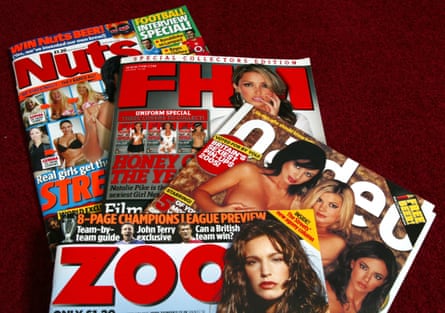
“The popular culture of the 2000s was profoundly, openly, cheerfully horrible to women,” said Sophie Gilbert, the author of Girl on Girl: How Pop Culture Turned a Generation of Women Against Themselves. “The shift from third-wave feminism to postfeminism during the 1990s enabled an environment where women were supposed to own their own objectification – to enjoy it and profit from it, and never complain.”
Gilbert cited Geri Halliwell and Kylie Minogue kissing on the chaotic entertainment show TFI Friday as a “surprise” for host Chris Evans, and Victoria Beckham being asked to step on a scale weeks after giving birth.
Throughout the late 90s and 00s, young female celebrities were relentlessly pursued by paparazzi, subjected to scrutiny over their weight and photographed in compromising situations. Upskirt pictures were published in magazines. In 2004, the highly successful celebrity magazine Heat devoted an entire special to celebrity cellulite, circling supposedly offending patches of skin on the legs of women including Beyoncé and former EastEnders star Martine McCutcheon.
When the singer Charlotte Church was 15, a website ran a countdown to her 16th birthday, when she would reach the age of consent – which was reported by the Sun. The Radio 1 presenter Chris Moyles, then 28, spoke on air about wanting to take Church’s virginity when she turned 16. Similar countdowns targeted other young celebrities, including Harry Potter star Emma Watson.
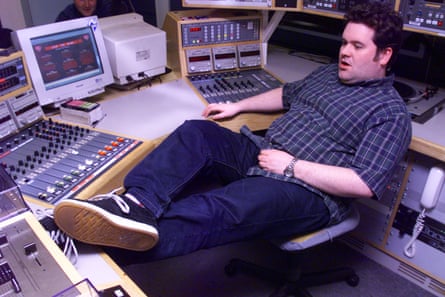
“I was made into this caricature: sexualised, patronised, ridiculed,” Church recently reflected. “I feel my character, the narrative of who I was in the world, was taken from me, and made into something salacious, or something to be ridiculed.”
Britney Spears faced similarly intrusive scrutiny as a teenager. In her memoir, The Woman in Me, she recalled reporters asking whether her breasts were real and “whether or not my hymen was intact”.
Ben Widdicombe, a former New York gossip columnist who examined the era in his memoir, Gatecrasher, recalled how the aftermath of 9/11 created an appetite for frivolous celebrity coverage; a phenomenon felt far beyond the US. “I saw an insatiable hunger for light, ‘sexy’ stories. This elevated a generation of young starlets into ‘pop icons’. However, the cruel logic of the tabloids is that they build you up only to knock you down,” he said.
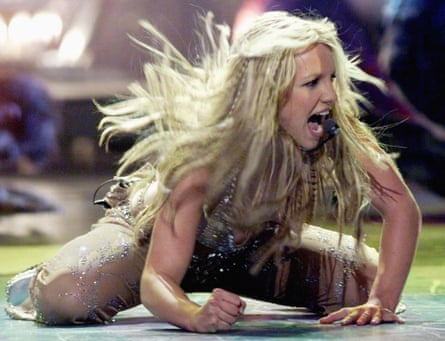
The treatment of Spears particularly troubled him. “I genuinely feared that we were going to hound Britney to her death.” But, he said, audiences shared responsibility: “There’s no media without an audience – the public was baying for Britney to be humiliated, and the tabloids obliged.”
Of course, the era’s misogyny did not go completely unchallenged. Many women objected, but their voices were often drowned out by the all-powerful entertainment industry.
“It was only acceptable to the men who were being loud and dominating TV,” said the comedian Jo Caulfield. “As a woman who was around then, it wasn’t acceptable then or now. They did and still do protect the stars.”
Anna Tippett, an academic who specialises in the sexualisation of popular culture, said the idea that it was simply “a different time” overlooked the women who were actively challenging the culture. In a 2012 survey, Tippett found that 57.8% of respondents classified lads’ magazines as “soft pornography”, despite their mainstream acceptance. “Women who objected risked being labelled prudish, humourless or outdated,” she said. “There was considerable pressure either to appear ‘in on the joke’ or to remain silent.” Perhaps Phillips’s anecdote should be understood in that light.
Nowhere was that dynamic more visible than in comedy, an industry that blurred the line between provocation and intimidation. Brand’s public persona, and vast success, was built around sexual excess and outrageous stories about women.
“This was the nature of his appeal,” Gilbert said. “If TV and radio bosses didn’t want to call him out for his behaviour, it was because they knew his transgressions were what made him popular.”
In 2007, a 21-year-old Lily Allen appeared on Channel 4’s The Big Fat Quiz of the Year; again the only woman on the panel.
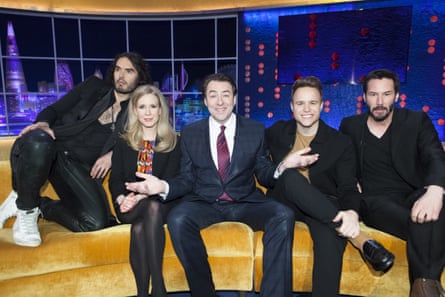
In another resurfaced clip, Ross suggested moving her away from Brand and the comedian and now Great British Bake Off presenter Noel Fielding so that she might “go home with her dress still on”. “How dare you? We’re not rapists,” Fielding said. “What if, horror of horrors, he ain’t even done a rape? You could ruin his reputation,” Brand quipped.
Even Allen laughed. But rewatching the footage years later made her uncomfortable, she said in 2023. “In retrospect, that’s really horrendous. I don’t think I felt that at the time, because it was the culture.”
During live performances of the TV sketch show Little Britain, Walliams played Des Kaye, a former children’s entertainer and sex offender who pulled down audience members’ trousers on stage and attempted to kiss them.
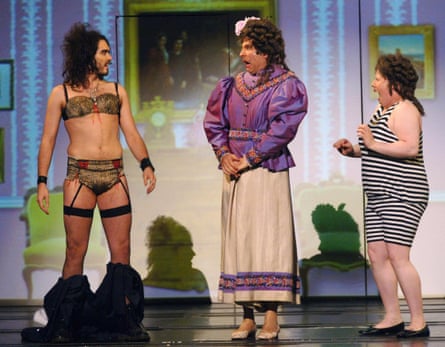
In 2008, the journalist Mary O’Hara described how comic Johnny Vegas had brought a young woman on stage at a London gig, where he groped her and repeatedly pulled up her skirt as she tried to cover herself. “Most disturbing, perhaps, was that around half the audience seemed to find this really funny,” she wrote. In a complaint about O’Hara’s article at the time, Vegas’s solicitors said that the young woman from the audience had told them she went along with the joke willingly and did not feel intimidated, scared or abused. His representatives have been contacted for comment for this article.
“I can’t tell you how toxic that culture was back then,” said the comedian Josie Long, who had her own backstage encounter with Brand.
“He would bite my face and I would tell him I didn’t like it and he would chase me around,” she recalled this week. “I would giggle because I was 22 and it was overwhelming.” Looking back, she said, she understood the behaviour as physical assault.
“Even at the smallest end of this spectrum, the culture was designed to tokenise and sexualise women,” Long said. It allowed “a kind of blokey camaraderie” that readily included “rape jokes and jokes about brutalising women”, while excluding different perspectives.
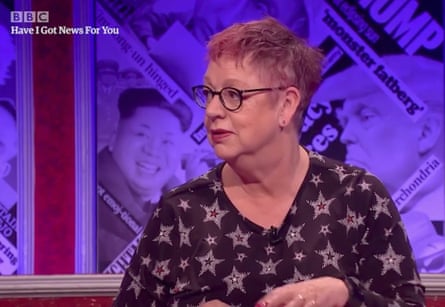
According to the TV writer Jack Searle, the rise of panel shows – at the expense of sitcoms – helped create a more adversarial form of comedy, dominated by “big, aggressive” male personalities. “Women – beware panel shows!” read the headline to an article by the comedian Jo Brand in the Guardian in 2009.
“Post-Britpop, post-Oasis, post-Cool Britannia, post-TFI Friday, you had the exuberance of the late 90s but with a nasty, lairy edge that certainly included misogyny,” Searle said. “Men on TV were like: ‘We know we shouldn’t be doing this, but we just have anyway.’”
Jessica Toomey, the director of the Live Comedy Association and the Women in Comedy festival, pointed to the lack of formal reporting procedures and the relatively small number of women in positions of power during the period. “The most frustrating sentence I keep hearing recently is: ‘Why didn’t they report it back then?’, when many victims just wouldn’t have felt empowered, informed or supported enough to know how to.”
So, how much has actually changed? Plenty, if you consider the rise of feminist blogging, an increase of women in positions of power in the industry and the ability to use social media to demand accountability.
“What has changed is not simply our recognition of misogyny, but the cultural willingness to confront it – and this is something to be celebrated,” Tippett said.
But other features remained, Tippett said, referring to the current era as “lad culture reimagined”: online abuse, “incel” culture and the prominence of figures such as self-professed misogynistic influencer Andrew Tate. Others point to the ubiquity of platforms such as OnlyFans as a contemporary successor to the influence of lads’ magazines such as Nuts and Zoo, and argue that widely available pornography, often seen by teenage boys, is more extreme than ever.
Meanwhile, some doubts remain as to whether greater awareness has translated into greater institutional accountability. This week, the comedian Lucy Beaumont, who revealed herself as a whistleblower in the investigation into Walliams, said she was struck by the lack of any obvious route for raising concerns. “There is no HR department in TV, there is no proper duty of care.”
She said she feared that speaking publicly about powerful figures could end her television career. “The reason high-profile people are not saying anything is because they lose work. No one wants to mess that up.”
In an article for the Guardian, she argued that the harmful actions of some men were seen and often ignored. “What happened to the women and girls wasn’t done in secret,” she wrote. “I think this is what the very national outcry is about – because it could have been called out, stopped, and women could have been prevented from being in dangerous situations with these men.”
Tara Joshi, a co-host of the 2000s pop-culture podcast Twenty Twenty, cautioned against treating the 2000s as a closed chapter. “Lad culture, tabloid culture, diet culture and misogyny all still exist, they’re just manifest in slightly different, perhaps more insidious ways,” she said.
Joshi acknowledged that conversations about abuse were now more open, and that more people may feel able to speak out. “But the reality is that Russell Brand was working in major film and television productions into the 2020s,” she said. “This conviction has only really been able to happen because there were an indisputable number of people coming forward with allegations.”
Searle said: “Celebrities behave that way when they feel untouchable, which comes from them recognising their own financial clout: everyone around them is earning their living from the star’s good reputation.
“Even now, unfortunately, it is still difficult to get someone to call out abusive behaviour if their salary depends on them not doing so.”
Explore more on these topicsShare
Reuse this content
