

CULTUREStudio Ghibli Anime: The Inspiration Behind the Imagination
“Grave of the Fireflies”: Takahata Isao’s Lifelong Quest for Realism
Manga/Anime | <a href="https://comicvibe.com/disneyland-holiday-entertainment-2026-christmas-fantasy-parade-fireworks-santa-and-more/” title=”Disneyland Holiday Entertainment 2026: Christmas Fantasy Parade, Fireworks, Santa and More”>Entertainment
Grave of the Fireflies remains the defining expression of Takahata Isao’s artistic vision. In contrast to the fantasy-driven worlds of fellow Ghibli director Miyazaki Hayao, Takahata spent his career exploring new forms of realism, culminating in the spare, innovative aesthetic of The Tale of the Princess Kaguya.
A Childhood Marked by War
Released in April 1988 as a double feature with Miyazaki Hayao’s My Neighbor Totoro, Grave of the Fireflies was Takahata Isao’s sixth animated feature film.
Grave of the Fireflies was adapted from Nosaka Akiyuki’s Naoki Prize–winning novel of the same title, based on the author’s experiences of World War II. Set primarily in and around Kobe and Nishinomiya in Hyōgo Prefecture, it follows a young brother and sister who are orphaned by the war and struggle to survive amid the postwar chaos.
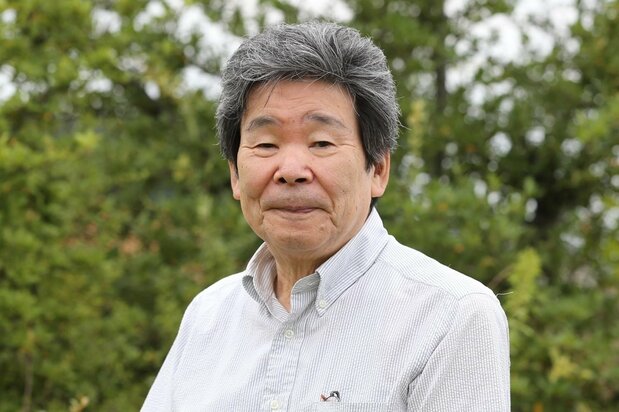

Takahata Isao in September 2016 at the Studio Ghibli facility in Koganei, Tokyo. (© Kyōdō)
Takahata portrays their story with uncompromising realism, tracing their ordeal all the way to their tragic deaths from malnutrition. The director himself experienced war firsthand. In June 1945, at the age of nine, he lived through the Okayama air raid, fleeing through a city reduced to ashes. That indelible memory is often cited as one reason the film’s bombing sequences possess such visceral immediacy.
A Documentary Approach to Animation
The simultaneous release of feature films by Miyazaki and Takahata in 1988—the first and last such pairing in Studio Ghibli’s history—brought their contrasting creative sensibilities into sharp focus. If Miyazaki was an entertainer who gravitated toward fantasy and flights of imagination, as Totoro vividly demonstrated, Takahata was a realist, crafting his works through meticulous observation and thoughtful storytelling.
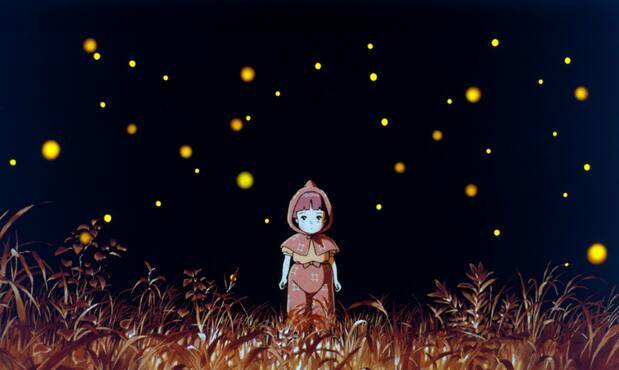
A scene from Grave of the Fireflies. (
Grave of the Fireflies represents the first full-scale realization in feature film of the realism Takahata had been developing since the 1970s, beginning with the 1974 television series Heidi, Girl of the Alps. Gestures, landscapes, and other details of daily life are created with extraordinary care, recalling the sensibility of Italian neorealism. Equally important is the film’s refusal to idealize its characters, observing them with empathy but without sentimentality.
In many respects, Takahata’s method resembles that of a documentarian. Significantly, the year before Grave of the Fireflies, he released his only live-action documentary, The Story of Yanagawa Waterways, an examination of the canals and neighborhoods of the northern Kyūshū city of Yanagawa.
The film’s remarkable realism also owes much to extensive location research conducted in the cities of Kobe and Nishinomiya before production began. Another key contribution came from Kondō Yoshifumi (1950–1998), the gifted animator who would later direct Whisper of the Heart (1995) for Ghibli. Serving as both character designer and animation director, Kondō helped ground the film’s realism in its visual execution.
Three Visions of a Larger Reality
Yet Takahata’s achievement in Grave of the Fireflies cannot be reduced to realism alone. As an adaptation, the film is largely faithful to Nosaka’s original text. Its most striking innovation, however, is the recurring appearance of Seita and Setsuko as ghosts, looking back on their own lives from beyond death.
Similarly, the opening and closing sequences, in which contemporary nighttime views of Kobe overlap with memories of the city’s past around Sannomiya Station, are entirely Takahata’s invention. These choices reveal that his artistic goal was never the simple reproduction of reality.
Throughout Takahata’s work, the everyday world depicted on screen is accompanied by another perspective just beyond it, a consciousness that observes reality from a distance and places it in a broader context. Reality is presented as something layered, with multiple planes of experience existing at once. Through that additional dimension, the world of the story also becomes an object of reflection and critique.
In Grave of the Fireflies, Seita and Setsuko’s ghostly selves embody that perspective. Variations of this device appear throughout Takahata’s later films. In Only Yesterday (1991), it is Okajima Taeko’s dialogue with her younger self; in Pom Poko (1994), it is the shape-shifting tanuki of the hills west of Tokyo who move freely between present reality and imagined possibilities.
In each case, the characters maintain one foot in the here and now and another in a realm of memory, aspiration, or alternative possibility—the life they wish to live, the world they believe ought to exist, or the world that once existed and has since been lost. Through acts of remembrance or determination, they actively transform reality itself, broadening it beyond a fixed dimension.
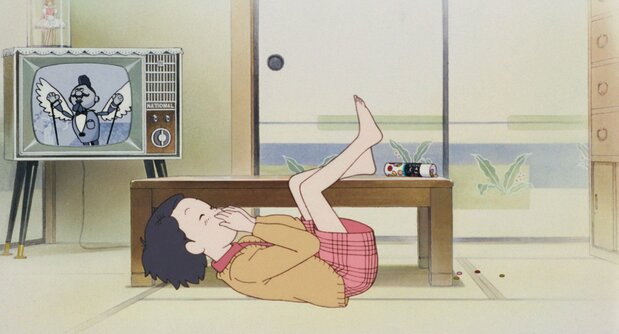
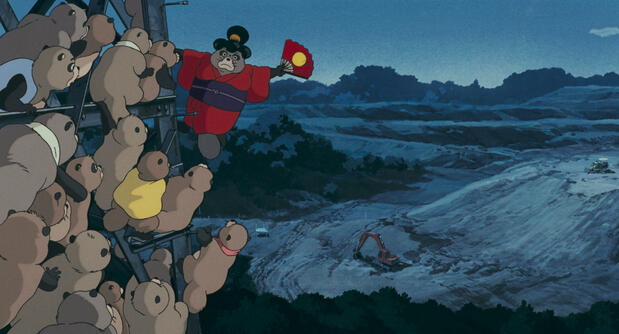
Taken together, Grave of the Fireflies, Only Yesterday, and Pom Poko can be viewed as a trilogy exploring what might be called Takahata’s expanded reality aesthetic. The three films also share a visual motif: urban and suburban nightscapes, often appearing at the opening or conclusion, that link the world of the film to that of the viewer.
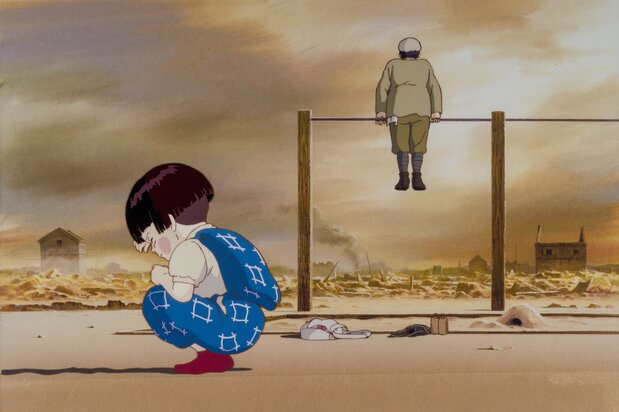
There are even occasional hints of surrealism in Grave of the Fireflies. One particularly memorable scene occurs after Seita and Setsuko escape an air raid. Leaving Setsuko outside, Seita enters a shelter and discovers their mother horribly burned and near death. Later, in a strangely luminous schoolyard that seems suspended outside ordinary reality, Seita spins around a horizontal bar, even as a tearful Setsuko pleads to see her mother.
The sequence unfolds like a waking dream and evokes prewar Japanese surrealist painters such as Koga Harue (1895–1933). Such an association is hardly surprising; surrealism attracted renewed attention in the 1950s, when Takahata came of age, and there are hints of its influence in his work.
Toward a New Kind of Realism
Takahata thus developed a distinctive approach to realism, one that began with Heidi and reached a creative peak in Grave of the Fireflies, Only Yesterday, and Pom Poko. In the final phase of his career, however, spanning the late 1990s and 2010s, he undertook another transformation, developing what might be called the realism of blank space, exemplified by My Neighbors the Yamadas (1999) and his final feature, The Tale of the Princess Kaguya (2013).
Beginning in earnest during production on My Neighbors the Yamadas, Takahata embraced a style characterized by simple, seemingly spontaneous brush-drawn lines and expanses of unpainted white space reminiscent of Nihonga painting. The approach grew partly out of his long-standing interest in medieval Japanese picture scrolls.
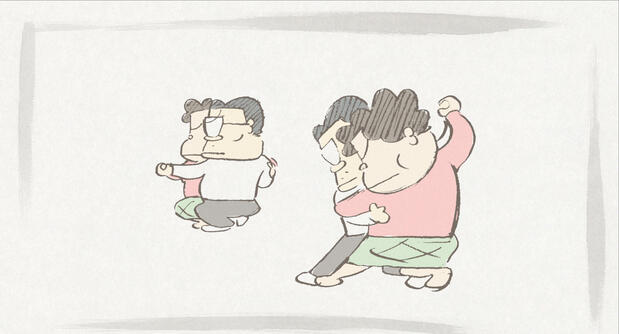
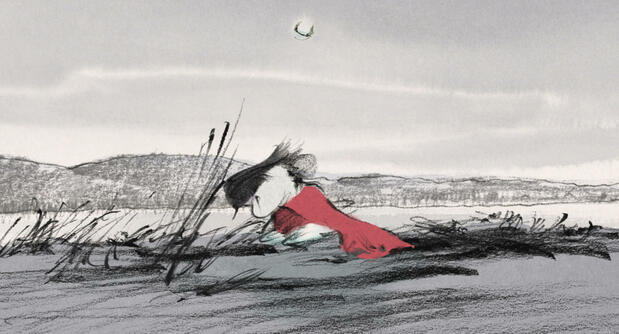
The Tale of the Princess Kaguya. (
Rather than constructing a fully enclosed and self-contained world of realism, Takahata sought to bridge the gap between the world on screen and that of the viewer. He wanted the audience to actively participate in the story, filling in the missing pieces with their own imagination. The blank spaces are not omissions but an invitation.
Takahata, who had openly expressed his distaste for escapist fantasy, became increasingly critical in the 2000s of what he called immersive or empathy-driven cinema: films designed to overwhelm viewers emotionally and compel identification with their characters. The realism he ultimately arrived at was the antithesis of such films.
An intriguing footnote underscores this trajectory. When Grave of the Fireflies first opened in theaters, production delays meant that some scenes were shown before all the coloring had been completed. Perhaps this was pure coincidence. Yet in retrospect, those unfinished images almost seem to foreshadow the aesthetics of incompleteness and open space that Takahata would later embrace.
Nearly four decades after its release, Grave of the Fireflies remains one of the defining achievements of animated cinema. The artistic possibilities Takahata explored in the film—and persistently refined at Studio Ghibli thereafter—continue to surprise and move audiences around the world, reaching new generations through streaming platforms.
(Originally published in Japanese. Banner photo: Seita and Setsuko flee the fires of an air raid
Studio Ghibli Anime: The Inspiration Behind the Imagination
Studio Ghibli has won global renown for its classic anime, created by directors including Miyazaki Hayao and Takahata Isao. Film historian Watanabe Daisuke reexamines the studio’s output and delves into the philosophies and historical theories that shaped it.
(Photo
“My Neighbor Totoro”: Miyazaki Hayao’s Forest Journey Back to JapanCULTURE | Nov 6, 2026

Sacred Ground: Anime’s Nagano HeartlandCULTURE | Oct 29, 2026
Miyazaki Hayao’s Animism: The Historical Theories That Shaped “Princess Mononoke”CULTURE | Oct 20, 2026
A Short History of Studio Ghibli: Four Decades of Anime ClassicsCULTURE | Oct 20, 2026
Related Articles
Takahata Isao and “Grave of the Fireflies”: Japanese Book Explores the Making of an Anime ClassicCULTURE | Oct 21, 2026A Short History of Studio Ghibli: Four Decades of Anime ClassicsCULTURE | Oct 20, 2026
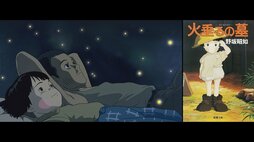
Most Japanese Teens Almost Never Talk About World War IIINSIGHT | Aug 15, 2025
Mysteries and Complexity: The Genius of Miyazaki HayaoCULTURE | Jun 13, 2024
Miyazaki Hayao and His Mentor Ōtsuka Yasuo: Learning the Fascination of AnimationCULTURE | Oct 7, 2021“My Neighbor Totoro”: Miyazaki Hayao’s Forest Journey Back to JapanCULTURE | Nov 6, 2026Sacred Ground: Anime’s Nagano HeartlandCULTURE | Oct 29, 2026
The Magazine Culture that Nurtured Shōjo MangaCULTURE | Oct 28, 2026
