

This message was just sent to Team XBOX employees globally.
Microsoft was founded on the belief that computing could put extraordinary capabilities in the hands of ordinary people. Gaming has been part of that story since the company’s beginning.
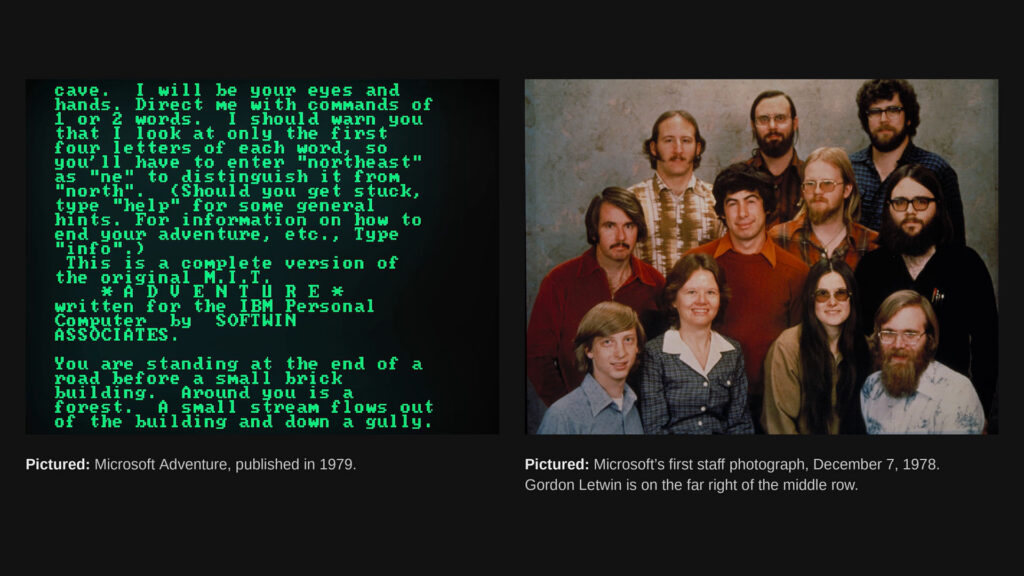
In 1979, we released Microsoft Adventure, a text-based game that looked more like MS-DOS than an early version of Minecraft. Adapted by a single programmer, Gordon Letwin, one of Microsoft’s first 13 employees and later an architect on OS/2, the game let players explore a digital world, collect treasure, solve puzzles, and encounter mythical creatures.
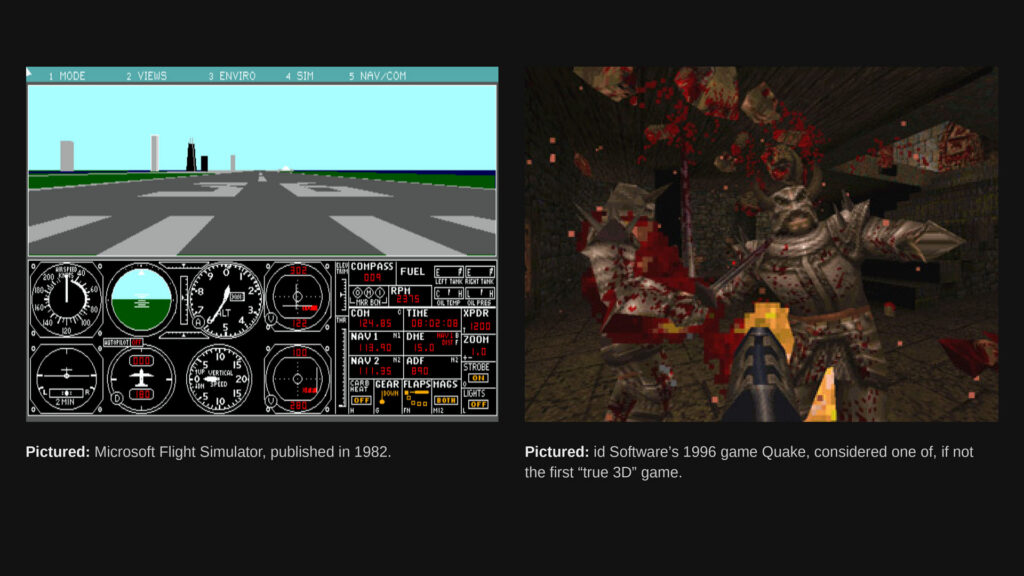
A few years later, Bruce Artwick brought the magic of flight to the 16-bit IBM PC, making it possible to fly a plane from your desk. Over the following decade, Microsoft published dozens of other titles including Minesweeper, Age of Empires, and another four Microsoft Flight Simulators, while Windows helped usher in 3D gaming with partners such as id Software (which would join XBOX some 24 years later).
In the mid-1990s, a small team working on DirectX, the technology that helped developers make games for Windows, had a big idea: using PC architecture to power the first American video game console in decades. Shortly thereafter, work began on the secret “Project Midway.”
When the original XBOX launched in 2001, it was impossible to miss. It was 2-3x larger than rival consoles, with a giant X molded into a black enclosure and a bright alien green jewel at the center. It shipped with a hard drive when competitors asked players to buy standalone memory cards and an Ethernet jack when 9 in 10 households still used dial-up. It also boasted more than twice the processing power of the PlayStation and GameCube and pioneered dual analog controllers.
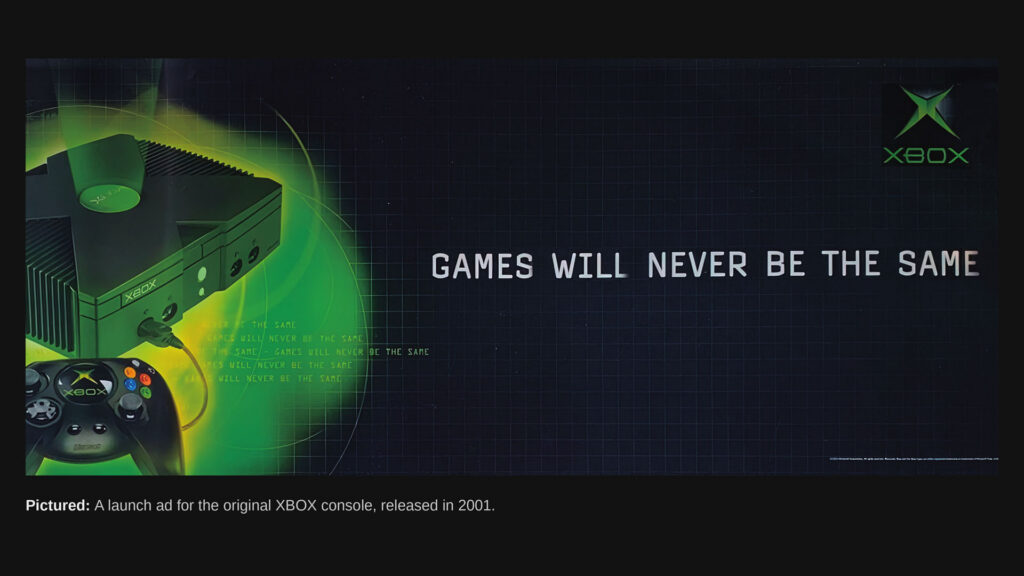
A year later, Xbox Live revolutionized online play with persistent friend lists and matchmaking, as well as a common service for developers to build connected experiences. And bringing all of this together was Halo: Combat Evolved, a launch title that not only defined XBOX but proved its first advertising campaign: “Games Will Never Be The Same.”
Twenty-five years later, XBOX has grown into one of the world’s largest gaming businesses. We’ve built four generations of XBOX consoles, with a fifth on the way. Today, our games reach more than a billion players every year spanning beloved and iconic franchises such as Call of Duty, Candy Crush, Diablo, Doom, Fable, Fallout, Forza, Gears of War, Halo, Minecraft, Overwatch, Sea of Thieves, The Elder Scrolls, StarCraft, Warcraft, Wolfenstein, and many more.
To Everyone Who Made XBOX, XBOX
XBOX has been built by generations of employees, studios, developers, and partners who believed in what gaming could become. To all of you, thank you. I especially want to recognize the 111 people across XBOX and our studios who have been here for 25 years or more. You’ve helped shape the history we’re celebrating today, and each of you will receive a special engraved console to commemorate what you’ve helped build.
Since joining XBOX, I’ve heard stories of friendships that began over a session and lasted a lifetime, of people who met the person they would marry, and of parents now sharing the games they grew up on with their children. I’ve also heard about people who are no longer with us, and how much those hours spent playing together still mean to those who love them. Ultimately, this is why we exist.
The story of XBOX has never been ours alone. Our fans have challenged us, cheered us on, held us accountable, and stuck with us. We’ve been celebrating this anniversary with fans around the world and special launches. Today, we are bringing the celebration home to Seattle.
The Next 25
Gaming has always been an industry driven by dreams. Not just the desire to bring something imagined to life, but to share it with others. Sometimes that dream is of a game, other times a console, a character, or an entire universe. The history of XBOX is a testament to the power of these dreams and how they can grow over time.
The first Microsoft Flight Simulator was just 160 KB, with 2D graphics, 16 colors, and 20 total airports. The 2024 version draws on more than 2.5 petabytes of data (more than 15 billion times the size of the original game). Its 200-million-square-mile map recreates almost every city, road, and landmark across the planet, with trillions of individually rendered trees and real-world weather reproduced in near real time.
While modern games demonstrate the heights of human craft in ways unimaginable just decades ago, the cost, retically. As a result, too many ideas never become games, and too many games fall short of what their creators imagined. For decades, this has been the unavoidable tradeoff of ambition. We must change this
Throughout human history, the scale of what we could create was determined by the people, capital, and resources we could command. That relationship is beginning to break. A single person will soon be able to wield capabilities that once required entire nations. A small team will be able to build worlds that today demand hundreds of developers and hundreds of millions of dollars. And our largest studios will be able to pursue ambitions as far beyond today’s games as Microsoft Flight Simulator 2024 is from its first entry in 1982.
I believe the future of gaming will look more like its beginning, when a small team with a big idea could change how the world plays. Our responsibility is to deliver great games, unmistakable hardware, and give more people the chance to make something the world has never seen.
Happy Birthday XBOX!

1 Comment
Pingback: Without Jensen Huang, is it game over for GeForce? - Comic Vibe