

This article is written by a student writer from the Her Campus at CU Boulder chapter and does not reflect the views of Her Campus.
As we come closer to Halloween, witch-related media has reentered my rotation of things to watch in my free time. Watching these movies and TV shows has made me think about the history of witches in pop culture, primarily the ways that the depiction of them has shifted in recent decades.
To begin examining the different depictions of witches through time, we need to go back all the way to the 8th century BC, when Homer wrote theOdyssey. In Book 10 of this epic poem, the character Circe is mentioned for the first time. At this point in the story of the Odyssey, Circe invites Odysseus’ men to feast at her home, only to turn them into pigs using a magic potion. Odysseus ends up saving his men by threatening to attack Circe with his sword, causing her to surrender and change the men back to their human form. Circe is considered to be the first witch in Western literature and media because of her role in the Odyssey, and the ways she shaped what people view as being “witchcraft.” By using magic to turn the men into pigs, this created the definition of who could be a witch as having the attributes of an outcasted, mysterious, evil-spirited woman who sought to harm men.
To continue, let’s take a look at Shakespeare’s Macbeth, which was published in 1606. The witches present in this story, who are referred to as the “Weird Sisters” or simply listed as being the “First Witch,” “Second Witch,” and “Third Witch,” played a large role in how Western culture began to view and understand witches specifically through their acts of deception, malevolence, and choric speech patterns. During the time period Shakespeare wrote Macbeth, King James I, a firm believer in black magic and the occult, had just become the king of England. Prior to taking the throne, James actually published a book titled Daemonologie, which was a theological argument for the presence of witchcraft and magic in our world. This book served the purpose of convincing both skeptics and non-believers of the existence of such supernatural things. That being said, it was also largely sexist (who’s shocked!), and painted women out to be “frailer, weaker, and more prone to the Devil’s lures,” as Christina Larner for Omeka states. Since James felt so strongly about the presence of sorcery and created a specific role for women to play in his portrait of what witchcraft is, the public’s opinion became extremely influenced by his ideology. This led to the acceleration of witch hunts, the demonization of the concept of witches, and why the witches in Macbethhave the traits that they do. They became symbols of evil and trickery, continuing the fear-mongering narrative that King James I fed into throughout his rule.
Fast forwarding nearly three centuries all the way to 1900, L. Frank Baum has now written and published The Wonderful Wizard of Oz, which is later turned into The Wizard of Ozmovie, released in 1939. This familiar story focuses on Dorothy Gale, a young girl from Kansas who ends up in the fantastical world of Oz, and is forbidden to leave until she destroys the notorious Wicked Witch of the West. This witch in particular has shaped certain features of witches in pop culture as a result of the physical characteristics and behaviors she beholds. For example, in the film adaptation, the Wicked Witch of the West has green skin, wears a large, pointy black hat, and flies on a broomstick. That being said, an interesting note to consider is that the witch actually did not have these traits in the book version of this story, and her green skin was simply a result of the directors wanting her to stand out in the new Technicolor film. This reflects the filmmakers’ desire to exaggerate the more “evil” characteristics that witches have according to society’s beliefs, and the cruel behaviors she acted upon throughout the movie.
On the flip side of the Wicked Witch of the West, we have Glinda the Good Witch. Contrasting the Wicked Witch, Glinda first appears wearing a frilly, glittery pink gown, and a bedazzled crown. This supports the idea that Glinda is, as her name states, good, because of the associations society makes with these colors and physical attributes. By creating two distinct perceptions of witches, the directors of The Wizard of Ozbuilt upon the concepts of “evil” witches being “ugly” or “unusual looking”, and “good” witches being overly feminine and angelic.
But then, in 1995, Gregory Maguire published Wicked: The Life and Times of the Wicked Witch of the West, a novel focusing on Elphaba Thropp’s, aka the Wicked Witch of the West, childhood and storyline. By creating this new perspective on the world and story Frank L. Baum built through The Wonderful Wizard of Oz, we now have a changed look on what it means to be a “wicked witch.” Throughout this book, we discover that Elphaba is a social justice activist who is incredibly vocal on the treatment of animals in the land of Oz, causing her to become an outcast as she continually fights back against the so-called “Wonderful Wizard of Oz” and Madame Morrible, two key figures in the misconstruing of Elphaba as being wicked. This impacted how society views witches because it challenged the concept of what evil witches look like, and if their actions are actually evil, or if they are just fighting back against an oppressive society.
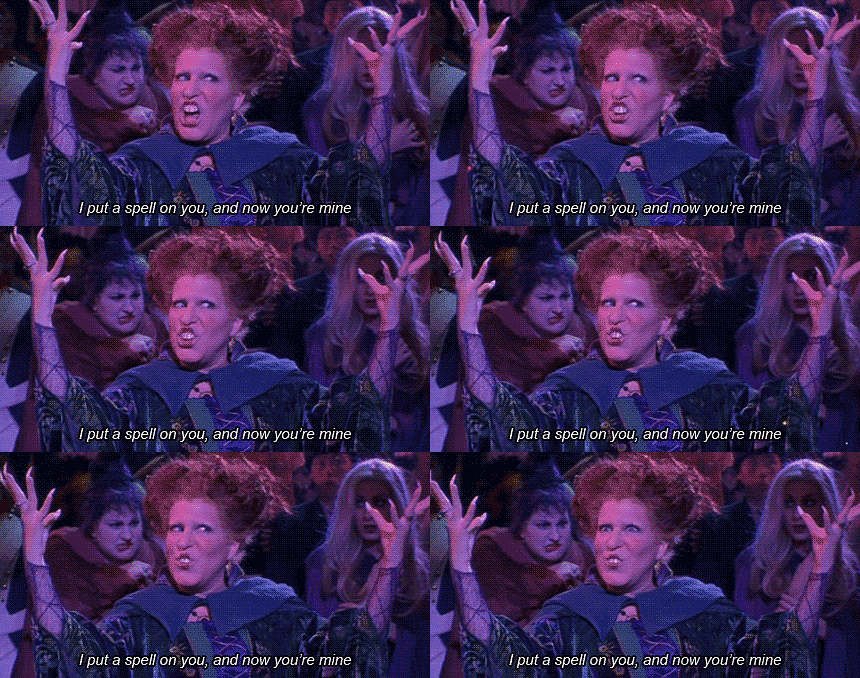
Hocus Pocus (1993)followed similar themes that Wickedpushed regarding witches. When a teen boy and his younger sister accidentally resurrect a trio of witches on Halloween night, the witches embark on a journey to consume the souls of the children in Salem before sunrise, otherwise they will turn into dust. The witches in this film are incredibly humorous, and while they have the goal of sucking the souls out of children, the humor of the film takes away from the typical fear many witch movies center on. Additionally, the three of them have a strong, sisterly bond, showing that witches are capable of creating bonds with others and handling the complexity that comes with them.
Just a few years later, Practical Magic (1998)was released. This film is an adaptation of the novel by Alice Hoffman, and focuses on the story of two sisters who are the descendants of a 17th century witch, leading them to discover they are haunted by a generational curse that leads any man who falls in love with either of them to die. Throughout the movie, we see the sisters bond as a result of their curse, and learn to embrace their bloodline and the magic that comes with it. This film holds a fundamental role in how society has viewed witches over time, because it shifted the narrative away from the concept that witches are evil or threatening beings, and created the idea that witchcraft is a symbol of sisterhood and female power. The witches in this movie are strong, brave, and use their powers to help the women around them.
Two decades later in 2018, the TV series The Chilling Adventures of Sabrina was released on Netflix. The protagonist, Sabrina Spellman, is challenged with coming to terms with her half-witch-half-mortal identity, and has to protect herself and her loved ones from the evil forces that are coming for her. While The Chilling Adventures of Sabrinadid have many elements of horror, it greatly challenged classic witch archetypes. For example, throughout the series, Sabrina fights against oppressive forces within her high school and the larger world she lives in, and takes control over her powers to represent the importance of autonomy and female power.
Finally, in 2020, The Owl Housepremiered on Disney Channel as a TV show. This series follows a young girl, Luz, as she accidentally stumbles upon The Boiling Isles, a secret magical realm, and an elder witch Eda, who becomes her friend and mentor. With the help of Eda and her other new witch friends, Luz learns how to cast spells, even though it defies the strict rules of the Isles and what is seen as being “right.” This show pushes the narratives of the importance of found family and female friendships, and also presents one of Disney’s only representations of a same-sex couple. Through these narratives, the show has proven that witches are more than scary creatures who perform evil actions; they represent uplifting others to be powerful and brave, choosing your own family, and fighting against oppressive systems in our society.
While there are countless other forms of media that center on witches, these are examples of notable times that a shift began to form with how the world viewed what a witch can be. It’s very fascinating to consider the ways that shifting social norms and systems change the media we consume, especially when it is centered on a specific character archetype that has been scrutinized for so long.
- entertainment

1 Comment
Pingback: Penn State Football Matchups As Pop Culture Rivalries - Comic Vibe