

While Netflix and other major Hollywood streamers have programmed their services to offer something for everyone, a group of smaller players has carved out their own path with more limited, more highly specific niches of interest.
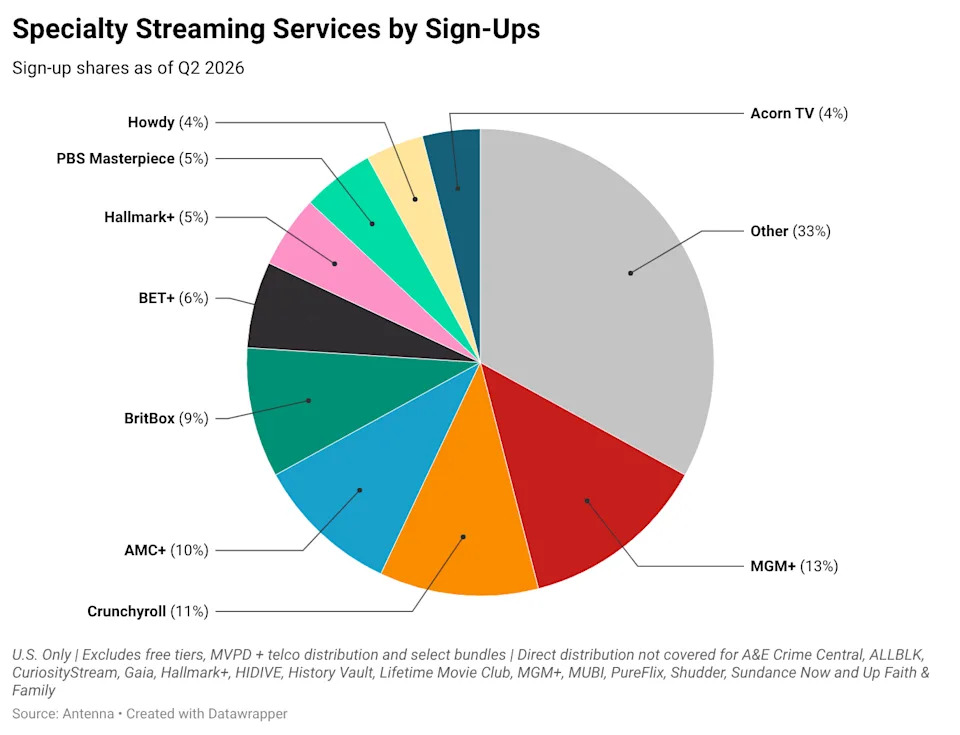
Rather than challenging their premium counterparts, these specialty streamers focus on being “everything to someone” with complementary offerings that superserve a fandom. Among the most notable are Sony’sanime-focused Crunchyroll, Amazon’s movie-centric MGM+, BBC’s British TV haven BritBox, Jon Erwin’s Christian <a href="https://comicvibe.com/cnn-news18-indian-of-the-year-2026-unveils-entertainment-nominees/” title=”CNN-News18 Indian of the Year 2026 unveils entertainment nominees”>entertainment-centric Wonder Project, Roku’s budget-friendly and nostalgia-focused ad-supported streamer Howdy and AMC Global Media’s AMC+.
While individually smaller than heavyweights like Netflix and Disney+, these services collectively draw a significant audience. In the second quarter, total specialty SVOD subscriptions grew 14% year over year to 42 million across 31 services – more than double premium SVOD’s 6% year over year growth, according to the research firm Antenna.
“Specialty SVODs have done a good job of highlighting what they’re really great at,” Roku Subscriptions, Partnerships and Corporate Development President Gil Fuchsberg told TheWrap. “You always know what you’re going to get and that distinction is helping drive a lot of the growth here.”
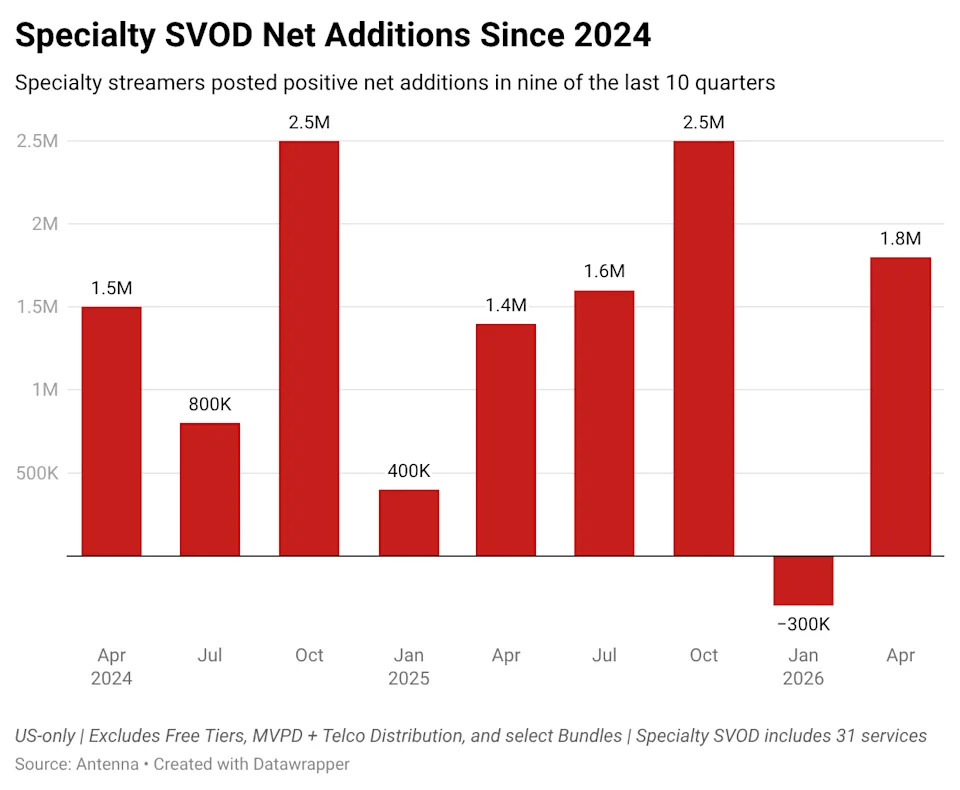
Despite their outsized growth, specialty streamers still only make up a 13% share of all SVOD subscriptions tracked by Antenna and face the same challenges as the rest of the industry: consumer fatigue, media consolidation and Wall Street’s profitability demands. With a universe of more than 500 total streaming services out there, many of them have — and will — disappear, including bigger name players like BET+, which was folded into Paramount+, and Fanduel Sports Network, which shut down last month.
But there’s reason to be bullish about at least some of these specialty services. A few have benefited from being included in channel platforms from Amazon and Roku, as well as teaming up with each other on bundles.
Specialty streaming distributors told TheWrap that they regularly have conversations with new platforms about becoming add-ons. In addition to Roku and Amazon, YouTube is poised to become a major player in the space and Netflix is also considering following the same model, with the latter’s executives opening the door to that possibility on Tuesday.
“The availability of these channel distribution models has become a lifeline for many of these specialty SVOD providers,” Fuchsberg said. “Much of their business is now in the channels model and a decreasing amount of it is in their standalone app business.”
For the specialty streamers able to tap into those specific niche interests with the right mix of programming, there’s a long runway for growth. But with competition and economic pressures, the stakes are high for these players to execute, especially those without the deep pockets and high-profile content of the conglomerate-backed megastreamers.
“They have to find ways that they can market themselves to their specific audience. Part of being successful is knowing who and what you are, what your market potential is and working around your limitations,” Parks Associates Entertainment Research Director Michael Goodman told TheWrap. “If you can’t make the economics work, at some point you’re going to close down or you’re going to get consolidated.”
Specialty SVOD’s lifeline
While specialty streamers take advantage of various strategies to reach new subscribers, one of the most beneficial to the category’s ability to survive and thrive has been third-party distribution partnerships with Amazon and Roku.
Prime Video Channels, which offers over 150 services inside the streamer’s app, accounted for 67% of the specialty SVOD market’s sign-ups in the second quarter. Its offerings include Crunchyroll’s first two U.S. bundles with Starz and Fox One, which launched earlier this year, and the platform’s first-ever five-service bundle in September, which includes Starz, AMC+, MGM+, BritBox and PBS Masterpiece. Specialty streamers’ content can also be sampled through Prime Video’s free collection and lineup of over 1,000 FAST channels.
Prime Video Channels head Ryan Pirozzi told TheWrap that specialty streamers on its platform have not only seen increased subscriber acquisition and retention, but also improved engagement. He added that he’s always looking for opportunities to bring more sports rights to the platform and sees news and documentaries as areas for further expansion.
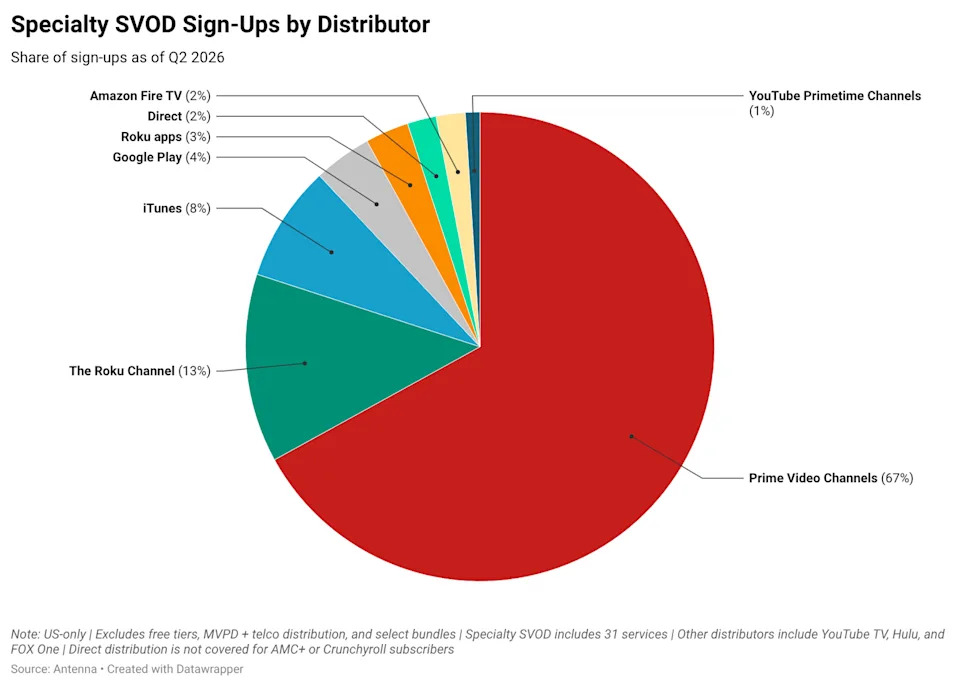
Prime Video isn’t the only platform showcasing these smaller streamers. The Roku Channel is the fastest-growing distributor of specialty streaming services, with its share of sign-ups nearly doubling to 13% in the last two years, per Antenna. Roku also offers over 30 bundle combinations through its Premium Subscriptions business.
Fuchsberg said Roku is always fielding pitches for new services both internally and externally and expects the number of specialty streamers to increase as the cost of experimentation falls.
And YouTube Primetime Channels, which offers over 45 streaming services in the U.S., grew specialty SVOD gross adds 47% year over year during the second quarter, per Antenna.
While it only accounts for 1% of the category’s sign-ups, it will be a major player to watch as it adds more content partners and expands to additional markets. In 2027, YouTube Premium will add NBCUniversal’s Peacock Premium, as well as its international streaming services Universal+ and Hayu.
YouTube Media and Sports Head Justin Connolly told TheWrap he’s constantly looking for partners who are willing to lean into the company’s entire ecosystem – from Premium and Primetime Channels to Shorts and creator integrations. In addition to PrimeTime Channels, YouTube TV launched 10 genre-specific bundlescovering sports, news, entertainment and family content in February.
“There’s no one-size-fits-all solution,” Connolly added. “So our priority is to provide offerings that give people the right subscription at the right price point.”
Other specialty SVOD distributors include Amazon’s Fire TV, Google Play, iTunes and streamers’ individual apps within Roku. Direct sign-ups accounted for just 2%, per Antenna, though the firm noted that some specialty streamers do not offer direct distribution.
Superserving audiences
Despite the engagement and retention benefits that third-party distribution partnerships provide, specialty streamers aren’t relying on them as their sole growth driver.
BritBox CEO Robert Schildhouse told TheWrap that the service topped 4 million subscribers in 2025, grew revenue 20% year over year and is delivering a profit margin north of 25% by doubling down on British mystery, crime and period programming, licensing content to major players and pushing subscribers toward its annual plans and Premier plan.
In September, BritBox licensed 15 shows to HBO Max as part of a three-month promotion, which has already resulted in a “significant” uptick in new subscribers joining its own platform. Nearly 60% of Britbox’s owned and operated subscribers are on annual plans, while over 17% subscribed to its Premier plan within the past year.
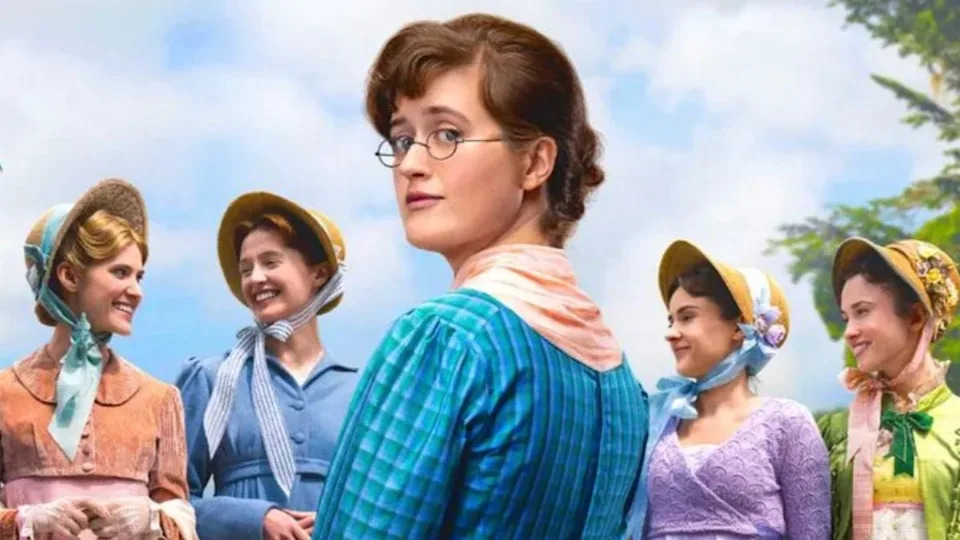
“We can run a very healthy, durable business for the long term without aiming to be in every household in America,” Schildhouse said. “You can’t outspend the general entertainment streamers. That’s just impossible with the scale of those businesses. So you have to present something that lives very comfortably in the same portfolio in a consumer’s streaming diet.”
Meanwhile, Wonder Project CEO Kelly Merryman Hoogstraten told TheWrap in July that it is building on the momentum from the 500,000 sign-ups through its Prime Video channel by creating franchises and programming categories that can “meet different needs” of audiences, offering early access to content, expanding into theatrical releases and using hybrid filmmaking techniques to boost content output and lower production costs.
Roku’s ad-supported streamer Howdy is looking to fill in the competitive gap created by streaming price hikes. Though it doesn’t disclose its subscriber count, Antenna estimates that it had 3 million sign-ups as of June. Fuchsberg said over 90% of Howdy’s sign-ups come from standalone plans and that its long-term aspiration is to reach over 100 million subscribers.
And MGM+ doubles as a streaming service and linear network through cable and satellite providers. While the service has seen improved churn, higher retention and the majority of its sign-ups through Prime Video and bundles, Pirozzi said there’s still a “huge benefit” to its standalone offering, which it has no plans to shut down.
Then there’s Crunchyroll, a Sony and Aniplex joint venture that has grown to 21 million paid subscribers globally and propelled the once-niche anime category into the mainstream. It boasts 25,000+ hours of on-demand streaming content, including 50 to 60 new shows per quarter that are simulcast with their linear broadcast premieres in Japan.
It also has distributed 12 of the highest-grossing anime films in U.S. box office history and will launch a new Storyworks division to adapt global stories into anime and Japanese anime into live action. The service is also adding over 250 new Japanese comicc and graphic novels, known as manga, to its library of more than 450 titles.
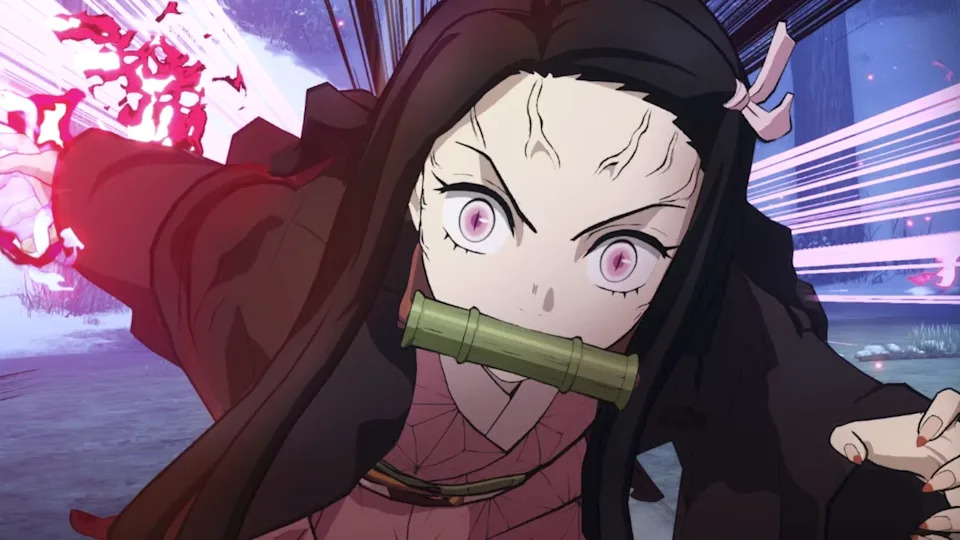
“We want to be everything to someone, not something to everyone. Manga has been one of our subscribers’ most requested additions, and bringing together stories from multiple publishers on one platform is incredibly exciting for fans,” Crunchyroll Global Commerce EVP Mitchel Berger told TheWrap. “It is another way to deepen their fandom and add meaningful value to their membership.”
Additionally, Crunchyroll offers games and music, sells merchandise and hosts panels, premieres and fan experiences throughout the year. In addition to its bundles, the PlayStation 5 offers Crunchyroll content in its new Live TV offering and will launch a hub dedicated to anime content next spring.
The specialty SVOD outlook
When it comes to specialty streaming’s outlook, many experts are bullish about the category’s future, citing a “long tail” of services out there.
But that doesn’t make them immune to the challenges that even the major players struggle with, like hanging onto customers. In June, specialty SVOD’s cancellation rate hit 7%, down from a peak of 9% in January but well above premium SVOD’s 4% churn rate. Fewer than half of specialty SVOD customers remained subscribed four months after signing up.
Media consolidation and Wall Street’s profitability demands are also thinning out the herd. Out of more than 500 total streaming services tracked across the U.S. and Canada, Parks Associates found 10 were phased out during the second quarter.
While the biggest specialty streamers have the benefit of being insulated by larger corporate ownership, Goodman warned there’s hundreds of “unaffiliated” specialty services that may not be in a position to be bundled or featured prominently in channel stores. But he and others believe there’s still plenty of opportunity to try to reach a wider audience.
Antenna noted that 61% of the specialty category’s consumers only subscribe to one service, while two in five (39%) subscribe to two or more, suggesting an untapped opportunity within its existing base.
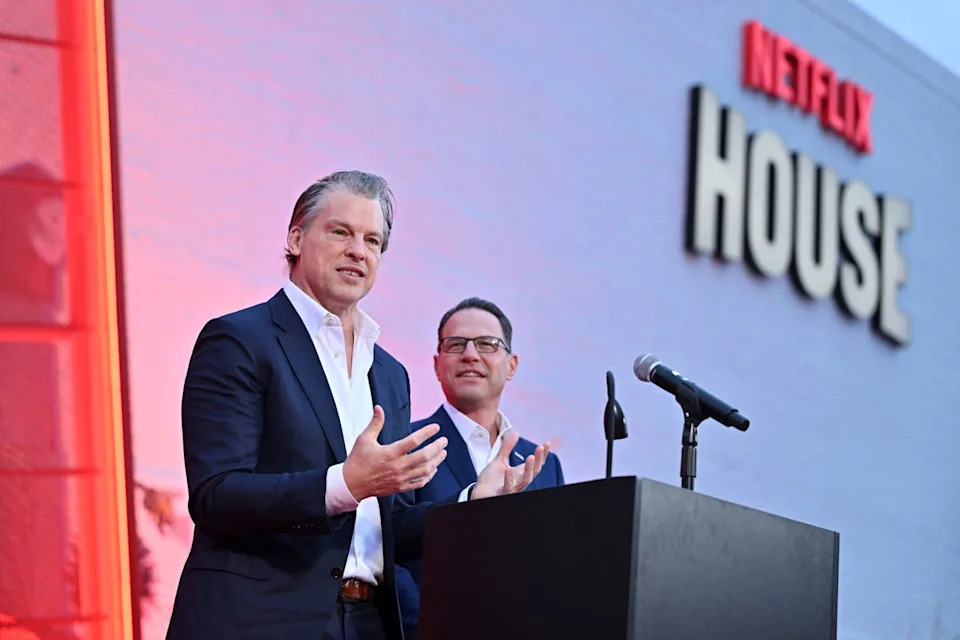
During its third-quarter earnings call on Tuesday, Netflix co-CEO Greg Peters said the service is open to the prospect of distributing add-on services. Similarly, Disney CEO Josh D’Amaro is going all-in on a strategy to turn Disney+ into the company’s “digital centerpiece,” which includes plans for a free tier and an opportunity for add-on subscriptions.
In order to help boost specialty streamers, Roku plans to launch new genre-based destinations in its platform and expand its Premium Subscriptions business to more markets, while Prime Video will add more “fixed” bundles. Pirozzi predicted personalization improvements by distributors and the platforms themselves would also bolster growth.
“I’m not worried about where we’re headed. Maybe some [niche streamers] will be bought or deprecated, but it’s hard for me to imagine a world in which we don’t have a thriving specialty streaming service business,” Pirozzi added. “You’re going to see services split out and merge and you’re going to see lots of iterations when it comes from a place of evolving to serve customers better.”
“There’s going to be some winners and some losers,” Goodman said. “But in the grand scheme of things, it’s still a drop in the bucket.”
