

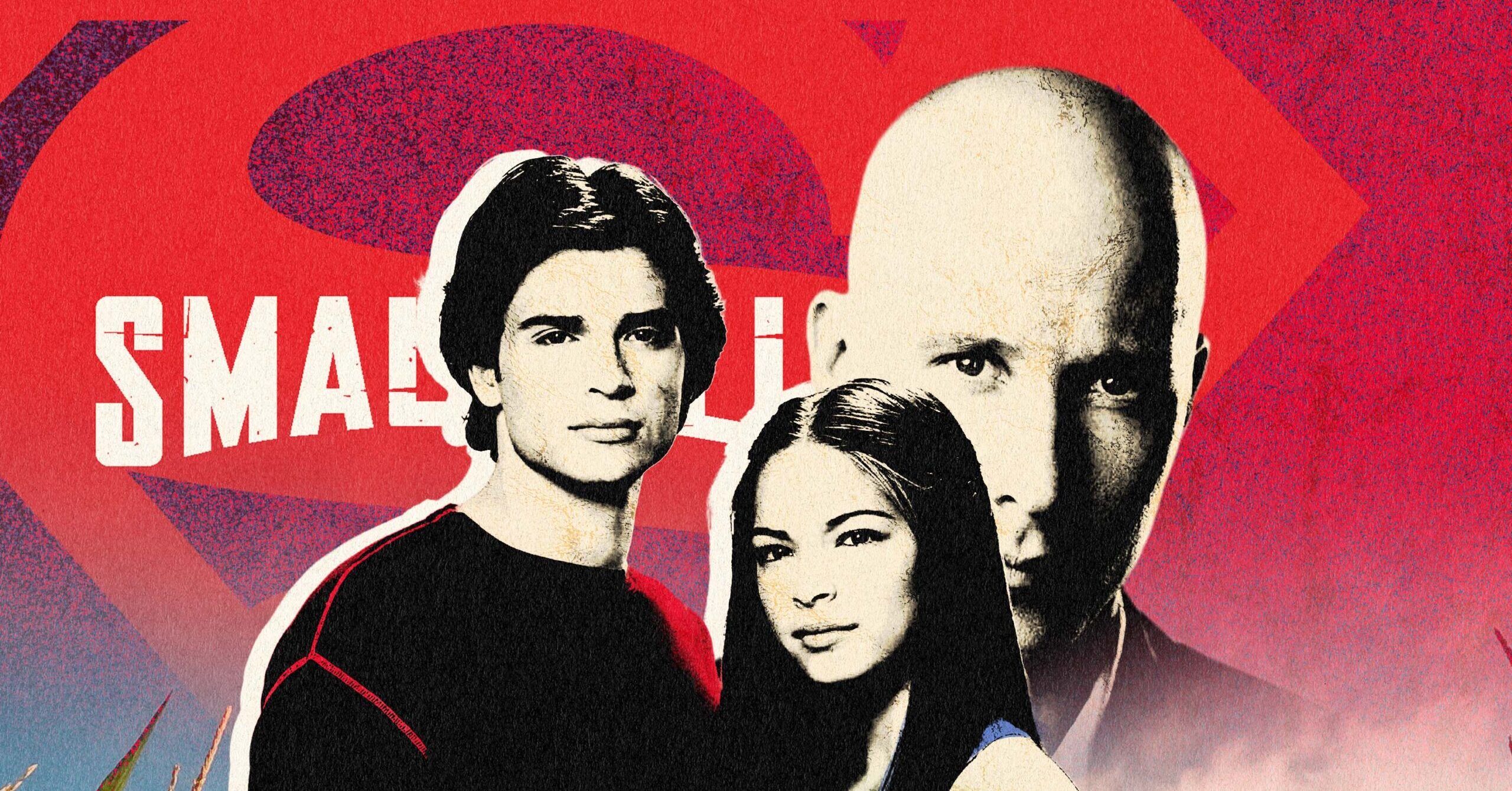
The Large Legacy of ‘Smallville’
Twenty-five years ago, ‘Smallville’ helped propel on-screen superhero stories to their modern, mainstream success
ByDaniel ChinOct. 19, 12:39 pm UTC
• 11 min
It’s easy to forget in today’s media landscape, but in the summer of 2000, most Hollywood studios and TV networks didn’t care about superheroes. The success of the Batmanfilms of the late ’80s and ’90s had ended in the box-office disappointment that was 1997’s Batman & Robin. The TV series Lois & Clark: The New Adventures of Superman was canceled after its fourth season following a decline in viewership, the same year that George Clooney’s Batman hung up his <a href="https://www.empireonline.com/movies/news/tim-burton-on-batman-forever-nipple-suit-go-f-yourself/” rel=”nofollow noopener” target=”_blank”>nipple-suit for good. Fox’s X-Men was one of the summer’s biggest box-office hits, but the birth of the Marvel Cinematic Universe was still almost a decade away.
Alfred Gough and Miles Millar had a deal at Warner Bros. Television when the production company’s then-president, Peter Roth, approached the creative duo that summer to make a show about Superman. Warner Bros. TV had just acquired the rights to the archetypal superhero from the studio’s feature division, and Roth wanted Gough and Millar to come up with a small-screen take on the character. Even with Roth’s support, convincing the networks would be an uphill battle.
“At that time there was little or no interest in superheroes,” Millar told The Ringerin an interview last year, ahead of the release of James Gunn’s Superman. “We had a lot of resistance and no interest in terms of who would buy the show. I mean, the WB had even initially rejected hearing the pitch. They were not interested at all. So it was definitely a different climate and a different era in terms of educating people about the incredible world that had been created in comics for decades.”
But that was all about to change.
The WB eventually heard that pitch and changed its tune. Gough and Millar had found a network home for their Superman series, and on October 16, 2001, Smallville’s first episodepremiered. The pilot attracted 8.4 million viewers, a record at the network for a series debut. Smallville would go on to become a TV staple, lasting for 10 seasons and 217 episodes en route to becoming the longest-running North American sci-fi series (by episode count) by the time its series finale aired in 2011. And 25 years after the series premiere, Smallville’s legacy is still growing.
“Smallville is a foundation stone in terms of the new era of superheroes and superhero media, and it predates, obviously, the MCU,” Millar told The Ringer in a recent conversation with him and Gough. “[Smallville] and the X-Men movies were really at the forefront of the birth of comic books and comic book heroes and characters becoming part of the cultural zeitgeist. Without Smallville, maybe that wouldn’t have happened when it did.”
In the decades leading up to Smallville, there had already been plenty of popular live-action portrayals of Superman. In addition to Lois & Clark in the ’90s, there was The Adventures of Superboy in the ’80s, the Christopher Reeve movies in the late ’70s and ’80s, and Adventures of Superman in the ’50s. But Smallvillehelped jump-start this new wave of superhero storytelling by offering a fresh take on the character and focusing on Clark Kent’s life before he became the Man of Steel.
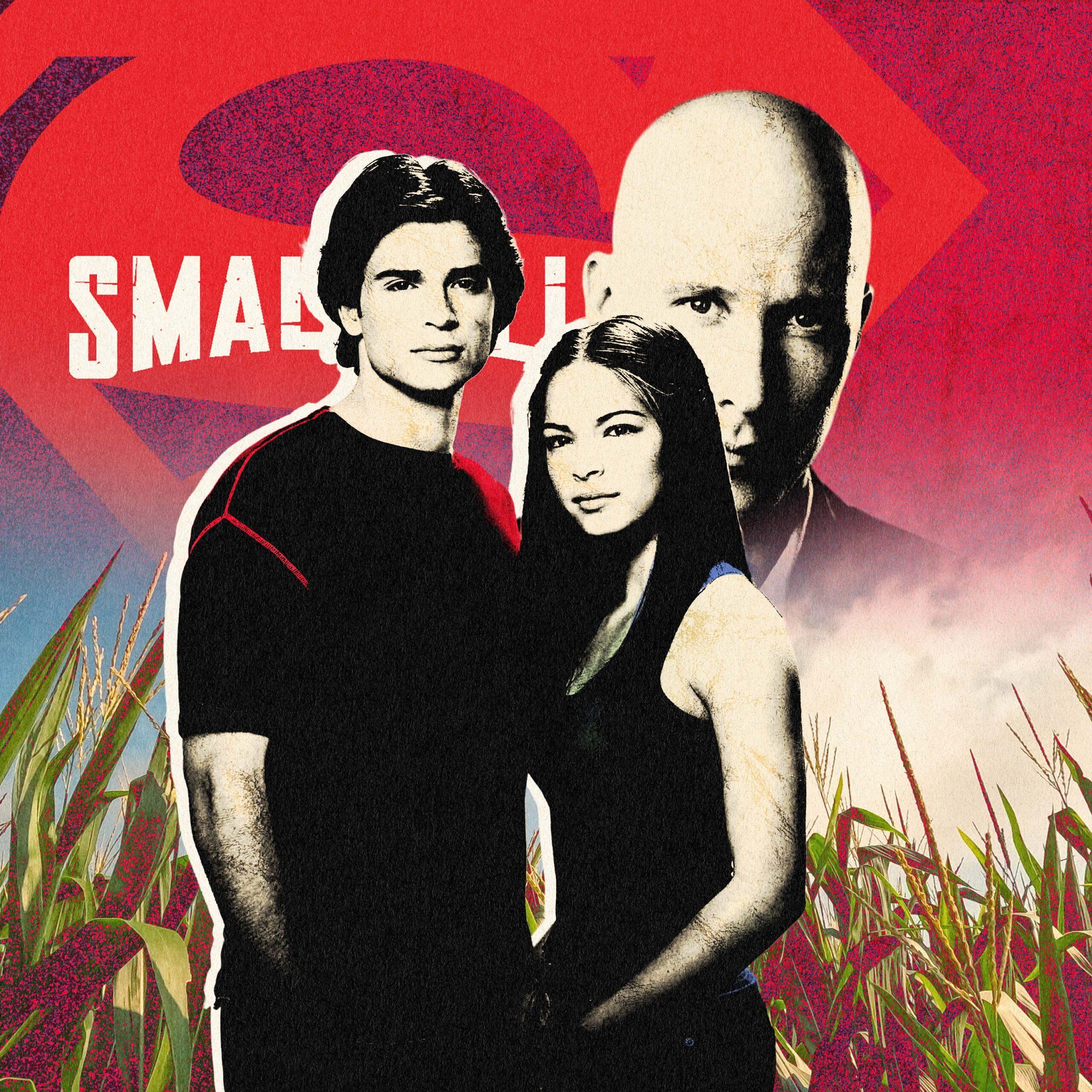
Instead of flying above the skyscrapers of Metropolis, Clark (Tom Welling) began by navigating the trials of being a teenager in his rural hometown. Trading in a red cape for superpowered puberty, he split his time between helping out on the Kent family farm and attending high school, where he daydreamed about his crush, Lana Lang (Kristin Kreuk). Clark and his classmates also investigated strange Kryptonite-related mysteries in Smallville in the years following the meteor shower that brought Clark to Earth.
“For us, he’s an iconic character and we all love him, but you didn’t understand him as a human,” Gough said last year. “And what we were able to do is kind of tell the untold chapter of his life.”
Superman Is the Hero Every Era Needs
Superman Is the Hero Every Era NeedsDaniel Chin• July 9, 2025• 22 min read
Superman Is the Hero Every Era Needs
Superman Is the Hero Every Era NeedsDaniel Chin• July 9, 2025• 22 min read
DC
Superman Is the Hero Every Era Needs
Superman Is the Hero Every Era NeedsDaniel Chin• July 9, 2025• 22 min read
Smallville also explores the relationship of Clark and his eventual archnemesis, Lex Luthor (Michael Rosenbaum). The rivalry between Clark and Lex is one of the cornerstones of almost any Superman story, from the comics to TV to the movies. But Gough and Millar made the bold choice to shift this classic dynamic by reintroducing the two as friends who had known each other long before their feuds in Metropolis. “At the time, some people were like, ‘Lex and Clark didn’t grow up together,’” Gough recalls of early skeptics. “So we built that mythology. There was no Chloe Sullivan, there was no Lionel Luthor, there was no meteor shower in Smallville. … One generation’s heresy is the next generation’s gospel.”
Before entering this superhero universe, neither Gough nor Millar was an expert on comic books. While one might assume that this would’ve been a disadvantage for the Smallville cocreators, the duo found it liberating.
“It gave us a freedom, not being so aware of all the ins and outs of the different mythologies and iterations of the comic books,” Millar says. “We had the freedom to create our own version of the Superman mythology. … Now, we definitely wouldn’t. We’d have a committee and have to be told, ‘No,’ and this and that. We’re very grateful that we actually were able to develop this in the time we did.”
That freedom to reinterpret theght other DC superheroes and villains into Clark’s orbit. For the show to last for 10 seasons of 20-plus episodes, it needed to inject new elements and fresh faces constantly. But how and when Smallville incorporated these superhero crossovers was important
“We delayed introducing any other DC characters for a long time, so that gave us a second wind,” Millar explains. “As superhero movies and superheroes became a much bigger thing in the culture, we were actually able to have our own versions of those. Other [superhero] shows that followed us, every week there’d be a new character. I’d say we were much more conservative in terms of what we did. [In Smallville], we saw [Green] Arrow, we saw Aquaman, but we made them special. It wasn’t just a big grab. In Season 1, you don’t see the Flash. We waited seasons before we introduced other [DC] characters.”
Gough adds, “We did that deliberately, because we wanted to establish our own universe and have everybody see it. I remember reading one quote of ours from an early thing, it’s like, ‘You’re not going to see Brainiac in Smallville. Until Season 5, and then you’re going to see Brainiac in Smallville because we got James Marsters.”
Even though the Smallville creators were afforded a lot of latitude in how they represented these crossover DC heroes, getting the clearance to include them in the first place was another matter. “We usually had to fight DC to get the characters in the show,” Gough said last year. “They didn’t want to give them to us. Like, we very much wanted young Bruce Wayne to show up, could not have him because of the [Christopher] Nolan movies at the time. We wanted Wonder Woman, or Diana Prince—could not get her.”
That resistance to small-screen superhero guest appearances seems almost quaint considering how TV shows and movies operate in the age of interconnected cinematic universes like the MCU and DCU. But those hesitant world-building sensibilities started to shift toward the end of Smallville’s decade-long run.
After the WB and UPN merged to form the CW in 2006, the latter half of Smallville’s 10 seasons aired on the new network. And a year after the show’s conclusion in 2011, the CW launched Arrow. In its debut season, the successor superhero series surrounded its arrow-slinging protagonist with other DC Comics characters, such as Huntress and Deathstroke. Although the CW’s creative team made sure to introduce Oliver Queen’s superhero persona properly in Arrow first, it didn’t take long for the network to establish the so-called Arrowverse, as spinoff shows including The Flash and Supergirl debuted within three years of Arrow’s first season.
Smallville paved the way for these interconnected series, providing them with not just a guiding template, but also essential creative and technical talent who returned to work on these subsequent projects, including director David Nutter and cinematographer-director Glen Winter. In the 2019 Arrowverse crossover event Crisis on Infinite Earths, Welling’s Clark and Erica Durance’s Lois Lane even reprised their Smallville roles to bring the CW’s TV multiverse full circle.
Smallvillechanged with the times and with the shifting corporate structure of its network home. But Clark’s expanding world of superheroes also reflected his natural growth as a character as he and his friends graduated from high school and moved on to the big city of Metropolis. By Season 10, almost every installment would feature a recognizable DC character from a non-Superman property, including the Suicide Squad’s Rick Flag, Blue Beetle, Hawkman, Zatanna, and Smallville’s own take on Oliver Queen.
A Good Superman Is Great. A Good Lex Luthor Is Sublime.
A Good Superman Is Great. A Good Lex Luthor Is Sublime.
Nicholas Hoult’s Lex Luthor Makes ‘Superman’Joshua Rivera• July 15, 2025• 5 min read
A Good Superman Is Great. A Good Lex Luthor Is Sublime.
A Good Superman Is Great. A Good Lex Luthor Is Sublime.
Nicholas Hoult’s Lex Luthor Makes ‘Superman’Joshua Rivera• July 15, 2025• 5 min read
DC
A Good Superman Is Great. A Good Lex Luthor Is Sublime.
A Good Superman Is Great. A Good Lex Luthor Is Sublime.
Nicholas Hoult’s Lex Luthor Makes ‘Superman’Joshua Rivera• July 15, 2025• 5 min read
When you look back at Smallville, it’s easy to see how the show’s evolution reflected the superhero media landscape that sprang up around it. But more than that, it’s apparent how much the TV industry was about to change. When Smallville started in 2001, Netflix was still shipping DVDs to its subscribers’ homes, six years away from forever changing the world of entertainment with its streaming service. The WB series was very much a product of the old broadcast TV structure—and all of its limitations.
“In the early 2000s, TV on DVD started to become a thing,” Gough says. “Because before then, if you didn’t see it, you might catch a rerun and that was it. And the avid television viewer watched one in four episodes. That was the avid viewer. So you couldn’t go two mythology [episodes in a row], or else people would tune in and be like, ‘What the heck’s going on?’ Whereas now, it’s like each [eight-episode] season is a novel and [episodes] are chapters in the novel. It’s more like doing an eight-hour movie than back in the day when you were making 22 episodes.”
The classic 22-episode structure for network TV shows still exists today, but it’s a dyingbreed in the world of streaming. Although the pressure to produce more episodes than even the most faithful viewers could follow imposed some storytelling constraints, there was an upside to the relentless schedule. “Because you’re shooting them and they’re airing as you’re making the show, you can see what audiences are gravitating toward and what they’re not,” Gough says. “You want things mapped out, but you always want to give yourself enough flexibility to pivot if something isn’t working. Or if suddenly this character pops, let’s start to explore some stories here. We call it precision jazz. You have to know where you’re going, but you gotta leave yourself enough room to pivot.”
Of course, producing that many episodes is no mean feat, and not every solo in that season-long song—improvised or not—was going to be a hit. As anyone who’s ever watched network television can attest, there are bound to be a few false notes—and Smallville was no exception.
“You know there are going to be three or four [episodes] that are just going to be duds,” says Millar. “It’s like the one before Thanksgiving, everyone’s burnt out, whatever it is. The law of averages means there are going to be a couple just, ‘Oh my God, I can’t believe we’ve made that episode.’ But it happens.”
Before Smallville, Millar and Gough had created and run just one TV show together, The Strip, which aired on UPN from late 1999 to early 2000 before getting canceled after nine episodes. Since their second series arrived only a year later and drew immediate attention, Smallville presented a steep learning curve.
“When we started this, we were incredibly young, we were incredibly inexperienced, and we had this giant hit,” Millar explains. “Having to handle the pressure of that and deliver on all fronts, it was very challenging, and we learned a lot doing it.”
Millar and Gough credit the writers room and their collaborators for the success Smallville achieved and sustained. Todd Slavkin, Darren Swimmer, Kelly Souders, and Brian Peterson all started as staff writers on Season 2 before eventually assuming showrunner duties from the cocreators after they left the series ahead of the show’s eighth season in 2008. Smallville prepared Millar and Gough for a long career in film and television, and after having mixed results in the latter medium in the 2010s (including a short-lived Charlie’s Angels reboot in 2011 and AMC’s Into the Badlands from 2015 to 2019), the duo created another hit on the small screen in 2022: Wednesday.
As a drama about angsty teens that puts a modern spin on classic IP, the Netflix series starring Jenna Ortega shares some DNA with Smallville, with Wednesday centering on the titular child of the Addams Family as she solves murder mysteries at her supernatural boarding school. But the production process for Wednesday—which features eight-episode seasons—reflects the different demands of the streaming era.
“We spent most of Smallville in Los Angeles, and our team was in Vancouver making the show,” recalls Millar. “We’d go up there four or five times and see things. But on Wednesday, we’re on set every single day. We are in the weeds on every single element. We are in post[production]. Everything is much more hands-on. The Smallville experience was great in terms of training, but the streaming experience is so much more intense in terms of every element—we have to be over everything.”
As Wednesday heads toward its third season in 2027, Smallville is still finding new audiences around the world thanks to its addition to Netflix in international markets. (Domestically, it’s available via Hulu.) According to data on Netflix Tudum, from January to June, Smallville landed on Netflix’s top 10 streaming list in 55 countries, which gave it a second life after so many years and subsequent live-action Superman portrayals. “We’re incredibly grateful to be talking about [Smallville] 25 years later,” says Gough. “Most shows, you make a television show for the time you’re in. And then when it is able to stand the test of time, and it’s a show that people are still enjoying 25 years later and always seems to be in the conversation every time a new Superman iteration pops up, it’s really gratifying.”
Even as Gunn expands his DCU around David Corenswet’s Superman, there’s always a chance that the Netflix bump could lead to a Smallville revival in today’s age of reboots and nostalgia-fueled storytelling. In an interview with Comicbook.com, Gunn acknowledged that he’d changed the name of Lex Luthor’s company in the DCU from “LexCorp”—as it is traditionally branded in the comics—to “LuthorCorp” in a nod to how it appeared in Smallville, while also teasing that the rebranding “leaves the door open” for Lex’s father (Lionel) or mother having had a part in the company. As far as the show’s creators are concerned, anything is possible.
“We’d still love to visit the world,” Millar says. “We’ve spoken about it before, and Warner Bros. hasn’t been interested in looking at that. So maybe the Netflix success will change minds and open doors because, as we’ve seen, there’s still a huge fan base. I think the actors are more than willing to take up the mantle again, and it would be really fun. We certainly would be up for it, and there are stories we could tell.”
Daniel Chin
Daniel ChinDaniel writes about TV, film, and scattered topics in sports that usually involve the New York Knicks. He often covers the never-ending cycle of superhero content and other areas of nerd culture and fandom. He is based in Brooklyn.

1 Comment
Pingback: Amazon Luna on Prime Video Expands to 12 More Countries - Comic Vibe