My friend recently told me she wants to be an influencer when she grows up. I laughed it off as absurd, but I’m starting to think I was the naive one. Influencing has gone from a quirky side hobby to a legitimate career path in barely a decade. What began with bloggers and YouTubers sharing their daily lives has grown into an industry where brands, studios and streaming platforms compete for creators’ attention. Between social media posts, brand endorsements, businesses and <a href="https://comicvibe.com/ramagya-saksham-mela-2026-to-bring-a-day-of-fun-food-and-entertainment-to-noida/” title=”Ramagya Saksham Mela 2026 to bring a day of fun, food and entertainment to Noida”>entertainment deals, mid-tier influencers average $50,000 to $100,000+ per year. That’s pretty good money for talking to a camera about your life.
Few people show how far that can go like Alix Earle. I still remember the first time she showed up on my feed: a girl in her college apartment doing her makeup and getting ready for a night out, chatting to the camera like it was a friend. I told myself I’d watch one video, and suddenly it was midnight and I had a surprisingly firm opinion on her relationship status. Fast forward a few years, and that same girl has a skincare line, millions of followers and an eight-episode Netflix series. So what is it about influencing that has so many people my age picturing themselves in her place? And does the lifestyle on our screens match the job behind it?
A brief history
Alix Earle is a 25-year-old New Jersey native who went viral as a college student through “Get Ready With Me” videos, mixing her makeup routine with candid storytelling. The casual-style videos made her feel less like a celebrity and more like a friend who happened to have a lot of followers. She now has more than 13 million followers across TikTok and Instagram.
I haven’t rlly done this . Scared
From there, she did what the most successful creators do, which is turn attention into a business. Her skincare brand, Reale Actives, launched with the built-in advantage of an audience that already trusted her recommendations. Along the way she picked up brand deals, appeared on “Dancing with the Stars,” and became one of the most recognizable faces of Gen Z internet culture.
All about ‘Earle Meets World‘
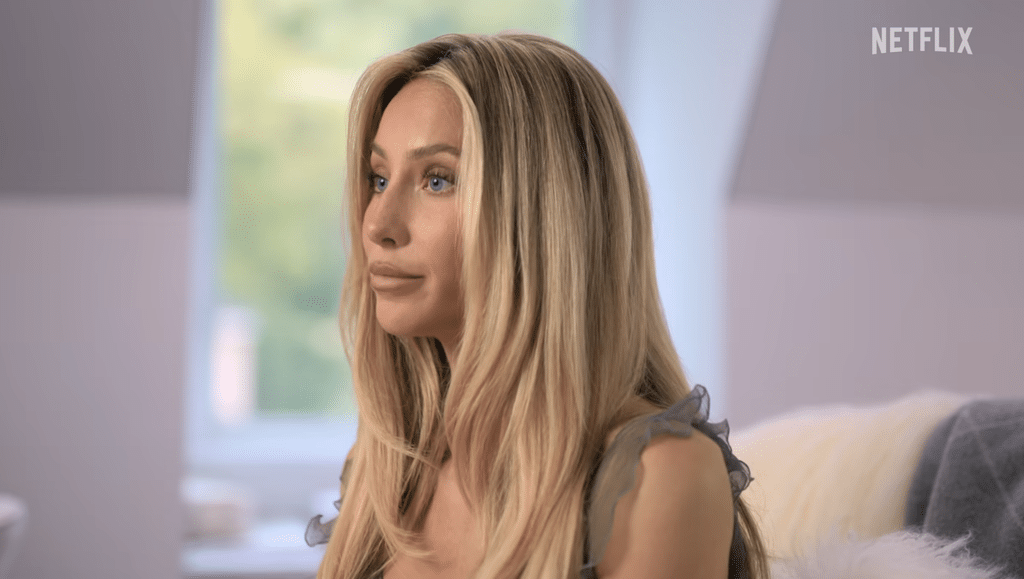
Netflix released “Earle Meets World” in early September, and all eight episodes of the first season dropped at once. The series follows Earle and her blended family, including: her father TJ and stepmother Ashley; her mother Alisa; her sister and fellow content creator Ashtin; and her best friend Sally. Earle has said the show is meant to capture “all the little things in between that you don’t always see online.” There’s an interesting tension in that promise, because those little things are now being captured by a production crew. In practice, the show also tackles the drama that has followed her across the internet, including the feud with podcaster Alex Cooper and the rumors about her and Tom Brady. One episode follows the launch day of Reale Actives.
That last detail is the one I can’t stop thinking about. A product launch is both a business milestone and a plot point. Brands aren’t just sponsoring the entertainment anymore, they’re woven into it. The line between a creator’s life, her company and her content has basically disappeared, and “Earle Meets World” is one of the first big streaming examples of that blur. I don’t think that’s necessarily cynical. It may just be an honest picture of how the modern fame economy works, where being a person and being a brand are the same job. But it does leave me wondering how much of an “unfiltered” life can stay unfiltered once it’s also the product.
Why influencing looks so good from the outside
If I’m honest, the “blowing up” appeal makes complete sense. It looks like an escape from a script most of us were handed early: finish school, find a job and work from right out of college until retirement. Against that backdrop, influencing looks like a loophole, a way to make work feel enjoyable instead of something to endure between weekends. I think that’s a big part of why it appeals to people my age. It’s more than being famous, it’s about wanting to enjoy the thing you’ll spend most of your life doing.
The money is definitely a big part of it too. The creator economy has been projected to grow into the hundreds of billions of dollars, and brands keep shifting ad budgets toward people who feel like friends instead of billboards. For a generation that grew up online, a job with flexibility, free products and a built-in community can sound almost too good to be true.
And Earle’s story makes it feel even more reachable. She arrived by being herself in front of a camera, or at least by seeming to be. Her relatability became the brand. If a regular college student can do it, the thinking goes, why not me? It’s a compelling argument, but it relies on the people we can see. We watch the ones who made it, and the ones who didn’t never show up in our feeds.
The ‘dream’ job
Here’s where I have to be a little honest, too. For most people, I think the dream is harder to live than it looks.
For every Earle, there are thousands of creators posting every day to a few hundred followers, often while working another job to pay for their necessities. Even for the biggest names, success depends on things nobody controls: algorithm changes, shifting trends, and audiences that can lose interest overnight. There’s no seniority, no guaranteed paycheck, and no promise that this year’s reach will exist next year.
Then there’s the part that doesn’t make the highlight reel. When your life is your product, you’re never fully off the clock. A vacation becomes content. A breakup becomes content. A family dinner, apparently, becomes a Netflix episode. I don’t think creators set out to give up their privacy. It probably happens gradually, because the job rewards sharing, and each small disclosure makes the next one easier. Earle has said she felt anxious before the premiere, and honestly, that makes sense. Putting your family on screen is a different level of exposure than posting a morning routine, and once the world has seen your relationships, you don’t get that privacy back.
There’s also the pressure of being endlessly likable. Followers feel like they know you, which means they feel entitled to opinions about you. The same closeness that builds an audience can turn on you in a single news cycle, and public feuds and rumors come with the job. In a strange way, the thing that makes an influencer valuable, the sense that she’s a friend, is also the thing that makes criticism feel so personal, for her and for the people watching.
What I’m left thinking
I don’t want to be the person who rolls her eyes at influencers. Building an audience takes real skill: storytelling, consistency, business sense and thick skin. Turning online attention into a company and then a streaming series is a serious accomplishment, and Earle deserves credit for it. Dismissing it as shallow would also miss something important. The people who admire this career aren’t just chasing fame. Many of us are chasing a way of working that feels like our own. That’s a deeply understandable thing to want, especially when the alternative looks like decades of work that never quite feels like yours.
But influencing offers that freedom with a catch. The autonomy comes bundled with constant visibility, and the authenticity that makes a creator valuable is also what gets packaged, scheduled and sold. “Earle Meets World” shows the dream at its peak, with the brand launch, the glamorous trips and the red carpet. What it can’t show is the long, invisible stretch of work before that moment, or the many people who put in the same effort and never got a camera crew. It also can’t show what it costs to keep turning yourself into something people can watch.
So maybe the more useful question isn’t whether influencing is a good career. It’s what we’re hoping it will give us, and whether there are other ways to find it. For a few people, being an influencer will be the answer. For the rest of us, the pull of that perfectly lit morning routine might be a sign that we want more control, more joy and more of ourselves in our work. And I’d like to believe we can build that without needing an audience of millions.