

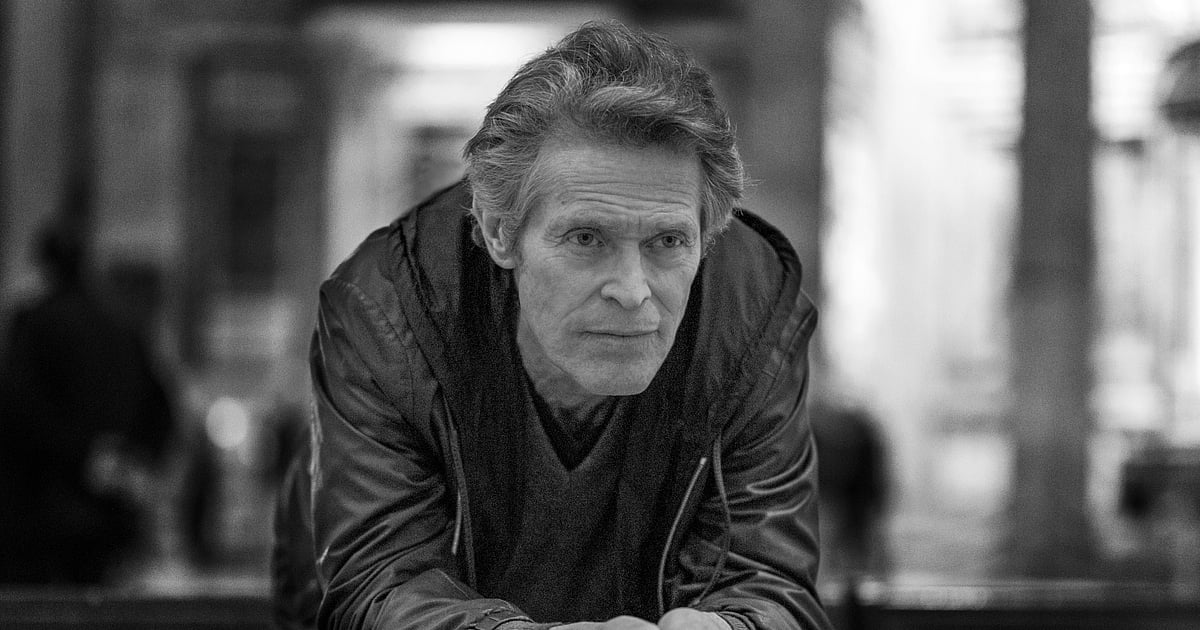
Willem DafoeDino Ignani/
Updated on: 14 Oct 2026, 11:32 am
He’s played Jesus Christ, a deeply troubled Vincent van Gogh, a motel manager who shares his workplace with a bunch of children, a deranged lighthouse keeper, and, now, a mountaineer attempting to conquer Everest.
I almost forgot; once in a while, he’s also been… something of a scientist.
Few actors can move between the worlds of Wes Anderson, Robert Eggers and Sam Raimi without looking like they’ve taken a wrong turn somewhere, but the great Willem Dafoe has spent decades making the unexpected look like second nature.
With his characteristic face, voice and physicality that seems to operate on a frequency of its own, Dafoe, now 71, continues to take on roles that excite, befuddle and inspire in equal measure.
From Platoon and Spider-Man to The Florida Project and The Lighthouse, his filmography is less a straight career trajectory than a series of gloriously strange detours.
In the upcoming Tenzing, he plays John Hunt, the expedition leader of the 1953 Mount Everest expedition, bringing his singular sensibility to a story of extraordinary human endurance. The Apple Original drama sees Dafoe share screen space with Tom Hiddleston and Genden Phuntsok, and had a theatrical release in select regions on October 9, ahead of its worldwide release on Apple TV on October 16.
Whereas in Late Fame, his other recent standout release, he essays a forgotten poet whose life is upended when a group of young downtown bohemians rediscover his work and hail him as a literary genius.
In a conversation with The Hollywood Reporter India, Dafoe discusses his acting philosophy, his indifference to the trappings of fame, and his reluctance to venture into long-form storytelling.
You said this a couple of years ago: “When I think about natural acting, I think about natural behaviour, and I think that sometimes that destroys movies, because we don’t just want to see imitations of life; we want to see something that is beyond that.”
That feels like such a perfect description of you as an actor. You manage to make every character you play so unique — physically and emotionally. Perhaps when you work with filmmakers like Wes Anderson or Robert Eggers, that lends itself naturally to those worlds. But when you portray someone like John Hunt in a very grounded film likeTenzing, how do you manage to keep that character so outwardly distinctive, while still staying within that realm of normalcy?
Dafoe:Well, so much is defined by what we’re doing, and acting is about doing and having an experience. That becomes so available when you’re doing something so specific and so concrete as climbing a mountain, talking to people about logistics, or talking about factual things.
You have certain things that help colour it, or flirt with a different point of view than you have. And sometimes those are external things. Whether it’s curling my hair and wearing a moustache like he wore, or the clothing, the equipment. You have all these things that are working on you.
So I’m not thinking about naturalism, and I’m really not thinking about performance. I’m thinking about having an experience and dedicating myself to doing those actions with a certain kind of presence, grace and consideration. That’s often what guides me.
The only reason why I make those comments about naturalism is I think cinema can really challenge us and make us dream about things and think in a different way. So when we recognise things that we see, because we see them in life, it’s a modest confrontation. I like something a little stronger.
Tom Hiddleston, Genden Phuntsok and Willem Dafoe in ‘Tenzing’
Both withTenzingand your other project this year,Late Fame, you continue to make such eclectic choices in your career.Late Fame, for instance, deals with a character who’s experiencing recognition at a very late stage in his life. You, of course, have such an interesting relationship with fame yourself. You seem like someone who’s never really been affected or influenced by it, even after all these decades of being a global superstar.
Dafoe: I try not to think about fame. Keep going forward and keep on doing the things that you love to do, and make sure that they’re things that challenge you… and don’t think about what they get you.
My mantra is, “Do this to do this, not do this to get that.” I think we’re so trained to this kind of transactional thing of, “Oh, if I’m good, I’ll be elevated.” I don’t try to enter that space at all.
Of course, I want people to like what I do. Everyone craves respect and to be validated and all that. But I really try to keep it far away from me, because the act of performing, while it’s public, is also very internal and personal.
So I have a dialogue with myself, and I always believe that any time I start to think about doing things for what’s outside of that world that I’m in, it becomes a problem because it blocks you and you aren’t there. If you start to do that, it ruins that purity of engagement that you try to have.
You’ve been a prolific actor for decades now. But one thing that stands out, which I noticed, is that you haven’t really entered the world of streaming yet, at a time when long-form storytelling is considered prestigious. Is that a conscious choice, or have you just not found the right script?
Dafoe:I think it’s both, actually. Because the truth is, for example, when I have free time, I watch cinema (in the theatres). I don’t watch streaming. Keep in mind, I don’t want to come across as snobby, and many films I do don’t get much distribution and end up on streaming anyway. But that’s not the point.
The point is I’m not that attracted to doing a series. Many people like them, but I think they don’t hold your feet to the fire. You have a long time to reveal (something), which may be a good thing, but it takes away a certain kind of discipline in what you’re doing.
You can be very relaxed, and then the audience can come to you like it’s a soap opera. You can eventually become “their guy.” They become patient with you. They may even hate you for two episodes, but then they keep on seeing you, and then it’s like, “Oh, he’s not so bad,” and they project onto you like a friend.
Whereas in a movie, there’s no stopping, no reflection for an hour and a half, two hours… and it’s done. Then you sit with it. It’s a whole different experience!
Of course, I don’t want to be old-fashioned and I don’t want to hang on to something that’s necessarily evolving.
But the theatrical experience is very important, and it’s why I maintain my involvement in theatre on stage as well, because I think the personal encounter, the meeting of public and performer live, and also in an intimate setting is so important. I think, ironically, being in a theatre with a bunch of strangers watching a light on a screen is more intimate than being at home, comfortable, watching it on… a TV of whatever size. You know what I’m saying?
So maybe that’s a prejudice. Maybe it’s foolish. I don’t want to get on a high horse. That’s just my experience. So as long as I can find interesting things to do in cinema, and I’m attracted to directors too — director-driven cinema — and what the story is, I will continue doing so.
Dafoe memorably played Norman Osborn/Green Goblin in ‘Spider-Man’
That’s such a fascinating way to put it. I’m sure you’ve received offers to star in shows, or other peers have talked to you about this.
Dafoe: I hear from colleagues that the showrunner is so important in some of these series, and how some shows have different directors for different episodes.
So the actors have too much power.
Because when a new director comes in, it’s too easy for an actor to say, “Well, actually, that’s not what we’re doing here.. lets do this other thing instead.” The director is trying to find their feet, trying to get comfortable with the actors, and now they have to… compromise. That’s not a good relationship to have.
There’s got to be a man or woman that’s the captain of the ship, and everybody gets behind their vision and tries to make it manifest. That’s the situation that I like best because then it’s a communal effort, and the important thing is to find out your place, find out what your contribution is.
Every time you do a movie, your job is different. There’s no such thing as acting being one job. It’s a fluid thing. You have to adjust your approach, and your relationship to what you’re doing every time. I guess that’s one of the reasons why I enjoy it so much.
And that was the case withTenzingand your other upcoming projects as well?
Yes, on some level, when I’m doing a movie, it always is the first time. It sounds like I’m being cute or being crazy, but it’s really true because the elements are so different. You’re working with different obligations, materials and intentions each time.
So those situations, even when they can be extreme — the locations, or working with another actor, with a director that is perhaps from another culture — this rejuvenates me, because it forces me to abandon my held beliefs and other people. If I can really understand that and learn something, then it opens my heart and brain up.
International
english cinema
international cinema
Hollywood Interviews
Hollywood
